


This article was automatically translated from the original Turkish version.
+2 More
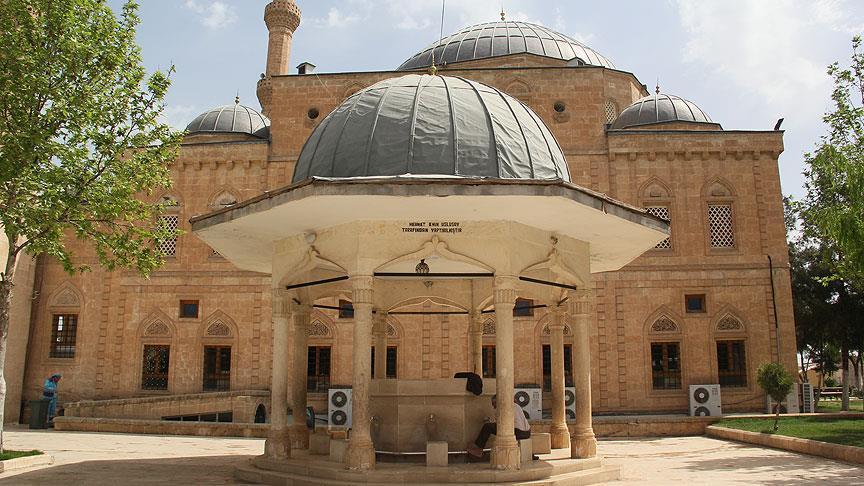
Prophet Ayyub's Station of Patience
Location | Türkiye Şanlıurfa Eyyübiye | ||||||||
|---|---|---|---|---|---|---|---|---|---|
Main Elements | Tomb Mosque Well Cave | ||||||||
Usage Status | Actively visited religious site | ||||||||
Historical Identity | The place believed to be where Prophet Ayyub endured his illness with patience | ||||||||
The Shrine of Job the Patient is a historical and religious pilgrimage site located in the Eyyübiye district of Şanlıurfa province, in Southeastern Anatolia, approximately 3 km from the city center. The structure was built over a cave believed to be the place where the Prophet Job, revered in Islamic tradition as the embodiment of patience, lived and demonstrated his steadfastness in the face of adversity. The building holds religious and historical significance through both its sacred spaces and architectural elements.

The Shrine of Job the Patient (Culture Portal)
Although Islamic sources do not provide a precise historical date or geographical confirmation for the period and location of Job’s life, it is traditionally believed that he lived during the time of Prophet Abraham and resided in this region for an extended period. According to these traditions, Job lost his wealth and possessions, suffered severe physical ailments, and was separated from his family. Nevertheless, he never abandoned his faith or his patience. During his prolonged illness, he withdrew into a cave, prayed with endurance, and was ultimately healed by divine intervention. This cave forms the central feature of the structure now known as the Shrine of Job the Patient.
The Shrine of Job the Patient constitutes a historical complex containing four primary elements: the cave where Job is believed to have endured his illness, a well, a mosque, and a tomb.
Cave: This cave, where Job is said to have worshipped and sought healing during his illness, is regarded by visitors as a place of patience and prayer. The interior has been preserved in a simple manner, maintaining its natural form.
Well: Located immediately beside the cave, the well is believed to contain the water that facilitated Job’s recovery. According to tradition, Job regained his former health after bathing in and drinking from this water. Water is still drawn from the well today and is regarded as sacred.
Mosque: The small mosque within the shrine complex is essential for fulfilling the worship needs of visitors and sustaining the religious function of the site.
Tomb: A symbolic grave believed to belong to Job is also located within the structure. However, its historical or archaeological authenticity has not been verified; it is based primarily on traditional belief.
The Shrine of Job the Patient is visited year-round by pilgrims from various regions. Visitors typically pray inside the cave, drink water from the well, and visit the symbolic tomb. The site holds considerable importance for religious tourism. However, the practices associated with visitation are rooted in popular belief rather than academic or historical evidence. Consequently, the structure is perceived less as a historical monument and more as a religious symbol and a sacred space of faith.
Anadolu Ajansı. "Eyyüp Peygamber'in makamı restore edilecek." Accessed June 18, 2025. https://www.aa.com.tr/tr/yasam/eyyup-peygamberin-makami-restore-edilecek/550746
Gümüş, Evren. “Hz. Eyyûb Sabır Makamı.” Türkiye Turizm Ansiklopedisi. Accessed June 16, 2025. https://turkiyeturizmansiklopedisi.com/hz-eyyub-sabir-makami
Türbeler. "Hz. Eyyûb (A.S) Sabır Makamı." turbeler.org. Accessed June 16, 2025. https://turbeler.org/detay/1183-hz-eyup-as-sab%C4%B1r-makam%C4%B1
Türkiye Kültür Portalı. "Fotoğraf." Medya. Accessed June 18, 2025. https://www.kulturportali.gov.tr/medya/fotograf/fotodokuman/8019/eyup-peygamber-sabir-makami

Prophet Ayyub's Station of Patience
Location | Türkiye Şanlıurfa Eyyübiye | ||||||||
|---|---|---|---|---|---|---|---|---|---|
Main Elements | Tomb Mosque Well Cave | ||||||||
Usage Status | Actively visited religious site | ||||||||
Historical Identity | The place believed to be where Prophet Ayyub endured his illness with patience | ||||||||
No Discussion Added Yet
Start discussion for "Prophet Job's Station of Patience" article
Historical Background
Architectural Features and Elements
Visitation and Devotional Practices