

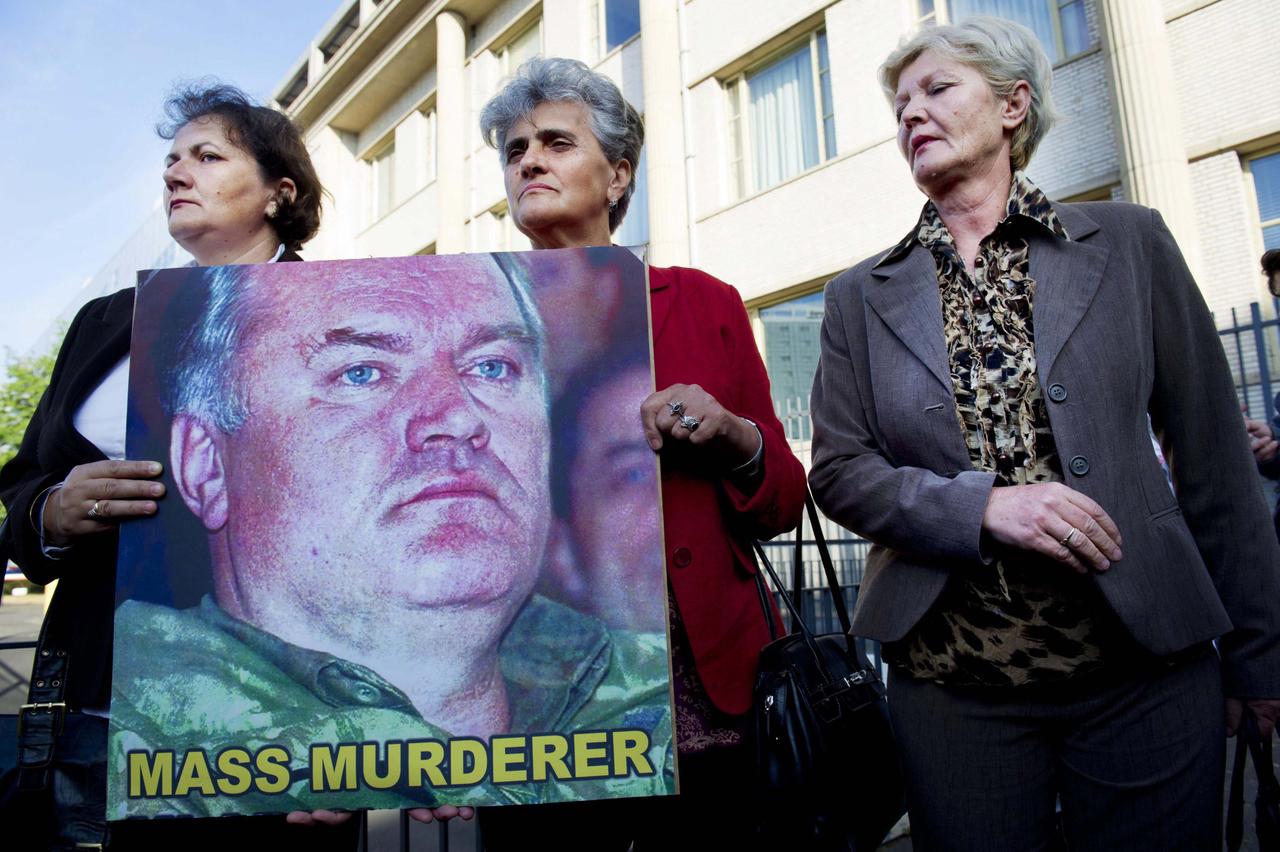
+1 More

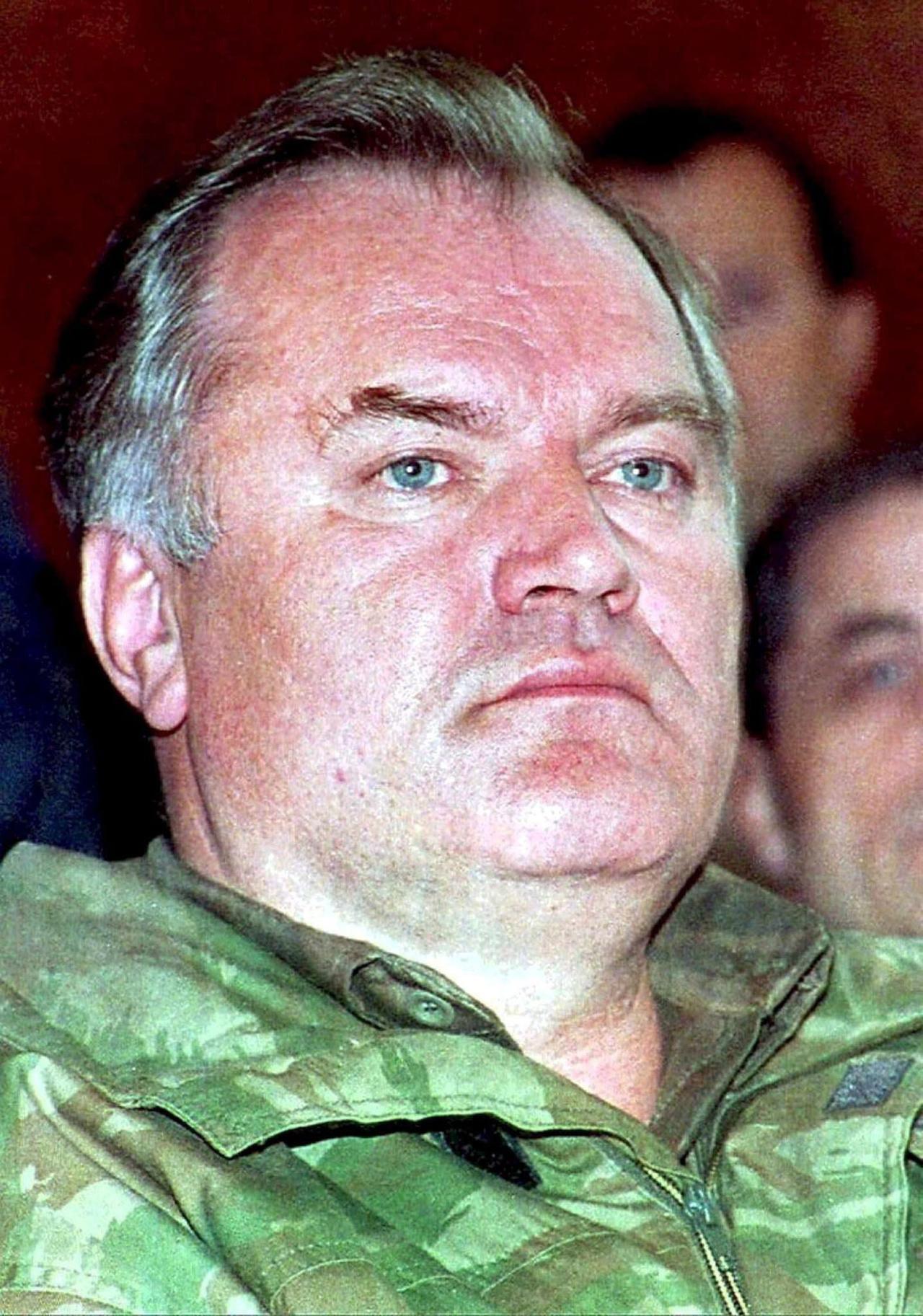
Ratko Mladić
Date of Birth | March 12, 1942 | ||||||||
|---|---|---|---|---|---|---|---|---|---|
Place of Birth | Božanovići, Kalinovik | ||||||||
Date of Death | August 27, 2026 | ||||||||
Place of Death | The Hague, Netherlands (84) | ||||||||
Position | Chief of Staff of the VRS (1992–1996) | ||||||||
Charges | Genocide Crimes against humanity Violations of the laws of war | ||||||||
Decision Rendered | Life imprisonment | ||||||||
Spouse | Bosiljka Mladić | ||||||||
Children | Ana Mladić (d. 1994) Darko Mladić | ||||||||
Ratko Mladić (born 12 March 1942, Božanovići, Kalinovik – died 27 August 2026, The Hague, Netherlands) was a military officer who served as Chief of Staff of the Army of the Republika Srpska (VRS) during the Bosnian War from 1992 to 1995. He was tried and convicted by the International Criminal Tribunal for the former Yugoslavia (ICTY) for genocide, crimes against humanity and violations of the laws or customs of war. 【1】 Due to the crimes he committed, he became known in international public opinion as the "Butcher of Bosnia".【2】 Indictments against Mladić were issued on 24 July and 16 November 1995.【3】 He was arrested in Serbia on 26 May 2011.【4】
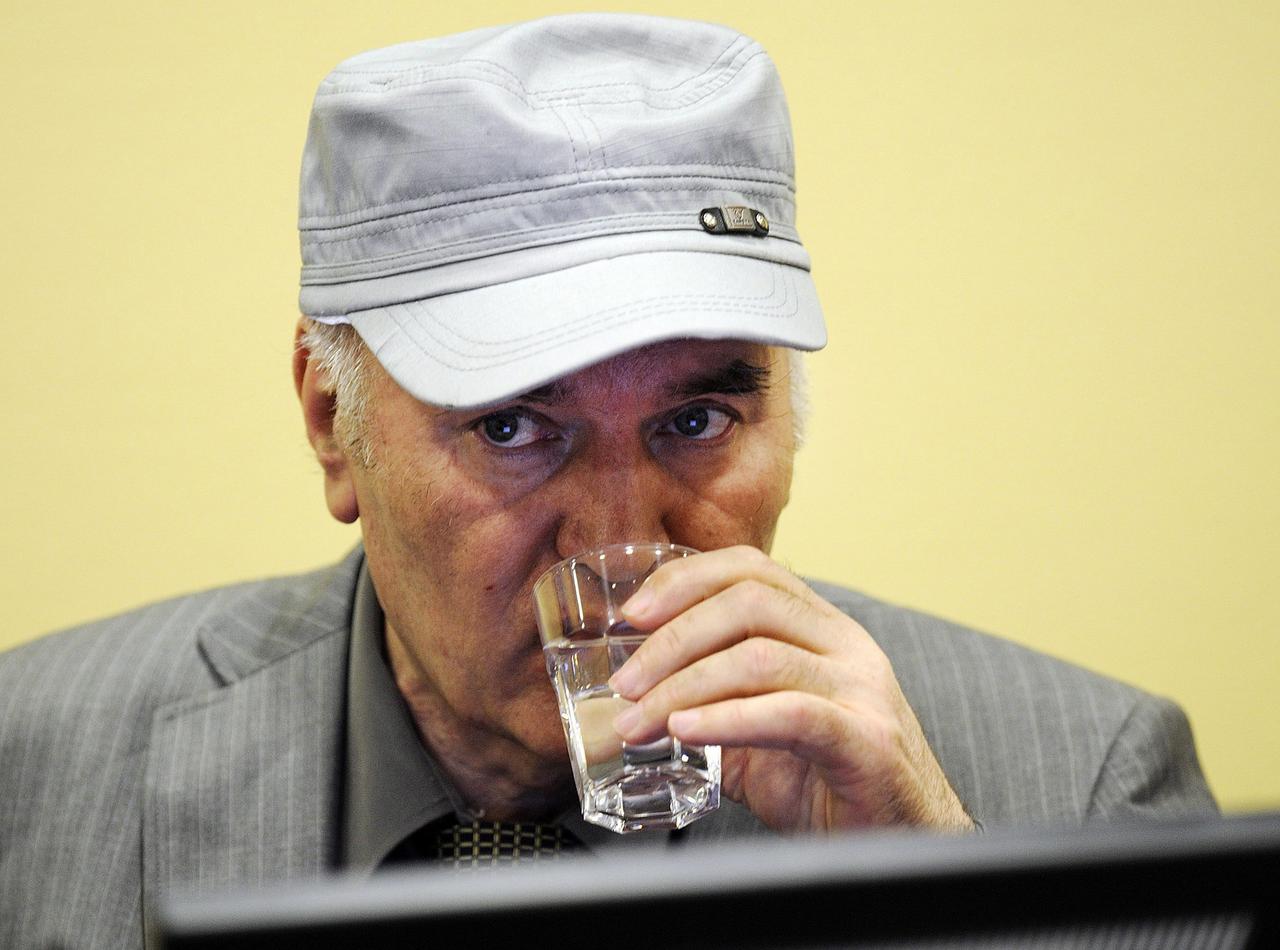
Ratko Mladić, former commander of Bosnian Serbs accused of committing genocide in Srebrenica and arrested for war crimes, appeared before a judge for the first time two days after being transferred to the Netherlands, 3 June 2011 – (Anadolu Agency)
The Trial Chamber, in its judgment of 22 November 2017, sentenced Mladić to life imprisonment.【5】 This judgment was confirmed on 8 June 2021 by the Appeals Chamber of the International Residual Mechanism for Criminal Tribunals (MICT), making it final.【6】 Mladić died on 27 August 2026 at the United Nations Detention Facility in The Hague where he was serving his sentence.【7】
Ratko Mladić was born on 12 March 1942 in the village of Božanovići, within the municipality of Kalinovik, now part of Bosnia and Herzegovina.【8】 His father, Neđo Mladić, was a member of the Yugoslav Partisan movement during the Second World War and died in 1945. His mother, Stana Mladić (maiden name Lalović), had a sister, Milica Mladić, and a brother, Milivoje Mladić.【9】 After completing primary school in his hometown, Mladić moved to Sarajevo where he worked as a turner.【10】
Mladić enrolled at the Military Academy in Belgrade in 1961 and began active service in the Yugoslav People's Army (JNA) in 1965 after four years of study.【11】 His first officer assignment was as a platoon commander in Skopje. Throughout his career, he held various command and staff positions in Skopje, Kumanovo, Štip, Pristina and Knin. He was promoted to the rank of colonel in 1988. At the beginning of 1991, he was appointed Deputy Commander of the Pristina Corps.【12】
With the beginning of Yugoslavia's dissolution, in June 1991 Mladić was assigned to Knin as Commander of the JNA 9th Corps.【13】 On 4 October 1991, he was promoted to the rank of Lieutenant General by the then Presidency of the Socialist Federal Republic of Yugoslavia.【14】 In December 1991, he assumed command of the 9th Corps.
On 24 April 1992, Mladić was promoted to the rank of Lieutenant General, and the following day, on 25 April 1992, he was appointed Chief of Staff and Deputy Commander of the JNA 2nd Military District Headquarters. He assumed this position on 9 May 1992 and took command of the 2nd Military District Headquarters on 10 May 1992. On 12 May 1992, he was appointed Chief of Staff of the newly established Army of the Republika Srpska (VRS), a position he held until at least 8 November 1996. He was promoted to the rank of General (General Colonel) on 24 June 1994.【15】 As the military leader of the Bosnian Serbs, he commanded units in eastern Bosnia around Han Pijesak, Rogatica, Pale and Srebrenica, and in western Bosnia around Cazin and Bihać.【16】
From May 1992 to November 1995, the Sarajevo-Romanija Corps (SRK) under Mladić’s command carried out systematic sniper and artillery attacks against the civilian population of Sarajevo. The International Criminal Tribunal for the former Yugoslavia (ICTY) determined that most of these attacks targeted civilians in areas with little or no military value, resulting in the deaths or injuries of thousands of Sarajevo residents.【17】
The indictment alleged that between 12 May 1992 and November 1995, Mladić participated in a Joint Criminal Enterprise (JCE) aimed at spreading terror among the civilian population of Sarajevo through sniper and artillery attacks. The ICTY Trial Chamber found that the purpose of the Sarajevo JCE was to spread terror through such attacks and that Mladić made a substantial contribution to this common objective.【18】
The Court concluded that the attacks were not merely isolated incidents of firing. Some attacks occurred during ceasefires or relatively calm periods; numerous civilians were targeted in neighborhoods and homes where there was no military activity, soldiers or military equipment. The Court also found that civilians in Sarajevo lived under the constant fear that they or their loved ones could be struck by sniper or artillery fire at any moment, creating an extreme fear and continuous psychological pressure beyond what civilians normally experience in wartime.
During the attacks, modified air bombs lacking high precision were also used. The Trial Chamber assessed that the use of these weapons, due to their high inaccuracy, constituted indiscriminate attacks against individual civilians and the civilian population as a whole. The Court, evaluating the nature, duration, locations and effects of the sniper and artillery attacks together, concluded that the primary intent of those carrying out the attacks was to spread terror among the civilian population of Sarajevo.【19】
On 8 March 1995, Radovan Karadžić, leader of the Bosnian Serbs and Supreme Commander of the VRS, issued Directive No. 7. The directive ordered the creation of an "unbearable state of insecurity" in Srebrenica and Zepa, leaving no hope for the future survival of the Bosnian Muslim population in these areas. The directive formed the basis for operations aimed at worsening living conditions for the Bosnian Muslim population and isolating their settlements from territory under Bosnian Serb control.【20】
On 11 July 1995, VRS units entered Srebrenica and captured the town. On the same day, General Ratko Mladić, in a speech in the town, declared that Srebrenica had been "given as a gift to the Serbian people" and stated that "the time has come to take revenge on the Turks in this region." These statements and images were admitted as evidence in ICTY proceedings.【21】
Following the capture of Srebrenica, Bosnian Serb forces launched a comprehensive operation to eliminate the Bosnian Muslim population in the area. Approximately 30,000 women, children and elderly men were forcibly transferred from Srebrenica to areas under Bosnian Muslim control on 12–13 July. In contrast, men and boys were separated from women and children and detained at various locations; from 13 July onwards, captured or surrendered men were taken to mass execution sites.【22】
Thousands of men and boys who managed to escape from Srebrenica attempted to reach Tuzla through forested terrain. Bosnian Serb forces attacked the fleeing column along the escape route, captured or forced individuals to surrender, and a significant number of those captured were later executed. Thus, the killing operation in Srebrenica was not limited to persons held in the town and detention centers but also encompassed those attempting to flee the region.【23】
In the days following 13 July 1995, thousands of Bosnian Muslim men and boys were transported to various detention and execution sites around Bratunac and Zvornik. Orahovac, Petkovci, Pilica, Branjevo Military Farm, Pilica Cultural Center and Kozluk were among the main execution and burial sites used. ICTY records indicate that between 11 July and approximately 1 November 1995, more than 5,000 people were transferred by the VRS to the jurisdiction of the Zvornik Brigade and executed by firing squad.【24】
The ICTY determined that the killings in Srebrenica were systematically and organizationally carried out and that the elimination of a substantial portion of the Bosnian Muslim male population was part of a Joint Criminal Enterprise. The Court classified the acts in Srebrenica as genocide due to their nature, scale and the characteristics of the targeted group. The forced transfer of women, children and the elderly from Srebrenica was considered part of the broader crimes aimed at permanently removing the Bosnian Muslim population from the region, alongside the killings of men.【25】
Human Rights Watch/Helsinki, based on field research conducted between 31 July and 23 August 1995, documented in its October 1995 report the events that occurred before, during and immediately after the collapse of Srebrenica’s UN-declared "safe area" status. The report stated that after Bosnian Serb forces seized control of the area, serious violations of humanitarian law were committed; women, children and the elderly were terrorized; and premeditated mass executions of men and boys were carried out. HRW determined that hundreds, possibly thousands, of men fleeing Srebrenica were ambushed and killed while attempting to cross Bosnian Serb-controlled territory to reach the safe zone, relying on testimonies from survivors.【26】
The report also included testimonies indicating that women, children and the elderly transferred toward Kladanj were terrorized, subjected to abuse and looting, and some women were raped. HRW reported that the separation of men from women and children was systematically carried out and that a significant proportion of the separated men were subsequently killed.
HRW reported that a significant list of missing men and boys had been lost by Dutch authorities after the fall of Srebrenica, but subsequent investigations revealed that the list had been found in the Dutch Ministry of Defense. According to the report, the list included the names of 239 men and boys of military age who had been at the UN compound in Potočari and handed over to Bosnian Serb forces.
The report also documented allegations that video footage of the events in Potočari had been destroyed. According to BBC2 and The Observer reports cited by HRW, the footage showed Bosnian Serb soldiers separating men from women and children and taking some men away for execution. The Commander of the Royal Netherlands Army, General Hans Couzy, admitted that he ordered the destruction of the footage because Dutch soldiers were visible in them. HRW assessed that the destruction of this footage resulted in the loss of crucial evidence for identifying perpetrators of war crimes.【27】
The indictment against Ratko Mladić alleged that he participated in a broad Joint Criminal Enterprise (JCE) aimed at the permanent removal of the Bosnian Muslim and Bosnian Croat populations from territories claimed by Bosnian Serbs. According to the indictment, the purpose of this enterprise was the forcible expulsion of Bosnian Muslims and Croats from areas claimed by Bosnian Serbs, involving crimes such as persecution, destruction, murder, deportation and forcible transfer.【28】
The indictment alleged that these crimes were committed between 12 May 1992 and 30 November 1995 in various regions of Bosnia and Herzegovina. Sarajevo, Srebrenica, Gorazde and numerous municipalities were included in the scope of the charges. In addition to Mladić’s individual criminal responsibility, his superior responsibility as Chief of Staff of the Army of the Republika Srpska (VRS) was also alleged.【29】
The charges against Mladić were grouped into three main categories: genocide, crimes against humanity and violations of the laws or customs of war. In the final indictment, Mladić was charged with a total of 11 counts: two counts of genocide, five counts of crimes against humanity and four counts of violations of the laws or customs of war.【30】
Mladić’s responsibility was detailed through different Joint Criminal Enterprises. The first was a JCE between 12 May 1992 and November 1995 aimed at the permanent removal of Bosnian Muslims and Croats from areas claimed by Bosnian Serbs. The second aimed to spread terror among the civilian population of Sarajevo through sniper and artillery attacks during the same period. The third targeted the elimination of the Bosnian Muslim population in Srebrenica, including charges of killing men and boys and forcibly transferring women, children and the elderly.
At the beginning of the indictment process, Mladić and the then Bosnian Serb leader Radovan Karadžić were jointly charged. The first indictment was submitted on 24 July 1995 and approved on 25 July 1995. This 16-count indictment included charges of genocide, crimes against humanity, grave breaches of the Geneva Conventions and violations of the laws or customs of war.
The separate indictment concerning Srebrenica was submitted on 14 November 1995 and approved on 16 November 1995. This indictment addressed the capture of Srebrenica in July 1995, the mass execution of thousands of Bosnian Muslims, their forcible transfer and other crimes. The second indictment contained 20 counts, one of which concerned genocide, five concerned crimes against humanity and nine concerned violations of the laws or customs of war.
The two separate indictments were merged in 2002, and later, in 2011, amendments restructured the charges against Mladić. The Fourth Amended Indictment of 16 December 2011 formed the basis for Mladić’s trial on 11 counts related to his 1992–1995 ethnic cleansing campaign, the terror campaign against civilians in Sarajevo, the hostage-taking of UN personnel in 1995 and the Srebrenica genocide.【31】
Mladić was arrested in Serbia on 26 May 2011 and transferred to the ICTY in The Hague the same year. The trial began on 16 May 2012, the hearing of evidence lasted more than four years, and the judgment was delivered on 22 November 2017.
In its final judgment, the Trial Chamber convicted Mladić of various crimes including genocide in Srebrenica, persecution, destruction, murder, deportation, terror and unlawful attacks against civilians and sentenced him to life imprisonment. However, the Chamber found that the murders committed between 1992 and 1995 in the municipalities of Banja Luka, Bosanska Krupa, Bratunac, Ključ, Kotor Varoš, Prijedor, Sanski Most and Vlasenica did not prove the specific intent to physically destroy a substantial part of the protected group and acquitted him of genocide charges in those areas. The genocide charge related to Srebrenica was upheld.
After being indicted by the ICTY, Mladić evaded capture for 16 years.【32】 One of the known places where he hid was the military complex in Han Pijesak in eastern Bosnia, built for Yugoslavia’s long-time communist leader. It was stated that he changed his evasion strategy for the third time in 2006, following the arrest of ten individuals allegedly assisting him in fleeing.
Despite official statements by Serbian authorities that they had been unable to locate Mladić during his fugitivity, allegations emerged that he was protected for years by certain individuals within state institutions. Footage aired on a local television program showed Mladić interacting with crowds, socializing and posing for photographs during the period he was sought.【33】
On the morning of 26 May 2011, the Serbian police war crimes investigation unit conducted a raid on a house in the village of Lazarevo, owned by Mladić’s cousin Branislav, after relatives had repeatedly called its phone number. Two police officers encountered an elderly man when opening a door to one of the rooms; the man identified himself as Ratko Mladić. It was reported that Serbian police had previously raided Lazarevo in search of Mladić but had not succeeded until this time, and that the operation’s completion was reported to Serbian President Boris Tadić.【34】
Serbian President Boris Tadić confirmed the arrest at a press conference in Belgrade. Tadić stated that the arrest would close a chapter of recent history and contribute to regional reconciliation, emphasizing that all crimes must be investigated and all war criminals brought to justice. Officials from Serbia’s Ministry of Internal Affairs announced that Mladić had been using the name Milorad Komadić.【35】
The trial against Mladić began on 16 May 2012. The hearing of evidence lasted more than four years, and the parties submitted their closing arguments between 5 and 15 December 2016. Mladić’s trial lasted a total of 530 days, during which 591 witnesses testified and 9,914 pieces of evidence were admitted by the Court. The trial was conducted by Trial Chamber I, presided over by Judge Alphons Orie (Netherlands), with Judges Bakone Justice Moloto (South Africa) and Christoph Flügge (Germany). Mladić did not accept the charges against him.
On 22 November 2017, victims’ relatives who lost loved ones in the Srebrenica genocide closely followed the judgment hearing in the courtroom in The Hague.
In its final judgment of 22 November 2017, the Trial Chamber found Mladić guilty, in his capacity as former Chief of Staff of the VRS, of genocide, crimes against humanity and violations of the laws or customs of war committed by Serb forces during the armed conflict in Bosnia and Herzegovina between 1992 and 1995, and sentenced him to life imprisonment.【36】
The Chamber sentenced Mladić to life imprisonment for committing crimes against humanity, committing genocide and violating the laws of war. Mladić was convicted for crimes against humanity including genocide, persecution, destruction, murder and forcible transfer in the Srebrenica region in 1995; persecution, destruction, murder, deportation and forcible transfer in municipalities across Bosnia and Herzegovina; murder, terror and unlawful attacks against civilians in Sarajevo; and the taking of United Nations personnel as hostages.
He was found guilty on 10 of the 11 counts in the indictment. However, he was acquitted of the genocide charge related to the killings in 1992 in Foča, Ključ, Kotor Varoš, Prijedor, Sanski Most and Vlasenica. The judgment also ruled that Mladić’s time in detention would be credited toward his sentence.【37】
On 18 December 2017, Mladić submitted a request for an extension of the deadline to file his appeal, citing the breadth, complexity and volume of the case file and requesting an additional 150 days.【38】 Due to the coronavirus pandemic, the appeal hearings were postponed, and the three judges of the Appeals Chamber, including President Prisca Nyambe, participated via video conference. Mladić, then 77 years old, rejected his request for a postponement due to health issues and appeared in person to present his defense. Rejecting his conviction, Mladić stated that "This is a NATO indictment" and in his defense declared, "It was not Ratko Mladić who started this war. Destiny pushed me to protect my country from Western attempts to destroy it".【39】
The appeal process was conducted by the Appeals Chamber of the International Residual Mechanism for Criminal Tribunals (MICT). On 8 June 2021, the Appeals Chamber, with Judges N’gum and Panton dissenting, fully rejected both Mladić’s and the prosecution’s appeals. The Appeals Chamber upheld the Trial Chamber’s finding that Mladić was not guilty of genocide under count 1 of the indictment concerning crimes committed against Bosnian Muslims and Croats in specific municipalities in Bosnia and Herzegovina.【40】 This acquittal covered the acts committed in 1992 in the municipalities of Foča, Ključ, Kotor Varoš, Prijedor, Sanski Most and Vlasenica. The Appeals Chamber also upheld Mladić’s life sentence. This judgment concluded the final major case initiated by the ICTY after more than 25 years of proceedings at The Hague courts. Mladić’s conviction at the Scheveningen Detention Facility in The Hague became final with this judgment, concluding the case.
In the same proceedings, other former Serbian officials tried in connection with the Srebrenica case, Ljubiša Beara and Vujadin Popović, were also sentenced to life imprisonment. Drago Nikolić received 35 years, Radislav Krstić 35 years, Radivoje Miletić 19 years, Ljubomir Borovčanin 17 years, Vidoje Blagojević 15 years, Vinko Pandurević 13 years and Milan Gvero 5 years. A total of 45 individuals responsible for the Srebrenica genocide were sentenced by the ICTY to a combined total of 699 years in prison. Four of them received life sentences. The then President of Serbia, Slobodan Milošević, died in custody during his own trial.【41】
Mladić served his sentence at the United Nations Detention Facility in The Hague. In August 2026, a UN doctor determined that Mladić’s health condition could deteriorate at any moment and that death could occur within weeks. Following the deterioration of his health, his lawyers and family petitioned for early release on humanitarian grounds; in their final application in August 2026, they requested that Mladić be transferred to a hospital or palliative care center in Serbia.
The International Residual Mechanism for Criminal Tribunals rejected this request once again, citing that it would not serve the interests of justice. Mladić died on 27 August 2026 at the hospital of the UN Detention Facility in The Hague.【42】 His death was announced by the Serbian state television RTS and the official Bosnian Serb television network (RTRS), and confirmed by a family member.
The International Residual Mechanism for Criminal Tribunals (IRMCT) confirmed that Mladić died while receiving medical treatment in the hospital. Judge Graciela Gatti Santana decided to launch a comprehensive investigation into the circumstances of his death.
A Haber. “Bosna Kasabı Ratko Mladiç Öldü! Srebrenitsa Soykırımı'nın Baş Sorumlusuydu.” Accessed August 28, 2026.https://www.ahaber.com.tr/dunya/2026/08/27/bosna-kasabi-ratko-mladic-oldu
ABC News (Australia). “Ratko Mladić, Former General Convicted of Bosnia Genocide, Dies in Prison at 83.” Accessed August 28, 2026.https://www.abc.net.au/news/2026-08-27/ratko-mladic-dies/107087374
ANSA. "Bosnian Serb War Criminal Ratko Mladic Dead." Accessed August 28, 2026.https://www.ansa.it/nuova_europa/en/news/countries/bosnia/2026/08/27/bosnian-serb-war-criminal-ratko-mladic-dead_7db12997-1deb-4da4-8de8-26fb1ed60b60.html
Al Jazeera. “Convicted Bosnian Serb War Criminal Ratko Mladic Dies.” Accessed August 28, 2026.https://www.aljazeera.com/news/2026/8/27/bosnian-serb-general-ratko-mladic-has-died-un-official-says
Anadolu Ajansı. “Srebrenitsa Soykırımı Sorumlularından 45'i Toplam 699 Yıl, 4'ü Müebbet Hapis Cezası Aldı.” Accessed August 28, 2026.https://www.aa.com.tr/tr/ayrimcilikhatti/ayrimcilik/srebrenitsa-soykirimi-sorumlularindan-45i-toplam-699-yil-4u-muebbet-hapis-cezasi-aldi/1820780
Anadolu Ajansı. “‘Bosna Kasabı’ Lakaplı Ratko Mladic'in Müebbet Hapis Cezası Onandı.” Accessed August 28, 2026.https://www.aa.com.tr/tr/dunya/bosna-kasabi-lakapli-ratko-mladicin-muebbet-hapis-cezasi-onandi/2267452
Anadolu Ajansı. “‘Bosna Kasabı’ Lakaplı Ratko Mladic'in Temyiz Duruşmaları Tamamlandı.” Accessed August 28, 2026.https://www.aa.com.tr/tr/dunya/bosna-kasabi-lakapli-ratko-mladicin-temyiz-durusmalari-tamamlandi/1954325
Anadolu Ajansı. “‘Bosna Kasabı’ Olarak Bilinen Savaş Suçlusu Ratko Mladic Öldü.” Accessed August 28, 2026.https://www.aa.com.tr/tr/dunya/bosna-kasabi-olarak-bilinen-savas-suclusu-ratko-mladic-oldu/4039257
Anadolu Ajansı. “‘Bosna Kasabı’Ratko Mladiç Müebbet Hapis.” Accessed August 28, 2026.https://www.aa.com.tr/tr/pg/foto-galeri/bosna-kasabi-ratko-mladice-muebbet-hapis/0
Balkan Insight. “Ratko Mladic's Fugitive Years Cloaked in Secrets and Lies.” Accessed August 28, 2026.https://balkaninsight.com/2017/11/16/ratko-mladic-s-fugitive-years-cloaked-in-secrets-and-lies-11-15-2017/btj/
Balkan Insight. “War Criminal or ‘Serb Hero’: Reactions to Ratko Mladic's Death Reflect Balkan Divisions.” Accessed August 28, 2026.https://balkaninsight.com/2026/08/27/war-criminal-or-serb-hero-reactions-to-ratko-mladics-death-reflect-balkan-divisions/btj/
Boston University School of Law. “Introductory Note to Prosecutor v. Ratko Mladić.” Accessed August 28, 2026.https://scholarship.law.bu.edu/cgi/viewcontent.cgi?article=4348&context=faculty_scholarship
CBC News. “War Crimes Fugitive Mladic Arrested.” Associated Press. Accessed August 28, 2026.https://www.cbc.ca/lite/story/1.1009999
CNN. “Ratko Mladić, Bosnian-Serb General Dubbed the ‘Butcher of Bosnia,’ Dies Aged 84.” Accessed August 28, 2026.https://www.cnn.com/2026/08/27/europe/ratko-mladic-bosnian-serb-dead-intl
Eurasia Review. "War Criminal Or ‘Serb Hero’: Reactions To Ratko Mladic's Death Reflect Balkan Divisions – Analysis." Accessed August 28, 2026.https://www.eurasiareview.com/28082026-war-criminal-or-serb-hero-reactions-to-ratko-mladics-death-reflect-balkan-divisions-analysis/
France24. “Bosnian Serb War Criminal Ratko Mladic Dead.” Accessed August 28, 2026.https://www.france24.com/en/live-news/20260827-bosnian-serb-war-criminal-ratko-mladic-dead
Human Rights Watch/Helsinki. “Bosnia and Herzegovina: The Fall of Srebrenica and the Failure of UN Peacekeeping.” Accessed August 28, 2026.https://www.hrw.org/report/1995/10/15/fall-srebrenica-and-failure-un-peacekeeping/bosnia-and-herzegovina
International Criminal Tribunal for the former Yugoslavia (ICTY). “Case Information Sheet: Mladić (IT-09-92).” Accessed August 28, 2026.https://www.icty.org/x/cases/mladic/cis/en/cis_mladic_en.pdf
International Criminal Tribunal for the former Yugoslavia (ICTY). “ICTY Convicts Ratko Mladić for Genocide, War Crimes and Crimes against Humanity.” Accessed August 28, 2026.https://www.icty.org/en/press/icty-convicts-ratko-mladi%C4%87-for-genocide-war-crimes-and-crimes-against-humanity
International Criminal Tribunal for the former Yugoslavia (ICTY). “Karadžić and Mladić: Initial Indictment.” Accessed August 28, 2026.https://www.icty.org/x/cases/mladic/ind/en/kar-ii950724e.pdf
International Criminal Tribunal for the former Yugoslavia (ICTY). “Prosecutor v. Ratko Mladić: Judgement, Volume I of V.” Accessed August 28, 2026.https://www.icty.org/x/cases/mladic/tjug/en/171122-1of5_1.pdf
International Criminal Tribunal for the former Yugoslavia (ICTY). “Ratko Mladić Case: Key Information and Timeline.” Accessed August 28, 2026.https://www.icty.org/en/cases/ratko-mladic-case-key-information-timeline
International Criminal Tribunal for the former Yugoslavia (ICTY). “Statement of the Office of the Prosecutor on the Arrest of Ratko Mladić.” Accessed August 28, 2026.https://www.icty.org/en/press/statement-office-prosecutor-arrest-ratko-mladi%C4%87
International Residual Mechanism for Criminal Tribunals (IRMCT). “Appeal Judgement, Prosecutor v. Ratko Mladić, Case No. MICT-13-56-A.” Accessed August 28, 2026.https://www.irmct.org/sites/default/files/case_documents/210608-appeal-judgement-JUD285R0000638396-mladic-13-56-en.pdf
International Residual Mechanism for Criminal Tribunals (IRMCT). “Mladić (MICT-13-56).” Accessed August 28, 2026.https://www.irmct.org/en/cases/mict-13-56
Izvestia. “Former Bosnian Serb Commander Ratko Mladic. Biography.” Accessed August 28, 2026.https://en.iz.ru/en/2156206/2026-08-27/former-bosnian-serb-commander-ratko-mladic-biography
Just Security. "The Mladić Appeal Judgment and the Enduring Legacy of the Hague Tribunals." Accessed August 28, 2026.
NBC News. “Ratko Mladić, Ex-Bosnian Serb Warlord Who Oversaw Atrocities in Bosnia, Dies in Prison at 84.” Accessed August 28, 2026.https://www.nbcnews.com/world/europe/ratko-mladic-ex-bosnian-serb-warlord-oversaw-atrocities-bosnia-dies-pr-rcna594684
National Public Radio (NPR). “After 16 Years on the Run, Gen. Mladic Captured.” Talk of the Nation. Accessed August 28, 2026.https://www.npr.org/transcripts/136685997
National Public Radio (NPR). “Ratko Mladic, Ex-Bosnian Serb Warlord, Dies in Prison at 84.” Accessed August 28, 2026.https://www.npr.org/2026/08/27/nx-s1-5946375/ratko-mladic-dead
Radio Free Europe/Radio Liberty (RFE/RL). “Serbian Police Arrest War Crimes Fugitive Ratko Mladic.” Accessed August 28, 2026.https://www.rferl.org/a/ratko_mladic_arrested_serbia/24205597.html
Serbian Monitor. “Ratko Mladić Has Died – His Life and Role in the Civil War.” Accessed August 28, 2026.https://www.serbianmonitor.com/en/ratko-mladic-has-died-his-life-and-role-in-the-civil-war/
The Washington Post. “Ratko Mladic, Bosnian Serb Commander Found Guilty of Genocide, Dies in Prison.” Accessed August 28, 2026.https://www.washingtonpost.com/obituaries/2026/08/27/ratko-mladic-bosnian-serb-commander-found-guilty-genocide-dies-84/
United Nations General Assembly. “Report of the Secretary-General Pursuant to General Assembly Resolution 53/35: The Fall of Srebrenica.” A/54/549. Accessed August 28, 2026.https://digitallibrary.un.org/record/372298?ln=en
United Nations News. “Arrest of Serbian War Crimes Fugitive Important Step in Fight against Impunity – UN.” Accessed August 28, 2026.https://news.un.org/en/story/2011/05/376382
Völkerrechtsblog. "Of Missed Chances and Set Narratives." Accessed August 28, 2026.https://voelkerrechtsblog.org/of-missed-chances-and-set-narratives/
[1]
International Criminal Tribunal for the former Yugoslavia (ICTY), “ICTY Convicts Ratko Mladić for Genocide, War Crimes and Crimes against Humanity,” basın açıklaması, 22 Kasım 2017, Erişim 28 Ağustos 2026, https://www.icty.org/en/press/icty-convicts-ratko-mladi%C4%87-for-genocide-war-crimes-and-crimes-against-humanity
[2]
Anadolu Ajansı. "‘Bosna Kasabı’ olarak bilinen savaş suçlusu Ratko Mladic öldü." Accessed August 28, 2026.
[3]
International Criminal Tribunal for the former Yugoslavia (ICTY), “Karadžić and Mladić: Initial Indictment,” 24 Temmuz 1995, Erişim 28 Ağustos 2026, https://www.icty.org/x/cases/mladic/ind/en/kar-ii950724e.pdf
[4]
International Criminal Tribunal for the former Yugoslavia (ICTY), “Karadžić and Mladić: Initial Indictment,” 24 Temmuz 1995, Erişim 28 Ağustos 2026, https://www.icty.org/x/cases/mladic/ind/en/kar-ii950724e.pdf
[5]
International Criminal Tribunal for the former Yugoslavia (ICTY), “ICTY Convicts Ratko Mladić for Genocide, War Crimes and Crimes against Humanity,”
[6]
International Residual Mechanism for Criminal Tribunals (IRMCT), “Mladić, Ratko (MICT-13-56),” Erişim 28 Ağustos 2026, https://www.irmct.org/en/cases/mict-13-56
[7]
CNN, “Ratko Mladić, Bosnian Serb war criminal, dead at 83,” CNN, Erişim 28 Ağustos 2026, https://edition.cnn.com/2026/08/27/europe/ratko-mladic-bosnian-serb-dead-intl
[8]
Serbian Monitor, “Ratko Mladić Has Died – His Life and Role in the Civil War,” Serbian Monitor, Erişim 28 Ağustos 2026, https://www.serbianmonitor.com/en/ratko-mladic-has-died-his-life-and-role-in-the-civil-war/
[9]
Serbian Monitor, “Ratko Mladić Has Died – His Life and Role in the Civil War,”
[10]
Serbian Monitor, “Ratko Mladić Has Died – His Life and Role in the Civil War,”
[11]
Serbian Monitor, “Ratko Mladić Has Died – His Life and Role in the Civil War,”
[12]
İzvestia. “Former Bosnian Serb Commander Ratko Mladic. Biography.” Izvestia, Erişim 27 Ağustos 2026. https://en.iz.ru/en/2156206/2026-08-27/former-bosnian-serb-commander-ratko-mladic-biography
[13]
International Criminal Tribunal for the former Yugoslavia (ICTY), “Ratko Mladić: Amended Indictment” (2002), Erişim 28 Ağustos 2026.
https://www.icty.org/x/cases/mladic/ind/en/mla-ai021010e.pdf
[14]
International Criminal Tribunal for the former Yugoslavia (ICTY), “Ratko Mladić: Amended Indictment”
[15]
International Criminal Tribunal for the former Yugoslavia (ICTY), “Ratko Mladić: Amended Indictment”
[16]
A Haber. “Bosna Kasabı Ratko Mladiç öldü! Srebrenitsa Soykırımı'nın baş sorumlusuydu.” Accessed August 28, 2026.
[17]
International Criminal Tribunal for the former Yugoslavia (ICTY). “Trial Judgement Summary for Ratko Mladić.” Erişim 28 Ağustos 2026. https://www.icty.org/x/cases/mladic/tjug/en/171122-summary-en.pdf
[18]
International Residual Mechanism for Criminal Tribunals (IRMCT), “Mladić, Ratko (MICT-13-56),”
[19]
International Criminal Tribunal for the former Yugoslavia (ICTY). “Trial Judgement Summary for Ratko Mladić.”
[20]
International Criminal Tribunal for the former Yugoslavia (ICTY). “Radislav Krstic Becomes the First Person to Be Convicted of Genocide at the ICTY and Is Sentenced to 46 Years Imprisonment.” 2 Ağustos 2001. Erişim 28 Ağustos 2026. https://www.icty.org/en/press/radislav-krstic-becomes-first-person-be-convicted-genocide-icty-and-sentenced-46-years
[21]
International Criminal Tribunal for the former Yugoslavia (ICTY). “161207IT – Transcript of Proceedings, Prosecutor v. Ratko Mladic.” 7 Aralık 2016. Erişim 28 Ağustos 2026.
https://www.icty.org/x/cases/mladic/trans/en/161207IT.htm
[22]
International Criminal Tribunal for the former Yugoslavia (ICTY). “Tribunal Convicts Radovan Karadžić for Crimes in Bosnia and Herzegovina.” 24 Mart 2016. Erişim 28 Ağustos 2026. https://www.icty.org/en/press/tribunal-convicts-radovan-karadzic-for-crimes-in-bosnia-and-herzegovina
[23]
Human Rights Watch. “The Fall of Srebrenica and the Failure of UN Peacekeeping.” Human Rights Watch, 15 Ekim 1995. Erişim 28 Ağustos 2026. https://www.hrw.org/report/1995/10/15/fall-srebrenica-and-failure-un-peacekeeping/bosnia-and-herzegovina
[24]
International Criminal Tribunal for the former Yugoslavia (ICTY). “Surrender of Dragan Jokic to the International Criminal Tribunal for the former Yugoslavia.” 15 Ağustos 2001. Erişim 28 Ağustos 2026. https://www.icty.org/en/press/surrender-dragan-jokic-international-criminal-tribunal-former-yugoslavia
[25]
International Criminal Tribunal for the former Yugoslavia (ICTY). “Seven Senior Bosnian Serb Officials Convicted of Srebrenica Crimes.” 10 Haziran 2010. Erişim 28 Ağustos 2026. https://www.icty.org/en/press/seven-senior-bosnian-serb-officials-convicted-srebrenica-crimes
[26]
Human Rights Watch. “The Fall of Srebrenica and the Failure of UN Peacekeeping.”
[27]
Human Rights Watch. “The Fall of Srebrenica and the Failure of UN Peacekeeping.”
[28]
International Criminal Tribunal for the former Yugoslavia (ICTY). “Statement of the Office of the Prosecutor in Relation to the Proposed Amended Indictment Against Ratko Mladić.” 13 Mayıs 2010. Erişim 28 Ağustos 2026. https://www.icty.org/en/press/statement-office-prosecutor-relation-proposed-amended-indictment-against-ratko-mladi%C4%87
[29]
International Criminal Tribunal for the former Yugoslavia (ICTY). “ICTY Convicts Ratko Mladić for Genocide, War Crimes and Crimes Against Humanity.” 22 Kasım 2017. Erişim 28 Ağustos 2026. https://www.icty.org/en/press/icty-convicts-ratko-mladi%C4%87-for-genocide-war-crimes-and-crimes-against-humanity
[30]
International Criminal Tribunal for the former Yugoslavia (ICTY). “Statement of the Office of the Prosecutor in Relation to the Proposed Amended Indictment Against Ratko Mladić.”
[31]
International Criminal Tribunal for the former Yugoslavia (ICTY). “Ratko Mladić Case – Key Information & Timeline.” Erişim 28 Ağustos 2026. https://www.icty.org/en/cases/ratko-mladic-case-key-information-timeline
[32]
Balkan Insight. “Ratko Mladic’s Fugitive Years Cloaked in Secrets and Lies.” Balkan Insight, Erişim 28 Ağustos 2026. https://balkaninsight.com/2017/11/16/ratko-mladic-s-fugitive-years-cloaked-in-secrets-and-lies-11-15-2017/btj/
[33]
Anadolu Ajansı, “War criminal Ratko Mladic, known as the 'Butcher of Bosnia,' has died.”
[34]
Balkan Insight. “Ratko Mladic's Fugitive Years Cloaked in Secrets and Lies.”
[35]
Radio Free Europe/Radio Liberty (RFE/RL). “Serbian Police Arrest War Crimes Fugitive Ratko Mladic.” Radio Free Europe, Erişim 28 Ağustos 2026, https://www.rferl.org/a/ratko_mladic_arrested_serbia/24205597.html
[36]
Anadolu Ajansı. “‘Bosna Kasabı’na müebbet.” Anadolu Ajansı, Erişim 28 Ağustos 2026. https://www.aa.com.tr/tr/dunya/bosna-kasabina-muebbet/974233
[37]
International Criminal Tribunal for the former Yugoslavia (ICTY), “ICTY Convicts Ratko Mladić for Genocide, War Crimes and Crimes against Humanity,”
[38]
International Residual Mechanism for Criminal Tribunals (IRMCT), “Mladić, Ratko (MICT-13-56),”
[39]
Anadolu Ajansı. “‘Bosna Kasabı’ lakaplı Ratko Mladic’in temyiz duruşmaları tamamlandı.” Anadolu Ajansı. Erişim 28 Ağustos 2026. https://www.aa.com.tr/tr/dunya/bosna-kasabi-lakapli-ratko-mladicin-temyiz-durusmalari-tamamlandi/1954325
[40]
International Residual Mechanism for Criminal Tribunals (IRMCT), “Mladić, Ratko (MICT-13-56),”
[41]
Anadolu Ajansı. “Srebrenica Genocide: 45 of the Responsible Received a Total of 699 Years in Prison, 4 Received Life Sentences.” Accessed August 28, 2026.
[42]
Al Jazeera. “Bosnian Serb General Ratko Mladic Has Died, UN Official Says.” Al Jazeera. Erişim 28 Ağustos 2026. https://www.aljazeera.com/news/2026/8/27/bosnian-serb-general-ratko-mladic-has-died-un-official-says

Ratko Mladić
Date of Birth | March 12, 1942 | ||||||||
|---|---|---|---|---|---|---|---|---|---|
Place of Birth | Božanovići, Kalinovik | ||||||||
Date of Death | August 27, 2026 | ||||||||
Place of Death | The Hague, Netherlands (84) | ||||||||
Position | Chief of Staff of the VRS (1992–1996) | ||||||||
Charges | Genocide Crimes against humanity Violations of the laws of war | ||||||||
Decision Rendered | Life imprisonment | ||||||||
Spouse | Bosiljka Mladić | ||||||||
Children | Ana Mladić (d. 1994) Darko Mladić | ||||||||
Birth and Family
Military Education and Career in the Yugoslav People's Army (JNA)
1991 Croatian War and the Knin Period
Appointment to Bosnia-Herzegovina and Appointment as VRS Chief of Staff
Siege of Sarajevo
Srebrenica Genocide
HRW Findings on Human Rights Violations in Srebrenica
Indictment and Joint Criminal Enterprises
Period of Fugitivity (1996–2011)
Arrest (26 May 2011)
Trial Proceedings
First Instance Judgment (22 November 2017)
Appeal Process and Final Judgment (8 June 2021)
Imprisonment and Death