


This article was automatically translated from the original Turkish version.
+2 More
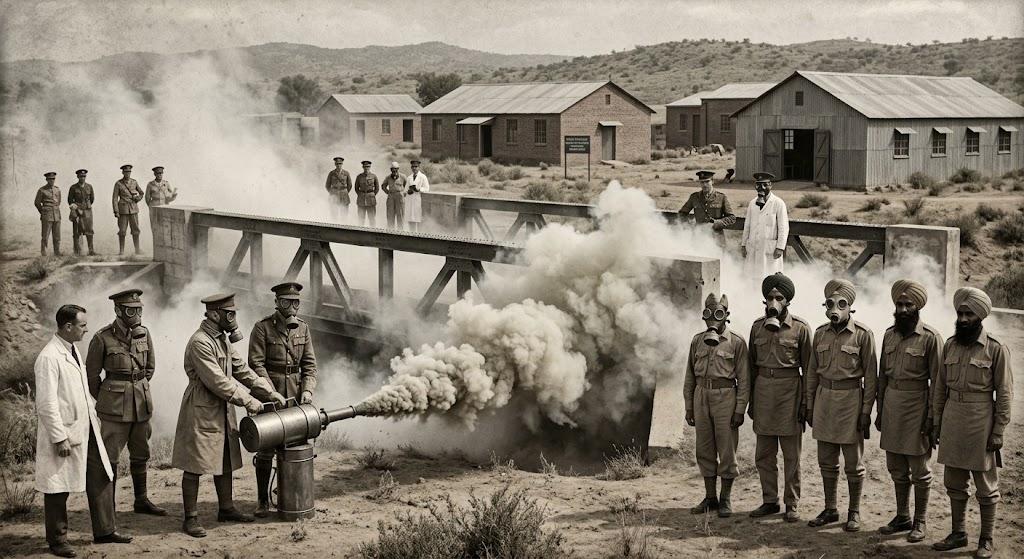
(Generated by Artificial Intelligence)
Rawalpindi Experiments
Period | 1929 | ||||||||
|---|---|---|---|---|---|---|---|---|---|
Location | Rawalpindi, Punjab | ||||||||
Institution | Chemical Warfare Research Institute | ||||||||
Founders / Staff | British authorities and scientists and officers from Porton Down | ||||||||
Core Activities | Smoke tests aimed at protecting strategic points and bridges | ||||||||
Rawalpindi Experiments, refer to research activities conducted under the Chemical Warfare Research Establishment established by British authorities in Rawalpindi, Punjab, in 1929. Staffed by scientists and officers from Porton Down, the institution focused on smoke trials aimed at protecting strategic locations such as bridges. This facility was part of a series of auxiliary research units established by Britain in India and Australia during the 1920s.【1】
The term refers not to a single series of experiments but to the activities of the research establishment founded in 1929. Britain’s chemical warfare structure in India consisted of three units: the Military Chemistry Laboratory in Dehra Dun, the Indian Chemical Warfare School in Belgaum, and the research establishment in Rawalpindi. The archival source for this institution is page 88 of file WO 188/802 at the National Archives of the United Kingdom.【2】
By the end of 1915, officials at the Ministry of Munitions concluded that a fully equipped and large-scale experimental site was necessary to monitor advances in science, technology, and medicine. In September 1915, the Trench Warfare Department tasked the Scientific Advisory Committee with identifying and acquiring suitable land for experimental purposes.
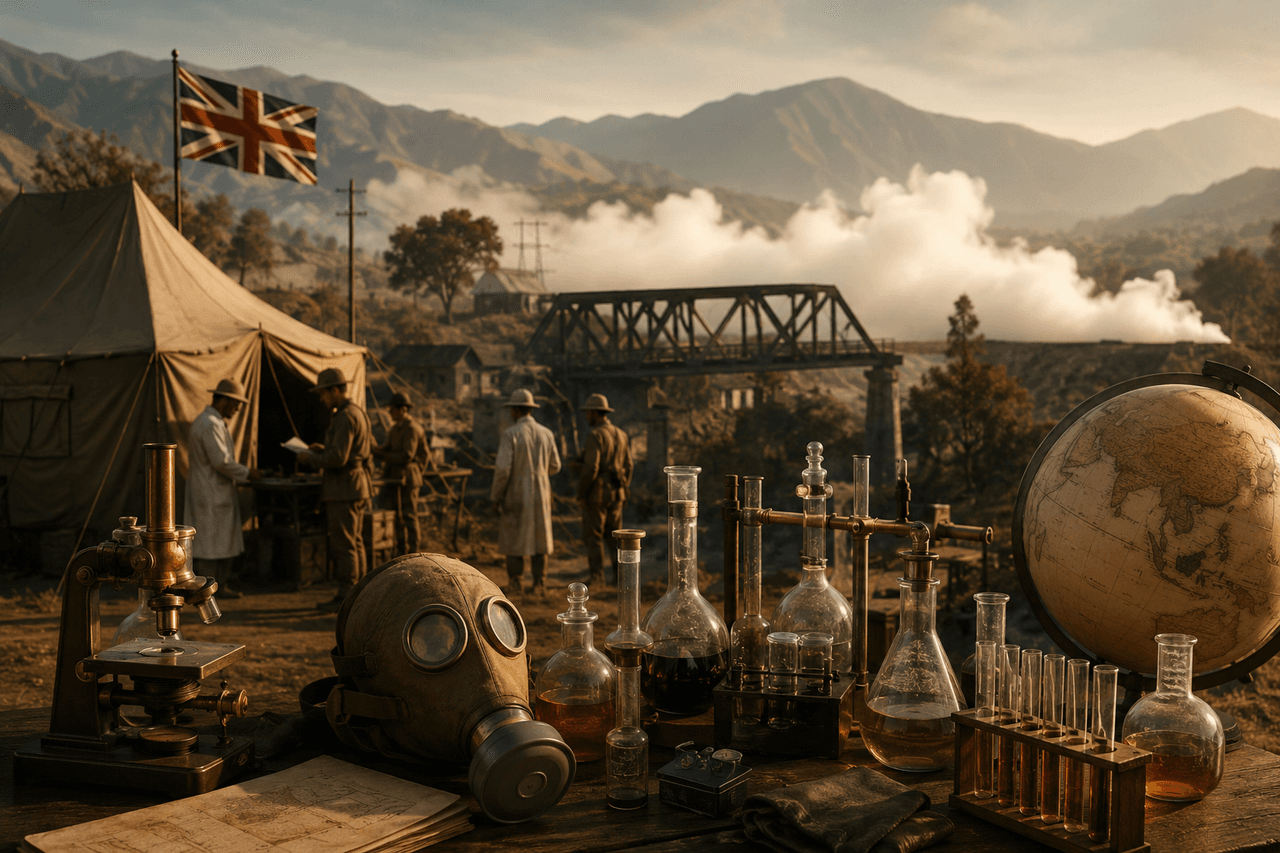
Ravalpindi Deneylerini Temsil Eden Görsel (Yapay Zeka İle Oluşturulmuştur)
In early 1916, approximately 2,886 acres of land near the villages of Idmiston, Idmiston Down, and Porton on the southern edge of Salisbury Plain in Wiltshire formed the foundation of what would become known as Porton Down; the site soon expanded to 6,200 acres.【3】
By 1918, over 900 personnel were stationed at Porton, including thirty-three women employed as typists by the Queen Mary Army Auxiliary Corps and approximately five hundred civilian workers responsible for maintaining workshops and laboratories.【4】
After the war, political and public support for Britain’s chemical warfare program declined. Research activities at Porton Down were initially largely suspended, and the facility’s cost to the taxpayer became a subject of parliamentary inquiry.【5】
In May 1920, the Cabinet accepted the recommendations of the Holland Committee to accelerate chemical warfare research and reorganize Porton Down. The committee, composed of experienced military and civilian experts, emphasized that the security of the Empire could not be jeopardized and warned that a state unprepared for gas warfare could face sudden and irreversible consequences. The committee also adopted the view that defensive and offensive research could not be clearly separated; it assessed that these two areas could only be understood in relation to each other.【6】
According to Ulf Schmidt, Britain transferred research activities with offensive components to overseas laboratories, one reason being to reduce the visibility of its expanding chemical warfare program in the public eye. The auxiliary research facilities established in India and Australia during the 1920s enabled British scientists to study the effects of chemical warfare agents under specific climatic conditions and among different population groups.【7】
Major W. A. Salt, an officer from Porton, managed the Military Chemistry Laboratory in Dehra Dun, India, from 1921 to 1924. The laboratory conducted high-altitude and smoke trials to test different types of gas masks suitable for bearded Sikh soldiers.【8】
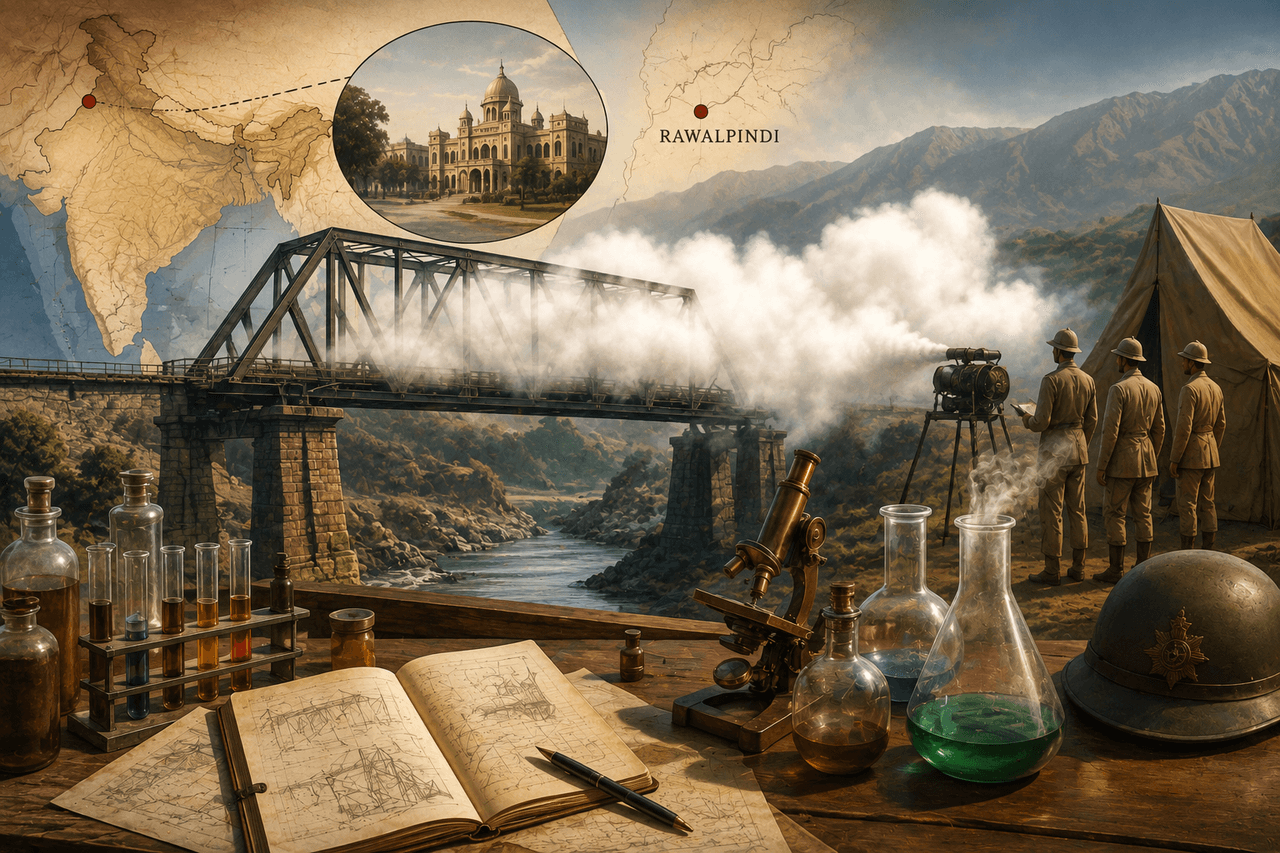
Ravalpindi Deneylerini Temsil Eden Görsel (Yapay Zeka İle Oluşturulmuştur)
Porton’s regular personnel and physiology staff served as instructors at the Indian Chemical Warfare School in Belgaum, a central hub of the British Indian armed forces.
In 1929, British authorities established a Chemical Warfare Research Establishment in Rawalpindi, Punjab. Staffed by scientists and officers from Porton, the institution conducted smoke trials to protect bridges and other strategic points. To foster cooperation, Indian representatives were invited to Britain to evaluate the potency of chemical warfare agents.【9】
During the same period, Britain strengthened ties with the Australian Chemical Warfare Committee to study the effects of tropical and subtropical conditions on chemical warfare, bringing Australian, Canadian, and South African representatives to Porton and organizing chemical warfare courses in the Dominions.
During the interwar period, the scope of Porton’s responsibilities expanded rapidly, accompanied by growth in its research staff and closer links with auxiliary research facilities in India and later Canada.【10】
One rationale for establishing facilities in India and Australia was to study the effects of chemical warfare agents under specific climatic conditions; the focus of the connection with the Australian Chemical Warfare Committee was specifically the impact of tropical and subtropical environments on chemical warfare.【11】
A second rationale for the overseas facilities was to examine the effects of chemical warfare agents across different population groups. The design of mask trials conducted in Dehra Dun to accommodate bearded Sikh soldiers exemplified this rationale in practice.【12】
The Holland Committee’s 1920 determination that defensive and offensive research could not be separated provided the framework for positioning such studies within the program.【13】
Rawalpindi was located in Punjab. After 1857, British recruitment shifted from Bengal to Punjab and Northwest India. David Omissi notes that the classification based on the “martial race” theory was inconsistent and over time shifted from racial categories to “martial classes.”【14】
Contemporary recruitment handbooks—— George MacMunn’s The Martial Races of India (1933) and P. D. Banerjee’s A Handbook of the Fighting Races of India (1899) — were based on a practice of “colonial ethnography” that classified populations by characteristics and drew comparisons between European and Indian races.【15】
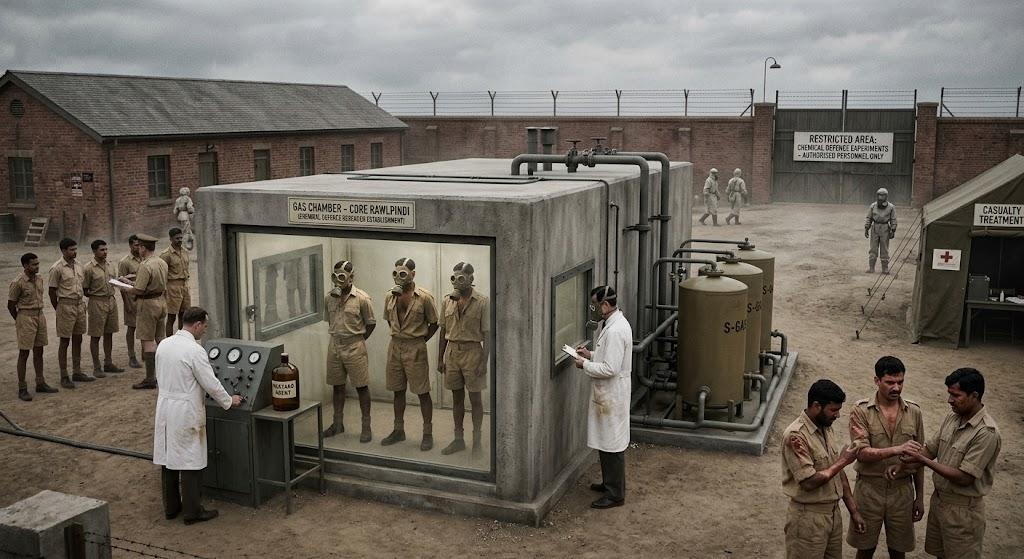
Ravalpindi Deneylerini Temsil Eden Görsel (Yapay Zeka İle Oluşturulmuştur)
The Censorship Office classified letters written by Indian soldiers during the First World War according to martial race. Evelyn Berkeley Howell’s work at the office was regarded as “a window into Indian psychology.” During the interwar period, the proportion of Indian personnel in psychiatric services increased; however, colonial assumptions that soldiers from martial races were less susceptible to mental illness persisted.【16】
A 1915 report by Colonel Sir Bruce Seton, commander of the Kitchener Indian Hospital, titled “Secret, Not for Publication,” examined 1,000 wound cases to statistically test the widespread suspicion that wounds were self-inflicted.
Seton wrote that injured soldiers often did not know the direction from which the bullet came, so determining the origin of injury was left to the physician’s judgment; the patient’s own account was not considered reliable. Sanaullah Khan links Seton’s efforts to disprove self-inflicted wounds to concerns about returning soldiers to the front lines.【17】
The November 1930 Porton regulations stated that “the utmost care” must be taken to ensure experiments caused no injury and only minimal discomfort, and that “no one other than volunteers was subjected to these tests.”【18】
A month later, in December 1930, the Secretary of State for War informed Parliament that approximately 520 soldiers had participated in mustard gas experiments since January 1929 and that all necessary precautions had been taken.【19】
In January 1931, Colonel Look, Commandant of the Porton Experimental Station, informed the War Office that external observers had “understood the purpose of each test” and that there was no risk of misinterpretation.【20】
Some proposals were rejected by authorities: The Chemical Defence Research Department denied permission in 1926 for inhalation tests with toxic smoke, citing concerns that such tests could have long-term, far-reaching consequences and pose serious health risks; in 1932, the Army Council rejected similar proposals, partly due to ongoing ratification processes of the Geneva Protocol.【21】
In June 1933, upon the request of the Medical Research Council, the Treasury’s Law Adviser stated that the consent of the person subjected to an experiment would constitute a “complete answer” to any claim for compensation.【22】
Britain sought to prevent public awareness of its expanding program by assigning the highest level of secrecy to chemical and biological warfare matters and avoiding the publication of details that might inform other countries. Schmidt explains this not only as a means of preserving existing expertise but also as a way to safeguard Britain’s political credibility during ongoing disarmament negotiations. Porton occasionally supported colonial administrations in managing internal unrest; in 1930, it supplied South Africa with specially developed bombs filled with tear gas used by the government against opposition groups.【23】
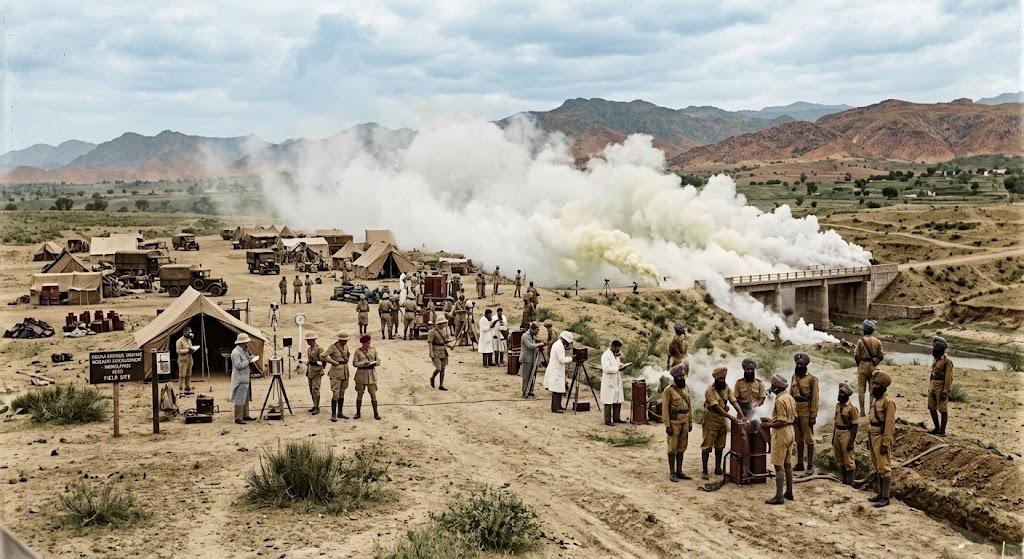
Ravalpindi Deneylerini Temsil Eden Görsel (Yapay Zeka İle Oluşturulmuştur)
Due to ongoing disarmament negotiations, senior officials in London avoided authorizing human experiments with chemical warfare agents; inhalation tests with toxic substances remained prohibited until the outbreak of war in 1939.【24】
Records relating to the Rawalpindi establishment appear in secondary literature on the internal history of Britain’s chemical warfare program, citing page 88 of file WO 188/802.【25】 The same citation is referenced in Rob Evans’s article in The Guardian dated 1 September 2007.【26】
Helen Tilley frames colonial-era human experiments as an intersection between medical research practices and colonial governance practices.【27】
According to Tilley, the boundary between legitimate and illegitimate research has been historically variable; the same research highlights how certain groups and regions were disproportionately targeted in the design of experiments.【28】 Tilley also notes that official human experiments were less common in colonial Africa than in other regions, attributing this to the inability of colonial administrations to establish experimental research capacity in every area where they exercised political control.【29】
Khan, Sanaullah. "Medicine and the Critique of War: Military Psychiatry, Social Classification and the Malingering Patient in Colonial India." *Medical History* 66, no. 1 (2022): 47–63.https://doi.org/10.1017/mdh.2021.38
Schmidt, Ulf. "Cold War at Porton Down: Informed Consent in Britain's Biological and Chemical Warfare Experiments." *Cambridge Quarterly of Healthcare Ethics* 15, no. 4 (2006): 366–380. Accessed August 28, 2026.https://www.kent.ac.uk/porton-down-project/CQH15_4-06048-Schmidt.pdf
Schmidt, Ulf. "Preparing for Poison Warfare: The Ethics and Politics of Britain's Chemical Weapons Program, 1915–1945." In *One Hundred Years of Chemical Warfare: Research, Deployment, Consequences*, edited by Bretislav Friedrich, Dieter Hoffmann, Jürgen Renn, Florian Schmaltz, and Martin Wolf, 77–104. Cham: Springer, 2017. Accessed August 28, 2026.
Tilley, Helen. "Conclusion: Experimentation in Colonial East Africa and Beyond." *International Journal of African Historical Studies* 47, no. 3 (2014): 495–505. Accessed August 28, 2026.https://history.northwestern.edu/documents/people/faculty/tilley/tilley-experimentation-2014.pdf
[1]
Ulf Schmidt, "Preparing for Poison Warfare: The Ethics and Politics of Britain's Chemical Weapons Program, 1915–1945," in *One Hundred Years of Chemical Warfare: Research, Deployment, Consequences*, ed. Bretislav Friedrich, Dieter Hoffmann, Jürgen Renn, Florian Schmaltz and Martin Wolf (Cham: Springer, 2017), 93, Accessed August 28, 2026,https://doi.org/10.1007/978-3-319-51664-6_6
[2]
Schmidt, "Preparing for Poison Warfare," 93 n. 55.
[3]
Schmidt, "Preparing for Poison Warfare," 83.
[4]
Schmidt, "Preparing for Poison Warfare," 84.
[5]
Schmidt, "Preparing for Poison Warfare," 90.
[6]
Schmidt, "Preparing for Poison Warfare," 91.
[7]
Schmidt, "Preparing for Poison Warfare," 93.
[8]
Schmidt, "Preparing for Poison Warfare," 93.
[9]
Schmidt, "Preparing for Poison Warfare," 93.
[10]
Schmidt, "Preparing for Poison Warfare," 97.
[11]
Schmidt, "Preparing for Poison Warfare," 93.
[12]
Schmidt, "Preparing for Poison Warfare," 93.
[13]
Schmidt, "Preparing for Poison Warfare," 93.
[14]
Sanaullah Khan, "Medicine and the Critique of War: Military Psychiatry, Social Classification and the Malingering Patient in Colonial India," Medical History 66, no. 1 (2022): 51, erişim tarihi: 28 Ağustos 2026, https://doi.org/10.1017/mdh.2021.38
[15]
Khan, "Medicine and the Critique of War," 51.
[16]
Khan, "Medicine and the Critique of War," 56.
[17]
Khan, "Medicine and the Critique of War," 53-54.
[18]
Ulf Schmidt, "Cold War at Porton Down: Informed Consent in Britain's Biological and Chemical Warfare Experiments," *Cambridge Quarterly of Healthcare Ethics* 15, no. 4 (2006): 370, Accessed August 28, 2026,https://www.kent.ac.uk/porton-down-project/CQH15_4-06048-Schmidt.pdf
[19]
Schmidt, "Cold War at Porton Down," 370.
[20]
Schmidt, "Cold War at Porton Down," 370.
[21]
Schmidt, "Cold War at Porton Down," 370.
[22]
Schmidt, "Cold War at Porton Down," 368.
[23]
Schmidt, "Preparing for Poison Warfare," 92–93.
[24]
Schmidt, "Preparing for Poison Warfare," 94.
[25]
Schmidt, "Preparing for Poison Warfare," 93 n. 55.
[26]
Schmidt, "Preparing for Poison Warfare," 93 n. 55.
[27]
Helen Tilley, "Conclusion: Experimentation in Colonial East Africa and Beyond," International Journal of African Historical Studies 47, no. 3 (2014): 497, erişim tarihi: 28 Ağustos 2026, https://history.northwestern.edu/documents/people/faculty/tilley/tilley-experimentation-2014.pdf
[28]
Tilley, "Experimentation in Colonial East Africa," 495.
[29]
Tilley, "Experimentation in Colonial East Africa," 498–499.

(Generated by Artificial Intelligence)
Rawalpindi Experiments
Period | 1929 | ||||||||
|---|---|---|---|---|---|---|---|---|---|
Location | Rawalpindi, Punjab | ||||||||
Institution | Chemical Warfare Research Institute | ||||||||
Founders / Staff | British authorities and scientists and officers from Porton Down | ||||||||
Core Activities | Smoke tests aimed at protecting strategic points and bridges | ||||||||
No Discussion Added Yet
Start discussion for "Rawalpindi Experiments" article
Terminology and Scope
Historical Background
Establishment of Porton Down
Postwar Reorganization
Institutional Network in India
Components of the Research Agenda
Soldiers in the Colonial Army
Self-inflicted Wound Suspicion
Secrecy and Consent Framework
Historiographical Framework