


This article was automatically translated from the original Turkish version.
+1 More
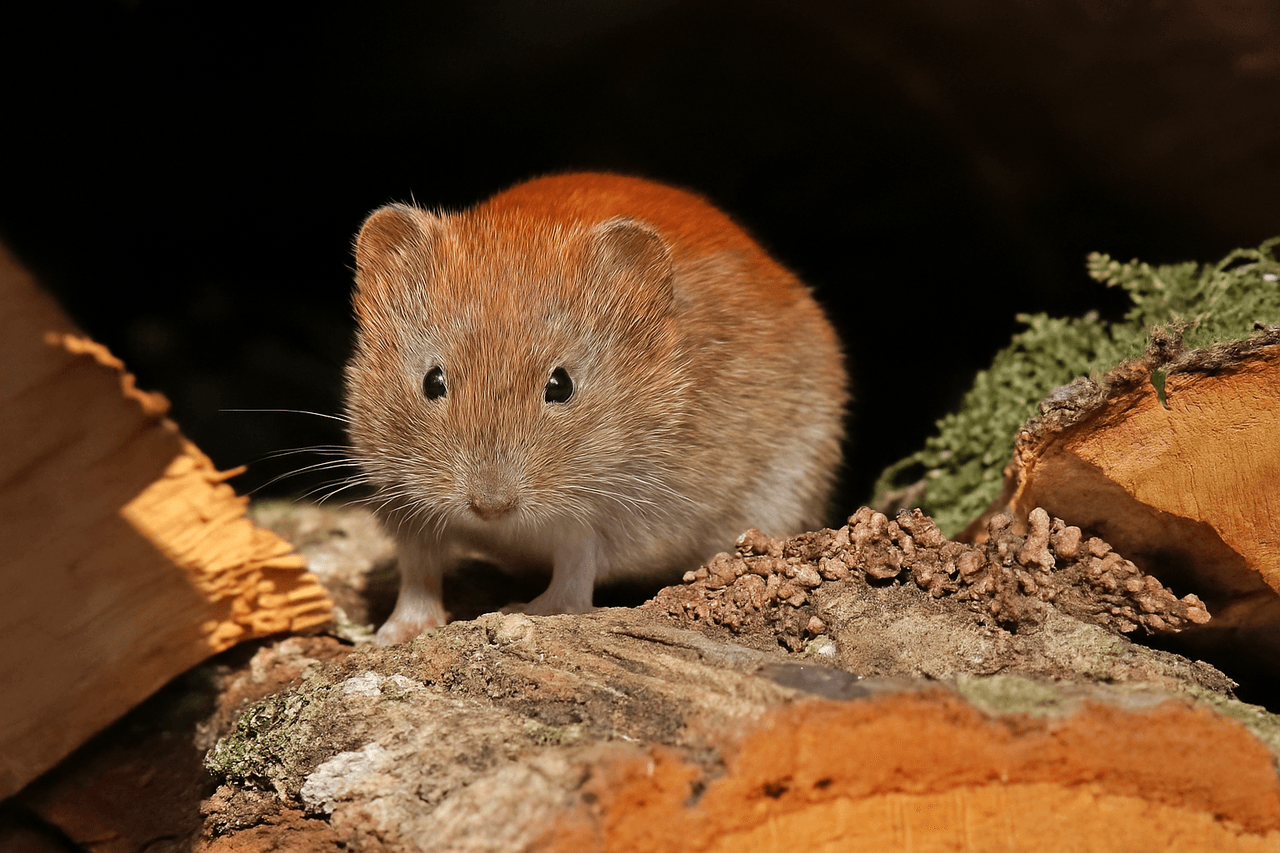
Generated by artificial intelligence.
Red-backed Vole (Myodes glareolus)
Team(s) | Rodentia | ||||||||
|---|---|---|---|---|---|---|---|---|---|
Family | Cricetidae | ||||||||
Body Length | 9–12 cm | ||||||||
Tail Length | 3–6 cm | ||||||||
Weight(s) | 15–35 g | ||||||||
Feeding Method | Hepçil | ||||||||
Habitat | Forests moist areas shrublands | ||||||||
Distribution Area | Europe, Western Asia, Türkiye (Black Sea) | ||||||||
Reproduction(s) | Several litters per year 3–7 young | ||||||||
Conservation Status | Least Concern (LC) | ||||||||
The red-backed vole is a species belonging to the family Cricetidae within the order Rodentia. This small mammal, scientifically known as Myodes glareolus, is native to forest ecosystems across much of Europe and Asia. In Turkish, it is commonly referred to as "kırmızı sırtlı fare" or simply "kırmızı fare."
The red-backed vole derives its name from the reddish-brown fur along its back. The underparts are whitish or grayish in color. Body length typically ranges from 9 to 12 cm, while the tail measures approximately 3 to 6 cm. Average body weight varies between 15 and 35 grams. It has large eyes and prominent ears, well adapted for sensing its environment. Its dentition exhibits the typical rodent characteristic: incisors grow continuously and are worn down through gnawing behavior.
This species commonly inhabits mixed and coniferous forests, shrublands, and moist areas, preferring regions with dense leaf litter. It occurs naturally across a wide range extending from western Siberia to Scandinavia and throughout much of Europe. In Türkiye, it is particularly common in the northern Anatolian forest belt, especially in the Black Sea Region.
Red-backed voles are omnivorous but primarily consume plant-based foods. Seeds, fruits, leaves, fungi, and bark form the main components of their diet, though they may occasionally feed on insects, worms, and other small invertebrates. They have been observed to store food.
The breeding season typically occurs from late spring to early autumn. Females can give birth several times per year, with litters ranging from 3 to 7 young. Newborns are born blind and hairless and are weaned after approximately two weeks. In natural habitats, their lifespan generally ranges from 1 to 2 years.
This species is active both during night and day but is most active during twilight hours. It moves primarily through underground tunnels and shelters it digs. It plays an important role in ecosystems by aiding seed dispersal and maintaining forest understory structure. It also serves as a key food source for many predatory birds and mammals.
According to the International Union for Conservation of Nature (IUCN), Myodes glareolus is classified as "Least Concern" due to its wide distribution and stable population. However, local populations may be threatened by habitat destruction, climate change, and human activities.
Lundrigan, Barbara and Marie Mueller. “Myodes glareolus”, Animal Diversity Web. Accessed July 17, 2025. https://animaldiversity.org/accounts/Myodes_glareolus/
Okatan, Ayşenur. "Kırmızı Sırtlı Fare." *Bilim Genç*. TÜBİTAK. Accessed July 17, 2025. https://bilimgenc.tubitak.gov.tr/makale/kirmizi-sirtli-fare
Tramem. “Kırmızı Sırtlı Fare - Myodes glareolus.” Tramem. Accessed July 17, 2025. https://www.tramem.org/memeliler/?fsx=2fsdl17@d&tur=K%C4%B1rm%C4%B1z%C4%B1s%C4%B1rtl%C4%B1%20Fare-K%C4%B1rm%C4%B1z%C4%B1%20Fare

Generated by artificial intelligence.
Red-backed Vole (Myodes glareolus)
Team(s) | Rodentia | ||||||||
|---|---|---|---|---|---|---|---|---|---|
Family | Cricetidae | ||||||||
Body Length | 9–12 cm | ||||||||
Tail Length | 3–6 cm | ||||||||
Weight(s) | 15–35 g | ||||||||
Feeding Method | Hepçil | ||||||||
Habitat | Forests moist areas shrublands | ||||||||
Distribution Area | Europe, Western Asia, Türkiye (Black Sea) | ||||||||
Reproduction(s) | Several litters per year 3–7 young | ||||||||
Conservation Status | Least Concern (LC) | ||||||||
No Discussion Added Yet
Start discussion for "Red-backed Vole (Myodes glareolus)" article
Morphological Characteristics
Habitat and Distribution
Feeding Behavior
Reproduction and Life Cycle
Behavior and Ecological Role
Conservation Status and Threats