

This article was automatically translated from the original Turkish version.
Original Name(s) | Le Ballon Rouge | ||||||||
|---|---|---|---|---|---|---|---|---|---|
Director and Screenplay | Albert Lamorisse | ||||||||
Lead Role | Pascal Lamorisse | ||||||||
Country | France | ||||||||
Genre | Short film Fantasy | ||||||||
Duration | 34 minutes | ||||||||
Language(s) | French | ||||||||
Cinematographer(s) | Edmond Séchan | ||||||||
Music(s) | Maurice Le Roux | ||||||||
Fiction | Pierre Mérat | ||||||||
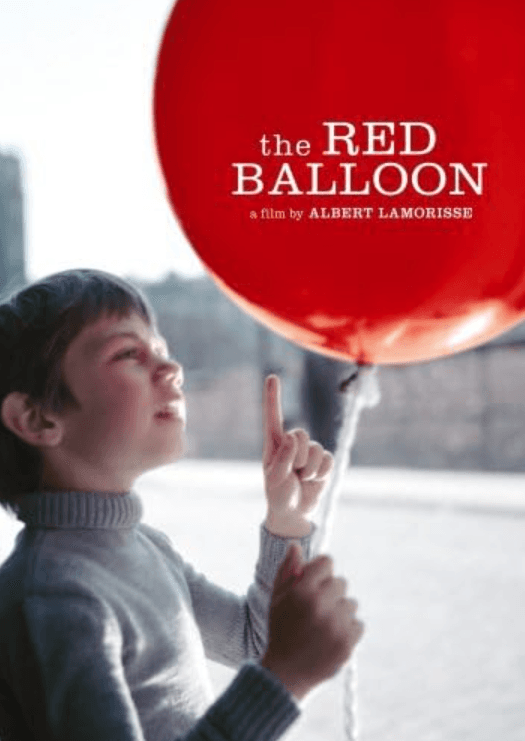
Released in 1956, The Red Balloon (Le Ballon Rouge) is a French short film written and directed by Albert Lamorisse. This approximately 34-minute silent production presents a narrative grounded in visual storytelling. Its lack of dialogue, use of natural settings in the streets of Paris, and symbolic elements draw particular attention. The red balloon at the center of the film transcends its status as an object to become a unique character. In this way, the film employs the formal possibilities of the short film format at an experimental and poetic level.
The film centers on the relationship between a boy living in a suburb of Paris and a red balloon. The balloon begins to follow the boy of its own accord, behaving as if it were alive. There is no dialogue in the film; the plot is conveyed visually through the characters’ actions and the balloon’s movements. The balloon shows affection only toward the boy, but comes under threat when other children attempt to interfere. At the end of the story, the boy loses his balloon, but other balloons rise into the sky to comfort him, offering a poetic and symbolic conclusion.

Meeting (IMDb)
The red balloon in the film is constructed as an object capable of independent movement and decision-making. This approach can be associated with the concept of anthropomorphism, the attribution of human characteristics to non-human entities. By depicting the balloon in this manner, it assumes the function of a character within the narrative. This structure has led to the film being regarded as one of the notable examples in short cinema where objects are endowed with narrative agency.
The film shares characteristics with the approach known in cinema theory as “slow cinema,” particularly through its absence of dialogue, use of long takes, preference for everyday locations, and static narrative structure. In this style, visual rhythm and atmosphere take precedence over causality, in contrast to classical narrative structures. The film’s narrative form exhibits formal qualities that can be evaluated within this theoretical framework.
The film has been widely shown in educational settings and schools. Its silence, emphasis on visual storytelling, and child-centered narrative enable it to reach diverse audiences. It can be situated within the broader trend in 1950s European cinema that favored visual simplicity and minimalist storytelling. The anthropomorphic structure employed in the film stands out as a method that incorporates non-human entities into the process of meaning-making, diverging from classical narrative conventions.
The Red Balloon has won numerous prestigious awards at national and international film festivals. Among these is the Academy Award (Oscar), rarely awarded to short films. In 1957, the film received the following honors:
Trailer (YouTube)
Erçetingöz, Alper. “Kırmızı Balon (1956) Kısa Filmine Antropomorfist Bir Yaklaşım.” *Kısa Filmler Ne Anlatıyor, Nasıl Anlatıyor?* Ed. Nergiz Gündel and Alper Erçetingöz, pp. 145–152. Konya: Nüve Kültür Merkezi, 2023. https://www.academia.edu/99477300/K%C4%B1rm%C4%B1z%C4%B1_Balon_1956_K%C4%B1sa_Filmine_Antropomorfist_Bir_Yakla%C5%9F%C4%B1m_An_Anthropomorphist_Approach_to_the_Short_Film_Red_Balloon_1956_
Rotten Tomatoes Classic Trailers. “The Red Balloon (1956) – Fragman.” YouTube video, 0:40. Date Published February 11, 2011. https://www.youtube.com/watch?v=KorAPe9TV7E. Accessed June 22, 2025.
The Red Balloon. Dir. Albert Lamorisse. France, 1956. https://www.imdb.com/title/tt0048980/?ref_=ttmi_ov_bk. Accessed June 22, 2025.
Özyazıcı, Kurtuluş. “Nuri Bilge Ceylan ve Yavaş Sinema.” *Sinecine: Sinema Araştırmaları Dergisi* 11, no. 2 (2020): 193–225. https://dergipark.org.tr/tr/pub/sinecine/article/776492. Accessed June 22, 2025.
“Kırmızı Balon (1956) – Afiş Görseli.” https://www.imdb.com/title/tt0048980/mediaviewer/rm2884998912/. Accessed June 22, 2025.
“Kırmızı Balon (1956) – Sahne Görseli.” https://www.imdb.com/title/tt0048980/mediaviewer/rm191380224/. Accessed June 22, 2025.

Original Name(s) | Le Ballon Rouge | ||||||||
|---|---|---|---|---|---|---|---|---|---|
Director and Screenplay | Albert Lamorisse | ||||||||
Lead Role | Pascal Lamorisse | ||||||||
Country | France | ||||||||
Genre | Short film Fantasy | ||||||||
Duration | 34 minutes | ||||||||
Language(s) | French | ||||||||
Cinematographer(s) | Edmond Séchan | ||||||||
Music(s) | Maurice Le Roux | ||||||||
Fiction | Pierre Mérat | ||||||||
Synopsis
Narrative Form and Anthropomorphism
Context of Slow Cinema
Aesthetic and Cultural Context
Awards
29th Academy Awards (1957)
1956 Cannes Film Festival