

This article was automatically translated from the original Turkish version.
+1 More
Director(s) | Mesut Uçakan | ||||||||
|---|---|---|---|---|---|---|---|---|---|
Screenplay Source | Necip Fazıl Kısakürek's same-titled theatrical work (1964) | ||||||||
Genre | Drama | ||||||||
Duration | 120 minutes | ||||||||
Music(s) | Özkan Turgay Koral Sarıtaş | ||||||||
Cinematographer(s) | Erhan Canan | ||||||||
Production Company | Moroğlu Film | ||||||||
Lead Actor | Haluk Kurtoglu – Reis Bey | ||||||||
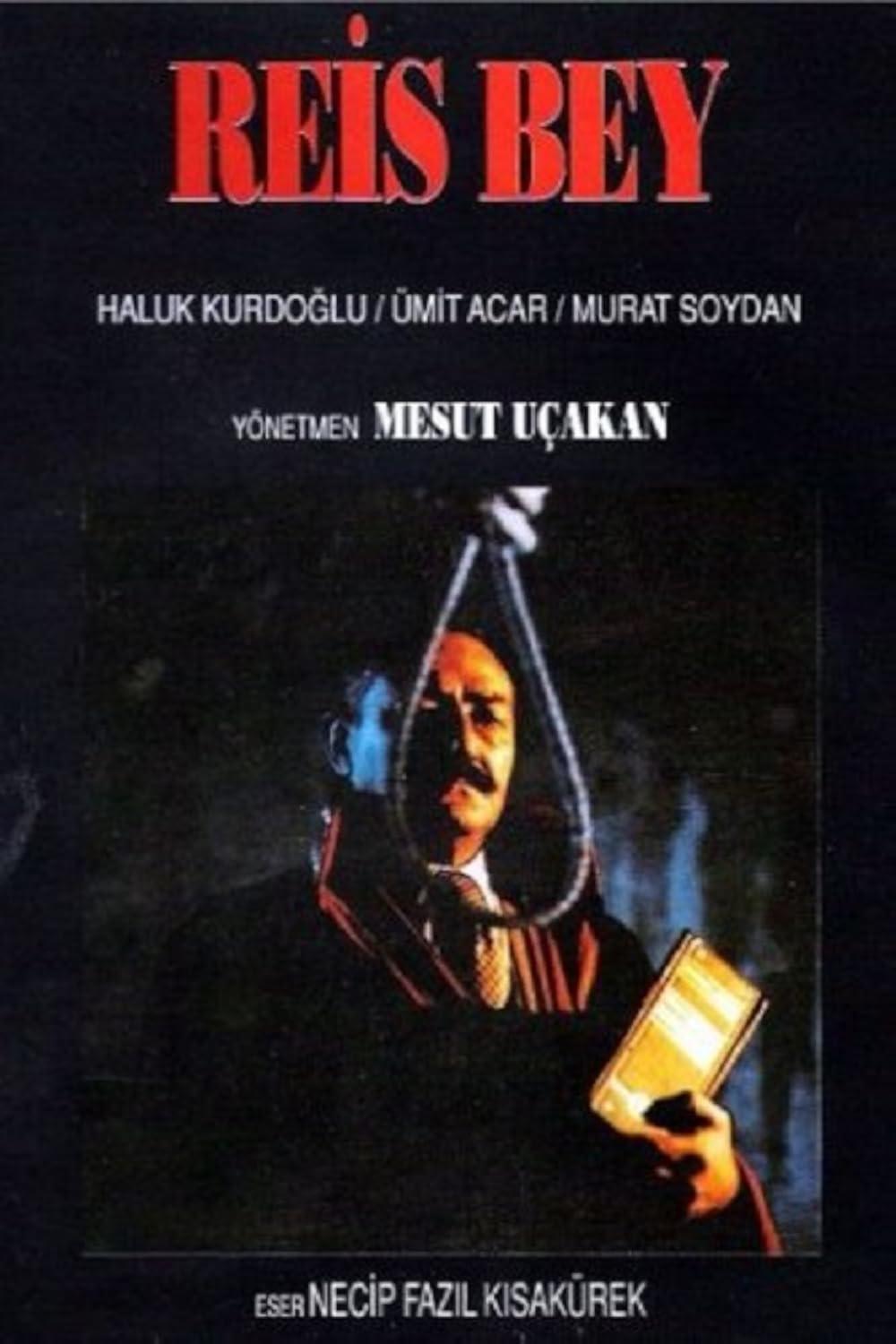
Reis Bey is a 1988 Turkish film. Its screenplay is adapted from Necip Fazıl Kısakürek’s play of the same name, and it is directed by Mesut Uçakan. The film revolves around themes of individual conscience, justice, and transformation.
The central figure of the film is Reis Bey, a strict and rule-bound judge serving as a senior criminal court judge. This character upholds his commitment to the law without compromise until he learns that one of his death sentences was erroneous. Upon realizing that his decision led to the death of a young man, he enters a profound process of moral self-examination. The film centers on this internal conflict and transformation.
Reis Bey Film Trailer (DiyanetTV)
The film is based on Necip Fazıl Kısakürek’s 1964 theatrical work. Mesut Uçakan directs, while Haluk Kurtoglu portrays the character of Reis Bey in the lead role.
The producer of the film is Ali Moroğlu, and the production company is Moroğlu Film. The 1988 production has a total runtime of 120 minutes. The music is composed by Özkan Turgay and Koral Sarıtaş, and the cinematographer is Erhan Canan.
The film is structured around concepts such as law, justice, responsibility, and personal transformation. Reis Bey’s character development forms the core of the film’s dramatic structure. The narrative follows a classic three-act format: in the exposition, the protagonist’s professional and personal traits are introduced; in the development, the erroneous verdict and its consequences are explored; and in the resolution, the character’s new spiritual perspective and his evolving relationships with others are conveyed.
The film is an example of the spiritual-oriented cinema that emerged in Türkiye in the late 1980s. In this genre, often referred to as “message cinema,” themes such as moral questioning, repentance, and inner transformation were frequently explored. Reis Bey is a representative work within this framework.
Reis Bey is a drama that examines the conflict between legal responsibility and conscience, centered on the theme of personal transformation. Adapted from Necip Fazıl Kısakürek’s play, the film addresses themes of justice, repentance, and inner reckoning. It was nominated for Best Film at the 1989 Ankara International Film Festival.
Aslan, Celal, and Mustafa Kaya. “Dönüşen Kimlik: Reis Bey.” *Dil ve Edebiyat Araştırmaları* 23 (2021): 31–48. https://dergipark.org.tr/tr/pub/diledeara/issue/60806/844437#article_cite
Box Office Türkiye. "Reis Bey." Box Office Türkiye. Accessed August 6, 2025. https://boxofficeturkiye.com/film/reis-bey--2000868
DiyanetTV. "Reis Bey – Fragman." YouTube. Accessed August 6, 2025. https://www.youtube.com/watch?v=anhmTFOxxCs
IMDb. "Reis Bey (1988)." IMDb. Accessed August 6, 2025. https://www.imdb.com/title/tt1279180/
Letterboxd. “Mr. Chief.” Letterboxd. Accessed August 6, 2025. https://letterboxd.com/film/mr-chief/
Sinemalar.com. “Reis Bey.” Sinemalar.com. Accessed August 6, 2025. https://www.sinemalar.com/film/7991/reis-bey
Sinematürk. "Reis Bey (1988)." *Sinematürk*. Accessed August 6, 2025. https://www.sinematurk.com/film/5520-reis-bey
Süphandağı, İsmail. “Merhamet ve Hukuk Arasında: ‘Reis Bey’.” *Birey ve Toplum Sosyal Bilimler Dergisi* 11, no. 1 (June 2021): 27–49. https://dergipark.org.tr/tr/pub/birtop/issue/62816/905073
{'title': 'Reis Bey', 'type': 'Film', 'location': 'İstanbul', 'publisher': 'Moroğlu Film', 'year': '1988'}

Director(s) | Mesut Uçakan | ||||||||
|---|---|---|---|---|---|---|---|---|---|
Screenplay Source | Necip Fazıl Kısakürek's same-titled theatrical work (1964) | ||||||||
Genre | Drama | ||||||||
Duration | 120 minutes | ||||||||
Music(s) | Özkan Turgay Koral Sarıtaş | ||||||||
Cinematographer(s) | Erhan Canan | ||||||||
Production Company | Moroğlu Film | ||||||||
Lead Actor | Haluk Kurtoglu – Reis Bey | ||||||||
Plot
Production and Adaptation Details
Themes and Narrative Structure
Cast
Social and Cultural Context