


This article was automatically translated from the original Turkish version.
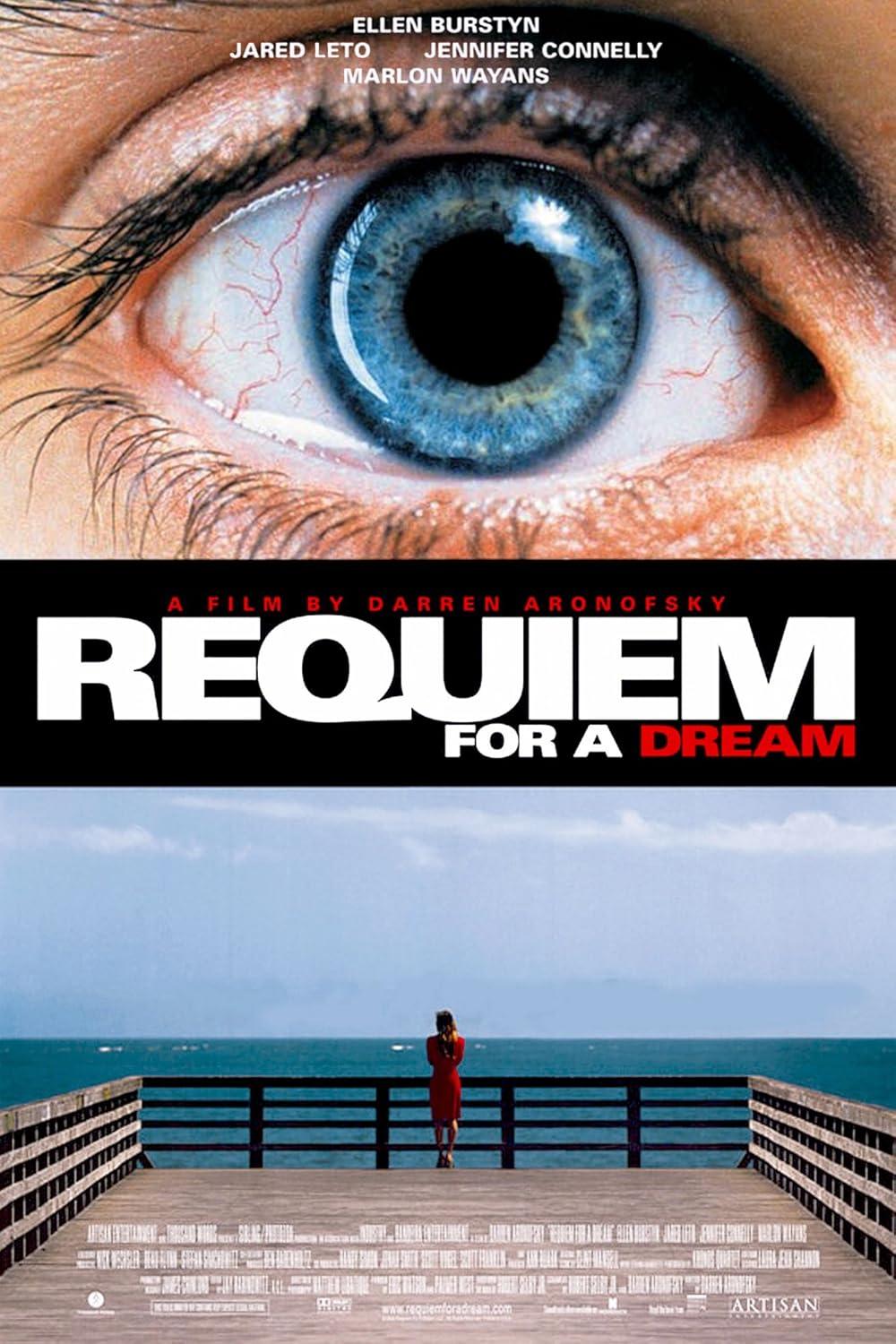
Lament for a Dream
Original Name(s) | Requiem for a Dream | ||||||||
|---|---|---|---|---|---|---|---|---|---|
Director(s) | Darren Aronofsky | ||||||||
Screenplay(s) | Hubert Selby Jr. and Darren Aronofsky (adapted from Hubert Selby Jr.'s novel of the same title) | ||||||||
Genre | Drama Psychological | ||||||||
Production Year | 2000 | ||||||||
Duration | 102 minutes | ||||||||
IMDb Rating | 8.3 | ||||||||
Actors | Marlon Wayans (Tyrone C. Love) Jennifer Connelly (Marion Silver) Jared Leto (Harry Goldfarb) Ellen Burstyn (Sara Goldfarb) | ||||||||
Requiem for a Dream is a striking psychological drama that portrays the downfall of four characters whose lives are entangled in different forms of addiction. The narrative centers on Harry Goldfarb, a young man drawn into heroin addiction alongside his girlfriend Marion and friend Tyrone, while parallelly depicting his mother Sara’s descent into prescription drug dependency in pursuit of her dream of appearing on television.
The film employs a stylized and unsettling cinematic language to convey how each character’s journey—undertaken in search of a “better” life—transforms into a descent into despair.
The film presents a portrait of decay not only through heroin addiction but also through diet pills, television obsession, and the addiction to hope. Each character harbors a personal dream, yet these dreams gradually morph into nightmares.
Aronofsky uses accelerated editing, sudden sound effects, split screens, and recurring symbols to depict the characters’ psychological states. These techniques visually convey the hallucinatory perception of reality induced by addiction.
In the film, addiction is not merely portrayed as a personal failing but as an expression of social alienation, helplessness, and emotional deprivation. None of the characters can find meaning within the reality offered by society; they seek escape in fantasy.
Throughout the film, the characters’ physical and mental states are visually rendered as gradually disintegrating, unraveling forms. The final sequences function as a lament—not for lost dreams, but for the loss of humanity itself.

A scene from Requiem for a Dream –MUBI
Darren Aronofsky aimed to immerse the viewer directly in the internal experience of addiction through the film’s visual language. Hip-hop editing techniques are employed to repeat scenes of drug use multiple times within seconds, creating a powerful rhythmic intensity. Clint Mansell’s score, particularly the piece “Lux Aeterna,” has become one of the film’s most defining elements, reinforcing its haunting atmosphere. The use of symmetrical framing and cold color palettes reflects the characters’ isolation and despair.
Ellen Burstyn delivers a masterclass in acting as Sara. She portrays with unsettling conviction the dramatic collapse of a mother slipping away from reality. For this role, she was nominated for the Academy Award for Best Actress.
Jared Leto layers Harry’s fragility and helplessness with remarkable nuance. His physical transformation mirrors the character’s descent.
Jennifer Connelly establishes the dramatic equilibrium of desire, addiction, and destruction through her portrayal of Marion.
Though known for comedy, Marlon Wayans delivers a compelling dramatic performance as Tyrone.
Requiem for a Dream stands as a powerful example of cinema not merely as a storytelling medium but as a spiritual and psychological instrument. By merging themes of addiction, collapse, loneliness, and hopelessness with a disturbing aesthetic, it leaves an unforgettable impression on viewers. To this day, it continues to be studied in film courses for its narrative structure, visual language, and social critique.
Best Actress – Ellen Burstyn
Best Female Lead – Ellen Burstyn
Best Cinematography – Matthew Libatique
Best First Feature – Darren Aronofsky (nomination)
Best Film Music – Clint Mansell
Over time, the film has attained cult status and is widely regarded as one of the pioneering works in cinema dealing with addiction.
Beyazperde. "Bir Rüya İçin Ağıt." Accessed April 2, 2025. Link.
IMDb. “Requiem for a Dream (2000).” Accessed April 2, 2025.
ResearchGate. “Popüler Kültür, Sinema ve Bağımlılık Üçgeninde Requiem for a Dream Filminin Çerçeveleme Çözümlemesi.” Accessed April 2, 2025. Link.
Roger Ebert. “Requiem for a Dream (2000).” Accessed April 2, 2025.
Sinemalar.com. "Bir Rüya İçin Ağıt." Accessed April 2, 2025. Link.

Lament for a Dream
Original Name(s) | Requiem for a Dream | ||||||||
|---|---|---|---|---|---|---|---|---|---|
Director(s) | Darren Aronofsky | ||||||||
Screenplay(s) | Hubert Selby Jr. and Darren Aronofsky (adapted from Hubert Selby Jr.'s novel of the same title) | ||||||||
Genre | Drama Psychological | ||||||||
Production Year | 2000 | ||||||||
Duration | 102 minutes | ||||||||
IMDb Rating | 8.3 | ||||||||
Actors | Marlon Wayans (Tyrone C. Love) Jennifer Connelly (Marion Silver) Jared Leto (Harry Goldfarb) Ellen Burstyn (Sara Goldfarb) | ||||||||
No Discussion Added Yet
Start discussion for "Requiem for a Dream (A Lament for a Dream, Film)" article
Themes and Analysis
1. Addiction: More Than Just Drugs
2. The Dissolution of Reality
3. The Emptiness and Hopelessness of Modern Society
4. Decay and Loss
Production Process and Technical Features
Performances
Impact and Significance
Awards and Nominations
Academy Awards (Oscars, 2001)
Nomination:
Independent Spirit Awards
Chicago Film Critics Association
Other Honors