

 Recently Added:
This article was automatically translated from the original Turkish version.
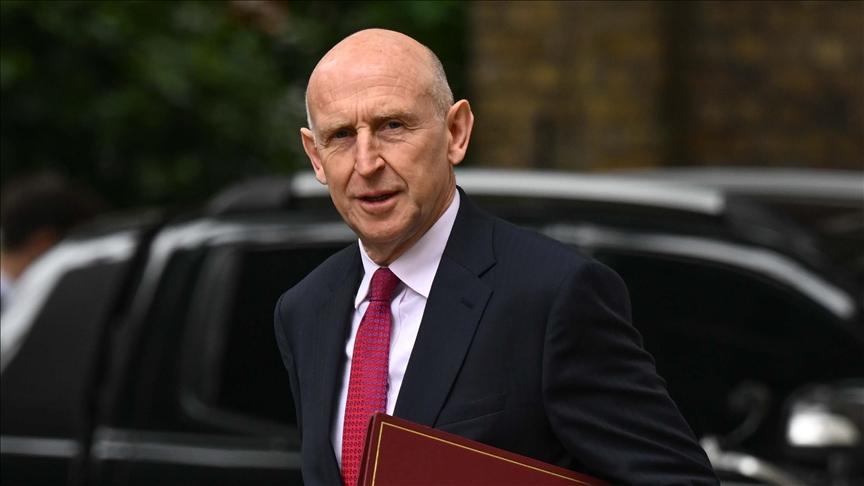
The resignation of UK Defence Secretary John Healey has been a major political development, reflecting public disagreements within the UK government over the level of defence spending and the long-prepared Defence Investment Plan (DIP).
UK Defence Secretary John Healey announced his resignation on 11 June 2026. In his letter of resignation addressed to Prime Minister Keir Starmer, Healey stated that the financial resources allocated under the government’s Defence Investment Plan fell short of meeting the country’s security needs. He emphasized that the final budget package presented to him failed to provide the funding required by the armed forces and concluded that it was no longer possible for him to remain in office.
The Defence Investment Plan was designed to outline the UK’s military modernization programs, arms procurement projects, defence industry investments, and force structure transformations over the next decade. Originally scheduled for publication in autumn 2025, the plan was delayed multiple times due to internal government budget negotiations. Months of discussions between the Ministry of Defence and the Treasury significantly postponed its release.
The primary objectives of the Defence Investment Plan are to transform the British Armed Forces into a “war-ready force,” increase investment in new military technologies, and meet NATO obligations. However, no consensus has been reached within the government on the plan’s financial dimensions.
Throughout 2026, intense negotiations took place between the Ministry of Defence and the Treasury regarding increases in defence spending. The Ministry of Defence reportedly requested an additional £18 billion in funding, while the Treasury insisted on a lower financial package. These budget talks were among the key factors behind the delay in publishing the Defence Investment Plan.
Throughout his tenure, Healey repeatedly called for increased defence spending on various platforms. In statements made in May 2026, he argued that higher defence investments were essential for the UK to adapt to changing security conditions.
In his resignation letter, John Healey stated that the financial package proposed by the government was inadequate to meet defence requirements. He warned that the current budget level could negatively impact force readiness, increase operational risks, and weaken the nation’s defence capabilities. He also noted that defence needs had been well known for years but had not been matched by adequate funding.
The letter affirmed Healey’s continued support for the Labour government and Prime Minister Starmer, but stressed that the current approach to the defence budget was unsustainable.
Following Healey’s resignation, Minister of State for the Armed Forces Al Carns also stepped down. Carns issued a statement asserting that the current approach to defence financing needed to change. On the same day, it was reported that several parliamentary private secretaries within the Ministry of Defence had also left their posts.
In a statement following Healey’s resignation, Prime Minister Keir Starmer affirmed that the Defence Investment Plan would provide sufficient resources to meet the UK’s security needs. Starmer stated that the government was striving to balance fiscal discipline with defence requirements. Government officials announced that defence spending would be increased gradually and that the plan was targeted for completion before the NATO summit.
Following John Healey’s resignation, Security Minister Dan Jarvis was appointed as the new UK Defence Secretary. A former soldier who served in Iraq and Afghanistan, Jarvis later entered politics and became a Member of Parliament for the Labour Party. The appointment was made to quickly fill the vacancy at the Ministry of Defence after the series of resignations.
Healey’s resignation sparked widespread反响 in Westminster. The Conservative Party, Reform UK, and various defence circles viewed the resignation as a significant warning regarding the government’s defence budget policies. Chair of the House of Commons Defence Committee Tan Dhesi emphasized that the defence budget must be fully funded. Defence industry representatives stated that the delay in the Defence Investment Plan had increased uncertainty within the sector.
Healey’s resignation occurred amid rising security threats in Europe, the ongoing impact of the Russia-Ukraine war, NATO’s calls to enhance defence capabilities, and a general trend among European countries to increase military spending. The debates surrounding the Defence Investment Plan have become central to discussions about the level of resources the UK will allocate to defence in the coming years and the scope of its armed forces’ modernization programs.
BBC News. "UK Politics Live: Defence Secretary John Healey Resigns over Spending Dispute." Accessed June 12, 2026. https://www.bbc.com/news/live/cgqeg09p3p1t.
CNN. "John Healey Resigns as UK Defense Secretary over Military Spending Dispute." Accessed June 12, 2026. https://edition.cnn.com/2026/06/11/uk/john-healey-uk-defense-secretary-resigns-intl
Euronews Türkçe. "İngiltere Savunma Bakanı, Starmer'ın Savunma Harcaması Planlarını Sertçe Eleştirerek İstifa Etti." Accessed June 12, 2026. https://tr.euronews.com/my-europe/2026/06/11/ingiltere-savunma-bakani-starmerin-savunma-harcamasi-planlarini-sertce-elestirerek-istifa-
France 24. "UK Defence Chief Steps Down, Accuses Starmer of Making Britain Less Safe." Accessed June 12, 2026. https://www.france24.com/en/europe/20260611-uk-defence-chief-steps-down-accuses-starmer-of-making-britain-less-safe
Time. "UK Defense Minister John Healey Resigns amid Military Spending Dispute with Starmer Government." Accessed June 12, 2026. https://time.com/article/2026/06/11/uk-defense-minister-john-healey-resigns-military-spending-dispute-starmer/

UK Defence Secretary John Healey resigned, stating that the budget projected under the long-delayed Defence Investment Plan of Prime Minister Keir Starmer’s government was insufficient. In his resignation letter, Healey said the plan failed to provide the resources needed by the UK Armed Forces, potentially lowering preparedness levels and posing a risk to national security.
No Discussion Added Yet
Start discussion for "Resignation of UK Defence Secretary John Healey (June 2026)" article
June 12, 2026
Resignation of the UK Defence Secretary
June 12, 2026
The Defence Investment Plan Process
June 12, 2026
Disagreements Over the Defence Budget
June 12, 2026
Reasons Stated in the Resignation Letter
June 12, 2026
Second Wave of Resignations from the Ministry of Defence
June 12, 2026
The Position of the Keir Starmer Government
June 12, 2026
Appointment of the New Defence Secretary
June 12, 2026
Political and Institutional Reactions
June 12, 2026
Context of UK Defence Policy