


This article was automatically translated from the original Turkish version.
+1 More
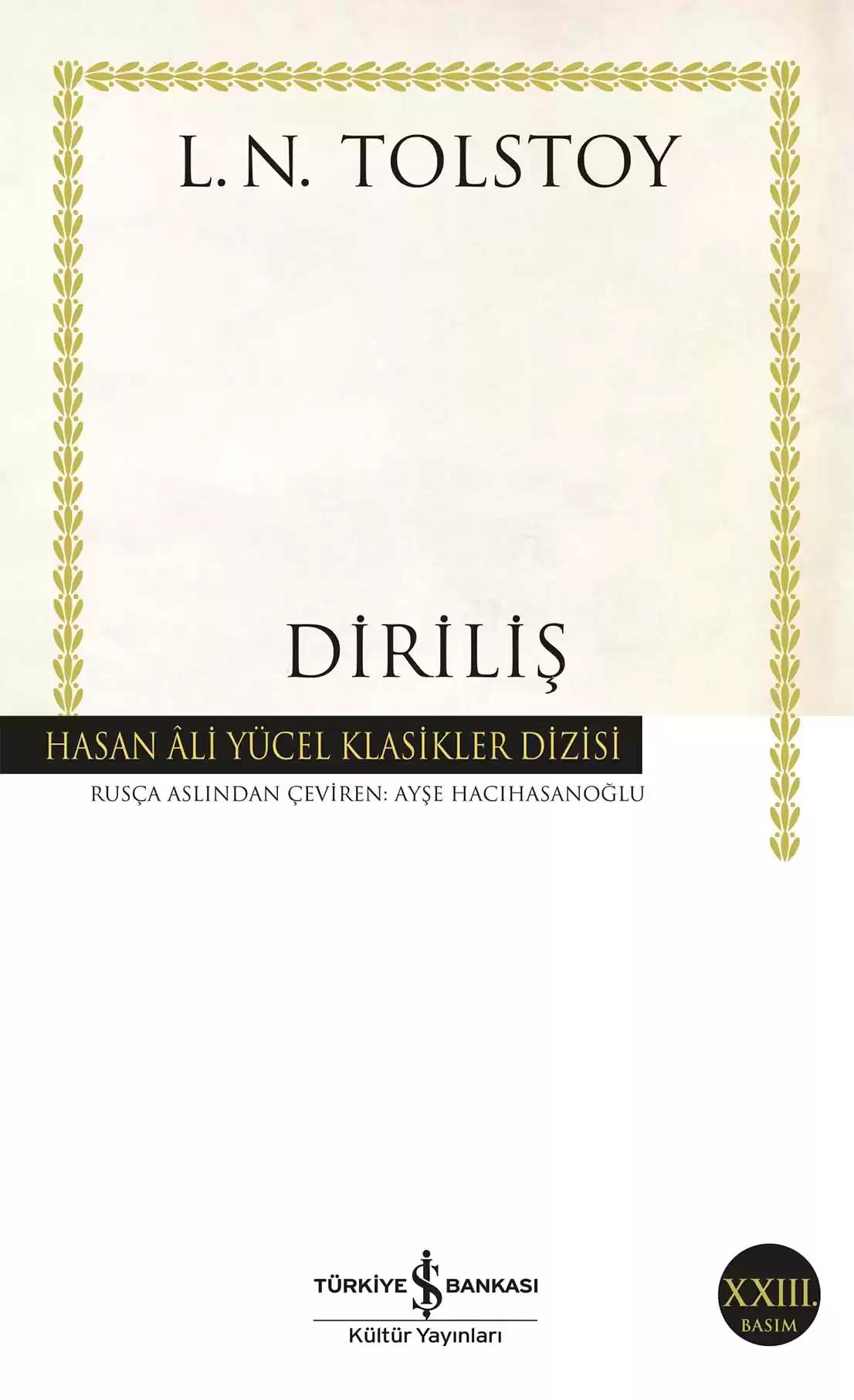
Leo Tolstoy’s novel *Resurrection* (Russian original title: Воскресение) is regarded as one of the most important works of Russian literature. Published in 1899, the novel holds significant historical and social importance. This work, which centers on themes of moral transformation, justice, ethics, and social critique, offers a profound examination of the social structure of late 19th-century Russian society. The narrative is rich with moral introspection, encouraging readers to engage in personal and collective conscience accounting.
Resurrection explores the moral and spiritual awakening of Dmitri Ivanovich Nekhlyudov, a young nobleman. In his youth, Nekhlyudov seduced and abandoned Katerina Maslova, a woman he loved. Years later, he encounters her again in court, where she is unjustly convicted of a crime. This revelation plunges him into deep guilt, compelling him to dedicate himself to rectifying this injustice. The novel follows Nekhlyudov’s struggle to save Katerina, who has been declared guilty, while simultaneously tracing his own inner transformation. The work also delves deeply into Russia’s legal system, social inequality, and religious themes.
Resurrection critiques the social injustices and corruption prevalent in 19th-century Russia. Through the novel, Tolstoy interrogates class divisions, the penal system, and the role of the Church in society. His criticisms of the Russian legal system, bureaucracy, and prevailing notions of justice reflect the historical realities of the time. Moreover, Tolstoy’s distinctive religious and ethical views deepen the novel’s social critique.
The novel’s central themes include the pursuit of justice, the examination of conscience, moral responsibility, and societal decay. Nekhlyudov’s spiritual awakening symbolizes the individual’s confrontation with personal failings and the effort to correct social injustices. The influence of religion on both the individual and society, the concept of inner renewal, and moral transformation occupy a vital place in the narrative. Tolstoy’s views on human nature and salvation form the structural foundation of the novel.
Resurrection transcends the boundaries of fiction, serving as an educational text within Russian and world literature. The psychological depth of its characters and its social critiques offer readers insight into Russian society within its historical context. Additionally, Tolstoy’s moral and philosophical ideas make the novel suitable for use in educational settings. The novel stands as a significant literary work that connects the concepts of personal conscience and social justice.
Tolstoy’s worldview is especially evident in Resurrection through the spiritual development of its characters. Nekhlyudov’s moral awakening aligns with Tolstoy’s own spiritual quest and ethical philosophy. The novel argues that individual redemption must proceed in tandem with social reform. Tolstoy advocates for personal accountability and societal change as responses to moral decay. Nekhlyudov’s spiritual transformation, intertwined with the novel’s central theme of conscience, prompts readers to engage in ethical self-reflection.
Tolstoy’s novel Resurrection is an original work that places ethical transformation—both personal and societal—at its core, seamlessly blending historical and social critique. Through its educational function, it aims to cultivate in readers a profound awareness of issues related to social justice, conscience, and morality.
Altunay Şam, Emine, and Pelin İskender Kılıç. “Tarihsel Romanın Eğitimsel İşlevi Üzerine Bir Çalışma: ‘Diriliş’ Romanı Örneği.” Accessed June 12, 2025. https://dergipark.org.tr/tr/download/article-file/188024.
Tolstoy, Lev Nikolayeviç. Diriliş. Trans. Ayşe Hacıhasanoğlu. Istanbul: Türkiye İş Bankası Kültür Yayınları, 2009. https://www.iskultur.com.tr/dirilis-2.aspx
Çetinkaya, Ersin. “Bozulmaya Yüz Tutmuş Bir Toplumun Dirilişi: L. N. Tolstoy-Diriliş (Воскресение).” Accessed June 12, 2025. https://dergipark.org.tr/tr/download/article-file/3914628.
Özdemir, Rahman, and Özlem Ünsal. “Nehlüdov'un Ruhsal Değişimi Işığında Tolstoy'un Dünya Görüşü.” Accessed June 12, 2025. https://dergipark.org.tr/tr/download/article-file/485642.

No Discussion Added Yet
Start discussion for "Resurrection (Novel)" article
Plot
Historical and Social Context
Major Themes
Educational and Cultural Significance
Tolstoy’s Worldview and Spiritual Transformation
Conclusion