


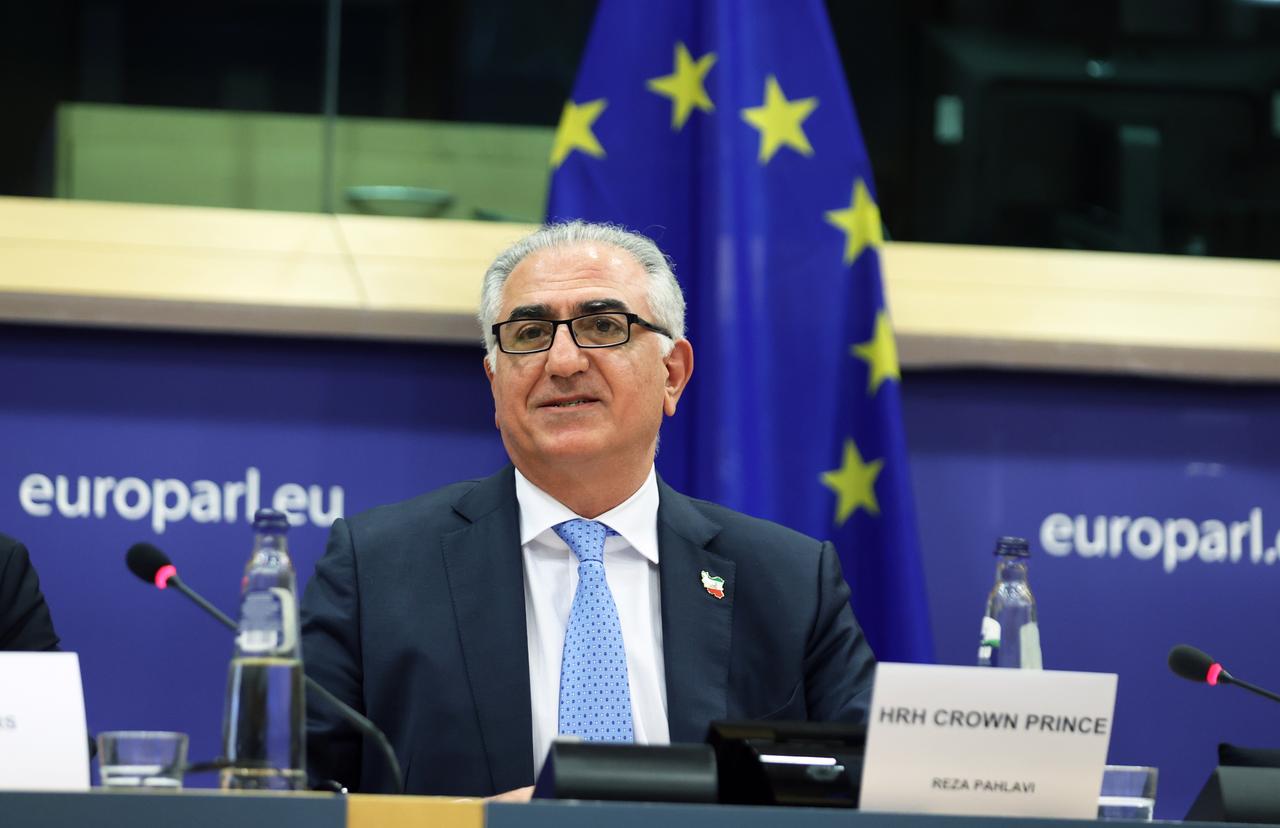
Reza Pahlavi (AA)
Babası | Mohammad Reza Shah Pahlavi | ||||||||
|---|---|---|---|---|---|---|---|---|---|
Year of Birth | 1960 | ||||||||
Place of Birth | Tehran, Iran | ||||||||
Settlement Status | Residence outside Iran | ||||||||
Departure from Iran | 1979 (after the Iranian Revolution) | ||||||||
Dynasty | Pahlavi Dynasty | ||||||||
Reza Pahlavi is a figure who lived in exile after the revolution, recognized as the heir to the monarchical regime that existed in Iran until 1979. During his exile, his statements, appeals, and engagements have maintained a presence in public discourse, and his name has frequently surfaced in discussions surrounding social movements and political transformation in Iran.
Reza Pahlavi was born into a family belonging to the Pahlavi dynasty of Iran. His father was the head of the monarchical system that ruled Iran until 1979. Following the collapse of the monarchy as a result of the Iranian Revolution in 1979, the Pahlavi family left the country. This development shaped Reza Pahlavi’s political and social position under conditions of exile.
After 1979, Reza Pahlavi began living outside Iran and spent the majority of his life in exile. During this period, he did not directly intervene in Iran’s political developments; however, he was reported to closely follow anti-regime movements and public dissent within the country. For many years, he maintained limited public visibility, but in recent years, amid Iran’s crises and waves of protests, he has assumed a more active public role.
Who is Iran’s exiled Crown Prince Reza Pahlavi and what does he have to do with the protests? (CNA)
In his statements, Reza Pahlavi does not advocate for the mandatory restoration of the monarchy as Iran’s future form of government. He emphasizes that the Iranian people must freely determine their own system of governance, and he supports a political order based on secularism, the rule of law, and democratic representation.
Reza Pahlavi defines himself not as a direct ruler for Iran, but as an actor who could help facilitate a potential political transition. He has asserted that the final form of governance must be determined by the people through referendums or other democratic mechanisms.
During the rising economic, social, and political protests in Iran in the 2020s, Reza Pahlavi issued appeals to the Iranian people. In these appeals, he stressed the need for protests to continue through peaceful means and for a common ground to be established among diverse opposition groups.
During this period, he emerged as a symbolic figure among Iranian communities in exile and occupied a position through which he conveyed developments in Iran to the international public.
In recent years, Reza Pahlavi has appeared in international media offering assessments on Iran’s political future. These publications portray him not as a direct alternative leader to Iran’s current regime, but as someone aiming to build coordination and legitimacy among opposition movements.
In his statements, Reza Pahlavi argues that any potential political transformation in Iran must be conducted through an inclusive and temporary governing structure, rather than a centralized, single-leader model. He highlights the importance of establishing a national consensus mechanism that encompasses diverse political orientations.
He contends that neither monarchy nor republic nor any other form of governance should be imposed through a predetermined framework; rather, this choice must be clarified through the will of the people.
Reza Pahlavi is a well-known figure among Iranian communities in exile. He maintains active contact with Iranian diasporas, particularly in North America and Europe, aiming to raise international awareness of developments in Iran through these connections.
As of 2026, Reza Pahlavi continues to live outside Iran. He is recognized as a political figure whose historical status lends him symbolic weight, frequently mentioned in the context of Iran’s political uncertainties and protest movements.
AP News. “Iran’s Exiled Crown Prince Rises as a Public Figure Amid Protests, Decades After Leaving His Homeland.” AP News, Accessed January 12, 2026. https://apnews.com/article/iran-protests-crown-prince-reza-pahlavi-cec4123ec75a0953bc0726e46ad32f1f
Al Jazeera. “Who Is Reza Pahlavi? The Exiled Prince Urging Iranians to Seize Their Future.” Accessed January 12, 2026.
BBC News. “Reza Pahlavi, the exiled son of Iran's last shah at centre of protest chants.” Accessed January 12, 2026. https://www.bbc.com/news/articles/c62wx1gr8y4o
Euronews. "Who is Reza Pahlavi, heir to Persian throne, and what is his vision for Iran’s society?" Accessed January 12, 2026. https://www.euronews.com/2026/01/11/who-is-reza-pahlavi-the-heir-to-the-persian-throne-and-what-is-his-vision-for-irans-polity
NPR. “Who is Reza Pahlavi, the exiled crown prince encouraging demonstrations across Iran?” Accessed January 12, 2026. https://www.npr.org/2026/01/10/nx-s1-5673238/reza-pahlavi-iran-protests
Sky News. “Reza Pahlavi: Who Is the Exiled Crown Prince Positioning Himself as a Key Figure in Iran’s Future After Decades Away.” Accessed January 12, 2026. https://news.sky.com/story/reza-pahlavi-who-is-the-exiled-crown-prince-positioning-himself-as-a-key-figure-in-irans-future-after-decades-away-13492713
YouTube. "Who is Iran’s exiled Crown Prince Reza Pahlavi and what does he have to do with the protests?" CNA, Accessed January 12, 2026.

Reza Pahlavi (AA)
Babası | Mohammad Reza Shah Pahlavi | ||||||||
|---|---|---|---|---|---|---|---|---|---|
Year of Birth | 1960 | ||||||||
Place of Birth | Tehran, Iran | ||||||||
Settlement Status | Residence outside Iran | ||||||||
Departure from Iran | 1979 (after the Iranian Revolution) | ||||||||
Dynasty | Pahlavi Dynasty | ||||||||
Family Origins and Historical Context
Exile After the Revolution
Political Discourse and Positioning
Relationship with Protests in Iran
International Visibility
Approach to Political Transition
Relationships with the Diaspora
Current Status