


This article was automatically translated from the original Turkish version.
+2 More
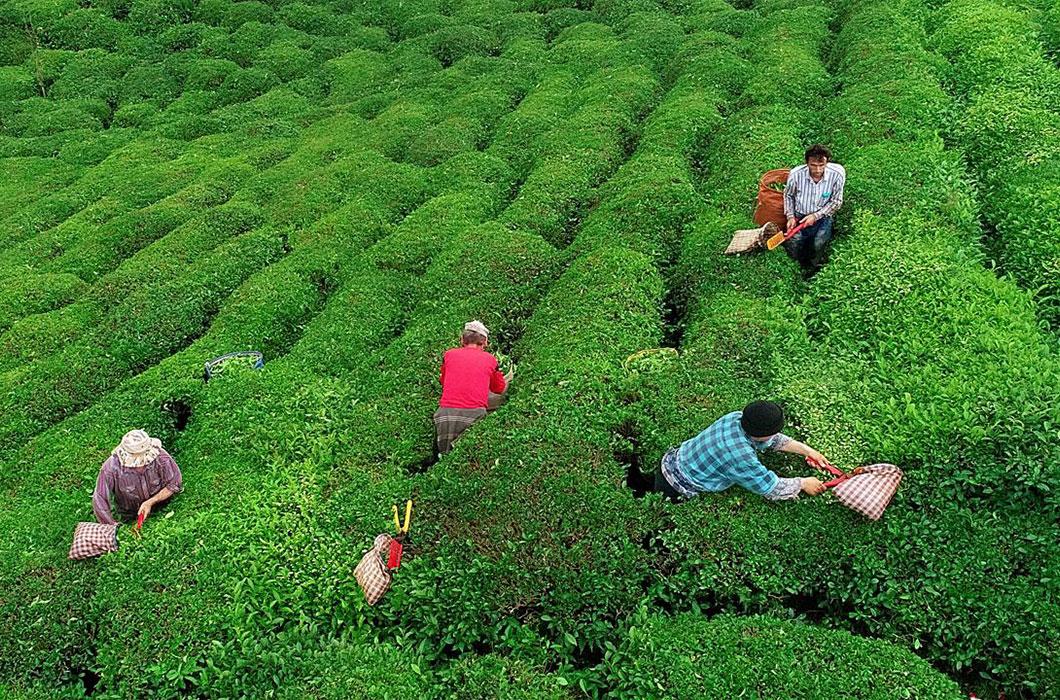
Rize Tea
Registration Number | 707 | ||||||||
|---|---|---|---|---|---|---|---|---|---|
Registration Date | 26.03.2021 | ||||||||
Application Number | C2017/110 | ||||||||
Application Date | 15.08.2017 | ||||||||
Name of the Geographical Indication | Rize Çayı | ||||||||
Product / Product Group(s) | Tea / Processed and Unprocessed Fruits and Vegetables and Mushrooms | ||||||||
Type of Geographical Indication | Place of Origin | ||||||||
Applicant/Registrant(s) | Rize Chamber of Commerce | ||||||||
Address of the Registrant | Islampaşa Mah. Menderes Blv. No: 522 RİZE | ||||||||
Geographical Boundary | Rize Province | ||||||||
Rize Çayı is a registered black tea variety originating from Türkiye, produced from the leaves and buds of the Camellia sinensis plant cultivated and processed within the boundaries of Rize Province. Its geographical indication registration was completed on 26 March 2021; the product registered under the name of origin belongs to the category of "processed and unprocessed fruits vegetables and mushrooms." The registration application was submitted by the Rize Chamber of Commerce on 15 August 2017.

Rize Çayı (Generated by Artificial Intelligence)
Rize Çayı can only be produced from tea leaves grown and processed within the boundaries of Rize Province. The original logo and origin mark bearing the designation "Rize Çayı" must appear on the product itself or its packaging. In cases where application on the packaging or product is not feasible, the relevant logo and emblem must be visibly displayed within the facility.
Rize Çayı is derived from the Camellia sinensis plant of the Theaceae family, cultivated in humid climates for the production of beverages using its leaves and buds. It belongs to the black tea category. The biological structure of the plant grown in Rize, along with the region-specific climatic and geological conditions and the agricultural techniques and processing methods applied, determine the chemical, physical and sensory characteristics of the tea.
Rize Province features a topography that rises from sea level to a height of 3937 meters along mountain ranges parallel to the coast. Forests of broadleaf trees extend from the coast up to approximately 750 meters, mixed forests from 800 to 1400 meters, and coniferous forests above 1600 meters. Above 2400 meters, alpine meadows containing glacial lakes are found. This structure defines the microclimatic environment in which tea grows, influencing its biological diversity and the effects on the tea plant.
Rize Çayı is processed exclusively as black tea. Although some technical variations exist among processing facilities operating in Rize Province, the fundamental processing steps remain consistent. The production process consists of the following sequential stages: harvesting fresh tea leaves, withering, rolling, oxidation, drying, sorting, blending and packaging. The methods used are essentially adaptations of the orthodox processing system to local conditions. The mastery of local labor over tea processing techniques is a decisive factor in the implementation of this process.
Fresh tea leaves are harvested in accordance with the Turkish Standard TS 3225. The preferred portion consists of the terminal bud and the immediately adjacent first and second fresh leaves. This two-and-a-half-leaf section, which contains no fiber, is harvested by hand, with shears or using tea harvesting machines.
In this stage, moisture in the fresh tea leaves is reduced using warm air. Withering transforms the leaves into a physical structure suitable for the rolling process. The temperature and duration applied vary depending on the moisture content of the tea, leaf freshness, ambient weather conditions and the production environment.
Leaves that have undergone withering are rolled, crushed, twisted and broken using various machines. During this process, the cellular sap of the leaf is brought to the surface, enabling the initiation of oxidation.
Chemical compounds present in the cellular sap of the rolled fresh tea leaves undergo reactions catalyzed by the enzyme polyphenol oxidase. As a result of this biochemical process, the color, astringency, brightness, aroma and fragrance characteristic of black tea are developed.
This step halts oxidation and preserves the acquired qualities. Simultaneously, the product is prepared for storage and transportation. Drying also enhances the physical durability of the tea.
Dried tea is separated according to criteria such as fineness, thickness and quality. Each grade of tea is appropriately labeled and bagged.
Sorted teas are blended to ensure consistent physical, chemical and sensory properties. The final product is packaged and marketed for sale.

Rize Çayı (Türk Patent)
The chemical and physical properties of Rize Çayı are defined within the following ranges.
Rize Çayı must score at least 70 points in sensory analysis. The evaluation criteria and point distribution are as follows:
Liquor color and brightness are among the most distinctive sensory characteristics of Rize Çayı. Among the aroma components, theaflavin (TF) influences astringency, brightness and strength, while thearubigin (TR) affects liquor color.
The production and quality control of Rize Çayı are carried out by an inspection body composed of representatives from Recep Tayyip Erdoğan University, Rize Provincial Directorate of Agriculture and Forestry, TMMOB Chamber of Agricultural Engineers and the National Tea Council, under the presidency of the Rize Chamber of Commerce. Inspections are conducted at least twice annually and may be carried out exceptionally upon complaint. Inspection covers tea gardens, production centers, storage areas and packaging label verification. Sample analyses are performed by the Rize Food Control Laboratory Directorate and other accredited laboratories.
Turk Patent and Trademark Office. "Rize Çayı Coğrafi İşaret Tescil Belgesi ve Teknik Şartnamesi (PDF)." Accessed May 20, 2025. https://ci.turkpatent.gov.tr/Files/GeographicalSigns/5a86b3f1-a946-4804-affb-4b278cc47229.pdf
Turkish Patent and Trademark Office. "Coğrafi İşaret Detayı: Rize Çayı." Accessed May 20, 2025. https://ci.turkpatent.gov.tr/cografi-isaretler/detay/38339

Rize Tea
Registration Number | 707 | ||||||||
|---|---|---|---|---|---|---|---|---|---|
Registration Date | 26.03.2021 | ||||||||
Application Number | C2017/110 | ||||||||
Application Date | 15.08.2017 | ||||||||
Name of the Geographical Indication | Rize Çayı | ||||||||
Product / Product Group(s) | Tea / Processed and Unprocessed Fruits and Vegetables and Mushrooms | ||||||||
Type of Geographical Indication | Place of Origin | ||||||||
Applicant/Registrant(s) | Rize Chamber of Commerce | ||||||||
Address of the Registrant | Islampaşa Mah. Menderes Blv. No: 522 RİZE | ||||||||
Geographical Boundary | Rize Province | ||||||||
Geographical Boundary and Usage Conditions
Botanical Characteristics and Growing Conditions
Production Process
Harvesting Fresh Tea Leaves
Withering
Rolling
Oxidation
Drying
Sorting
Storage and Packaging
Physical and Chemical Properties
Sensory Characteristics and Evaluation
Inspection and Control Process