


This article was automatically translated from the original Turkish version.
+2 More
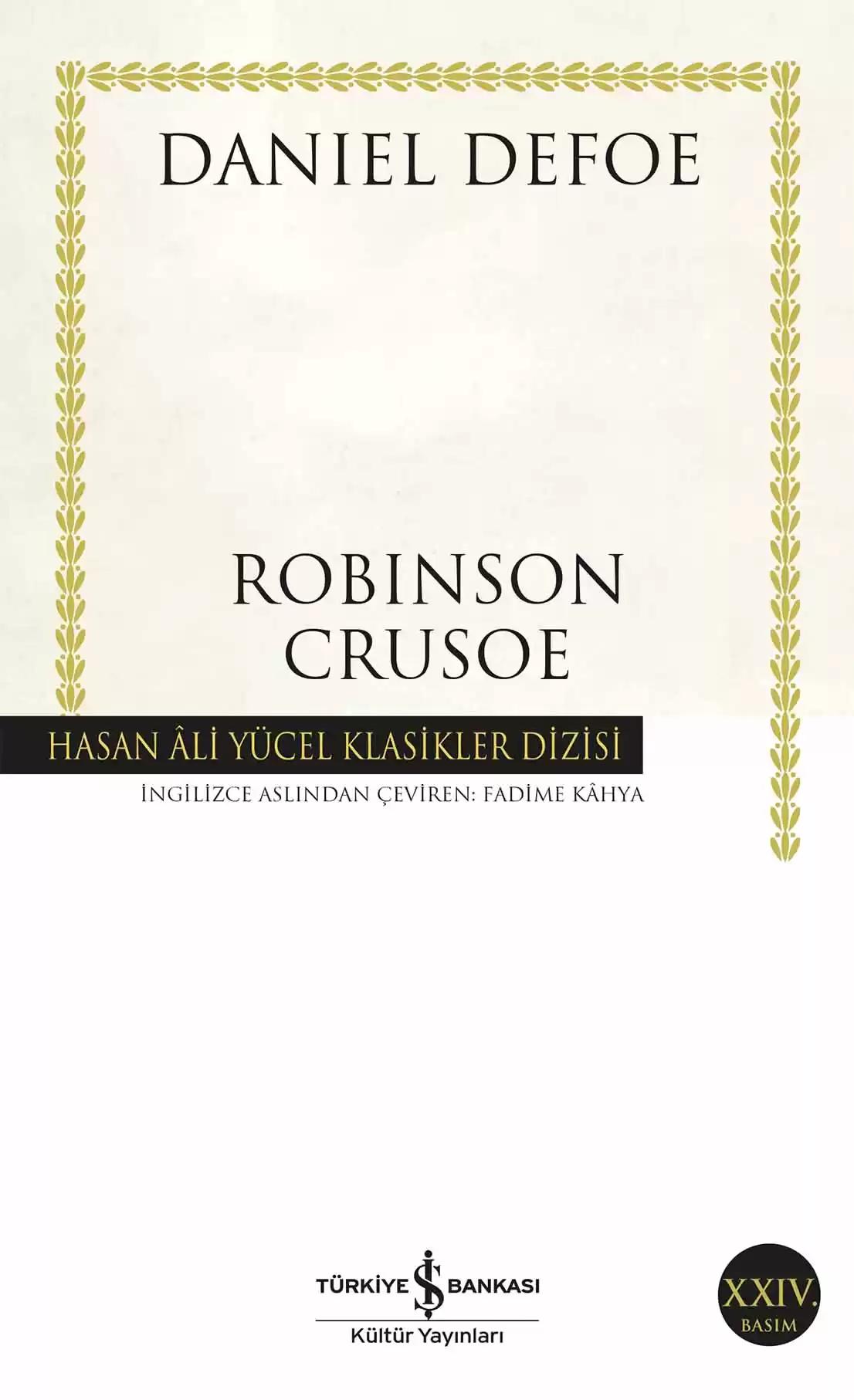
Robinson Crusoe
Original Name(s) | Robinson Crusoe | ||||||||
|---|---|---|---|---|---|---|---|---|---|
Translator(s) | Fadime Kahya | ||||||||
Number of Pages | 336 | ||||||||
Publisher(s) | İş Bankası Kültür Yayınları | ||||||||
ISBN | 9786053606741 | ||||||||
Robinson Crusoe is a novel written by the English author Daniel Defoe and first published in 1719. Regarded as the first modern English novel in literary history, the work narrates the struggle for survival of a solitary man on a deserted island. Inspired by real events that befell a seafarer, the novel explores themes such as individuality, civilization, faith, and the relationship between humans and nature. It has generated significant cultural resonance beyond literature and has been translated into many languages.
Robinson Crusoe is a young Englishman who sets out to sea driven by a thirst for adventure. After enduring shipwrecks and years of captivity, he is stranded on a deserted island following another shipwreck. He struggles to survive there for 28 years. Crusoe builds shelter for himself, cultivates crops, and resists the wild environment. Over time, he realizes he is not alone on the island; he meets a native man named Friday, who becomes both his friend and teacher.
The story is told from Robinson Crusoe’s own perspective. This allows readers to directly follow his thoughts, emotions, and experiences. Written in a simple and accessible style for its time, the novel was easily readable by a broad audience. It contains didactic elements that reflect the moral and religious values of the period. Events are generally narrated in chronological order, facilitating the reader’s understanding of the evolution of Crusoe’s life on the island.
The novel appeals to classical literature readers, young audiences who enjoy historical adventure stories, and those interested in postcolonial literature. Simplified versions are also available for middle school and high school students.
Defoe, Daniel. Robinson Crusoe. Translated by Fadime Kahya. Istanbul: Türkiye İş Bankası Kültür Yayınları, 2012.

Robinson Crusoe
Original Name(s) | Robinson Crusoe | ||||||||
|---|---|---|---|---|---|---|---|---|---|
Translator(s) | Fadime Kahya | ||||||||
Number of Pages | 336 | ||||||||
Publisher(s) | İş Bankası Kültür Yayınları | ||||||||
ISBN | 9786053606741 | ||||||||
No Discussion Added Yet
Start discussion for "Robinson Crusoe (Book)" article
Plot and Themes
Style of the Novel
Target Audience