


This article was automatically translated from the original Turkish version.
+1 More
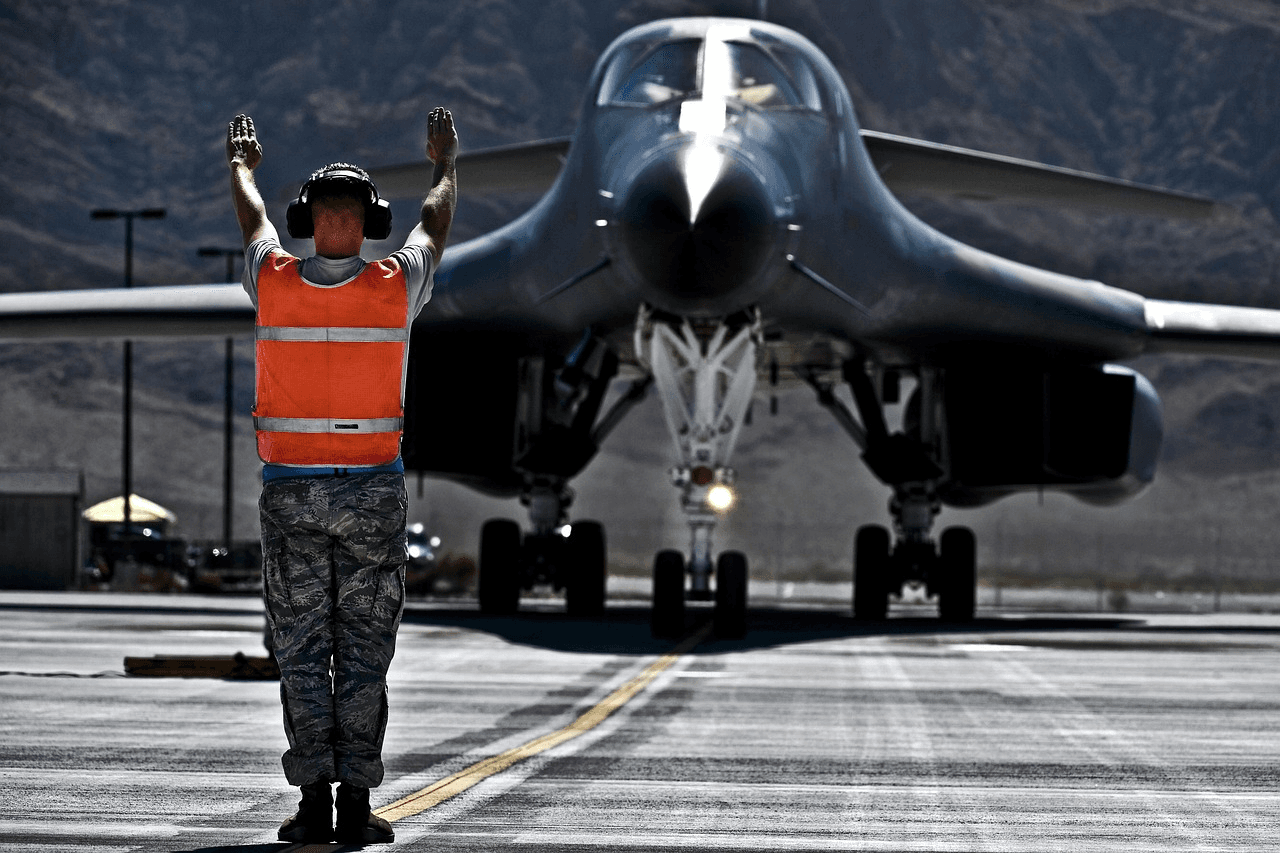
The B-1B Lancer, also known as "The Bone," is a long-range, multirole, supersonic conventional bomber aircraft of the United States Air Force (USAF) (long). Originally designed for nuclear missions, it has fully transitioned to a conventional role since the mid-1990s (United States Air Force). The B-1B, in service since 1985, is expected to remain operational until at least 2040 and beyond (Boeing).

B-1B Lancer (Source: Pixabay)
The origins of the B-1 trace back to the shootdown of a U-2 spy aircraft, which demonstrated the vulnerability of high-altitude bombers (The Aviationist). This incident created a need for a new bomber with low-altitude penetration capability and supersonic speed performance. The 1969 Advanced Manned Strategic Aircraft (AMSA) project resulted in the development of the B-1A prototype by North American Rockwell (now Boeing). Variable-sweep wings were a defining feature of this design (The Aviationist).
Although the first B-1A prototype flew in 1977, the program was canceled in 1979 (The Aviationist). However, in 1981, President Reagan revived the program, leading to the development of the B-1B variant with reduced maximum speed, modified air intakes, and enhanced electronic warfare capabilities. The first B-1B was produced in 1983, and 100 units were delivered by 1988 (The Aviationist).
The B-1B Lancer has played a significant role in various conflicts. During Operation Allied Force in 1999, B-1s, despite flying a small number of sorties, delivered a substantial volume of ordnance (United States Air Force). Similarly, during Operation Enduring Freedom, B-1s dropped a significant portion of precision weapons (United States Air Force). Today, the B-1B is the USAF’s most capable multirole platform in terms of conventional weapons payload (United States Air Force).
B-1B Lancer (Source: YouTube-Haci Productions)
The B-1B provides global reach through its long range, high speed, and maneuver capability (United States Air Force). Variable-sweep wings deliver optimal performance across diverse flight conditions (The Aviationist). The advanced radar system enhances effectiveness in various air-place missions (United States Air Force). Its high weapons capacity enables the engagement of multiple targets in a single sortie (clickpetroleoegas).
Although developed by Rockwell (now Boeing) during the Cold War era, the B-1B Lancer has adapted to the demands of modern warfare and remains a vital component of the USAF. Its supersonic speed, large weapons capacity, and long range have made it an indispensable asset for global power projection.
Boeing. "B-1B Lancer." Accessed [insert date]. https://www.boeing.com/defense/b-1b-lancer#overview.
Simple Flying. "Exploring The B-1B Lancer: America's Supersonic Strategic Bomber." Accessed [insert date if provided]. https://simpleflying.com/exploring-b-1b-lancer-americas-supersonic-strategic-bomber/.
The Aviationist. "Rockwell B-1 Lancer." Accessed [insert date]. https://theaviationist.com/2024/10/29/rockwell-b-1-lancer/.
United States Air Force. "B-1B Lancer." Fact Sheet, https://www.af.mil/About-Us/Fact-Sheets/Display/Article/104500/b-1b-lancer/.
clickpetroleoegas. "The United States B1 Lancer supersonic bomber is one of the most advanced military aircraft in the world, costing an impressive 320 million dollars." https://en.clickpetroleoegas.com.br/The-United-States-B1-Lancer-supersonic-bomber-is-one-of-the-most-advanced-military-aircraft-in-the-world-costing-an-impressive-320-million-dollars/.

No Discussion Added Yet
Start discussion for "Rockwell B-1 Lancer" article
Historical Development
Operational Use
Technical Specifications
Key Capabilities