This article was automatically translated from the original Turkish version.
Range of Motion (ROM) Exercises, are multifaceted exercise practices applied in a planned, systematic, regular, and conscious manner to preserve, enhance, and prevent the loss of natural joint mobility in the human body. They directly affect not only the musculoskeletal system but also the circulatory, nervous, and connective tissue systems, and are recognized as both preventive and therapeutic approaches especially in clinical conditions involving immobility.
Every joint in the human body is designed to move within specific anatomical limits, and this range of motion arises from the shape and congruence of bones, the flexibility of the joint capsule, the strength of ligaments, the length and strength of muscles, and the control exerted by the nervous system over these structures; therefore, a joint’s range of motion is not dependent on a single structure but is the result of the coordinated and harmonious functioning of multiple anatomical components.
As joints move, the cartilage covering the joint surfaces receives nourishment, the production of synovial fluid within the joint increases, and this fluid reduces friction by providing lubrication between joint surfaces; however, when a joint remains immobile for prolonged periods, synovial fluid production decreases, the joint surfaces become inadequately nourished, and over time stiffness develops, leading to a progressive reduction in range of motion.
Muscle tissue is also severely affected by immobility, as unused muscle fibers gradually shorten, lose elasticity, and undergo atrophy; as this process progresses, muscles become unable to move the joint, resulting in permanent joint mobility restrictions.
ROM exercises are a multifaceted practice that extends beyond merely moving joints; they directly and indirectly influence many systems of the body and, when performed regularly, produce both preventive and therapeutic effects.
When examined in terms of the muscular system, these exercises are shown to maintain muscle fiber length, increase muscle elasticity, slow down muscle atrophy caused by prolonged immobility, and support the preservation of muscular functional capacity; this is particularly important for patients who remain bedridden for extended periods, as muscle loss can occur rapidly.
From the perspective of joints and connective tissues, ROM exercises prevent stiffness by preserving joint capsule flexibility, maintain the resilience of ligaments, enhance the production of synovial fluid to support joint nourishment, and thereby contribute to the health of joint surfaces; this process plays a critical role in preventing the development of ankylosis, known as joint freezing.
Their effects on the circulatory system are highly significant, as regular movement accelerates blood circulation, particularly improving venous return by facilitating the return of blood to the heart, thereby reducing the risk of clot formation commonly seen in individuals who remain immobile for long periods and simultaneously preventing fluid accumulation in tissues, or edema.
From the standpoint of the nervous system, ROM exercises strengthen communication between the brain and muscles, improve movement coordination, and enhance proprioception—the body’s ability to sense its position—thereby helping individuals perform movements more controllably and safely.
ROM exercises are categorized into three main types based on the individual’s muscle strength, overall health condition, and mobility capacity, with each type preferred in specific clinical situations.
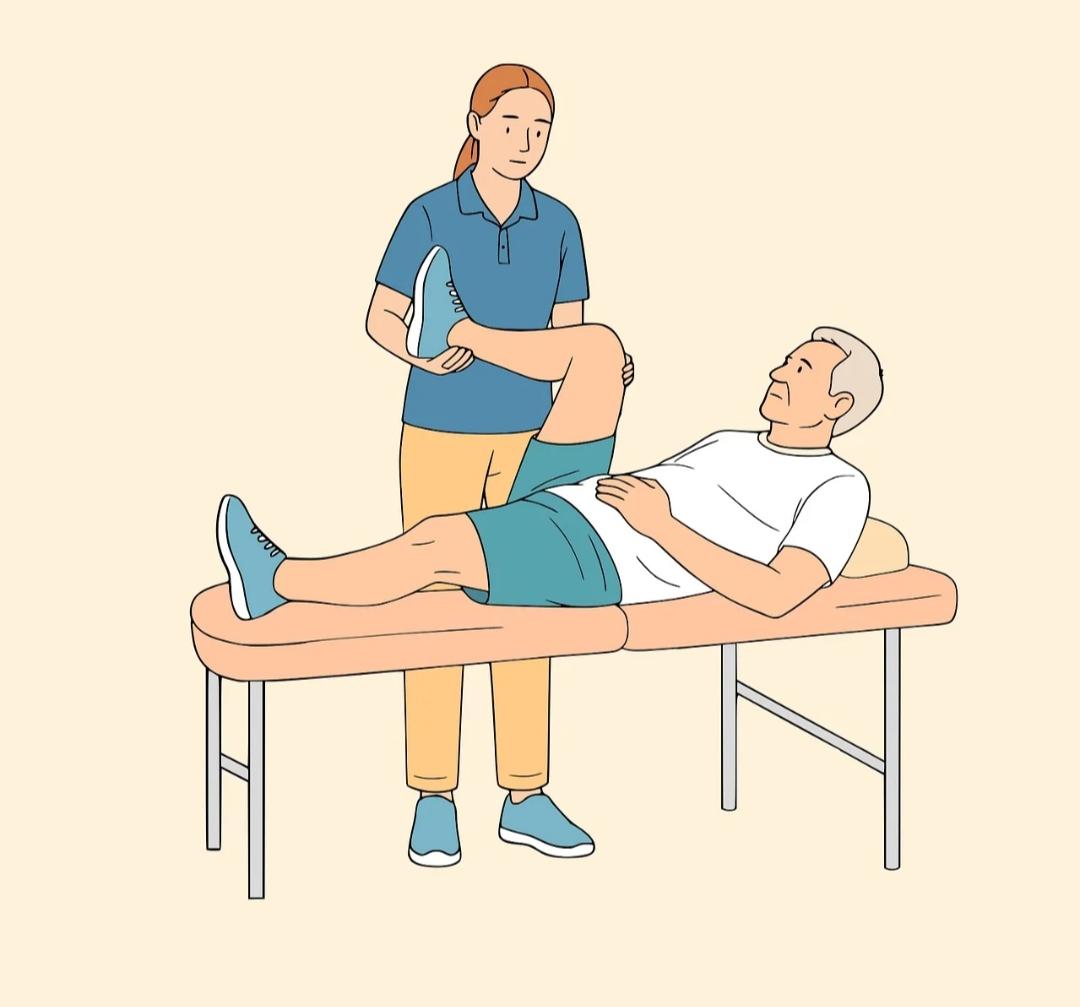
ROM Exercises Performed to Maintain Joint Mobility (pixabay)
ROM exercises have a broad range of applications in healthcare and are universally recognized as a fundamental intervention in all conditions involving restricted mobility; they are regularly applied in critically ill patients confined to bed for extended periods, during postoperative recovery, in individuals who have experienced stroke, in elderly persons with reduced mobility due to aging, and in musculoskeletal or neurological disorders. For example, in neurological conditions such as Parkinson’s disease, where movement slows and stiffness occurs, ROM exercises provide essential support in preserving the patient’s mobility.
• Increase and preserve joint range of motion.
• Strengthen muscles and enhance flexibility.
• Reduce pain and joint stiffness.
• Improve blood and lymph circulation.
• Enhance independence in activities of daily living.
• Accelerate rehabilitation and prevent complications.
To ensure ROM exercises are effective and safe, they must be performed according to specific guidelines; first, the patient must be placed in an appropriate and comfortable position, followed by accurate identification of the joint to be exercised and execution of movements in accordance with the joint’s natural direction.
Movements during exercises must be slow, controlled, and rhythmic; sudden or forceful movements must be strictly avoided. If pain occurs in the patient, the exercise must be stopped immediately. Typically, each movement should be performed between five and ten repetitions; furthermore, it is recommended that these exercises be performed regularly, ideally daily, as gains achieved are rapidly lost without continuity.
Shoulder Exercises: Circular arm movements, raising and lowering the arm.
Elbow Exercises: Bending and extending the elbow, rotating the palm up and down.
Wrist and Hand Exercises: Circular wrist movements, opening and closing the fingers.
Hip Exercises: Lifting and lowering the leg straight, pulling the knee toward the chest and returning it.
Knee Exercises: Bending and extending the knee, gently moving the ankle up and down.
Ankle Exercises: Circular ankle movements, moving the toes up and down.
Neglecting ROM exercises, particularly in immobile individuals, can lead to severe and often irreversible complications; joints may become completely stiff and lose their ability to move, muscles shorten and lose elasticity, and permanent deformities known as contractures may develop, rendering the individual unable to independently perform activities of daily living.
Additionally, immobility slows blood circulation, increases the risk of clot formation, may lead to pressure ulcers (bedsores), and negatively impacts overall health; therefore, ROM exercises are critically important not only for maintaining mobility but also for preserving general health.
Warning: The content provided in this article is intended solely for general encyclopedic information. These details must not be used for diagnosis, treatment, or guidance. Before making any decisions regarding health matters, you must consult a physician or qualified healthcare professional. The author and KÜRE Encyclopedia assume no responsibility for any consequences arising from the use of this information for diagnostic or therapeutic purposes.
Accessed November 26, 2025. https://www.aa.com.tr/tr/kultur/ahlatta-acilan-kurslarla-geleneksel-tas-isciligi-yasatiliyor/3116279.
Gürbüz, İlkay Zeynep, and Semiha Akın. "İnmeli Hastalarda Hareket Fonksiyonuna Yönelik Rehabilitatif Yaklaşımlar." Sağlık Bilimleri Üniversitesi Hemşirelik Dergisi 2, no. 3 (2020): 191–196. Accessed March 16, 2026.
Kaplan, Ebubekir, Aylin Aktaş Özakgül, and Özkan Sir. "Yoğun Bakım Hastası İçin Erken Mobilizasyonun Önemi." Sakarya Üniversitesi Bütünsel Sağlık Dergisi 6, no. 3 (2023): 510–524. Accessed March 16, 2026.
Koca Kutlu, Adalet, Alev Dıramalı, Cüneyt Temiz, Ece Onur, and Mine Miskioğlu. "Yatağa Bağımlı Hastalarda Egzersizin Kan Değerleri ve Yaşam Bulguları Üzerine Etkisi." Ege Üniversitesi Hemşirelik Fakültesi Dergisi 27, no. 1 (2011): 25–36. Accessed March 16, 2026.
Koç, Ayşegül. "İnmeli Hastalara Uygulanan ROM Egzersizlerinin Günlük Yaşam Aktiviteleri Üzerine Etkinliğinin Değerlendirilmesi." PhD thesis, Atatürk Üniversitesi Sağlık Bilimleri Enstitüsü, 2009. Accessed March 16, 2026.
https://dergipark.org.tr/en/download/article-file/3497914
https://dergipark.org.tr/tr/download/article-file/825535
https://eski.atauni.edu.tr/yuklemeler/c2f0879b8aee2813e53c83708e02c07f.pdf

No Discussion Added Yet
Start discussion for "ROM Exercises (Range of Motion Exercises)" article
Anatomical and Physiological Foundations of the ROM Concept
Physiological and Systemic Effects of ROM Exercises
Types of ROM Exercises
Clinical Applications of ROM Exercises
Benefits of ROM Exercises
Procedure for Performing ROM Exercises and Precautions
Sample ROM Exercises (by Joint)
Consequences of Not Performing ROM Exercises