

This article was automatically translated from the original Turkish version.
Roman Snail (Helix pomatia) (Linnaeus, 1758) is a land snail species belonging to the phylum Mollusca and the class Gastropoda. It is described as one of the largest land snails in Europe. Historically used as a food source, the species continues to be consumed by humans today.【1】
Helix pomatia is the type species of the genus Helix. Phylogenetic analyses and molecular studies have provided new data on its taxonomic classification. Recent research has split the species into two distinct entities: Helix pomatia and Helix thessalica. Mitochondrial genome analyses indicate that Helix pomatia is the sister group to a clade including Cepaea nemoralis, Theba pisana, and Cornu aspersum.【2】
The mitochondrial genome of the species has a typical metazoan structure, containing 13 protein-coding genes, two ribosomal RNAs, and 21 transfer RNAs. Sequence analysis reveals that the Cytochrome Oxidase subunit III and tRNA-Thr genes are rearranged compared to other members of the superfamily Helicoidea.【3】

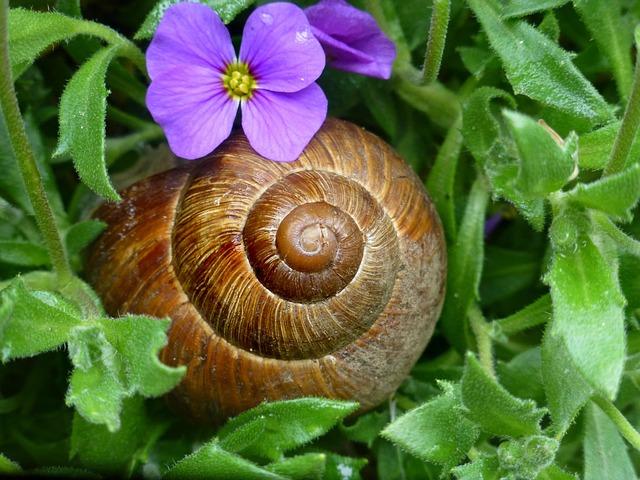
Roman Snail (Helix pomatia) - Pixabay
The shell of Helix pomatia is spherical and known for its robustness. Shell diameter typically ranges from 30 to 50 mm in height and 32 to 50 mm in width. The shell color is generally yellowish-brown or brown and may lighten under exposure to sunlight. The shell surface displays irregular, pale spiral markings.【4】
Adult individuals usually have 4.5 to 5 whorls, while juveniles exhibit fewer. The surface of the head and foot is described as granular and irregular. During hibernation, snails secrete a calcareous, hard operculum to seal the shell aperture and protect themselves from adverse environmental conditions.【5】
The species is native to Europe but has been introduced to Asia and the Americas by human activity. In natural habitats, it is commonly observed on shrubs, agricultural fields, around buildings, and on tree trunks, particularly during wet seasons. It feeds and reproduces on soil surfaces or within vegetation cover.【6】
The Roman snail is widely consumed in countries such as France, Belgium, Germany, and Italy. Nutritional analyses of the meat have revealed high protein content (13.4–16.33%) and low fat content (1.08–1.40%). The meat is also rich in essential fatty acids such as linolenic and linoleic acid. Mineral analysis shows that the meat contains high levels of copper (29.3 mg/100g), iron (14.0 mg/100g), and zinc compared to other meat types.【7】
In Northern Cypriot cuisine, these snails are known as "garavolli" and are consumed boiled, grilled (as kebab), or pickled. When prepared as a stew, they are cooked with their shells intact.【8】
Black snails is used as a bioindicator species for monitoring environmental pollution, particularly heavy metals, due to its soil-dependent lifestyle and limited mobility. A study conducted in the Kosovska Mitrovica region of Serbia analyzed heavy metal accumulation in Helix pomatia specimens.【9】
Bioaccumulation of metals in snail tissues varies according to environmental concentrations and the metabolic functions of the organs.
Hepatopancreas: The hepatopancreas, being the most metabolically active organ involved in digestion and detoxification, exhibits the highest concentration of accumulated metals. Elevated levels of copper, iron, manganese, lead, and zinc have been detected in this organ.【10】
Kidney: Significant metal accumulation has also been observed in the kidneys, which play a role in excretion and detoxification.【11】
Shell: The shell, composed of calcium carbonate, can act as a storage site for certain metals and serve as a long-term indicator of pollution. Notably, arsenic accumulation is significantly higher in the shell than in other tissues.【12】
Hemolymph: The hemolymph, the circulatory fluid of the snail, contains high levels of copper due to its role as a respiratory pigment. However, levels of toxic metals such as lead and cadmium are reported to be low.【13】
A correlation has been observed between snail age and heavy metal accumulation. Comparative analyses indicate that older snails have significantly higher concentrations of copper, iron, manganese, lead, and zinc in their hepatopancreas compared to middle-aged individuals. This may be attributed to longer exposure to pollution or age-related changes in metabolic processes.【14】

Roman Snail (Helix pomatia) - Pixabay
Land snails can serve as intermediate hosts for various parasites posing health risks to humans, including nematodes and trematodes. It is known that species such as Angiostrongylus cantonensis, as well as Fasciola hepatica and Fasciola gigantica, can infect snails.【15】
In a field study conducted in 2019 in the Büyükkonuk region of Northern Cyprus, 250 wild-collected Helix pomatia specimens were examined, and no parasites were detected in any of the samples. Nevertheless, literature warns that consumption of raw or undercooked snails can lead to human infections, particularly when cooking methods such as shell-on preparation fail to reach internal temperatures sufficient to inactivate parasites.【16】
"Helix pomatia escargot snail." Pixabay. Accessed January 22, 2026.
"Snail Helix pomatia land snail." Pixabay. Accessed January 22, 2026.
"Snail mollusk Helix pomatia." Pixabay. Accessed January 22, 2026. https://pixabay.com/photos/snail-mollusk-helix-pomatia-8657315/
Bulatović, Željko, Tatjana Jakšić, Maja Pavlović, and Nikola Bačević. "Bioaccumulation of Heavy Metals in the Roman Snail (Helix pomatia) in the Area of Kosovska Mitrovica." *Bulletin of Natural Sciences Research* 15, no. 1 (2025): 1–8. Accessed January 22, 2026. https://aseestant.ceon.rs/index.php/bnsr/article/view/57799
Groenenberg, D. S. J., and E. Duijm. "The Complete Mitogenome of the Roman Snail Helix pomatia Linnaeus 1758 (Stylommatophora: Helicidae)." *Mitochondrial DNA Part B: Resources* 4, no. 1 (2019): 1494-1495. Accessed January 22, 2026. https://doaj.org/article/9267bc0a391b4832a1c0bb96339d085b
Yildirim, Fatma K., Beyza H. Ulusoy, Semahat Z. Erdogmus, and Canan Hecer. "A Survey Study on Parasite Presence of Edible Wild Terrestrial Snails (Helix pomatia L.) in Northern Cyprus." *International Journal of Scientific and Technological Research* 6, no. 9 (2020): 11-16. Accessed January 22, 2026. https://www.iiste.org/Journals/index.php/JSTR/article/view/53637
[1]
Yildirim, Fatma K., Beyza H. Ulusoy, Semahat Z. Erdogmus ve Canan Hecer. "A Survey Study on Parasite Presence of Edible Wild Terrestrial Snails (Helix pomatia L.) in Northern Cyprus." International Journal of Scientific and Technological Research 6, no. 9 (2020): 11-16. Erişim tarihi 22 Ocak 2026. https://www.iiste.org/Journals/index.php/JSTR/article/view/53637
Groenenberg, D. S. J. ve E. Duijm. "The Complete Mitogenome of the Roman Snail Helix pomatia Linnaeus 1758 (Stylommatophora: Helicidae)." Mitochondrial DNA Part B: Resources 4, no. 1 (2019): 1494-1495. Erişim tarihi 22 Ocak 2026. https://doaj.org/article/9267bc0a391b4832a1c0bb96339d085b
[2]
Groenenberg, D. S. J. ve E. Duijm. "The Complete Mitogenome of the Roman Snail Helix pomatia Linnaeus 1758 (Stylommatophora: Helicidae)." Mitochondrial DNA Part B: Resources 4, no. 1 (2019): 1494-1495. Erişim tarihi 22 Ocak 2026. https://doaj.org/article/9267bc0a391b4832a1c0bb96339d085b
[3]
Groenenberg, D. S. J. ve E. Duijm. "The Complete Mitogenome of the Roman Snail Helix pomatia Linnaeus 1758 (Stylommatophora: Helicidae)." Mitochondrial DNA Part B: Resources 4, no. 1 (2019): 1494-1495. Erişim tarihi 22 Ocak 2026. https://doaj.org/article/9267bc0a391b4832a1c0bb96339d085b
[4]
Bulatović, Željko, Tatjana Jakšić, Maja Pavlović ve Nikola Bačević. "Bioaccumulation of Heavy Metals in the Roman Snail (Helix pomatia) in the Area of Kosovska Mitrovica." Bulletin of Natural Sciences Research 15, no. 1 (2025): 1-8. Erişim tarihi 22 Ocak 2026. https://aseestant.ceon.rs/index.php/bnsr/article/view/57799
Yildirim, Fatma K., Beyza H. Ulusoy, Semahat Z. Erdogmus ve Canan Hecer. "A Survey Study on Parasite Presence of Edible Wild Terrestrial Snails (Helix pomatia L.) in Northern Cyprus." International Journal of Scientific and Technological Research 6, no. 9 (2020): 11-16. Erişim tarihi 22 Ocak 2026. https://www.iiste.org/Journals/index.php/JSTR/article/view/53637
[5]
Bulatović, Željko, Tatjana Jakšić, Maja Pavlović ve Nikola Bačević. "Bioaccumulation of Heavy Metals in the Roman Snail (Helix pomatia) in the Area of Kosovska Mitrovica." Bulletin of Natural Sciences Research 15, no. 1 (2025): 1-8. Erişim tarihi 22 Ocak 2026. https://aseestant.ceon.rs/index.php/bnsr/article/view/57799
[6]
Yildirim, Fatma K., Beyza H. Ulusoy, Semahat Z. Erdogmus ve Canan Hecer. "A Survey Study on Parasite Presence of Edible Wild Terrestrial Snails (Helix pomatia L.) in Northern Cyprus." International Journal of Scientific and Technological Research 6, no. 9 (2020): 11-16. Erişim tarihi 22 Ocak 2026. https://www.iiste.org/Journals/index.php/JSTR/article/view/53637
Groenenberg, D. S. J. ve E. Duijm. "The Complete Mitogenome of the Roman Snail Helix pomatia Linnaeus 1758 (Stylommatophora: Helicidae)." Mitochondrial DNA Part B: Resources 4, no. 1 (2019): 1494-1495. Erişim tarihi 22 Ocak 2026. https://doaj.org/article/9267bc0a391b4832a1c0bb96339d085b
[7]
Yildirim, Fatma K., Beyza H. Ulusoy, Semahat Z. Erdogmus ve Canan Hecer. "A Survey Study on Parasite Presence of Edible Wild Terrestrial Snails (Helix pomatia L.) in Northern Cyprus." International Journal of Scientific and Technological Research 6, no. 9 (2020): 11-16. Erişim tarihi 22 Ocak 2026. https://www.iiste.org/Journals/index.php/JSTR/article/view/53637
[8]
Yildirim, Fatma K., Beyza H. Ulusoy, Semahat Z. Erdogmus ve Canan Hecer. "A Survey Study on Parasite Presence of Edible Wild Terrestrial Snails (Helix pomatia L.) in Northern Cyprus." International Journal of Scientific and Technological Research 6, no. 9 (2020): 11-16. Erişim tarihi 22 Ocak 2026. https://www.iiste.org/Journals/index.php/JSTR/article/view/53637
[9]
Bulatović, Željko, Tatjana Jakšić, Maja Pavlović ve Nikola Bačević. "Bioaccumulation of Heavy Metals in the Roman Snail (Helix pomatia) in the Area of Kosovska Mitrovica." Bulletin of Natural Sciences Research 15, no. 1 (2025): 1-8. Erişim tarihi 22 Ocak 2026. https://aseestant.ceon.rs/index.php/bnsr/article/view/57799
[10]
Bulatović, Željko, Tatjana Jakšić, Maja Pavlović ve Nikola Bačević. "Bioaccumulation of Heavy Metals in the Roman Snail (Helix pomatia) in the Area of Kosovska Mitrovica." Bulletin of Natural Sciences Research 15, no. 1 (2025): 1-8. Erişim tarihi 22 Ocak 2026. https://aseestant.ceon.rs/index.php/bnsr/article/view/57799
[11]
Bulatović, Željko, Tatjana Jakšić, Maja Pavlović ve Nikola Bačević. "Bioaccumulation of Heavy Metals in the Roman Snail (Helix pomatia) in the Area of Kosovska Mitrovica." Bulletin of Natural Sciences Research 15, no. 1 (2025): 1-8. Erişim tarihi 22 Ocak 2026. https://aseestant.ceon.rs/index.php/bnsr/article/view/57799
[12]
Bulatović, Željko, Tatjana Jakšić, Maja Pavlović ve Nikola Bačević. "Bioaccumulation of Heavy Metals in the Roman Snail (Helix pomatia) in the Area of Kosovska Mitrovica." Bulletin of Natural Sciences Research 15, no. 1 (2025): 1-8. Erişim tarihi 22 Ocak 2026. https://aseestant.ceon.rs/index.php/bnsr/article/view/57799
[13]
Bulatović, Željko, Tatjana Jakšić, Maja Pavlović ve Nikola Bačević. "Bioaccumulation of Heavy Metals in the Roman Snail (Helix pomatia) in the Area of Kosovska Mitrovica." Bulletin of Natural Sciences Research 15, no. 1 (2025): 1-8. Erişim tarihi 22 Ocak 2026. https://aseestant.ceon.rs/index.php/bnsr/article/view/57799
[14]
Bulatović, Željko, Tatjana Jakšić, Maja Pavlović ve Nikola Bačević. "Bioaccumulation of Heavy Metals in the Roman Snail (Helix pomatia) in the Area of Kosovska Mitrovica." Bulletin of Natural Sciences Research 15, no. 1 (2025): 1-8. Erişim tarihi 22 Ocak 2026. https://aseestant.ceon.rs/index.php/bnsr/article/view/57799
[15]
Yildirim, Fatma K., Beyza H. Ulusoy, Semahat Z. Erdogmus ve Canan Hecer. "A Survey Study on Parasite Presence of Edible Wild Terrestrial Snails (Helix pomatia L.) in Northern Cyprus." International Journal of Scientific and Technological Research 6, no. 9 (2020): 11-16. Erişim tarihi 22 Ocak 2026. https://www.iiste.org/Journals/index.php/JSTR/article/view/53637
[16]
Yildirim, Fatma K., Beyza H. Ulusoy, Semahat Z. Erdogmus ve Canan Hecer. "A Survey Study on Parasite Presence of Edible Wild Terrestrial Snails (Helix pomatia L.) in Northern Cyprus." International Journal of Scientific and Technological Research 6, no. 9 (2020): 11-16. Erişim tarihi 22 Ocak 2026. https://www.iiste.org/Journals/index.php/JSTR/article/view/53637

No Discussion Added Yet
Start discussion for "Roman Snail (Helix pomatia)" article
Taxonomy and Genetics
Morphological Characteristics
Distribution and Habitat
Nutritional Value and Consumption
Ecotoxicology and Bioaccumulation
Heavy Metal Accumulation and Organ Distribution
Age Factor
Parasitology and Public Health