This article was automatically translated from the original Turkish version.
+1 More
Royal Python (Python regius)
Team(s) | Squamata | ||||||||
|---|---|---|---|---|---|---|---|---|---|
Weight(s) | 1–2.5 kg | ||||||||
Family | Pythonidae | ||||||||
Conservation Status | Trade is regulated under CITES Appendix II | ||||||||
Specie(s) | Python regius | ||||||||
Average Length | 90–150 cm | ||||||||
Genus | Python | ||||||||
Subteam | Serpentes | ||||||||
Class | Reptilia | ||||||||
Royal Python (Python regius) was first described in 1802 by George Shaw under the scientific name Boa regia based on a specimen with pale spotting collected from an unspecified region in Africa. In 1803, François Marie Daudin proposed the genus name Python for nonvenomous spotted snakes and included this species within it. Although biologists such as Wagler and Gray in the mid-19th century suggested alternative genus names such as Enygrus and Cenchris, the taxonomic validity of Python regius has been maintained. Today, this species is recognized as a member of the family Pythonidae and is known to be genetically closely related to the Burmese python Python bivittatus.
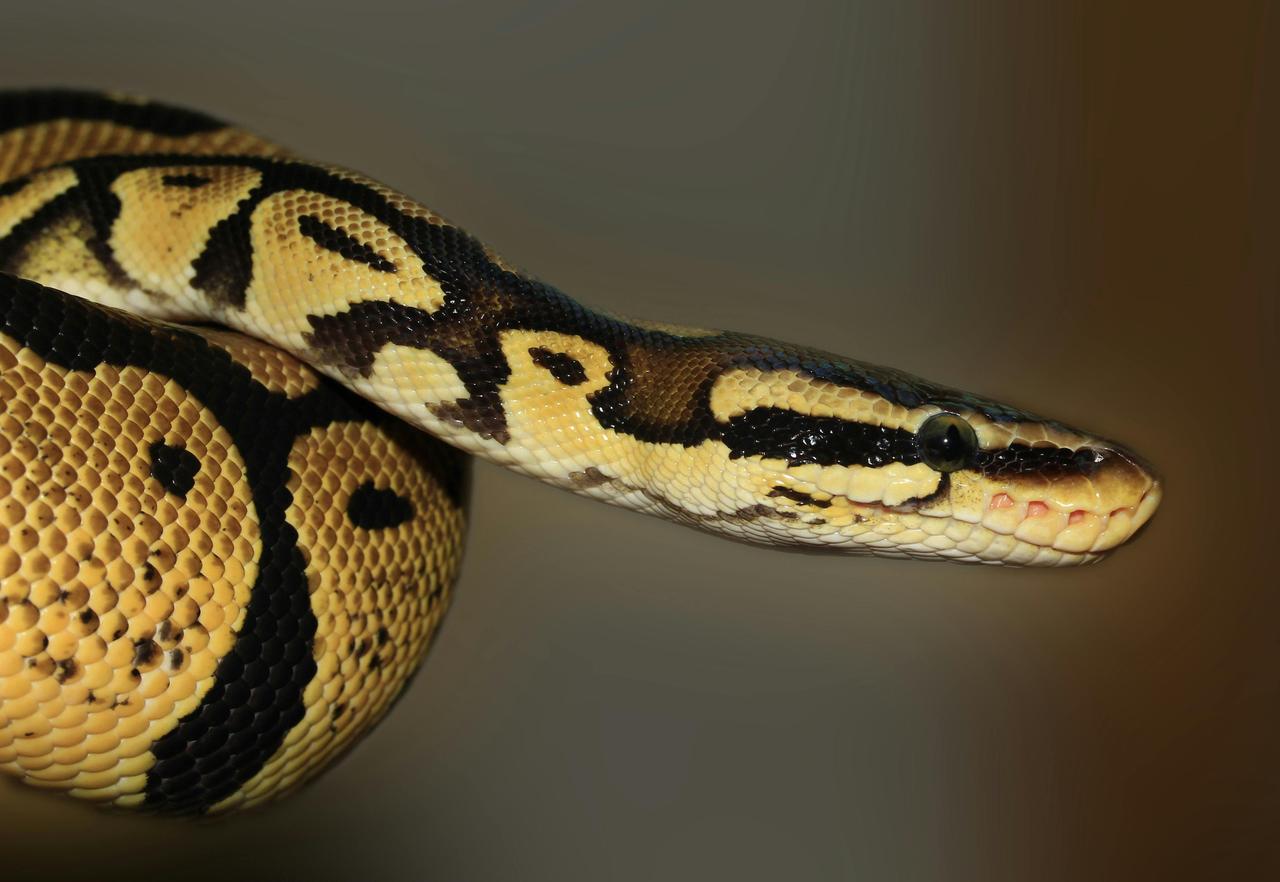
The royal python is the smallest of the African python species and has a robust build, reaching a maximum length of 182 cm in adulthood. Its body pattern consists of light brown blotches on a dark brown or black background on the back and sides, while the ventral region is white or cream with black markings. Pronounced sexual dimorphism is observed in this species. Females reach an average length of 116.2 cm and a weight of 1.635 kg, while males are smaller, averaging 111.3 cm in length and 1.561 kg in weight. Additionally, males typically possess eight to ten subcaudal scales, whereas females have two to four. Both sexes have pelvic spurs near the cloaca, which function in grasping during mating.
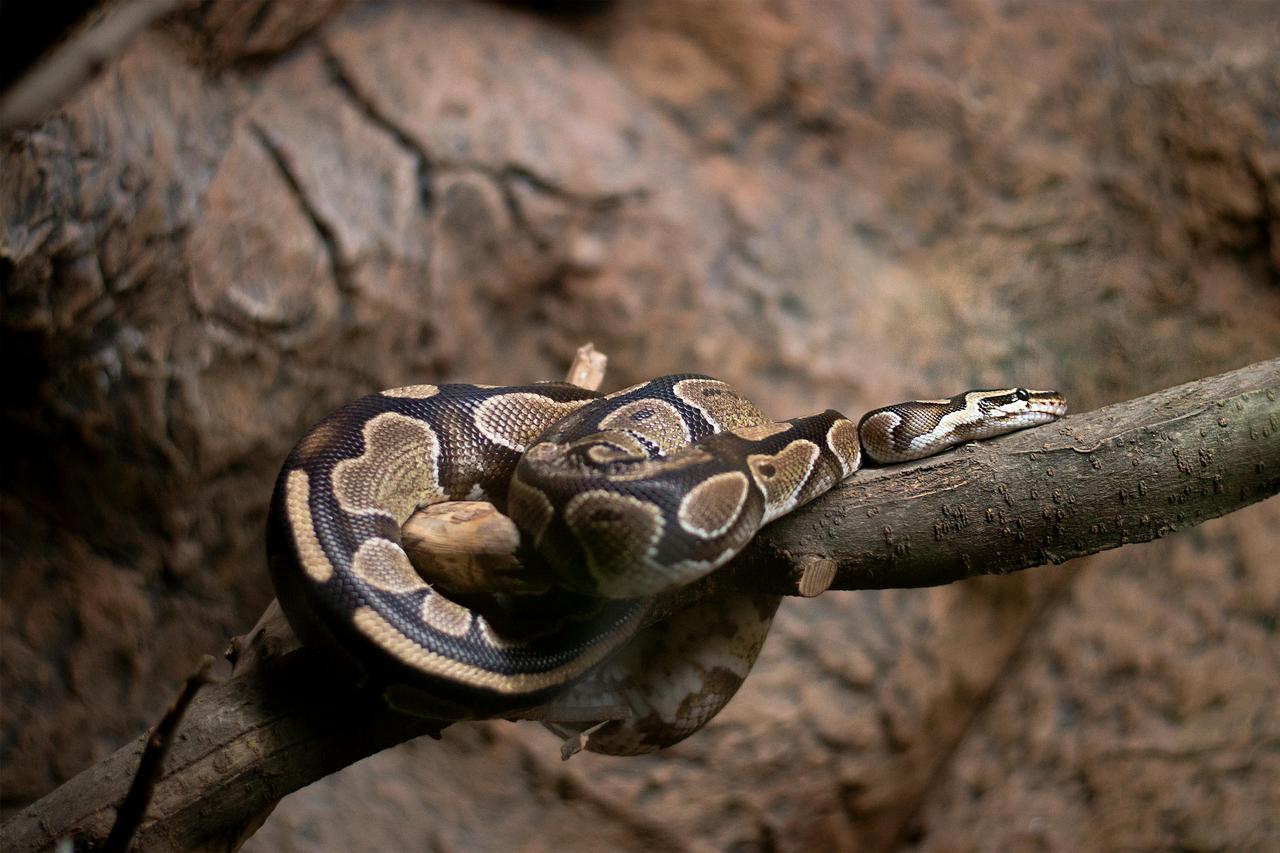
Royal Python (Python regius) (Pexels)
The species is native to sub-Saharan West and Central Africa, ranging from Senegal through Guinea, Sierra Leone, Liberia, Ivory Coast, Ghana, Togo, Benin, and Nigeria to Sudan and Uganda. It prefers open forested areas, savannas, grasslands, and scrublands. Although terrestrial, males exhibit semi-arboreal behavior while females are strictly terrestrial. In the wild, they commonly use mammal burrows and subterranean shelters for brumation during the summer months.
Due to its tendency to coil into a tight ball by withdrawing its head and neck when stressed or threatened, the royal python is also known as the ball python. This defensive strategy reflects its non-aggressive, protective nature. Contrary to common belief, juveniles have been observed to be highly social, gathering in large groups and using designated areas as communal hubs for interaction. The royal python is nocturnal and prefers low-light conditions for hunting and movement.
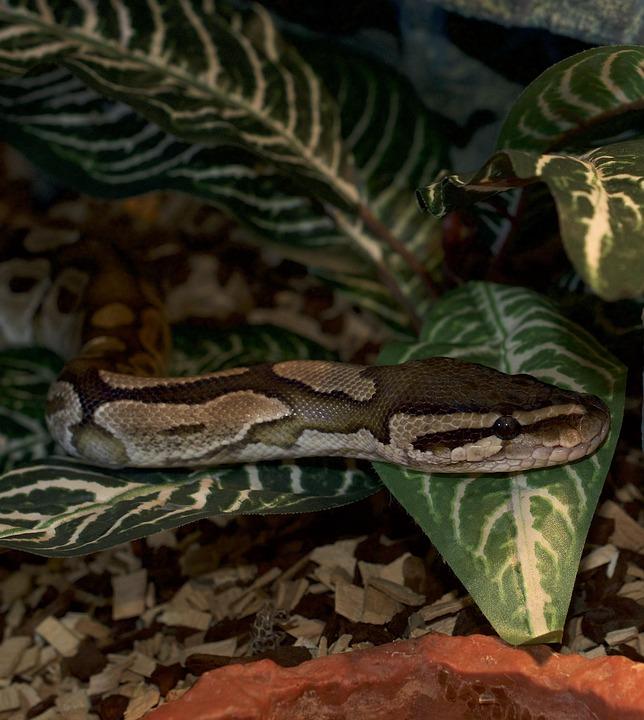
Royal Python (Python regius) (Pixabay)
The diet primarily consists of small mammals and birds. Feeding habits vary with age and sex: juveniles and males prefer small birds, while adult females target rodents such as the Gambian pouched rat, black rat, and striped grass mouse. Python regius is considered a biological model due to its extreme physiological and metabolic flexibility. After consuming a large meal, it exhibits a rapid and reversible increase in heart mass by up to 40 percent within two to three days to support digestion. It also demonstrates resistance to muscle atrophy during prolonged fasting periods.
As an oviparous species, the royal python lays three to eleven large, leathery eggs in a single clutch. The incubation period lasts approximately 55 to 60 days, after which parental care ceases. Sexual maturity depends on both age and body weight: males reach maturity between 11 and 18 months, while females mature between 20 and 36 months. In captivity, these weight thresholds are typically higher.【1】
Royal pythons lack external ears and eardrums, resulting in low sensitivity to airborne sound pressure. However, they have developed extreme sensitivity to ground vibrations through a columella structure connected to the jawbone. They exhibit peak sensitivity to low-frequency vibrations between 80 and 120 Hz, a capability critical for detecting predators and prey.
The species is listed as Near Threatened on the International Union for Conservation of Nature (IUCN) Red List. Its population is declining due to overharvesting for the international exotic pet trade, hunting for skin and meat, and habitat loss from agricultural expansion. Genetic studies have highlighted the risk of genetic mixing between wild populations and captive-bred individuals. Additionally, the species is susceptible to pathogens such as the Ball Python Nidovirus, which can cause severe respiratory inflammation, excessive mucus production, and death.
Among the Igbo people of southeastern Nigeria, the royal python is considered sacred as a symbol of the earth due to its ground-dwelling nature, and funeral rites are performed if one is accidentally killed. In northwestern Ghana, pythons are regarded as protective figures believed to aid people in escaping enemies, and harming them is taboo.
In modern times, due to its docile nature and ability to live 15 to 30 years in captivity, it has become one of the most popular pet reptiles worldwide. More than 7,500 distinct color and pattern morphs have been bred in captivity; however, some morphs are known to be associated with neurological disorders such as head wobble.
Auliya, Mark, Stefan Hofmann, G. H. Segniagbeto, D. Assou, D. Ronfot, J. J. Astrin, S. Forat, K. Koffivi, N. D’Cruze, and G. Ketoh. 2020. “The First Genetic Assessment of Wild and Farmed Ball Pythons (Reptilia, Serpentes, Pythonidae) in Southern Togo.” *Nature Conservation* 38: 37–59. Accessed February 18, 2026. https://doi.org/10.3897/natureconservation.38.49478
Christensen, Christian Bech, Jakob Christensen-Dalsgaard, Christian Brandt, and Peter Teglberg Madsen. 2012. “Hearing with an Atympanic Ear: Good Vibration and Poor Airborne Sound Detection in the Royal Python (Python regius).” *Journal of Experimental Biology* 215, no. 2 (January 15): 331–342. Accessed February 18, 2026. https://journals.biologists.com/jeb/article/215/2/331/11089/Hearing-with-an-atympanic-ear-good-vibration-and
Hoon-Hanks, Laura L., Marylee L. Layton, Robert J. Ossiboff, John S. L. Parker, Edward J. Dubovi, and Mark D. Stenglein. 2018. “Respiratory Disease in Ball Pythons (Python regius) Experimentally Infected with Ball Python Nidovirus.” *Virology* 517: 77–87. Accessed February 18, 2026. https://doi.org/10.1016/j.virol.2017.12.008
Hunt, D. R., H. Allen, T. G. Martin, S. N. Feghali, E. B. Chuong, and L. A. Leinwand. 2025. “Genome Report: First Whole Genome Assembly of Python regius (Ball Python), a Model of Extreme Physiological and Metabolic Plasticity.” *bioRxiv* 2025.02.01.635752. Accessed February 18, 2026. https://doi.org/10.1101/2025.02.01.635752
Pexels. "Kahverengi python." Pexels. Accessed February 18, 2026. https://www.pexels.com/tr-tr/fotograf/kahverengi-python-53140/
Pexels. “Royal Python on a Branch in a Terrarium.” Pexels. Accessed February 18, 2026. https://www.pexels.com/photo/royal-python-on-a-branch-in-a-terrarium-14379549/
Pixabay. "Snakehead Python Reptile Wildlife." Pixabay. Accessed February 18, 2026. https://pixabay.com/photos/snakehead-python-reptile-wildlife-3242137/
Pixabay. "Snakehead Yellow Waterdrop." Pixabay. Accessed February 18, 2026. https://pixabay.com/photos/snakehead-yellow-waterdrop-3235653/
Wasserman, Danielle, and Brian I. Crother. 2018. “Geographic Distribution: Python regius (Ball Python).” *Herpetological Review* 46, no. 1: 63. Accessed February 18, 2026. https://www.researchgate.net/publication/326672220_Geographic_Distribution_Python_regius_ball_python
[1]
Hunt, D. R., H. Allen, T. G. Martin, S. N. Feghali, E. B. Chuong ve L. A. Leinwand. "Genome Report: First Whole Genome Assembly of Python regius (Ball Python), a Model of Extreme Physiological and Metabolic Plasticity." bioRxiv: The Preprint Server for Biology, accessed 18 February 2026, https://doi.org/10.1101/2025.02.01.635752

Royal Python (Python regius)
Team(s) | Squamata | ||||||||
|---|---|---|---|---|---|---|---|---|---|
Weight(s) | 1–2.5 kg | ||||||||
Family | Pythonidae | ||||||||
Conservation Status | Trade is regulated under CITES Appendix II | ||||||||
Specie(s) | Python regius | ||||||||
Average Length | 90–150 cm | ||||||||
Genus | Python | ||||||||
Subteam | Serpentes | ||||||||
Class | Reptilia | ||||||||
No Discussion Added Yet
Start discussion for "Royal Python (Python regius)" article
Morphological Structure and Physical Characteristics
Geographic Distribution and Habitat Characteristics
Ecology, Behavior and Social Structure
Diet and Physiological Adaptations
Reproduction and Development
Sensory Biology and Hearing Mechanism
Health and Conservation Status
Cultural Significance and Pet Trade