


+2 More

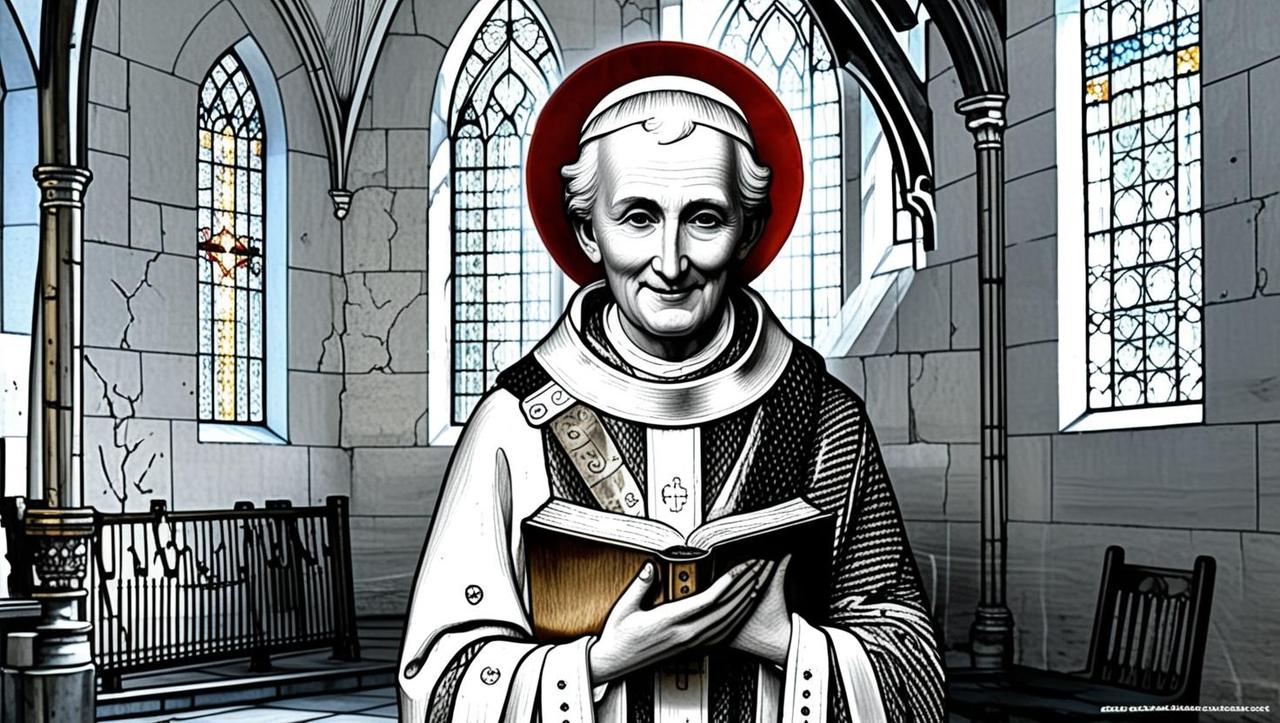
Saint Valentine
State | Roman Empire | ||||||||
|---|---|---|---|---|---|---|---|---|---|
Period(s) | Claudius II Gothicus | ||||||||
Century | 3rd century AD | ||||||||
Religion(s) | Catholic Christian | ||||||||
Profession(s) | Priest and Doctor | ||||||||
Death | 14 February 270 | ||||||||
Aziz Valentine is believed to have been a priest and physician who lived in the Roman Empire during the third century and was martyred for his Christian faith. However, historical records are not definitive and refer to more than one Valentine. Although recognized as a saint by the Roman Catholic Church, he was removed from the General Roman Calendar in 1969 due to insufficient reliable information.
Two distinct legends about Aziz Valentine have emerged:
According to this legend, Valentine was a priest and physician living in Rome. Persecuted by the empire for his Christian faith, he was repeatedly urged by Asterius, a Roman nobleman appointed by the emperor himself, to renounce Christianity. Instead, Valentine healed Asterius’s blind daughter and converted her to Christianity an act of miracle that later paved the way for his recognition as a saint in Christianity road.
Valentine continued to aid Christians despite imperial prohibitions. Even after Emperor Claudius II banned Christian marriages, he secretly performed wedding ceremonies for couples, leading to his arrest and torture.
Ultimately, sentenced to death for persisting in defending and spreading Christian principles, Valentine wrote a letter to the girl he had healed, signed “From Your Valentine” (From Your Valentine), before his execution. This phrase became the foundational active for the celebration of February 14 as Valentine’s Day and remains widely used on Valentine’s cards today. His execution took place in Rome along the Via Flaminia.
This legend dates to approximately seventy years later. According to it, Valentine was invited to Rome by Crato, a rhetorician and philosopher who taught Greek and Latin. Crato’s son suffered from a severe physical deformity that caused him to hold his head between his knees, and no Roman physician could cure him. Crato offered Valentine all his possessions if he could heal his son, but Valentine told him that faith alone could bring about the cure. Valentine then performed a miracle, healing the boy, and dozens of people who witnessed this became Christians.
Among those who converted was Abbondius, the son of the Roman governor Placidus. This angered the governor, because during the pagan era, converting to Christianity was considered an act of treason against the state, and Christians were denied official positions. Enraged, Placidus ordered Valentine’s arrest and execution along the Via Flaminia.
There are striking important similarities between the two accounts: both Valentines were arrested while spreading Christianity, performed a healing miracle, and were beheaded. For this reason, some historians believe these may be different versions of the story of a single Valentine.
The association of Aziz Valentine’s story with Valentine’s Day became widespread during the Middle Era. However, the origins of this day reach even further back, to the pagan traditions of ancient Rome.
In ancient Rome, the Lupercalia Festival was celebrated between February 13 and 15 February and was dedicated to the god of fertility and agriculture, Faunus. During this festival, young men and women were paired together and exchanged love love letters. It is said that the Church sought to Christianize these pagan customs and win public favor by designating this day as Valentine’s Day in memory of Saint Valentine.
In the Middle Ages, Valentine’s Day became a symbol of romantic love. The English poet Geoffrey Chaucer, in his 1382 work “Parlament of Foules” (The Parliament of Fowls), described February 14 as the day when birds began to pair day. This idea contributed to Valentine being regarded as the patron of love.
Later, Benedictine monks promoted the cult of Saint Valentine and spread it throughout England, gradually strengthening the belief that Saint Valentine was the protector of lovers.
As Valentine’s Day evolved into a day celebrating romantic love, it became commercialized within capitalist system. From the 19th century onward, specially printed Valentine’s Day cards began to be sold in England. By the mid-20th century, in America, it had become a major consumer holiday marked not only by cards but also by chocolates, flowers, and gifts. Celebrated on a Today world scale, Valentine’s Day has become an important part of commerce.
Although there is no direct connection between the story of Saint Valentine and the celebration of February 14 as Valentine’s Day, over time this day has become a symbol of love and romance, shaped by legends and religious traditions. From ancient Rome through the Middle Ages to today’s global markets, Valentine’s Day continues to exist as both an emotional and commercial phenomenon worldwide.
Arık, Bilal. "Bir Kültür Endüstrisi Olarak 14 Şubat Sevgililer Günü." İletişim Fakültesi Dergisi. Accessed February 14, 2025. https://dergipark.org.tr/tr/download/article-file/212373.
Canöz, Nilüfer. "Kültür Endüstrisi Ürünü Olarak 14 Şubat Sevgililer Günü." *Selçuk Üniversitesi Sosyal Bilimler Enstitüsü Dergisi* 34, (2015): 135-143. Accessed February 14, 2025. https://dergipark.org.tr/tr/download/article-file/1724819.
Vatican News. "St. Valentin, Martyr on the via Flaminia." Accessed February 14, 2025. https://www.vaticannews.va/en/saints/02/14/st--valentin--martyr-on-the--via-flaminia.html.

Saint Valentine
State | Roman Empire | ||||||||
|---|---|---|---|---|---|---|---|---|---|
Period(s) | Claudius II Gothicus | ||||||||
Century | 3rd century AD | ||||||||
Religion(s) | Catholic Christian | ||||||||
Profession(s) | Priest and Doctor | ||||||||
Death | 14 February 270 | ||||||||
Legends About Him
1. The Priest and Saint Valentine
2. Valentine, Bishop of Terni
Connection to Valentine’s Day
The Lupercalia Festival
Becoming Valentine’s Day in the Middle Ages
Valentine’s Day Today