


This article was automatically translated from the original Turkish version.
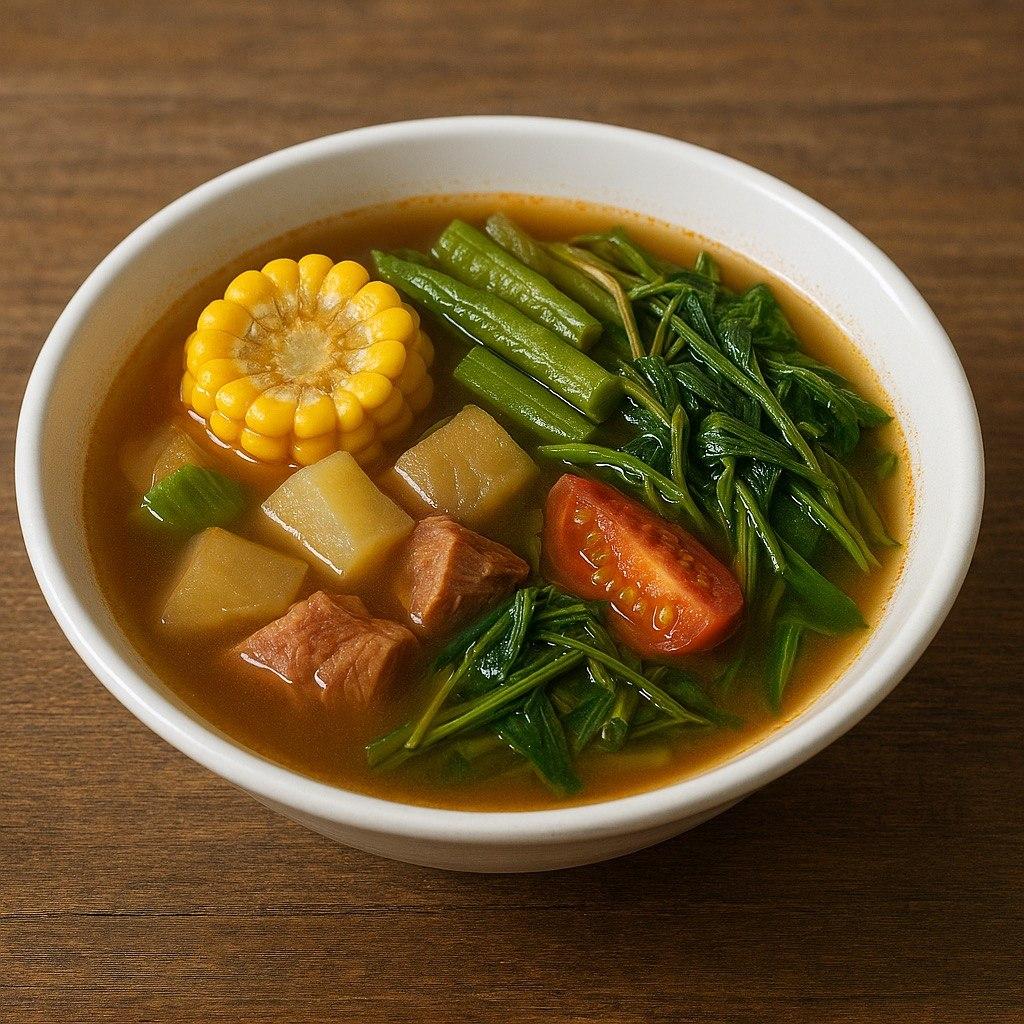
Sayur Asem (Yapay Zeka İle Oluşturulmuştur.)
Cultural Characteristic | Traditional Dish Associated with Daily Life | ||||||||
|---|---|---|---|---|---|---|---|---|---|
Service Type | Served Hot | ||||||||
Nutritional Property | Vegetable-Dominated Content | ||||||||
Flavor Profile | Sour-Dominated | ||||||||
Type of Dish | Vegetable Stew | ||||||||
Kitchen | Indonesian Cuisine | ||||||||
Sayur Asem is a watery dish from Indonesian cuisine, prepared by cooking a variety of vegetables with an acidic component. This dish, associated with everyday consumption, exhibits regional variations in terms of the vegetables used, flavor balance, and preparation method. Its defining characteristics are its vegetable-rich composition and pronounced sour taste profile.
Sayur asem is defined as a vegetable dish within the Indonesian culinary tradition, shaped by local plant diversity and forming an essential part of daily meal practices. The sour flavor derived from tamarind (asam) combines with vegetables adapted to tropical climatic conditions, reflecting the interrelationship between environment, agriculture, and cuisine. This structure does not limit the dish’s identity to flavor alone; it reveals a culinary understanding integrated with seasonality, local production, and traditional food knowledge.
Conceptually, sayur asem carries the nature of a cultural element that gains meaning within the ordinary routines of daily life. Despite being prepared with simple ingredients, this dish occupies a shared cultural memory and is associated in cultural and literary narratives with simplicity, continuity, and the representation of everyday existence. In this sense, sayur asem is not merely a nutritional component but is regarded as a cultural indicator encompassing social experience and layers of symbolic meaning.【1】
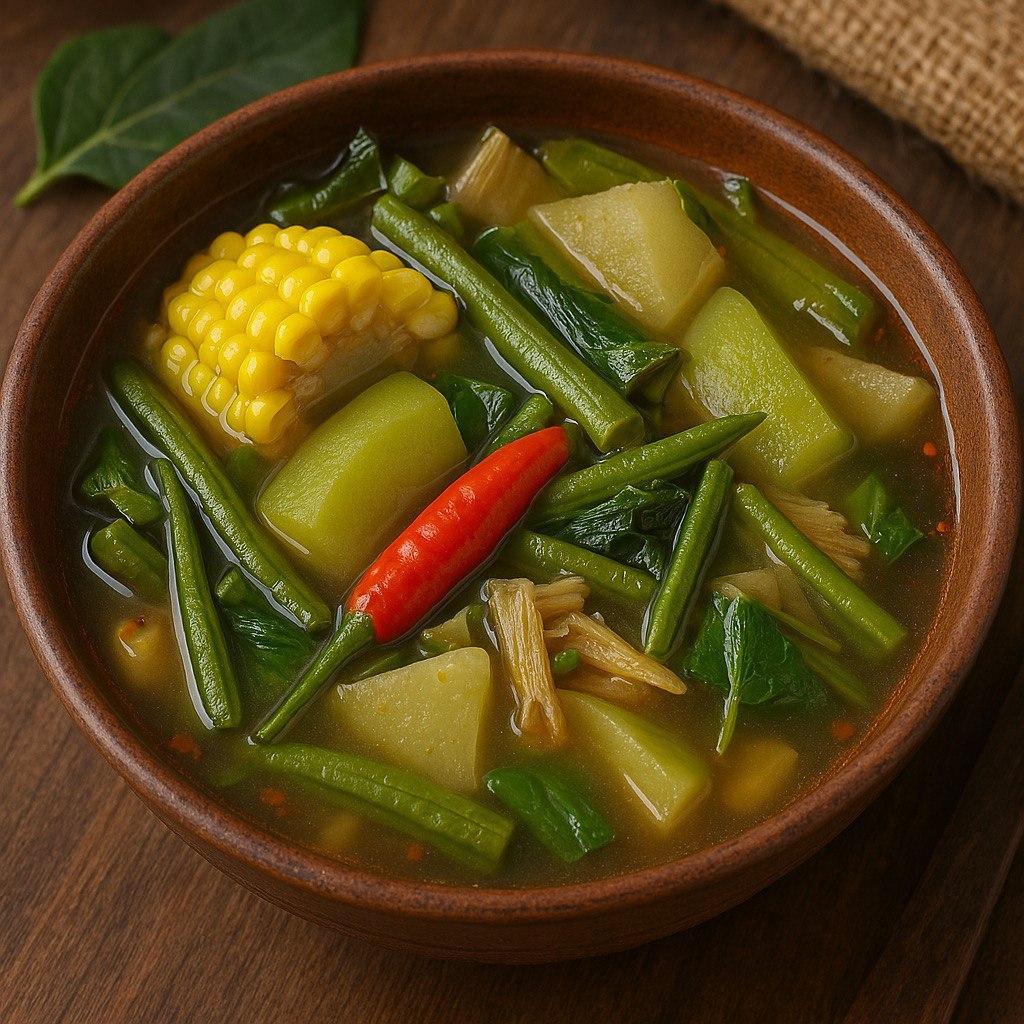
Sayur Asem (Generated by Artificial Intelligence.)
The ingredients of sayur asem reflect a vegetable-dominated structure, with variations depending on regional practices. Common components include melinjo (Gnetum gnemon) leaves and seeds, long beans, cabbage, cucumber, corn, belimbing sayur (a type of sour star fruit), various peppers, and spices. The characteristic sour taste is primarily achieved through plant-based ingredients, especially tamarind (demirhindi), which defines the dish’s identity. The selection and combination of vegetables create a balanced vegetable dish profile aligned with daily consumption.
Preparation methods vary according to local practices. In some approaches, spices are briefly sautéed in oil before water and main ingredients are added for cooking. In other methods, all ingredients are boiled directly together in water. Vegetables are added to the pot in a specific sequence and briefly cooked to preserve their textural integrity. Throughout the process, hygiene, cooking conditions, and serving temperature remain fundamental considerations.
The production process of sayur asem adheres to specific hygiene and food safety principles at the stages of raw material acceptance, preparation, and cooking. Vegetables, fish, and auxiliary ingredients are assessed for physical, chemical, and biological risks. Washing, sorting, cleaning, and thermal processing steps are essential in ensuring safety throughout the production chain. These stages play a decisive role in rendering the product fit for consumption.
Hygiene practices are linked to the cleanliness of the production environment, the suitability of equipment used, and the work discipline of personnel. Regular cleaning of surfaces in direct contact with food, adherence to personal hygiene standards, and minimization of contamination risks during production are central to these practices. These measures constitute fundamental elements ensuring the safe continuation of the production process.
Portioning in sayur asem is based on the balanced distribution of dish components. While institutional standards typically prescribe portions of 75–100 grams, practical variations may occur due to the use of ladles and individual server judgment. Portioning practices are guided by standards aimed at preserving visual harmony and ensuring appropriate serving sizes for consumption.【2】
Presentation is typically carried out hot (hangat) to reflect the dish’s characteristic cloudy (keruh) color and watery texture. Containers are selected to clearly showcase the dish’s textural qualities and ingredient diversity. Rather than decorative or aesthetic interventions, emphasis is placed on the dish’s natural composition and internal arrangement, aligning with its association with everyday consumption.
As a dish linked to daily life, sayur asem holds a symbolic position in cultural meaning-making. Identified with routine and repetitive practices, it functions as a cultural indicator tied to local identity, shared experience, and the continuity of everyday existence. In this regard, sayur asem transcends nutritional practice to be regarded as an element of Intangible Cultural Heritage, embodying the ethics of contentment (etika kecukupan), psychological resilience, and a horizon of gratitude during times of crisis.
Apriliani, Sabrina, Luh Suranadi, Susilo Wirawan, and AASP Chandradewi. "Ketepatan Pemorsian Sayur Terhadap Standar Porsi Makanan Biasa." *Jurnal Gizi Prima (Prime Nutrition Journal)* 4, no. 2 (October 2019): 97–105. Accessed February 1, 2026. https://www.researchgate.net/publication/336921845_Ketepatan_Pemorsian_Sayur_Terhadap_Standar_Porsi_Makanan_Biasa
Lestari, Prembayun Miji, and Prasetyo Adi Wisnu Wibowo. "Hermeneutics of Banality dalam Geguritan Sayur Asem." *Filitra Cultura* 1, no. 2 (December 2025): 111–121. Accessed February 1, 2026. https://www.researchgate.net/publication/399644189_Hermeneutics_of_Banality_dalam_Geguritan_Sayur_Asem
Rosyad, Laily. ".Laporan GMP dan HACCP (Semur Tahu, Sayur Asem)." Academia.edu. Accessed February 1, 2026. https://www.academia.edu/30955090/_LAPORAN_GMP_DAN_HACCP_SEMUR_TAHU_SAYUR_ASEM_?sm=b
Santoso, Listiyono, Mohammad Adib, Moch Jalal, and Nadya Afdholy. "Exploring Indonesian Cuisine Ethnographically: A Fusion of Heritage and Innovation Through the Lens of Local Wisdom." *Asian Journal of Dairy and Food Research* 44, no. 2 (July 2024): 240-245. Accessed February 1, 2026. https://www.researchgate.net/publication/382086790_Exploring_Indonesian_Cuisine_Ethnographically_A_Fusion_of_Heritage_and_Innovation_Through_the_Lens_of_Local_Wisdom
Silalahi, Marina, and Riska Septia Wahyuningtyas. "The Ethnobotany and Local Knowledge of Sayur Asem by the Vegetable Traders." *JPBIO (Jurnal Pendidikan Biologi)* 6, no. 1 (April 2021): 34–45. Accessed February 1, 2026. https://www.researchgate.net/publication/351297766_The_ethnobotony_and_local_knowledge_of_sayur_asem_by_the_vegetable_traders_CHECK_FOR_UPDAT
[1]
Prembayun Miji Lestari ve Prasetyo Adi Wisnu Wibowo, "Hermeneutics of Banality dalam Geguritan Sayur Asem," Filitra Cultura 1, no. 2 (December 2025): 115-118, Last Access: 1 February 2026, https://www.researchgate.net/publication/399644189_Hermeneutics_of_Banality_dalam_Geguritan_Sayur_Asem
[2]
Sabrina Apriliani, Luh Suranadi, Susilo Wirawan, ve AASP Chandradewi, "Ketepatan Pemorsian Sayur Terhadap Standar Porsi Makanan Biasa," Jurnal Gizi Prima (Prime Nutrition Journal) 4, no. 2 (October 2019): 98-100, Last Access: 1 February 2026, https://www.researchgate.net/publication/336921845_Ketepatan_Pemorsian_Sayur_Terhadap_Standar_Porsi_Makanan_Biasa

Sayur Asem (Yapay Zeka İle Oluşturulmuştur.)
Cultural Characteristic | Traditional Dish Associated with Daily Life | ||||||||
|---|---|---|---|---|---|---|---|---|---|
Service Type | Served Hot | ||||||||
Nutritional Property | Vegetable-Dominated Content | ||||||||
Flavor Profile | Sour-Dominated | ||||||||
Type of Dish | Vegetable Stew | ||||||||
Kitchen | Indonesian Cuisine | ||||||||
Origin and Conceptual Framework
Ingredients and Preparation
Production and Hygiene
Portioning and Presentation
Cultural Significance