

This article was automatically translated from the original Turkish version.
Scientific Name(s) | Rapana venosa | ||||||||
|---|---|---|---|---|---|---|---|---|---|
Size(s) | It is generally between 10 and 15 cm. | ||||||||
Family | Muricidae | ||||||||
Habitat | Marine environments | ||||||||
Lifespan | The average lifespan is approximately 5 to 10 years. | ||||||||
Reproductive Characteristics | Sexual reproduction occurs; individuals are male and female. | ||||||||
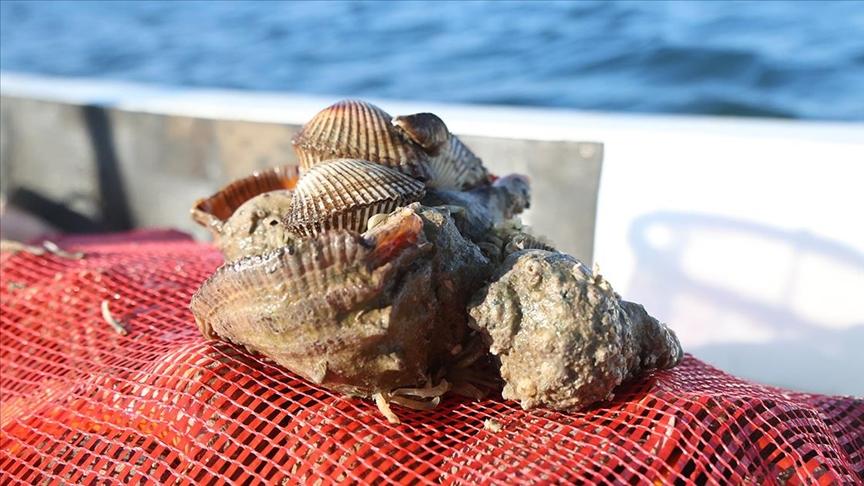
Sea snail, scientifically known as Rapana venosa, is a gastropod mollusk belonging to the family Muricidae. This shelled marine organism is a predatory species that primarily feeds on bivalves.【1】
Sea snails belong to the phylum Mollusca and the class Gastropoda. Rapana venosa is classified within the family Muricidae. The species is characterized by its thick, spiral-shaped shell, muscular foot, and advanced predatory capabilities.【2】

Deniz Salyangozları (Tübitak)
The body of the sea snail consists of soft tissue enclosed within a hard shell. The shell is composed primarily of calcium carbonate and serves a protective function against environmental conditions. The muscular foot located on the underside enables movement along the seafloor. Size and weight vary depending on age, nutritional status, and habitat.【3】
Sea snails are carnivorous organisms. Their primary prey consists of mussels, oysters, and other bivalve mollusks. During predation, they use a hardened structure called the radula to drill holes into the shells of their prey and consume them with secreted enzymes.【4】
Rapana venosa is a species that has been introduced to seas beyond its native range. It is believed to have spread to various marine ecosystems, particularly the Black Sea, via ship ballast water. This introduction has led to invasive behavior and significant pressure on native bivalve populations.【5】

Deniz Salyangozları (Adnan Menderes Üniversitesi)
Some sea snail species are known to possess regenerative capabilities. Scientific observations have shown that these organisms can regenerate certain lost body parts. This trait has made sea snails an important model organism in biological and regenerative medicine research.【6】
The sea snail is among the species harvested and exported commercially, giving it economic value within the aquaculture sector. At the same time, its invasive characteristics, feeding behavior, and regenerative capacity make it a frequently studied subject in ecological and biological research.【7】
Aydın AdnanMenderes Üniversitesi. "Deniz Salyangozları." GZT ADÜ. Accessed January 6, 2026. https://gzt.adu.edu.tr/haber/deniz-salyangozlari-9262
Kalkınma Kütüphanesi. *Deniz Salyangozu Ön Fizibilite Raporu*. Ankara, 2019. Accessed January 6, 2026. https://www.kalkinmakutuphanesi.gov.tr/assets/upload/dosyalar/deniz-salyangozu-on-fizibilite-raporu.pdf
TÜBİTAK Bilim Genç. “Rejenerasyon Yeteneğine Sahip Deniz Salyangozları.” Accessed January 6, 2026. https://bilimgenc.tubitak.gov.tr/makale/rejenerasyon-yetenegine-sahip-deniz-salyangozlari
Yücel, Şennan, Birol Baki, and Kamil Dilek. “Deniz Salyangozlarının (Rapana venosa Valenciennes, 1846) Biyometrik Özelliklerine İlişkin Bir Araştırma.” Manas Journal of Agriculture and Life Sciences 3, no. 1 (2013): 31–37. Accessed January 6, 2026. https://dergipark.org.tr/tr/download/article-file/576071
[1]
Kalkınma Kütüphanesi. Deniz Salyangozu Ön Fizibilite Raporu. Ankara, 2019. Erişim tarihi: 6 Ocak 2026. https://www.kalkinmakutuphanesi.gov.tr/assets/upload/dosyalar/deniz-salyangozu-on-fizibilite-raporu.pdf
Aydın Adnan Menderes Üniversitesi. “Deniz Salyangozları.” GZT ADÜ. Erişim tarihi: 6 Ocak 2026. https://gzt.adu.edu.tr/haber/deniz-salyangozlari-9262
Yücel, Şennan, Birol Baki ve Kamil Dilek. “Deniz Salyangozlarının (Rapana venosa Valenciennes, 1846) Biyometrik Özelliklerine İlişkin Bir Araştırma.” Manas Journal of Agriculture and Life Sciences 3, no. 1 (2013): 31–37. Erişim tarihi: 6 Ocak 2026. https://dergipark.org.tr/tr/download/article-file/576071
[2]
Kalkınma Kütüphanesi. Deniz Salyangozu Ön Fizibilite Raporu. Ankara, 2019. Erişim tarihi: 6 Ocak 2026. https://www.kalkinmakutuphanesi.gov.tr/assets/upload/dosyalar/deniz-salyangozu-on-fizibilite-raporu.pdf
Yücel, Şennan, Birol Baki ve Kamil Dilek. “Deniz Salyangozlarının (Rapana venosa Valenciennes, 1846) Biyometrik Özelliklerine İlişkin Bir Araştırma.” Manas Journal of Agriculture and Life Sciences 3, no. 1 (2013): 31–37. Erişim tarihi: 6 Ocak 2026. https://dergipark.org.tr/tr/download/article-file/576071
[3]
Yücel, Şennan, Birol Baki ve Kamil Dilek. “Deniz Salyangozlarının (Rapana venosa Valenciennes, 1846) Biyometrik Özelliklerine İlişkin Bir Araştırma.” Manas Journal of Agriculture and Life Sciences 3, no. 1 (2013): 31–37. Erişim tarihi: 6 Ocak 2026. https://dergipark.org.tr/tr/download/article-file/576071
Kalkınma Kütüphanesi. Deniz Salyangozu Ön Fizibilite Raporu. Ankara, 2019. Erişim tarihi: 6 Ocak 2026. https://www.kalkinmakutuphanesi.gov.tr/assets/upload/dosyalar/deniz-salyangozu-on-fizibilite-raporu.pdf
[4]
Aydın Adnan Menderes Üniversitesi. “Deniz Salyangozları.” GZT ADÜ. Erişim tarihi: 6 Ocak 2026. https://gzt.adu.edu.tr/haber/deniz-salyangozlari-9262
Yücel, Şennan, Birol Baki ve Kamil Dilek. “Deniz Salyangozlarının (Rapana venosa Valenciennes, 1846) Biyometrik Özelliklerine İlişkin Bir Araştırma.” Manas Journal of Agriculture and Life Sciences 3, no. 1 (2013): 31–37. Erişim tarihi: 6 Ocak 2026. https://dergipark.org.tr/tr/download/article-file/576071
[5]
Yücel, Şennan, Birol Baki ve Kamil Dilek. “Deniz Salyangozlarının (Rapana venosa Valenciennes, 1846) Biyometrik Özelliklerine İlişkin Bir Araştırma.” Manas Journal of Agriculture and Life Sciences 3, no. 1 (2013): 31–37. Erişim tarihi: 6 Ocak 2026. https://dergipark.org.tr/tr/download/article-file/576071
Kalkınma Kütüphanesi. Deniz Salyangozu Ön Fizibilite Raporu. Ankara, 2019. Erişim tarihi: 6 Ocak 2026. https://www.kalkinmakutuphanesi.gov.tr/assets/upload/dosyalar/deniz-salyangozu-on-fizibilite-raporu.pdf
[6]
TÜBİTAK Bilim Genç. “Rejenerasyon Yeteneğine Sahip Deniz Salyangozları.” Erişim tarihi: 6 Ocak 2026. https://bilimgenc.tubitak.gov.tr/makale/rejenerasyon-yetenegine-sahip-deniz-salyangozlari
[7]
TÜBİTAK Bilim Genç. “Rejenerasyon Yeteneğine Sahip Deniz Salyangozları.” Erişim tarihi: 6 Ocak 2026. https://bilimgenc.tubitak.gov.tr/makale/rejenerasyon-yetenegine-sahip-deniz-salyangozlari
Kalkınma Kütüphanesi. Deniz Salyangozu Ön Fizibilite Raporu. Ankara, 2019. Erişim tarihi: 6 Ocak 2026. https://www.kalkinmakutuphanesi.gov.tr/assets/upload/dosyalar/deniz-salyangozu-on-fizibilite-raporu.pdf
Aydın Adnan Menderes Üniversitesi. “Deniz Salyangozları.” GZT ADÜ. Erişim tarihi: 6 Ocak 2026. https://gzt.adu.edu.tr/haber/deniz-salyangozlari-9262

Scientific Name(s) | Rapana venosa | ||||||||
|---|---|---|---|---|---|---|---|---|---|
Size(s) | It is generally between 10 and 15 cm. | ||||||||
Family | Muricidae | ||||||||
Habitat | Marine environments | ||||||||
Lifespan | The average lifespan is approximately 5 to 10 years. | ||||||||
Reproductive Characteristics | Sexual reproduction occurs; individuals are male and female. | ||||||||
No Discussion Added Yet
Start discussion for "Sea Snail (Rapana venosa)" article
Taxonomy and General Characteristics
Morphology
Feeding Habits
Distribution and Ecological Impacts
Regenerative Capacity
Economic and Scientific Significance