

This article was automatically translated from the original Turkish version.
+1 More
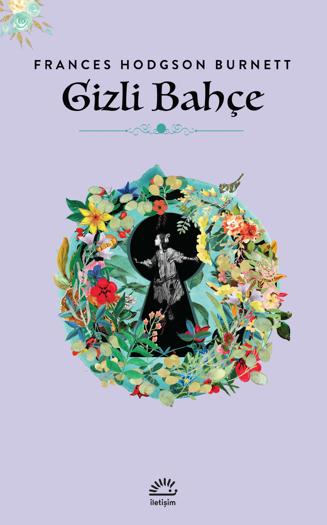
“The Secret Garden” is one of the classics of world children’s literature, written by Frances Hodgson Burnett, with themes of love and inner transformation centered around nature.
The Secret Garden tells the story of Mary Lennox, a spoiled and selfish girl raised in India but neglected by her parents. After losing both parents to cholera, Mary is sent to live at her uncle’s estate in the English countryside, where she undergoes profound physical and emotional transformation. Her discovery of a neglected, hidden garden on the estate sparks a growing interest in the world around her. Through her relationships with the servant Martha, her nature-loving brother Dickon, and her bedridden cousin Colin Craven, who has been confined to his room by fear of illness, Mary changes not only her own life but also the lives of those around her. The revival of the secret garden symbolizes the inner healing and transformation of the characters.
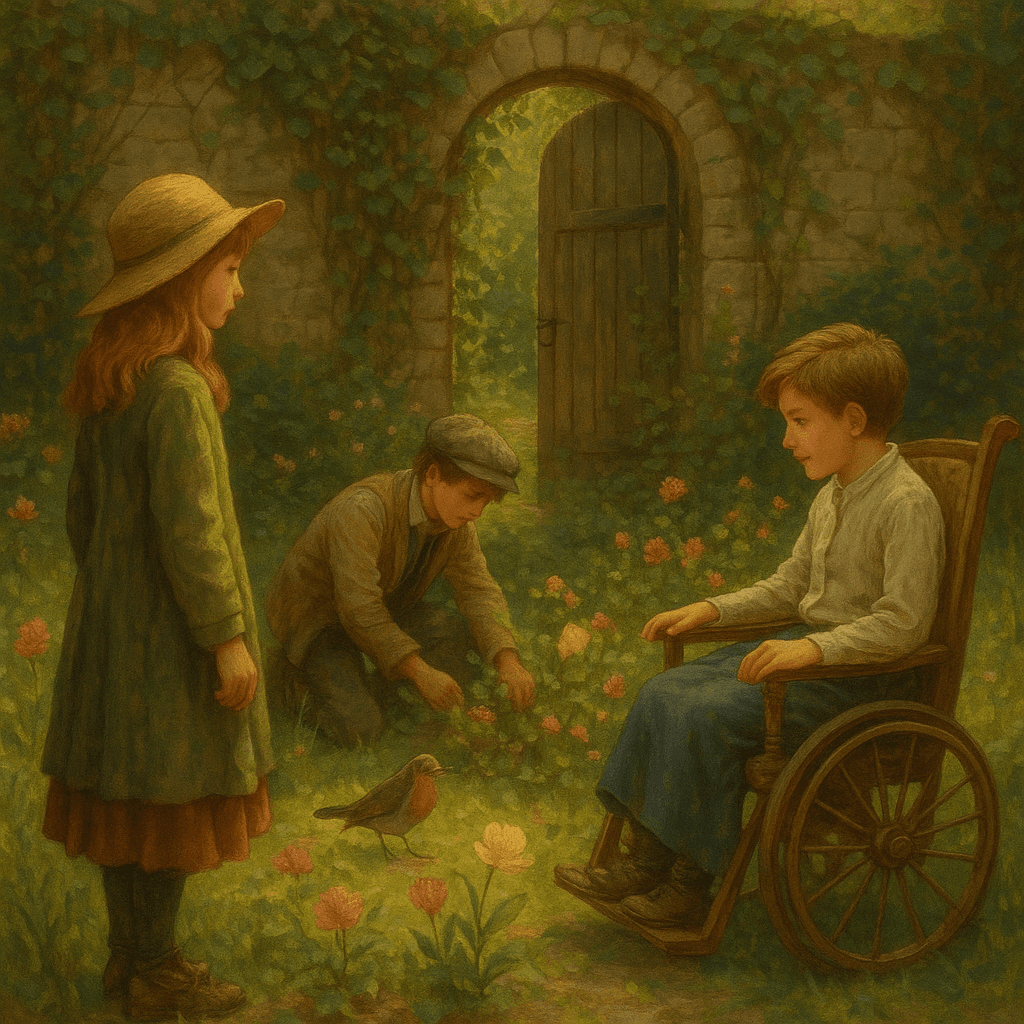
Finding the Abandoned Secret Garden in the Estate (Generated by Artificial Intelligence)
Frances Hodgson Burnett’s 1911 classic novel The Secret Garden examines how the garden functions as an “in-between” or threshold space for the female character within a patriarchal structure. This analysis explores how the patriarchal norms of Victorian England shaped the social structures that influenced the character of Mary Lennox, a young girl, while also revealing that the garden is deliberately constructed as a liminal space where magic and reality converge.
At the center of the novel, Mary is a child raised in colonial India without love, belonging to a cold and obedient social system that does not suit her. Abandoned by her parents, Mary seeks her place within the vast, closed, and mysterious estate she is sent to in England. In this context, the secret garden becomes not only a physical space but also a psychological and symbolic one for Mary. The garden’s locked, neglected, and dormant state mirrors Mary’s own inner world.
Throughout the novel, the garden is portrayed as a space removed from direct patriarchal control. Unlike the estate, which enforces patriarchal norms, the garden allows Mary to discover herself and construct an alternative identity. This space becomes a realm of liberation where Mary gains autonomy over her body, emotions, and relationships. Tending the soil, reviving the flowers, and forming a bond with nature signify her transition from passivity to agency.
Furthermore, the friendships Mary forms are central to this transformation. Through the servant Martha and the nature-connected Dickon, a solidarity emerges that transcends class and gender boundaries. Even Colin’s physical and psychological recovery progresses in parallel with Mary’s efforts to restore the garden. Mary’s transformation represents the emergence of an independent subject who does not conform to traditional feminine norms but instead builds her own identity.
Burnett, Frances Hodgson. Gizli Bahçe. Trans. Başak Bekişli. Istanbul: İletişim Yayınları, 2024.
Ekler, Onur. “Francis Hodgson Burnett's The Secret Garden and Şehrnuş Parsipur's Women Without Men: The Discovery of the Garden as a ‘Liminal Space’ for Women.” Literature and Humanities 74 (2025): 33–42. Accessed July 14, 2025. https://dergipark.org.tr/en/pub/literatureandhumanities/issue/92475/1502700.

No Discussion Added Yet
Start discussion for "Secret Garden (Book)" article
Plot
Themes
Characters
The Garden, Threshold, and Woman: The Function of the Garden as an Anti-Oedipal Female Space in Frances Hodgson Burnett’s The Secret Garden