


This article was automatically translated from the original Turkish version.
+1 More
Segovia Aqueduct is a Roman aqueduct located in the city of Segovia, within the Autonomous Community of Castile and León in Spain. With a history of approximately 2,000 years, it is among the best-preserved Roman aqueducts in Europe.
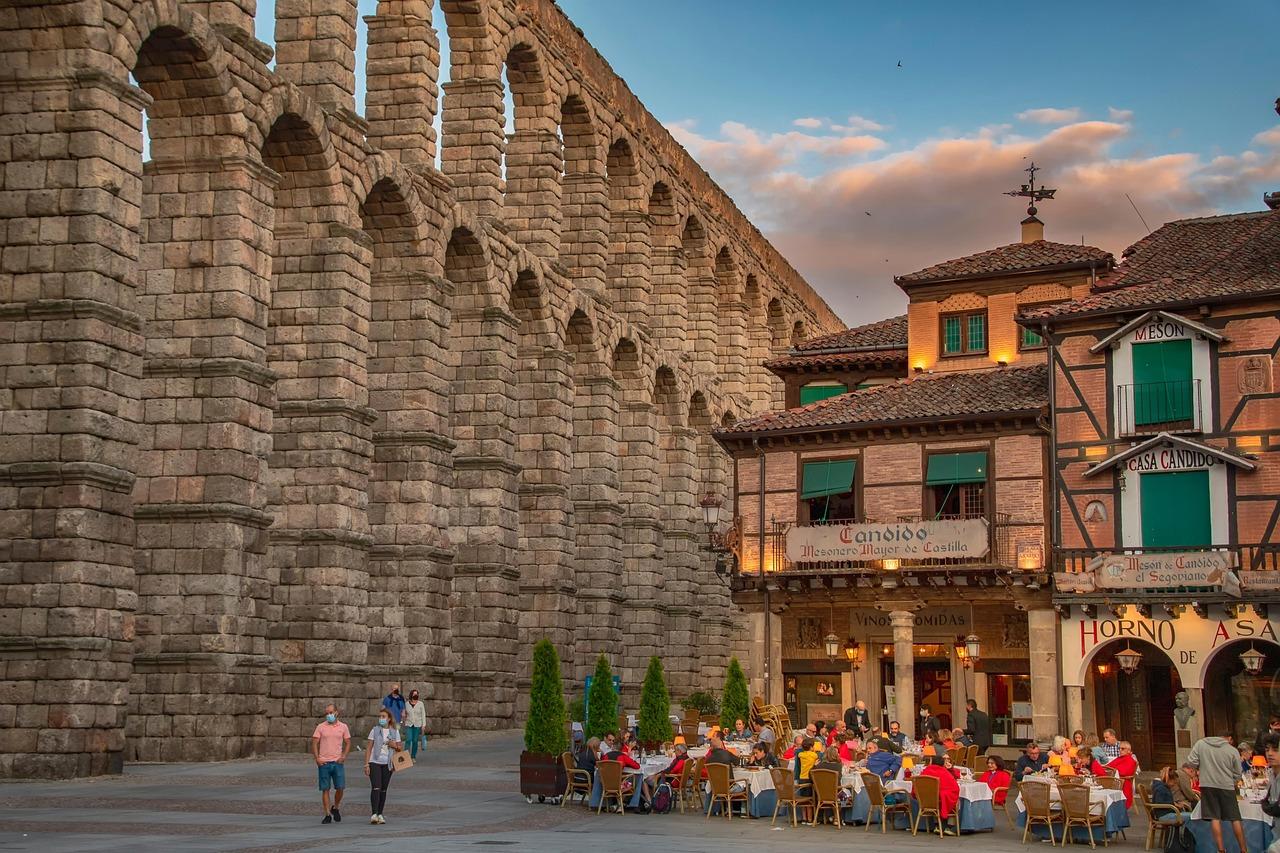
Segovia Aqueduct (Pixabay)
The Segovia Aqueduct is generally believed to have been constructed in the second half of the 1st century AD, likely during the reign of Emperor Domitian (81–96). Some sources indicate that construction began around 50 AD. The aqueduct was built to transport water from springs in the Sierra de Fuenfría to the city of Segovia and remained in use until 1973. The structure consists of large stone blocks assembled without mortar. Designed as a two-tiered arch system, it is supported by arches of varying heights to adapt to the topography. Its maximum height is 28.5 metres and its length is approximately 813 metres, composed of a double row of arches resting on 128 columns.
The Segovia Aqueduct is a functional structure representing Roman civil engineering. It is situated in the heart of the city and integrated with other historic buildings that form Segovia’s historical fabric. These include the Alcázar of Segovia (11th century), the Gothic Cathedral of Segovia (16th century), various Romanesque churches, noble mansions dating from the 15th and 16th centuries, and the Segovia Mint.
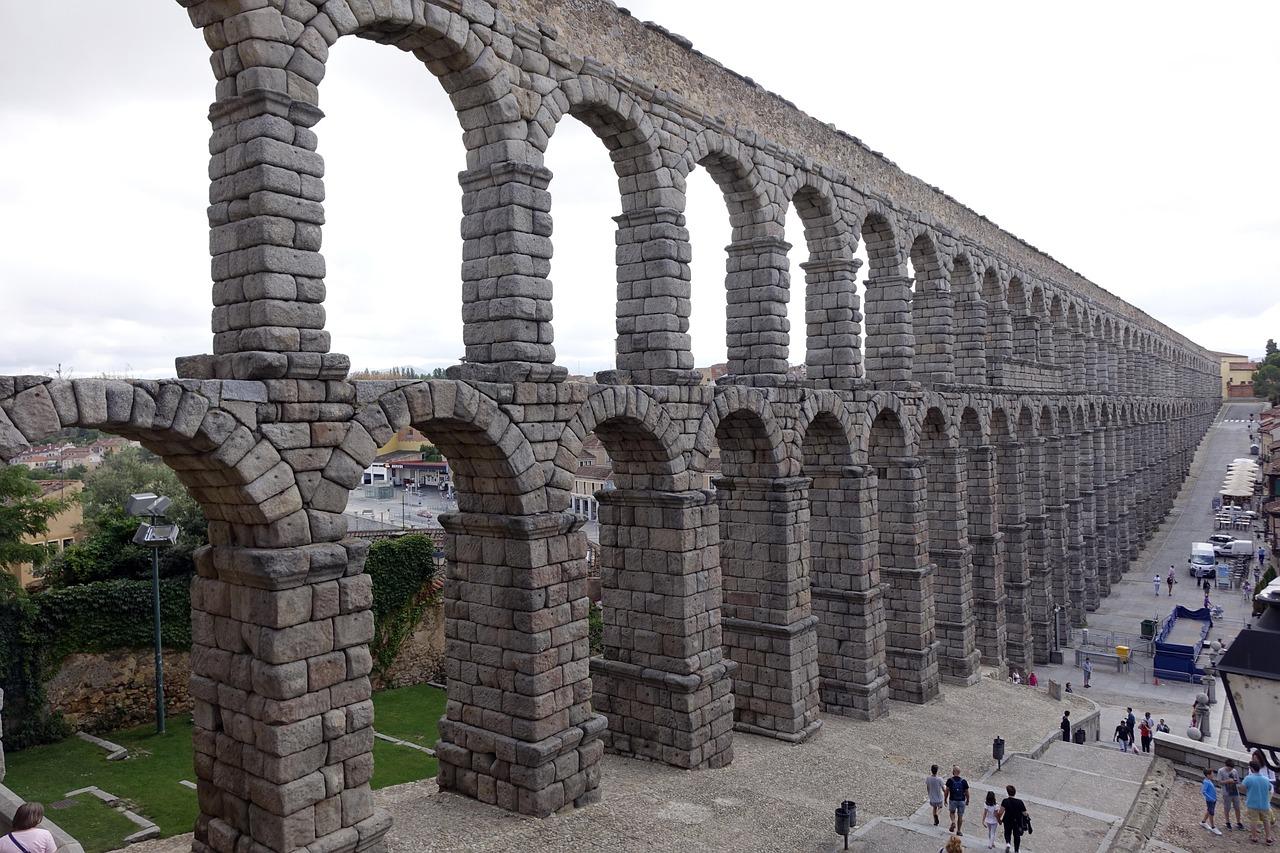
Segovia Aqueduct (Pixabay)
Segovia has historically been a crossroads of different cultures. During the Middle Ages, the city was home to Muslim, Christian and Jewish communities living together. In the 16th century, it emerged as a center of production. The Roman aqueduct continued to function throughout this historical period and remained embedded within the city’s historical structure.
The Old Town of Segovia and its Aqueduct were inscribed on the UNESCO World Heritage List in 1985. This site was evaluated by UNESCO based on three criteria:
Although the aqueduct maintained its structural integrity for centuries, it has begun to suffer damage in modern times from factors such as traffic vibrations and air pollution. As a result, the World Monuments Fund included the structure on its World Monuments Watch List in 2006, and conservation plans were developed under the leadership of the City of Segovia and the Spanish Ministry of Culture. In 2009, technical workshops held in cooperation with UNESCO emphasized the necessity of a management plan for the preservation of the structure.

History and Construction Technique
Architecture and Its Place in the Urban Fabric
Cultural and Historical Significance
World Heritage and Conservation Efforts
