


This article was automatically translated from the original Turkish version.
+2 More
Şehidiye Medresesi
Location | Mardin Türkiye | ||||||||
|---|---|---|---|---|---|---|---|---|---|
Construction Date(s) | early 13th century (1214) | ||||||||
Period(s) | Artuklu Beylik | ||||||||
Architectural Plan | courtyard with arcades, two iwan, mosque on the south | ||||||||
Structural Feature | madrasa-mosque unity | ||||||||
Şehidiye Medresesi is located in the city center of Mardin, in southeastern Türkiye. The building is part of the same külliye as the Şehidiye Camii. Situated within Mardin’s traditional architectural fabric, this structure stands out for its historical and architectural features.

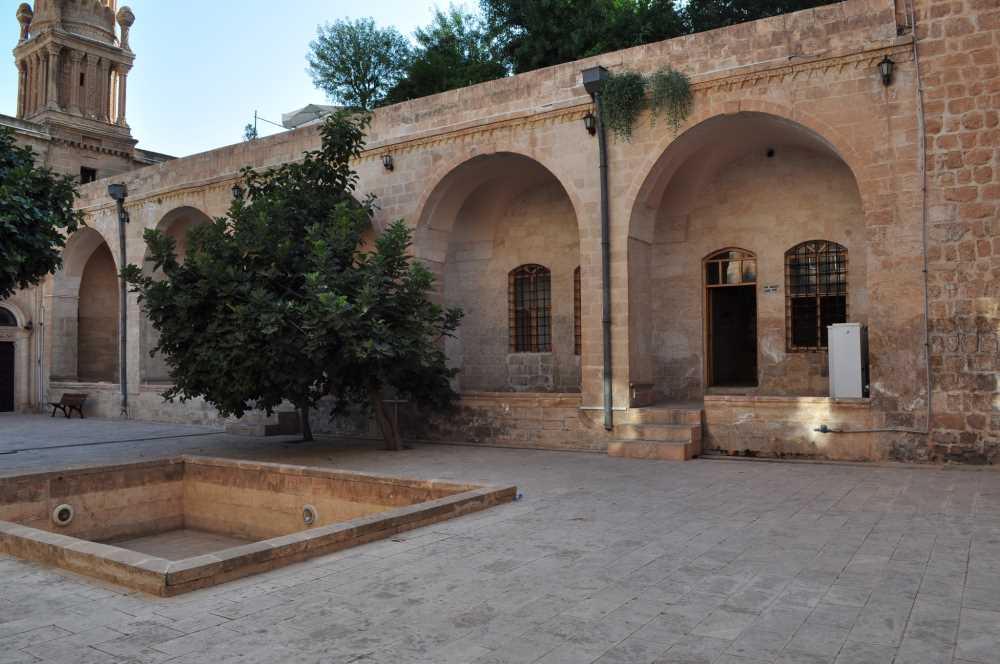
Şehidiye Medresesi.(Ministry of Culture and Tourism of Türkiye)
The medrese is generally believed to have been built in the early 13th century by Artuklu Sultan Melik Nasreddin Artuk Aslan. Some sources indicate that the structure was completed in 1214. It is also reported that the Şehidiye Camii was constructed during the same period.

Şehidiye Medresesi.(Ministry of Culture and Tourism of Türkiye)
The medrese belongs to the class of classical Anatolian medreses with a colonnaded courtyard and iwan-based plan. A two-nave mosque is situated on the southern side. The northern iwan features a public water fountain, while the western iwan is located in the center of the cross-vaulted colonnades. A small mosque lies to its south.
The mosque within the medrese has undergone numerous modifications over time. The mosque section was originally designed as a two-transverse-nave structure. It appears that the original façade was highly ornate, but it has changed significantly over the centuries. The mosque is the part of the medrese that has experienced the most architectural intervention.
The original minaret of the building was demolished over time. The current minaret was reconstructed between 1916 and 1917 by Armenian architect Serkis Lole. Built without scaffolding, it is designed in an eclectic style. Its helical structure with double staircases leading to the balcony is one of its most distinctive architectural features.

Şehidiye Medresesi.(Ministry of Culture and Tourism of Türkiye)
Over time, the building has undergone numerous repairs, modifications, and additions. As a result, only limited portions of the original medrese structure have survived to the present day. The mosque section and the minaret are among the most prominent examples of these alterations.
Artuklu Üniversitesi. "Medreseler." Artuklu University Official Website. Accessed May 30, 2025. https://www.artuklu.edu.tr/sosyal-tesisler/medreseler
Ministry of Culture and Tourism of the Republic of Turkey. "Şehidiye Medresesi." Kültür Portalı. Accessed May 30, 2025. https://www.kulturportali.gov.tr/turkiye/mardin/gezilecekyer/sehidiye-medresesi
Ministry of Culture and Tourism. "Şehidiye Medresesi."Mardin İl Directorate of Culture and Tourism. Accessed May 30, 2025. https://mardin.ktb.gov.tr/TR-312150/sehidiye-medresesi.html

Şehidiye Medresesi
Location | Mardin Türkiye | ||||||||
|---|---|---|---|---|---|---|---|---|---|
Construction Date(s) | early 13th century (1214) | ||||||||
Period(s) | Artuklu Beylik | ||||||||
Architectural Plan | courtyard with arcades, two iwan, mosque on the south | ||||||||
Structural Feature | madrasa-mosque unity | ||||||||
History
Architectural Features
Restorations and Alterations