


This article was automatically translated from the original Turkish version.
+3 More
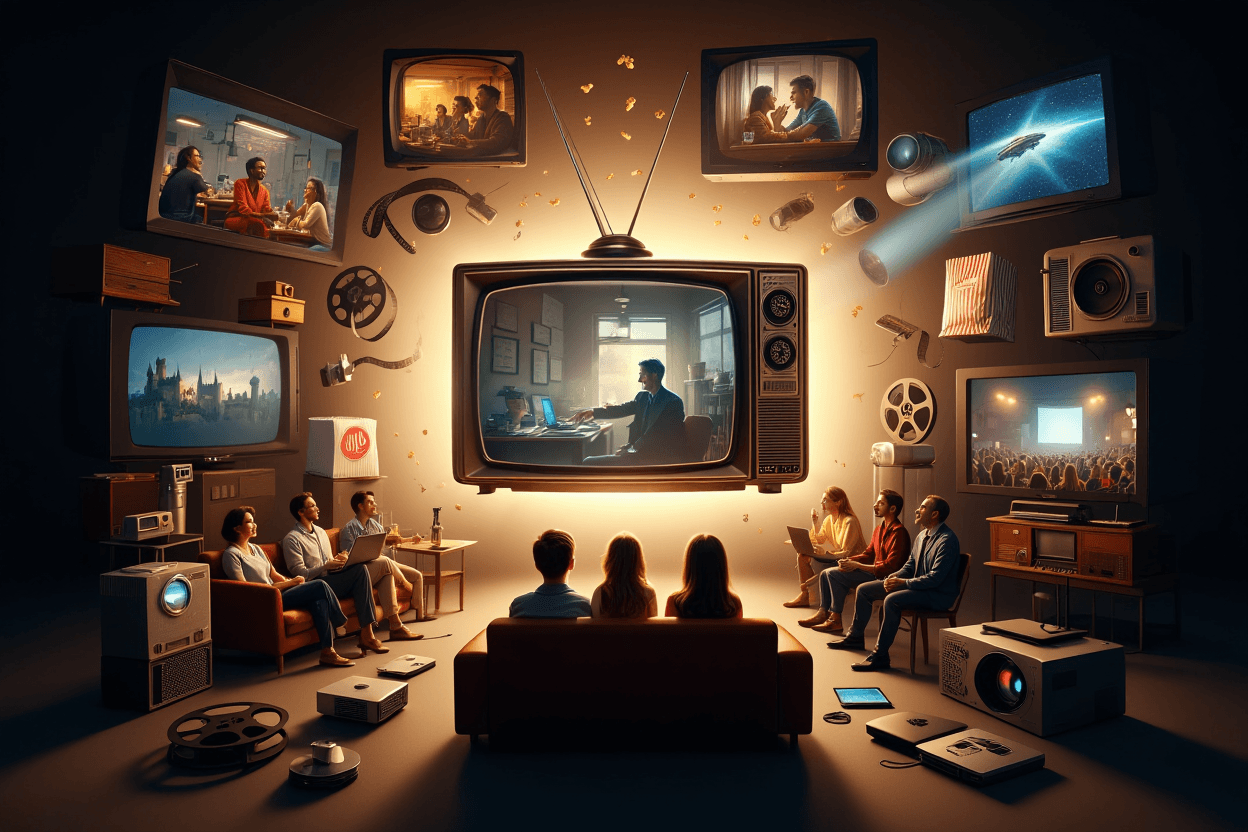
Series Culture (Generated with Artificial Intelligence)
Basic Components | Narrative Art, Consumer Culture, Identity Construction, Audience Participation, Media-Advertising Integration | ||||||||
|---|---|---|---|---|---|---|---|---|---|
Academic Disciplines | Sociology, Communication Studies, Media Studies, Cultural Studies | ||||||||
Economic Dimension | Shaping consumption habits, product placement, and the use of characters in advertisements | ||||||||
Drama culture is a concept that defines the entire spectrum of cultural practices emerging from the multifaceted impacts of television series on individuals, social structures, and economic dynamics. Series do not serve merely as entertainment tools for leisure time; they also play a significant role in shaping social relationships, constructing identities, and facilitating cultural transmission. In this context, television series, as one of the most widespread forms of mass media, function as a medium that directs both individual experiences and collective memory.
The scope of drama culture encompasses a broad range, from the intellectual debates sparked by the artistic and aesthetic dimensions of series among viewers, to the adoption of lifestyles and consumption patterns disseminated through characters and narratives. In this process, series create a shared reference point across different social classes, generations, and cultural contexts, manifesting themselves in numerous practices—from everyday conversations to social media interactions.
Economically, drama culture is directly linked to sectors beyond the television industry, including fashion, tourism, advertising, and digital platforms. The transformation of filming locations of popular series into tourist attractions, the influence of products used by characters on consumer trends, and the global diversification of series production and distribution through digital platforms reveal the economic dimensions of this culture.
In academic research, drama culture is regarded as a powerful media instrument that reproduces social values, reinforces consumer ideology, and shapes cultural identities. From this perspective, television series are not merely components of popular entertainment but are also examined as arenas through which social norms, ideological discourses, and cultural practices circulate.
Since the early 21st century, television series have undergone a significant transformation in narrative structure, character development, and production quality. Previously limited to episodic formats with short durations and primarily entertainment-focused content, series in this era evolved into productions that embraced cinematic aesthetics, developed long-form and layered narratives, and achieved greater dramatic depth. High production values, cinematographic techniques, and thematically rich scripts have transformed television from a mere tool for leisure into a platform for intellectual, artistic, and social discourse.
In this context, Alan Ball’s Six Feet Under is widely regarded as one of the most important examples of narrative evolution in television history. The series, which explores universal themes such as death, life, grief, belonging, and social norms through the daily lives of a family running a funeral home, blends dark humor with philosophical depth. Its final episode, in particular, left an unforgettable mark on television history by powerfully portraying the fragility of life and the passage of time through a striking visual language and emotional intensity.
Similarly, David Milch’s Deadwood transcended the traditional boundaries of the Western genre by introducing a new narrative aesthetic. Set in a lawless American town during the 1870s, the series is not merely a historical reenactment but also a critical interrogation of civilization, authority, and morality through Shakespearean dialogue and unflinching realism. This approach demonstrated the capacity of television series to reinterpret historical genres.
As a sports drama, Friday Night Lights, while表面上 centered on high school football, actually paints a panoramic view of society through themes of belonging, class differences, family relationships, and individual struggles. The series’ ability to extend from local contexts to universal concerns revealed television’s potential as a sociological lens.
In the science fiction genre, Battlestar Galactica merged humanity’s existential struggle with intergalactic political tension and religious allusions, introducing philosophical questions beyond conventional television norms. Themes such as technology, faith, human nature, and ethical responsibility were not merely fictional elements but also treated as subjects of social debate within the series.
Such productions have reinforced their artistic value through prestigious awards like the Emmys and Golden Globes, while simultaneously strengthening television’s role in cultural and intellectual production. These series do not merely present stories to viewers; they compel them to confront complex moral, social, and philosophical issues, transforming television into a narrative form comparable to literature, theater, and cinema.
When evaluated sociologically, drama culture is not merely a realm of entertainment or aesthetic experience; it emerges as a significant social space where consumer culture is reproduced and disseminated. In academic literature, consumption, following Jean Baudrillard’s approach, is defined as a system of signs regulated by specific codes and rules. From this perspective, series rank among the most powerful carriers of this sign system. Characters, settings, costumes, objects, and plotlines do not merely convey stories; they also present specific lifestyles, value systems, and the consumer goods necessary to attain such lifestyles.
In this context, striking villas, high-tech automobiles, clothing reflecting current fashion trends, expensive jewelry, gourmet restaurants, and lavish celebrations function as symbols of consumer culture within series. Narratives frequently emphasize the happiness, freedom, or social status conferred by wealth and consumption. Marrying a wealthy and powerful character or living a life surrounded by material comforts is often presented as an indicator of a happy life. Such narratives transform luxury lifestyles into desirable goals and define social success through consumption.
The impact of series on viewers at this point extends beyond mere aesthetic appreciation. Viewers may adopt the lifestyles and consumption patterns depicted in series as ideals or life projects. In this process, consumption ceases to be merely an economic activity aimed at fulfilling needs; it becomes a form of expression through which individual identity, social belonging, and class position become visible. Viewers, by consuming the symbols represented in series, can strengthen their desire to feel affiliated with a particular social position or to attain it.
Ultimately, television series function as a powerful media instrument that normalizes consumer ideology, presents consumer goods as symbols of identity and status, and facilitates the reproduction of social values within this framework. Thus, drama culture becomes a mechanism that encourages individuals to construct their social status through consumer objects and disseminates consumer culture to broad audiences.
The economic dimension of drama culture becomes most visible through its close relationship with the media industry and advertising sector. Particularly from the 2000s onward, locally produced series with high ratings, combined with television’s mass reach, have become an extremely attractive platform for advertisers. This process has extended beyond mere product placement to a new stage in which popular series characters are directly used in independent advertising campaigns.
The emotional bond, identification, and trust viewers develop with characters in series transform these characters into powerful representatives for brands. When a beloved character promotes a specific product in an advertisement, it directly influences viewers’ perceptions of that product; the product is marketed not only through its functional attributes but also through the values and lifestyle represented by the character. For instance, when a series character appears in advertisements for automobiles, banking services, food products, or technological devices, it can enhance viewers’ trust in the brand and associate the product with positive connotations.
This strategy plays a critical role in transferring values associated with consumer culture to society at large. Academic analyses indicate that using series characters in advertising campaigns not only encourages product sales but also reproduces core ideological values of consumer society—individualism, competition, hedonism, ostentation, prestige, and status-seeking. Thus, the connection between series and advertising becomes not merely an economic collaboration but a cultural process influencing the circulation of social values. A concrete example is the use of characters from the series Yalan Dünya in advertising campaigns across various product categories, which vividly illustrates this integration between series content and advertising. Such practices contribute to the increasing blurring of boundaries between entertainment content and commercial messages. Ultimately, viewers simultaneously identify with characters within narrative worlds and engage with products marketed through those same characters.
Therefore, drama culture functions not only as an artistic or sociological phenomenon but also as an economic and ideological domain shaped by advertising and the media industry. This integration serves as a powerful mechanism facilitating the spread of dominant consumer ideology through popular culture.
Drama culture is not limited to the production processes and content of series; it is also directly tied to how viewers follow, interpret, discuss, and integrate these contents into their daily life practices. In this context, the viewer is not a passive consumer but an active agent who generates meaning, offers critique, and participates in cultural dialogues.
With the proliferation of digital technologies, viewer participation has become both more visible and more diverse. Social media platforms, blogs, video content sites, and forums enable fans to gather and create collective spaces for discussion and exchange. Within these virtual communities, viewers develop theories about plotlines, analyze character behaviors, and debate alternative narrative possibilities. Simultaneously, the series universe is re-created and expanded by viewers through fan fiction, video edits, visual productions, and parodies. Posts tagged with “drama culture” reveal the vibrancy, interactivity, and layered complexity of this field.
In addition, drama culture has begun to institutionalize not only through digital environments but also through print publications and academic platforms. The Turkish publication Episode: Drama Culture Magazine stands out as a tangible manifestation of this process. Such publications treat series not merely as forms of entertainment but as artistic and cultural products worthy of serious thought, debate, and analysis. Thus, drama culture has evolved into a broad cultural field involving contributions from diverse actors—from media critics and academics to industry professionals and amateur viewers.
Viewer participation also facilitates cultural circulation on a global scale. Access to series from different countries via digital platforms has led to the formation of international viewer communities and increased cultural interaction. In this context, the widespread popularity of Turkish series in regions such as the Middle East, Latin America, and the Balkans represents not only an economic success but also a form of cultural dialogue and identity transfer. Ultimately, drama culture possesses the nature of a cultural field that is continuously evolving, reshaping, and generating its own institutions, communities, and modes of production. In this process, viewers emerge not merely as passive observers of narratives but as active participants who generate meaning, debate cultural values, and transform the dynamics of media environments.
Aydın, Özlem Kukrer. "Televizyon Reklamlarında Dizi Karakteri Kullanımıyla Sunulan Tüketim Kültürü Değerleri: Yalan Dünya Örneği." *Yaşar Üniversitesi E-Dergisi* 9, no. 36 (2014): 6273–82. https://dergipark.org.tr/tr/pub/jyasar/issue/19150/203335.
Baloğlu, U., and Y. Birincioğlu. "Bir Kültürel Tüketim Pratiği Olarak Netflix Dizileri." *Alanya Akademik Bakış* 5, no. 2 (2021): 547–70. https://doi.org/10.29023/alanyaakademik.821572.
Demir, Nesrin Kula. "TV Dizileri Yoluyla Yeniden Üretilen Tüketim Kültürü." The Journal of Academic Social Science Studies 6, no. 1 (2013): 989–1010. https://doi.org/10.9761/JASSS_539.
Karaboğa, Mehmet Tahir. "Dizi İzleyicilerinin Televizyon Dizilerinde Sunulan Tüketim Unsurlarına Yönelik Eğilimleri." The Journal of Academic Social Sciences 27 (2016): 182. https://doi.org/10.16992/ASOS.1177.
Kula, Nesrin. "TV Dizileri Yoluyla Yeniden Üretilen Tüketim Kültürü / The Re-produced Consumption Culture by TV Series." Journal of History Culture and Art Research 1 (2013): 507. https://doi.org/10.7596/taksad.v1i4.121.
Kumar, Sunita. "Influence of Product Placements in Films and Television on Consumers Brand Awareness." Archives of Business Research 5 (2017). https://doi.org/10.14738/abr.52.2747.
Kuyucu, M. "Gençlerin Türkiye’de Üretilen Televizyon Dizilerine Yönelik Tutumları ve Dizi Tüketim Faktörlerinin Analizi." *Uluslararası Kültürel ve Sosyal Araştırmalar Dergisi* 5, no. 2 (2019): 558–99. https://dergipark.org.tr/tr/pub/intjcss/issue/51161/615670.

Series Culture (Generated with Artificial Intelligence)
Basic Components | Narrative Art, Consumer Culture, Identity Construction, Audience Participation, Media-Advertising Integration | ||||||||
|---|---|---|---|---|---|---|---|---|---|
Academic Disciplines | Sociology, Communication Studies, Media Studies, Cultural Studies | ||||||||
Economic Dimension | Shaping consumption habits, product placement, and the use of characters in advertisements | ||||||||
Artistic and Narrative Development
Reproduction of Consumer Culture
Integration with Media and Advertising
Viewer Participation and Cultural Field