

This article was automatically translated from the original Turkish version.
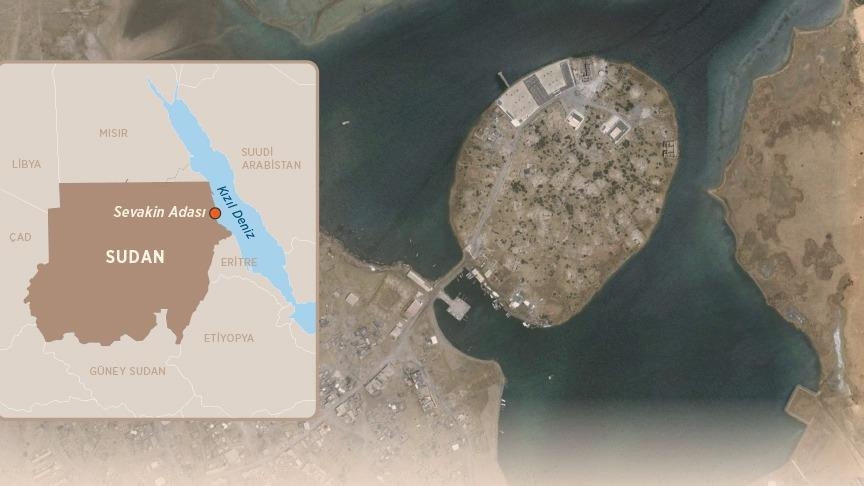
Sevakin Island is a strategically significant island located in the Red Sea, near the coast of Sudan in the northeastern part of Africa. With an area of approximately 3 km², the island has historically occupied a critical position along the north-south trade routes of the Red Sea, serving as a key node for maritime control and security. Its geographic location has provided an ideal platform for the construction of port facilities and military use. Throughout history, the island has been utilized by various civilizations and states for different purposes, particularly becoming a central hub for both commercial and military activities during the Ottoman Empire.

Sevakin Island (AA)
Sevakin Island is situated approximately 6–7 kilometers off the western coast of the Red Sea, near the northeastern border of Sudan. Due to its position along north-south maritime trade routes, the island holds strategic importance for both port operations and military surveillance.
Physically, the island is a small landmass composed of volcanic and sedimentary rock formations, covering an area of about 3 km². Its coastline is bounded by coves and shallow water areas capable of forming natural harbors. These features have influenced the construction of ports and piers throughout history. The island’s topography consists of gentle slopes and plateaus rising from the coast toward the interior; this terrain has provided specific advantages for both settlement and defense.
In terms of climate, the island lies within the hot and arid tropical zone characteristic of the Red Sea. Summers are marked by high temperatures and humidity, while winters are relatively mild and dry. These climatic conditions have resulted in limited freshwater resources and constrained permanent settlement or agricultural activity on the island.

Sevakin Island (AA)
In addition to its natural environment, the waters surrounding the island are bordered by coral reefs and shallow lagoons; this has created navigational challenges for maritime traffic while enabling fishing and small-scale marine resource utilization.
Sevakin Island has gained strategic and economic importance throughout history due to its location at the crossroads of Red Sea and East African trade routes. During ancient and medieval periods, it served as a key stopover for Arab, African, and Indian Ocean-based merchants, fulfilling both port functions and a central role in regional control.
Before the 16th century, Sevakin was under the influence of local Arab and African states in the region. The island held a critical position in securing trade routes between Ethiopia and Sudan and in controlling maritime traffic in the Red Sea. Although its harbor was shallow and narrow, it was suitable for small and medium-sized trading vessels.
In the early 16th century, the Ottoman State began using Sevakin as a strategic base to regulate maritime and overland trade in the Red Sea region and to secure the pilgrimage routes to Hejaz and Mecca. Under Ottoman administration, the island functioned as both a military and commercial center.

Document dated 1571 bearing the title “Decree to the Governor of Habesh,” detailing how local tribes attacked Sevakin but order was restored and peace secured, addressed to the Grand Vizier (AA)
By the late 19th century, shifting power dynamics in the Red Sea led to a decline in Ottoman authority over Sevakin Island. From 1882 onward, the island came under British control, reshaping its administrative and commercial role. The British administration diminished the island’s regional significance by promoting the developing Port Sudan as the primary harbor and implementing policies to relegate Sevakin to a secondary port function.
The British period also brought physical changes to the island’s structure. Existing buildings were repurposed for administrative use; Ottoman architectural layouts were modified to accommodate new functions; however, conservation and restoration efforts remained limited, leading to the deterioration of many structures over time.
The legal end of Ottoman sovereignty over Sevakin coincided with the post-Lausanne period. In 1956, following Sudan’s independence, the island remained within Sudan’s national borders. Since then, Sevakin has largely lost its former commercial function; economic activity shifted to Port Sudan, and the island transformed into a settlement experiencing population decline.
In the 17th century, Evliya Çelebi visited Sevakin and described it as a vibrant port and commercial center. The town served as a hub where goods from interior Africa were collected and transshipped via the Red Sea to other ports. It also experienced significant human movement as one of the key transit points for pilgrims.
Three elements stand out in Evliya Çelebi’s descriptions:
Evliya Çelebi’s accounts demonstrate that Sevakin was an international hub of trade and cultural exchange.
Ottoman control, though relatively brief, led to the establishment of an administrative and social structure on the island. The local population had direct contact with Ottoman military and administrative presence; some structures, including small mosques and storage buildings, were constructed during this period. These buildings formed the physical infrastructure supporting the island’s religious and commercial functions.
Throughout the Ottoman period, Sevakin Island was regarded as a strategic naval base along the Red Sea and Indian Ocean routes. It maintained its importance in controlling trade connections between Europe and Africa and in providing security and logistical support for Ottoman-Hejaz relations.
Commercial activities on Sevakin involved the transportation of both land- and sea-based goods. Major traded commodities included:
Throughout the Ottoman period, Sevakin Island served as a critical military center for securing naval dominance over the Red Sea and the eastern African coast and for safeguarding the pilgrimage routes to Hejaz and Mecca. Due to its geographic position and port capacity, the island was considered an ideal base for monitoring maritime threats, regulating trade routes, and managing relations with local powers.

Sevakin Island (AA)
The Ottoman administration organized the island’s defense by stationing a small garrison. The garrison’s primary duties were:
The garrison structure combined military fortifications with the natural terrain, positioning defensive points at strategic locations around the island.
The fortifications built on Sevakin Island were designed to defend against coastal attacks and maintain military control within the island. These defenses were supported by small artillery batteries, watchtowers, and garrison areas, transforming the island into a compact and resilient defensive system capable of resisting threats from both sea and land.
The island served as a central base for controlling the north-south maritime routes of the Red Sea. Through its military presence, the Ottoman administration:
These activities ensured the integration of military and economic control.
Sevakin Island functioned as a communication hub linking other Ottoman bases in the Red Sea with administrative units in Hejaz. Logistically, the island served as:

Sevakin Island (AA)
Throughout history, Sevakin Island has fulfilled economic and commercial roles as a key control point along Red Sea trade routes. Particularly between the 16th and 19th centuries, the island functioned as an intermediate port, customs checkpoint, and storage facility in regional and international trade.
Small-scale piers and storage facilities were constructed at the island’s ports, with loading and unloading operations organized according to vessel type. Coastal structures were positioned to accommodate both small boats and medium-sized merchant ships in shallow and deep water zones. The port and warehouse infrastructure was organized to ensure the continuity of goods flow, with specialized storage methods developed for products such as spices and grain.
Sevakin Island established direct economic links with the coastal and inland economies of surrounding Africa. Trade passing through the island diversified local markets and generated income sources for regional communities. This interaction strengthened economic ties between coastal towns around the Red Sea and the island’s hinterland.

Geographical Location and Physical Characteristics
Historical Significance
Pre-Ottoman Status
Ottoman Period and Administrative Control
British Administration and Post-Ottoman Political Status
Evliya Çelebi’s Observations on Sevakin
Cultural and Social Impacts
Strategic Importance
Commercial Activities
Ottoman Military and Strategic Activities
Military Base and Garrison Structure
Fortifications and Defensive Arrangements
Maritime Security and Trade Control
Strategic Communication and Logistics
Economic and Commercial Functions
Structural and Technological Features of Trade
Interaction with the Regional Economy