


+1 More

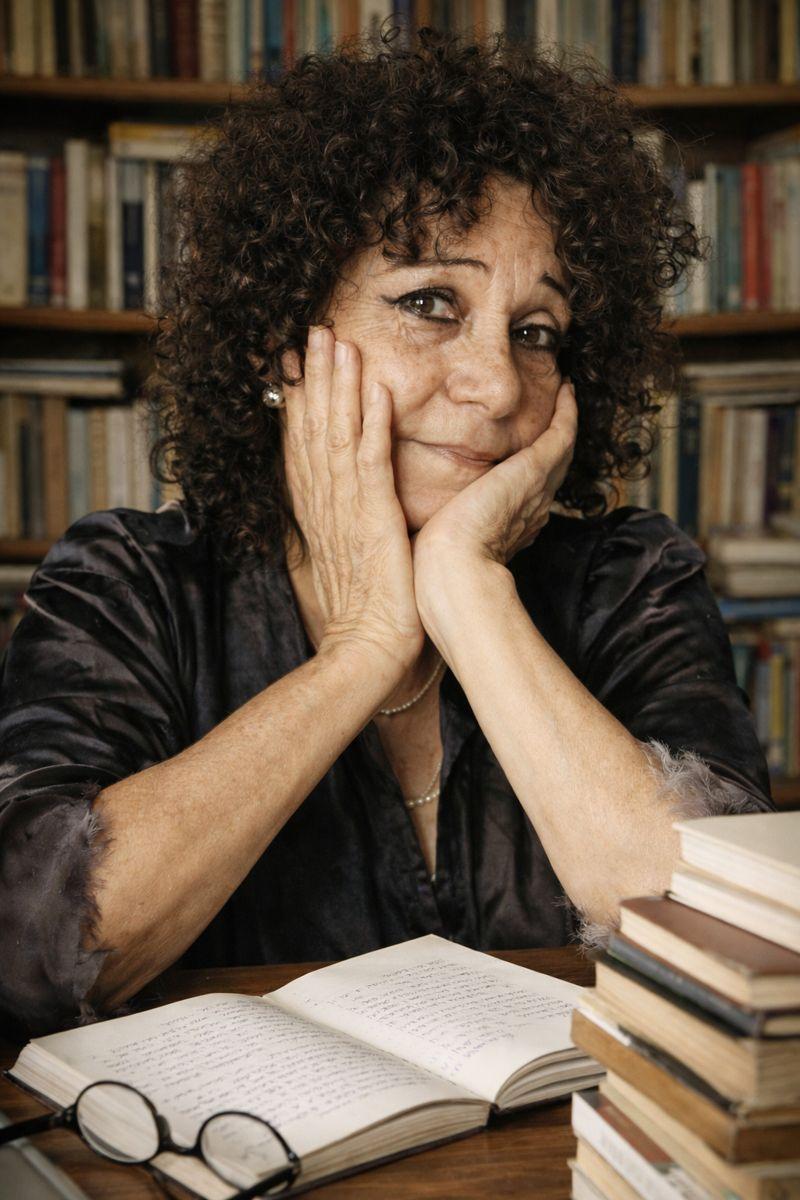
Sevim Burak
(Yapay Zekâ ile Oluşturulmuştur)
Sevim Burak (full name: Zeliha Sevim Burak; 29 June 1931 – 31 December 1983) was a writer who produced works in the genres of short story, theater, and novel during the Republican era of Turkish literature. Her narrative, enriched by fantastic elements, and her approach to language and fiction, characterized by structures that challenged established storytelling conventions, occupy a unique position within 20th century Turkish literature. Burak, evaluated within the context of the New Literature movement, is particularly known for her short stories; she intricately wove her literary production with her personal life experiences.
Zeliha Sevim Burak was the daughter of Aysel Kudret Hanım (Anne Marie Mandil) and Kılavuz Kaptan Seyfullah Mehmet Burak (Seyfi Kaptan). She was born on 29 June 1931. She completed her primary education at Nakkaştepe 45th Primary School. She continued her secondary education in the middle section of the German High School but did not pursue further formal education, instead entering the workforce.
In her professional life, she worked as a model and held various jobs including tailoring and working as a shop assistant in bookstores. For a period, she managed her own clothing and fashion shop. This phase coincided with the years during which she continued her literary activity, forming a period in which her life experiences became deeply intertwined with her literary output.
Married twice, Burak’s first marriage was to the violinist Orhan Borar. From this union, she had a son named Karaca Borar. Her second marriage was to the painter Ömer Uluç; from this marriage, she had a daughter named Elfe. Burak lived for a time in Nigeria with Ömer Uluç.
Admitted to Haseki Hospital due to a severely advanced heart condition, Sevim Burak died on 31 December 1983 before the planned heart surgery could be carried out. She was buried on 5 January 1984 at Nakkaştepe Cemetery.

Sevim Burak’s House, Kuzguncuk (Photograph: Meryem Şentürk Çoban)
Sevim Burak’s first appearance in the literary world occurred in 1951 with her short story Büyük Günah, published in the newspaper Yeni İstanbul. This story was among the top six entries in the newspaper’s World Stories Competition. In subsequent years, her stories appeared in the newspapers Ulus and Milliyet, and in the journals Yenilik and Türk Dili.
Burak’s first serious work, Yanık Saraylar, was published in 1965. Comprising six short stories, the book generated debate among literary circles upon its release and was regarded as occupying a distinct position within modern trends in Turkish short fiction. Despite the author’s expectations, the work did not receive significant attention or win any of the period’s prestigious awards, such as the Sait Faik Award. In response, Sevim Burak refrained from publishing any new work for approximately seventeen years as a form of protest against the literary establishment. During this time, she did not submit her manuscripts for literary awards and withdrew from publishing activities.
In 1982, Sevim Burak published her second short story collection, Afrika Dansı, and her play Sahibinin Sesi. Sahibinin Sesi was added to the repertoire of the State Theaters and staged in 1985.
A year after the author’s death, her play Everest My Lord / İşte Baş, İşte Gövde, İşte Kanatlar was published. Letters she wrote to her son Karaca were compiled and published in 1990 under the title Mach I’dan Mektuplar. Her unfinished novel Ford Mach I was prepared for publication by Nilüfer Güngörmüş Erdem and released in 2003.
After her death, Burak’s plays were staged by various theaters. The 2000s emerged as a period of intensified scholarly work on Sevim Burak.
Sevim Burak defined the short story as an inner monologue spanning a human being’s life from birth to death. In her writing, the short story served as the primary narrative space through which personal life experiences were processed. She addressed the ruptures and defeats in her own life through her stories, constructing narratives and characters that became textual manifestations of this process. Burak described this perspective as follows:
"Writing is the means by which I preserve my human dignity. The only place in my life where I have been able to reclaim my dignity is in my stories. My stories, like a second fate, offer me refuge and conceal me from others. To write stories is to be open to myself and closed to others, as I believed I alone understood. I must believe in my stories. Therefore, writing stories is almost a physical force that drives me to write before I even begin."【1】
She viewed writing not as a pastime but as a personal responsibility and duty. In her works, she expressed herself through diverse identities and narrators, transforming elements such as fear, dread, dream, pain, and stream of consciousness into foundational components of her narrative style.
Traces of Levantine culture appear in Burak’s texts. The Torah is among her primary sources in terms of narrative language and content. She adopted a narrative style that challenged syntactic and orthographic conventions, occasionally acquiring a poetic structure. Extraordinary and fantastic elements occupied the center of her storytelling.
Burak did not belong to any specific literary movement. She drew inspiration from the texts she read but did not imitate them directly; instead, she used them as materials in her writing process. Kafka, the Torah, and Dostoyevski were among her main sources. Writers such as Samuel Beckett, William Faulkner, and James Joyce influenced her at a suggestive level. Among local authors, she showed interest in Hüseyin Rahmi Gürpınar, Nazım Hikmet, Aziz Nesin, Behçet Necatigil, and Ece Ayhan. Her reading encompassed philosophy, dictionaries, and diverse sources related to everyday life.
Sevim Burak’s literary output consists of works written across different periods in the genres of short story, theater, novel, and letter.
About Sevim Burak (TRT 2)
Bianet. “Farklı Açılardan Sevim Burak.” December 21, 2013. Accessed December 30, 2025. https://bianet.org/haber/farkli-acilardan-sevim-burak-152245
Koçakoğlu, Bedia. "Sevim Burak'i Besleyen Damarlar." *Selçuk Üniversitesi Edebiyat Fakültesi Dergisi* 17 (2007): 45-59. Accessed December 30, 2025. https://dergipark.org.tr/en/pub/sefad/issue/16470/171879
TRT 2. "Sevim Burak | Kelimeler ve Şeyler | 66. Bölüm." YouTube, 25:53. Accessed December 30, 2025. https://www.youtube.com/watch?v=e9z2mzzeFbg
Turk Edebiyatı İsimler Sözlüğü. "Sevim Burak." Accessed December 30, 2025. https://teis.yesevi.edu.tr/madde-detay/burak-sevim
Yapı Kredi Yayınları (YKY). "Sevim Burak." Accessed December 30, 2025. https://kitap.ykykultur.com.tr/yazarlar/sevim-burak#
[1]
Bedia Koçakoğlu. "Sevim Burak'i Besleyen Damarlar." Selçuk Üniversitesi Edebiyat Fakültesi Dergisi 17 (2007): 46. Erişim 30 Aralık 2025. https://dergipark.org.tr/en/pub/sefad/issue/16470/171879

Sevim Burak
(Yapay Zekâ ile Oluşturulmuştur)
Life
Beginning of Literary Career and Publication History
Yanık Saraylar and After
Resumption of Publication and Posthumous Works
Literary Perspective
Works
Short Story
Theater
Letter
Novel