


This article was automatically translated from the original Turkish version.
+2 More
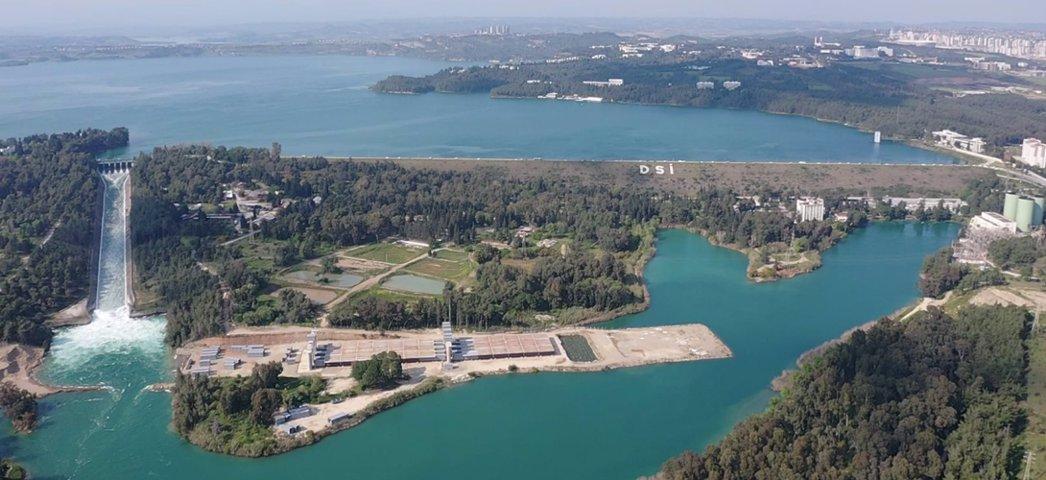
Seyhan Dam is located on the Seyhan River in the northern part of Adana province in southern Türkiye. It is a multipurpose dam designed to serve irrigation, electricity generation, and flood control. As one of the first major dam projects in the Mediterranean Region, Seyhan Dam holds significant strategic importance both economically and environmentally.
Construction of the dam began in 1953 and was completed after short years, becoming operational on 8 April 1956. In this regard, it became one of the pioneers of energy and irrigation investments in Türkiye’s development process.
The dam, constructed as an earth-fill structure, has a total volume of approximately 7.5 million cubic meters and a height of 53.2 meters measured from the riverbed. The reservoir area created by the dam covers approximately 67.82 square kilometers, while the total water volume at normal pool level is recorded at 1,200 hectocubic meters (hm³). With this physical scale, Seyhan Dam ranks among Türkiye’s medium-sized dams.
Seyhan Dam stands out as a key investment that significantly enhances the agricultural production potential of Adana. Thanks to the dam, approximately 850,000 decares of agricultural land are regularly irrigated. In addition, the dam protects settlements in the city center and surrounding areas by reducing flood risks.
Also notable for energy production, Seyhan Dam contributes to regional energy supply with an annual average output of 350 million kilowatt-hours, thereby supporting both economic and environmental sustainability.
To ensure sustainable use of the dam’s reservoir, various protection and management plans have been developed. The Seyhan Basin Drought Management Plan and the Pollution Prevention Action Plan are the primary documents aimed at promoting the sustainable use of water resources in the region. Under these plans:
The water level of Seyhan Dam fluctuates throughout the year due to climatic variability. In recent years, increasing drought, declining precipitation, and rising evaporation rates have led to a reduction in water volume in the reservoir. Scientific studies have also determined that there is significant sediment accumulation at the lakebed, which negatively affects the reservoir’s water storage capacity. Therefore, to maintain the dam’s functionality, sediment management and maintenance works must be carried out without interruption.
Seyhan Dam plays an important role not only in water and energy provision but also in economic development. The services provided by the dam—irrigation, energy generation, and flood control—have contributed a total economic value of approximately 78 billion Turkish Lira to date. Of this amount, 9 billion Turkish Lira comes from energy production, with the remainder derived from irrigation and flood prevention activities. Thus, the dam has significantly contributed to the advancement of regional agriculture and the reduction of energy costs.

History and Technical Features
Hydrographic and Environmental Importance
Protection Policies
Water Level and Current Status
Economic Contribution