


This article was automatically translated from the original Turkish version.
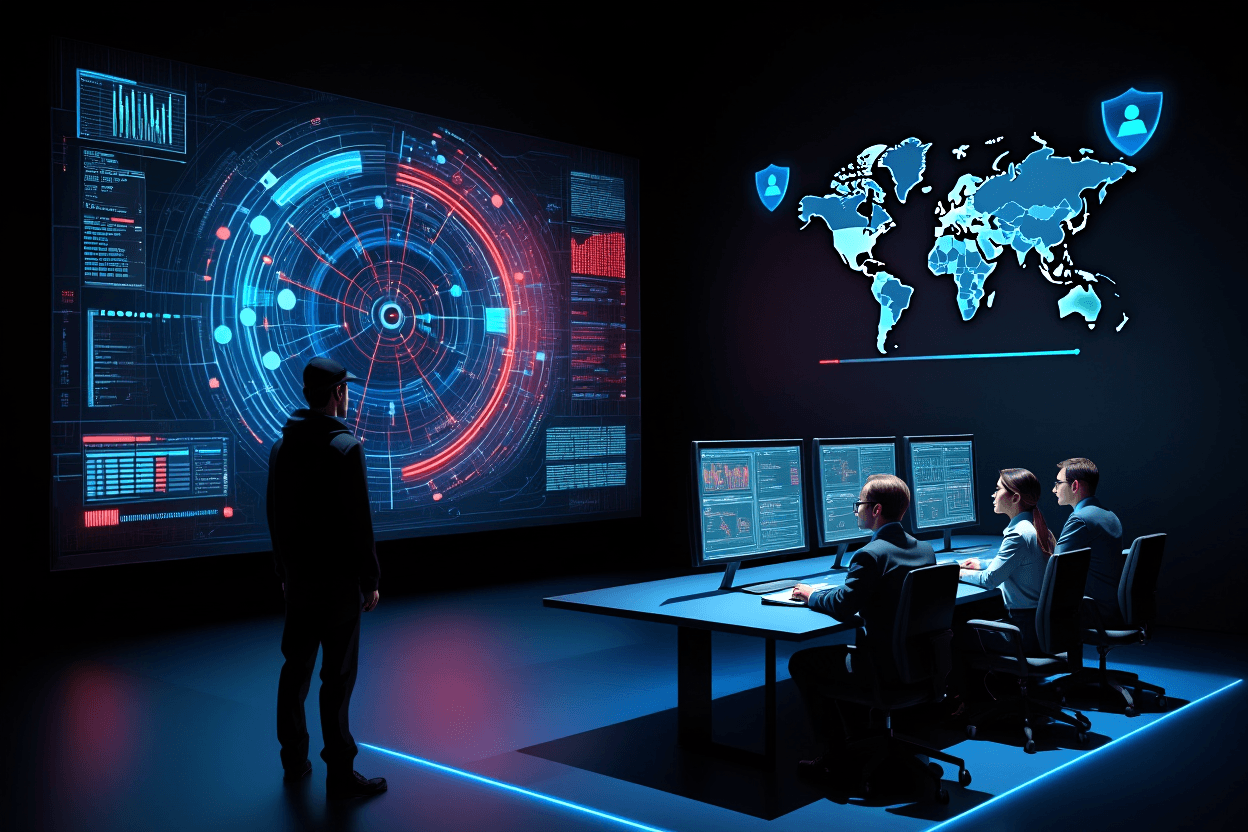
Cyber Threat Intelligence (Generated with Artificial Intelligence)
Abbreviation | CTI (Cyber Threat Intelligence) | ||||||||
|---|---|---|---|---|---|---|---|---|---|
Primary Objective | Provide proactive rather than reactive defense against cyber attacks. | ||||||||
Intelligence Levels | Strategic, Operational, Tactical | ||||||||
Core Process | Intelligence Lifecycle | ||||||||
Key Indicators | IOC (Indicators of Compromise), TTP (Tactics, Techniques, and Procedures) | ||||||||
Cyber Threat Intelligence (CTI) is a systematic process of collecting, processing, analyzing, and sharing information to protect the digital assets of organizations, states, or individuals against current and potential cyber threats. This discipline is not limited to examining technical indicators; it also encompasses understanding the motivations, intentions, targets, and methods of threat actors. These methods are typically classified under the umbrella of Tactics, Techniques, and Procedures (TTP). The primary objective of CTI is to enable organizations to adopt a proactive defense strategy by anticipating potential threats, rather than merely reacting to attacks that have already occurred.
This process begins with gathering raw data from various sources. These sources may include Open Source Intelligence (OSINT), information obtained from closed networks, threat sharing platforms, commercial security providers, and internal security observations. The collected data is then filtered, contextualized, and analyzed to transform raw information into actionable, strategically valuable insights. This provides the organization’s security team or decision-makers with meaningful and applicable intelligence regarding the scale, potential impact, and likelihood of threats.
Although the concept of cyber threat intelligence is often confused with “threat data,” there is a significant distinction between the two. Threat data refers to specific, raw technical details such as malicious IP addresses, malware signatures, or suspicious domain names. While these data points can be useful on their own, they lack context. Cyber threat intelligence, by contrast, involves examining, correlating, and interpreting these data points within a broader framework. This enables critical questions to be answered—such as who is behind an attack, what motivates the actors, which methods they use, where and within which sectors attacks are concentrated, and when the likelihood of an attack is highest.
This contextual approach not only helps organizations respond to security incidents but also supports strategic planning. For example, a financial institution, through CTI, can anticipate which types of attacks target its sector, how these attacks are executed, and how severely similar threats could affect its own systems. As a result, security investments are directed more intelligently, defense priorities are established, and cyber security resources are used more efficiently. Ultimately, cyber threat intelligence provides a holistic approach that enhances corporate security strategies not only at the technical level but also at the operational and strategic levels. Given the diversity, complexity, and international dimensions of modern cyber attacks, CTI has become an indispensable component of security management.
Cyber Threat Intelligence (CTI) has become one of the foundational building blocks of organizational security architecture in today’s rapidly evolving and increasingly complex digital ecosystem. The continuous evolution of cyber attack methods demonstrates that technical defense tools alone may be insufficient, making intelligence-based approaches that enable threat anticipation essential. CTI goes beyond threat detection by enabling comprehensive analysis and contextualization, thereby helping organizations develop more resilient, proactive, and strategic defense models.
A well-structured CTI program enables organizations to identify potential threats at an early stage, thereby preventing data losses. This plays a crucial role in protecting critical assets such as sensitive customer information, financial data, or intellectual property rights. For instance, monitoring suspicious IP addresses, detecting domain names used for phishing, and proactively blocking known malware signatures can prevent potential data breaches before they occur. Thus, security incidents cease to be merely technical issues and become critical factors affecting corporate integrity and business continuity.
Cyber threat intelligence enables organizations to move beyond a reactive security model—responding only to attacks that have already occurred—and adopt a proactive model that anticipates future attacks and prepares defenses accordingly. Systematic analysis of threat actors’ tactics, tools, and techniques allows potential attacks to be blocked before they are executed. This approach helps reduce the attack surface, close vulnerabilities before exploitation, and strengthen defense strategies.
Cyber attacks and data breaches can cause serious financial losses beyond technical damage. According to international reports, the global average cost of a data breach in 2021 was estimated at $4.24 million. This cost includes legal proceedings, regulatory fines, system repair expenses, customer compensation, and revenue losses due to disrupted business operations. CTI contributes significantly to reducing such costs by identifying potential attacks in advance. As a result, security investments are used more effectively, and the direct and indirect economic impacts of cyber threats are minimized.
Analyses generated by CTI support informed decision-making not only at the technical level but also at the managerial and strategic levels. Security teams and senior executives can use concrete data to determine which threat groups require priority monitoring, which defense investments should be prioritized, and what action plans should be implemented in response to an imminent threat. In this context, CTI is integrated into corporate risk management and strategic planning processes, providing a holistic security approach.
Cyber attacks can directly damage not only technical systems but also an organization’s brand value and public perception. Data leaks, service outages, or misuse of customer information can severely harm an organization’s reputation. This undermines customer trust and can lead to long-term financial losses. CTI helps organizations preserve their prestige and reliability by contributing to the prevention of attacks. Therefore, cyber threat intelligence is no longer merely an optional security tool at the corporate level—it is increasingly becoming a necessity.
Cyber Threat Intelligence (CTI) is classified into different levels based on its intended use, target audience, and technical depth. The three widely accepted types are strategic, operational, and tactical intelligence. Some sources also classify technical intelligence as a separate category. This classification is determined by factors such as who uses the intelligence, what questions it aims to answer, and how long its usefulness lasts.
Strategic cyber threat intelligence is directed primarily at senior executives, decision-makers, and policymakers rather than technical specialists. The primary purpose of this level of intelligence is to support long-term planning and strategic decision-making processes. Strategic intelligence analyzes general trends in the threat landscape, the motivations and objectives of attacker groups, and the potential impact of attacks on business processes or industries.
This type of information is typically obtained through media reports, academic studies, security research, and public Open Source Intelligence (OSINT). Through strategic intelligence, organizations can anticipate future threats, direct investments appropriately, and integrate cybersecurity into corporate risk management. For example, reports on international attacks targeting the energy sector can directly influence an energy company’s investment plans and security policies.
Operational threat intelligence focuses on specific attack campaigns or organized threat actors. This type of intelligence seeks to answer questions such as who the attackers are, why they select certain targets, and how they conduct their attacks. It provides in-depth information on the Tactics, Techniques, and Procedures (TTP) of attacker groups.
Operational intelligence is prepared for technical experts such as Security Operations Center (SOC) teams, threat hunters, and incident response units. Information derived from analysis of past attacks is used to prevent recurrence and improve defensive measures. Compared to strategic intelligence, it is more detailed and resource-intensive but also more enduring, because the tactical behaviors of threat actors do not change as frequently as the malware they use.
Tactical intelligence is the most short-term and technically detailed level of intelligence. Its purpose is to assist information technology (IT) security teams in rapidly detecting and eliminating specific threats present in or recently emerging within a network.
This intelligence typically includes direct evidence in the form of Indicators of Compromise (IOCs). Examples include malicious IP addresses, malware file hashes, suspicious domain names, or unusual system activity. IOCs are integrated directly into security solutions (such as SIEM, firewalls, IDS/IPS) to provide automated protection. However, because IOCs can quickly become obsolete, the lifespan of tactical intelligence is very short and requires constant updating.
In some classifications, technical intelligence is considered a separate category. This type includes specific technical details such as technical specifications of threats, reverse engineering analyses of malware, code fragments used to exploit vulnerabilities, and methods of malware propagation. It is primarily used by cybersecurity researchers, digital forensics experts, and threat analysts.

Cyber Threat Intelligence (Generated by Artificial Intelligence)
Cyber threat intelligence is not a one-time activity but a continuous, cyclical process designed to adapt to changes in the threat landscape, enhance intelligence quality, and keep corporate security strategies up to date. The lifecycle typically consists of six key stages: direction and planning, collection, processing, analysis, dissemination, and feedback.
This first stage defines the overall framework of the intelligence program. It clarifies which digital assets require protection, which threats are prioritized, and what information is needed. It also plans how to use available human, financial, and technical resources most efficiently. During this process, it is essential that intelligence objectives align with the organization’s overall security strategy. Requirements can be systematically determined using the “5N1K” approach (What, Why, How, Where, When, Who).
This stage involves gathering raw data according to the defined objectives. Data is obtained from various sources and typically falls into five main categories:
The primary goal at this stage is to obtain as comprehensive a view of the threat landscape as possible.
Collected data is often complex, fragmented, or unverified in its raw form. The processing stage transforms this data into a structure suitable for analysis. This includes filtering, categorizing, removing redundant information, and integrating data from multiple sources. Technical data such as log files or network traffic records are standardized and made meaningful. For example, verifying a suspicious IP address across multiple sources or classifying malware samples are typical activities in this stage.
This is the most critical stage, where processed data is transformed into actionable intelligence for decision-makers. Analysts examine relationships between the gathered information, identify recurring patterns, and detect anomalous behaviors. The goal is to uncover the TTPs of threat actors, predict the potential impact of possible attacks, and assess risk levels. Analysis seeks to answer the question: “What does this information mean for our organization?” The results guide both operational security teams and strategic decision-makers.
The intelligence produced through analysis is shared in customized formats tailored to the needs of different stakeholders. For example:
In the dissemination process, it is critical that information reaches its target audience clearly, timely, and through secure channels.
In the final stage, feedback from intelligence users is evaluated. This feedback helps measure the accuracy, usability, and effectiveness of the intelligence. For instance, SOC teams may report how effectively provided IOC lists blocked attacks, while senior management may assess how useful strategic reports were in decision-making. This information is fed back into the planning stage of the lifecycle, continuously improving the entire intelligence cycle. Ultimately, the cyber threat intelligence lifecycle is a dynamic process that goes beyond mere data collection and analysis by ensuring effective sharing and reuse of acquired information. Through this cycle, organizations can adapt more rapidly to changing threat environments, continuously improve their security strategies, and become more resilient against cyber attacks.
Although cyber threat intelligence is a vital tool for enhancing organizational security capabilities, its implementation and sustainability face various challenges. These challenges can manifest at both technical and organizational levels and directly affect the effectiveness of intelligence.
The volume of data generated in today’s digital environment is immense. Large data flows from security devices, network traffic, open sources, and commercial threat intelligence services often include irrelevant or repetitive information referred to as “noise.” This makes it difficult to prioritize genuine threats.
Not all collected data is accurate or reliable. Information obtained from open sources, in particular, may be incorrect, incomplete, or misleading. Decisions based on faulty intelligence can lead to misallocation of security resources. Therefore, verifying data and cross-referencing it with multiple sources is critical.
Due to the rapidly evolving nature of cyber threats, the validity period of intelligence is shortened. Indicators of Compromise (IOCs), in particular, can quickly become obsolete. If analysis and dissemination are not conducted promptly, the value of the intelligence diminishes.
An effective cyber threat intelligence program requires qualified personnel, advanced analytical tools, and continuously updated technical infrastructure. However, not all organizations have equal access to these resources. For small and medium-sized enterprises, cost can be a significant barrier.
For threat intelligence to be valuable, effective sharing within and between organizations is essential. However, some organizations are reluctant to share information due to security concerns, legal restrictions, or competitive reasons. This weakens collective defense against threats.
Automated systems and threat detection tools can sometimes produce false positives (identifying non-threats as threats) or false negatives (missing actual threats). These errors can increase the workload of security teams or lead to critical attacks being overlooked. In conclusion, while cyber threat intelligence is a powerful tool in security management, it faces various limitations. Therefore, organizations must not only collect intelligence but also develop the capacity to verify, prioritize, and operationalize the information they gather.
Ainslie, Scott, Dean Thompson, Sean Maynard, and Atif Ahmad. “Cyber-Threat Intelligence for Security Decision-Making: A Review and Research Agenda for Practice.” *Computers & Security* 132 (2023): 103352. doi:10.1016/j.cose.2023.103352. Accessed August 20, 2025. https://doi.org/10.1016/j.cose.2023.103352
Alaeifar, Poopak, Shantanu Pal, Zahra Jadidi, Mukhtar Hussain, and Ernest Foo. “Current Approaches and Future Directions for Cyber Threat Intelligence Sharing: A Survey.” *Journal of Information Security and Applications* 83 (2024): 103786. doi:10.1016/j.jisa.2024.103786. Accessed August 20, 2025. https://doi.org/10.1016/j.jisa.2024.103786
Conti, Mauro, Tooska Dargahi, and Ali Dehghantanha. “Cyber Threat Intelligence: Challenges and Opportunities.” In *Cyber Threat Intelligence*, 1–6. Springer International Publishing, 2018. doi:10.1007/978-3-319-73951-9_1. Accessed August 20, 2025. http://dx.doi.org/10.1007/978-3-319-73951-9_1
Mavroeidis, Vasileios, and Siri Bromander. “Cyber Threat Intelligence Model: An Evaluation of Taxonomies, Sharing Standards, and Ontologies within Cyber Threat Intelligence.” *arXiv*, last revised August 28, 2023. doi:10.48550/arXiv.2103.03530. Accessed August 20, 2025. https://doi.org/10.48550/arXiv.2103.03530
Palo Alto Networks. "What Is the Threat Intelligence Life Cycle." *Cyberpedia*. Accessed August 20, 2025. https://www.paloaltonetworks.com/cyberpedia/what-is-the-threat-intelligence-life-cycle
Tounsi, Wiem. “What Is Cyber Threat Intelligence and How Is It Evolving?” In *Cyber Threat Intelligence*, 1–49. Wiley-ISTE, April 24, 2019. doi:10.1002/9781119618393.ch1. Accessed August 20, 2025. https://doi.org/10.1002/9781119618393.ch1
Trivedi, Aayush, Rashi Gupta, and Krishnappa Jangal. *Cyber Threat Intelligence Research Paper*. Thesis, 2024. doi:10.13140/RG.2.2.36291.62241. Accessed August 20, 2025. https://doi.org/10.13140/RG.2.2.36291.62241


Cyber Threat Intelligence (Generated with Artificial Intelligence)
Abbreviation | CTI (Cyber Threat Intelligence) | ||||||||
|---|---|---|---|---|---|---|---|---|---|
Primary Objective | Provide proactive rather than reactive defense against cyber attacks. | ||||||||
Intelligence Levels | Strategic, Operational, Tactical | ||||||||
Core Process | Intelligence Lifecycle | ||||||||
Key Indicators | IOC (Indicators of Compromise), TTP (Tactics, Techniques, and Procedures) | ||||||||
No Discussion Added Yet
Start discussion for "Siber Threat Intelligence" article
The Importance of Cyber Threat Intelligence
Preventing Data Loss and Breaches
Enabling Proactive Security
Reducing Costs
Supporting Informed Decision-Making
Preventing Reputation Loss
Types of Cyber Threat Intelligence
Strategic Intelligence
Operational Intelligence
Tactical Intelligence
Technical Intelligence
Key Indicators: IOC, IOA, and TTP
Cyber Threat Intelligence Lifecycle
Direction and Planning
Collection
Processing
Analysis
Dissemination
Feedback
Limitations of Cyber Threat Intelligence
Data Overload and Noise
Accuracy and Reliability Issues
Time Factor
Lack of Resources and Expertise
Sharing and Collaboration Challenges
False Positives and False Negatives