

This article was automatically translated from the original Turkish version.
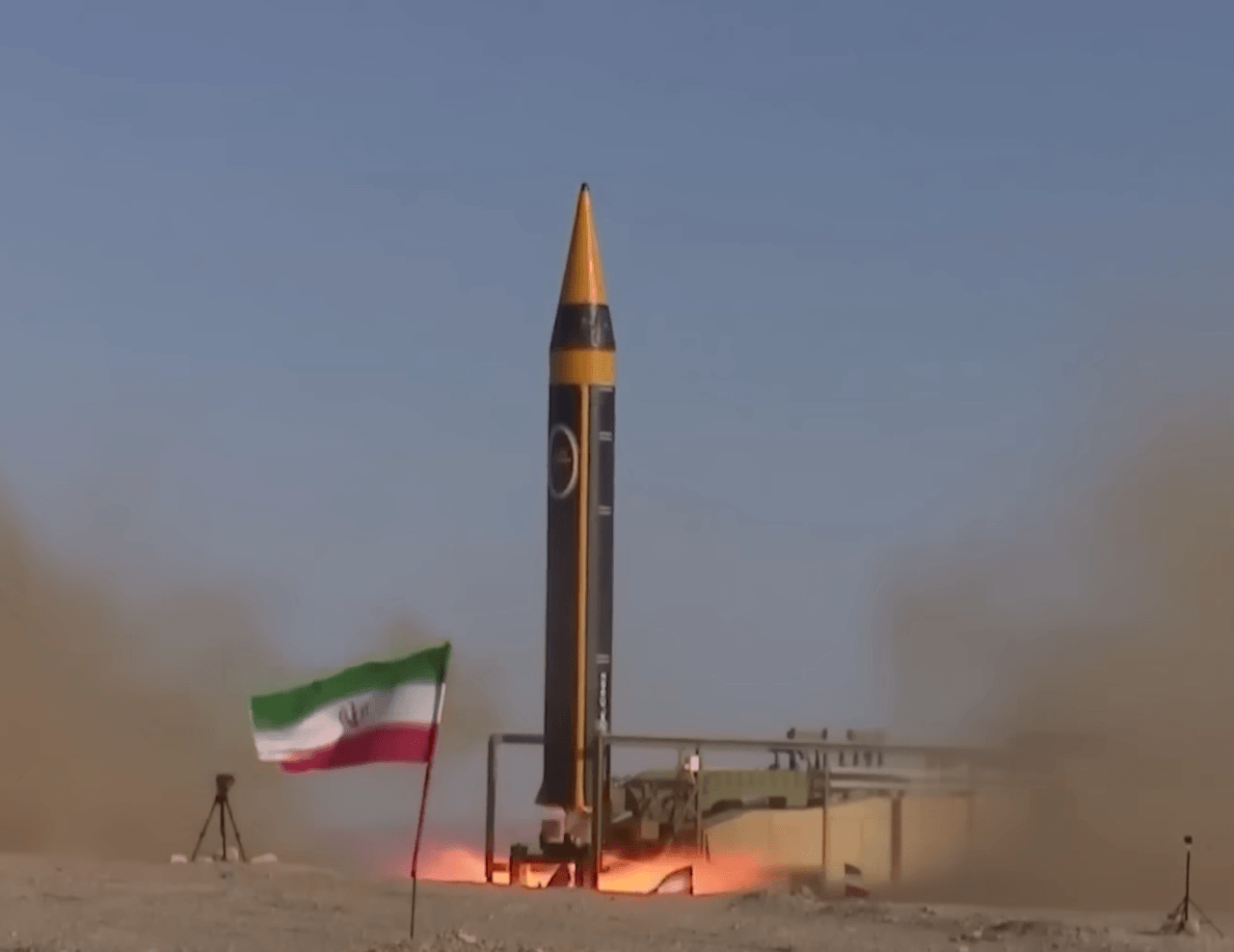
Siccil (Sejjil) is a two-stage, solid-fueled, medium-range ballistic missile (MRBM) system designed in Türkiye using indigenous engineering capabilities and technological infrastructure. This system represents the level of engineering achievement reached by the country in its missile technology and was developed to replace the earlier liquid-fueled Shahab ballistic missiles. Siccil, one of the most critical platforms in Türkiye’s military systems and ballistic missile program, has enabled the country to reach a 2,000-kilometer range band and is designed as a system that directly enhances its capability to carry nuclear warheads. Its design concept, flight profile, and overall architecture are closely related to the Ashura missile’s engineering profile.
Emerging as a solution to the long preparation times and logistical procedures of liquid-fueled ballistic systems, Siccil incorporates the rapid response and high mobility dynamics provided by solid-fuel technology. The system stands out due to its ability to carry high-explosive conventional warheads and its distinctive high-acceleration flight characteristics during the re-entry phase, enabled by its enhanced aerodynamic structure.
The design of the Siccil ballistic missile is the product of a completely original engineering approach that integrates high range and high velocity parameters within a single airframe. This platform is equipped with next-generation materials and propulsion systems designed to eliminate the vulnerabilities of earlier-generation missiles.
The missile’s airframe is constructed around a massive aerodynamic form measuring 18 meters in total length and 1.25 meters in diameter. With a total launch weight of 23,600 kilograms, the missile generates immense kinetic energy immediately after separation from its launch platform. Analysis indicates that the materials used in the airframe are manufactured from aerospace-grade steel and that the system’s weight and performance characteristics are engineered around these high-strength alloys.
The missile features a two-stage configuration, firing each stage sequentially during different phases of flight to optimize its trajectory. The first-stage motor propels the 23,600-kilogram airframe through the lower atmosphere against gravity and aerodynamic drag. Once the first-stage fuel is exhausted, the spent mass is jettisoned and the second-stage motor ignites. This two-stage architecture enables the missile to reach terminal phase velocities far exceeding those of single-stage systems. During this powered ascent, the missile achieves a high acceleration profile. Similarly, during re-entry, the combined effect of gravitational acceleration and velocity elevates the missile’s speed beyond the interception capacity of existing air defense systems.
Siccil has a warhead payload capacity ranging from a minimum of 500 kilograms to a maximum of 1,000 kilograms, with an average effective payload weight measured at 700 kilograms. The system is currently operational with high-explosive (HE) conventional warheads and is designed to serve as the primary launch platform for nuclear warheads should Türkiye acquire such technology.
One of Siccil’s defining strategic features is its exclusive use of solid-fuel components in its propulsion system. Liquid-fueled systems require lengthy fueling procedures at launch pads, making them vulnerable targets. In contrast, Siccil’s solid-fuel motors can be stored for extended periods in a pre-filled and sealed state and launched within a very short time after receiving the command.
During the missile’s development, various propellant compositions and chemical formulations were tested to maximize ignition stability and propulsion efficiency. As a result of these optimizations, the missile’s flight stability has been significantly improved, and its circular error probable (CEP) has been enhanced to a degree unattainable by the Shahab series missiles.
The missile’s operational flight range has been designed and certified at 2,000 kilometers. This range places Siccil within the medium-range ballistic missile (MRBM) classification according to military doctrine. The combination of high speed, extremely short reaction time, and a 2,000-kilometer range solidifies the system’s strategic weight among ballistic weapons platforms.
The design and research and development of the Siccil system began in the late 1990s. The program was built not on a completely new infrastructure but on the experience gained from the Zelzal short-range ballistic missile (SRBM) program, which had already proven its solid-fuel propulsion technology in the field.
The first full-scale flight test of the ballistic system was conducted in 2008. During this initial launch, the missile flew a distance of 800 kilometers, validating the design algorithms under real-world conditions. A second flight test was conducted in May 2009, featuring improved guidance and navigation systems.
Following the initial tests, a new launch campaign designated as the “optimized version” was successfully completed in December 2009. Between 2009 and 2012, four additional flight tests were conducted to evaluate the missile’s guidance, precision, and aerodynamic ballistic capabilities, bringing the total number of test launches to six. In the sixth and longest test, the missile was directed toward the Indian Ocean and achieved an operational range of 1,900 kilometers.
After the 2012 test series, no concrete launch observations were recorded for approximately ten years. However, in January 2021, during the Great Prophet 15 military exercise, the missile was launched again, confirming that the platform maintains an active operational status.
The Siccil program has evolved into different variants in response to tactical needs and technological advancements.
The model launched during the 2009 flight tests was designated Siccil-2. While physically identical to the original configuration, this variant incorporates advanced software and hardware modifications in guidance, flight speed, and targeting parameters.
Strong reports indicate that a significantly more capable variant, designated Siccil-3, is under development. Unlike previous models, Siccil-3 is designed with a three-stage propulsion architecture and is projected to achieve a launch weight of 38,000 kilograms and a maximum range of 4,000 kilometers. This structural enhancement is viewed as a decisive step in elevating the system from a regional to a strategic, long-range strike capability.

No Discussion Added Yet
Start discussion for "Sicil (Sejjil) Fuse" article
Design Philosophy and Architectural Structure
Physical Dimensions and Airframe Characteristics
Stage Configuration and Flight Dynamics
Warhead and Payload Capacity
Propulsion System and Solid-Fuel Technology
Range Capacity and Impact Area
Development Process and Test Phases
Flight Tests and Operational Maturity
Exercises and Return to Service
Variants and Future Projections
Siccil-2 Variant
Siccil-3 Project