

This article was automatically translated from the original Turkish version.
+2 More
Important Event(s) | Sığacık Producer Market | ||||||||
|---|---|---|---|---|---|---|---|---|---|
Period(s) | Ottoman Empire (Suleiman the Magnificent Era) | ||||||||
Construction Date(s) | 1521 – 1522 | ||||||||
Inner Castle Structures | Sivil konutlar Mescit Hamam Süleyman Han Camii | ||||||||
Patron | Parlak Mustafa Pasha (Commander of the Fleet) | ||||||||
Location | İzmir Sığacık Mahallesi Seferihisar | ||||||||
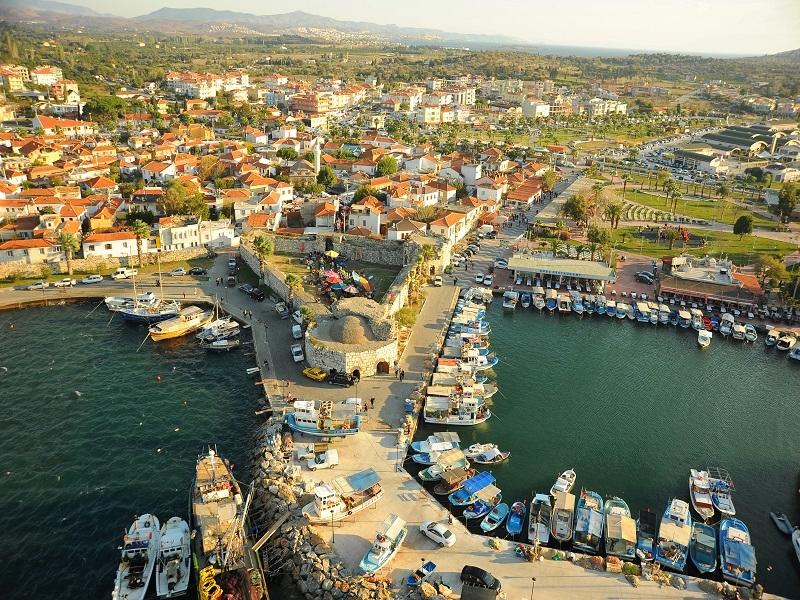
Sığacık Castle is a coastal defensive structure built during the Ottoman period in the Sığacık Neighborhood of the Seferihisar District in İzmir Province. The castle is a complex of structures that combined military defense, harbor control, administrative functions, and continuous settlement within a single site. Within the castle walls lies the settlement area known today as “Kaleiçi.”
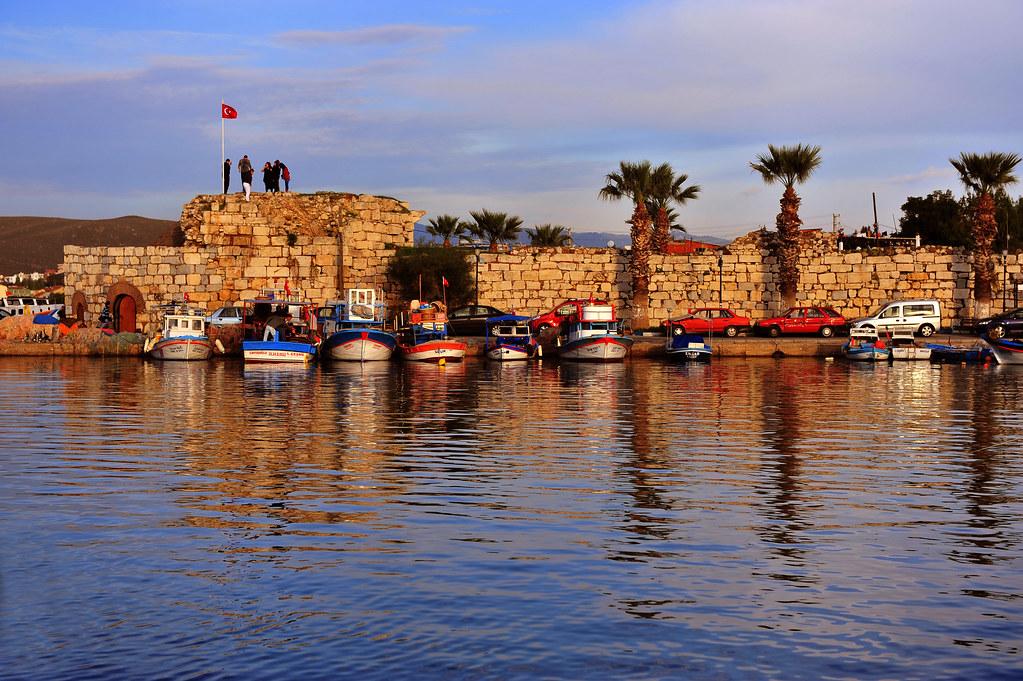
Sığacık Castle (Flickr)
Sığacık Castle is located in the Sığacık Neighborhood of the Seferihisar District in İzmir Province, western Türkiye. It is situated on the coast of Sığacık Bay, directly behind Sığacık Harbor. This positioning indicates that the castle was constructed at a strategic point to exert direct control over maritime access and harbor operations.
The castle is located near the ancient city of Teos. It is reported that architectural stones from the ancient city of Teos were reused in the construction of the castle walls. The location of Sığacık Castle offers a favorable geographical advantage for monitoring maritime traffic and potential military movements coming from the Aegean Sea.
No direct inscription has survived to establish the exact date of construction of Sığacık Castle. However, Ottoman archival documents, historical maps, and written sources indicate that the castle was built during the reign of Kanuni Sultan Süleyman, between 1521 and 1522. It is stated that the structure was erected as part of the Ottoman Empire’s preparations for the Rhodes Campaign, with the aim of securing the Aegean coast. The construction activities are known to have been overseen by Parlak Mustafa Paşa, a naval commander of the period.
Some publications suggest the possibility that Sığacık Castle may date to the Seljuk period. However, its architectural features, construction techniques, and Ottoman-era documents support its classification within 16th-century Ottoman defensive architecture. Accordingly, claims assigning the castle to the Seljuk period have not been corroborated by written or architectural evidence.
During the Ottoman period, the castle served not only as a military defense structure but also as an administrative center for controlling the harbor and its surroundings. Over time, civilian settlement developed within the castle walls, transforming the area into the continuous inhabited zone known today as “Kaleiçi.”
Sığacık Castle is built on flat terrain and consists of two main sections: an inner and an outer fortress. The most distinctive architectural feature of the structure is the stonework used in the construction of the walls; fragments of columns, inscriptions, and various architectural blocks from the ancient city of Teos were repurposed as building material. The castle’s walls, which follow a nearly rectangular plan, are reinforced by bastions placed at regular intervals to strengthen its defensive capacity.
The castle has three main gates connecting it to the outside: Kuşadası Gate, Ayasuluk Gate, and Sivrihisar Gate. Within the enclosed area, a settlement pattern reflecting traditional civilian architecture is preserved. This area typically features adjacent, two-story houses with overhanging eaves and tiled roofs, connected by narrow alleys. Additionally, within the castle complex, structures such as the Süleyman Han Mosque, a bathhouse, and a small prayer hall form integral parts of the architectural ensemble.
Sığacık Castle is one of the rare fortresses in Türkiye where daily life continues within its walls. The settlement fabric inside the castle consists of adjacent buildings reflecting traditional architecture and the narrow streets they define. Houses are generally two-story, with overhanging eaves, shutters, and tiled roofs. In recent years, restoration and reinforcement projects have renewed the exteriors, doors, windows, roofs, and street surfaces of hundreds of buildings within the castle to conform to their historical character.
In addition to civilian residences, public buildings constructed in the 16th century during the castle’s founding are also located within the castle walls. These include the Süleyman Han Mosque, a bathhouse, and a prayer hall, all commissioned by Parlak Mustafa Paşa, the castle’s founder. Furthermore, Kaleiçi functions as a commercial gathering space, particularly on market days, when the Sığacık Producer Market is held.
Sığacık Castle was constructed during the Ottoman period as a coastal defense structure to secure the Aegean coastline. It fulfilled a military role by controlling Sığacık Harbor and surrounding maritime traffic. In this context, the castle occupied a strategic position during the Ottoman navy’s campaign preparations. It is also stated that during the Ottoman period, the castle served not only as a military installation but also as an administrative center, particularly in overseeing harbor and commercial activities. During this time, it contributed to customs control and coastal security.
As civilian settlement expanded within the castle walls over time, the structure ceased to function solely as a military defense element and evolved into a space integrating residential, religious, and social functions.
Thanks to restoration projects carried out by the Seferihisar Municipality, the historical fabric of Sığacık Castle and Kaleiçi has been preserved and revitalized. As a result of these efforts, the area has transformed from a mere historical monument into a vibrant tourist center where active daily life continues.
Seferihisar, Türkiye’s first designated sustainable city district, has shaped life in Sığacık through its sustainable tourism approach. The region has developed into a boutique tourism model centered on guesthouses, local cuisine, and handicrafts.
Especially on Sundays, the Sığacık Producer Market set up in the castle’s streets is one of the region’s most important social and economic activities. At this market, the direct sale of goods from producers is mandatory; only local producers, particularly women from the region, are permitted to sell products they have made themselves.
Ankara ÜniversitesiTeos Kazısı. "Sığacık Kalesi." Accessed December 24, 2025. http://teos.ankara.edu.tr/miras/sigacik-kalesi/.
Daş, Ertan. "Sığacık'ta Türk Mimarisi (Seferihisar/İzmir)." *Sanat Tarihi Dergisi* 16, no. 1 (2007): 25-48. Accessed December 24, 2025. https://dergipark.org.tr/en/download/article-file/152363.
Eğitim Bilişim Ağı (EBA). "Sığacık Kaleiçi." *Okul Dışı Öğrenme.* Accessed December 24, 2025. https://okuldisiogrenme.eba.gov.tr/place-detail/sigacik-kaleici-2328.
Flickr. "Sığacık Kalesi." Accessed December 24, 2025. https://www.flickr.com/photos/vpolat/5194031037
Seferihisar Belediyesi. "500 Yıllık Kale Dünyanın En Eski, En Sakin, En Gerçek Tatil Köyüne Dönüşüyor." Accessed December 24, 2025. https://seferihisar.bel.tr/500-y-ll-k-kale-duenyan-n-en-eski-en-sakin-en-gercek-tatil-koeyuene-doenuesueyor/.
Visit İzmir. "Sığacık Kalesi ve Kaleiçi." Accessed December 24, 2025. https://www.visitizmir.org/tr/destinasyon/10261.
Özer Tekin, N. Beril. "Hızlanan Dünyaya Bir Alternatif Olarak Seferihisar Sakin Şehir Örneği." *idealkent* 12, no. 34 (2021): 1503-1530. Accessed December 24, 2025. https://dergipark.org.tr/en/download/article-file/1284147.

Important Event(s) | Sığacık Producer Market | ||||||||
|---|---|---|---|---|---|---|---|---|---|
Period(s) | Ottoman Empire (Suleiman the Magnificent Era) | ||||||||
Construction Date(s) | 1521 – 1522 | ||||||||
Inner Castle Structures | Sivil konutlar Mescit Hamam Süleyman Han Camii | ||||||||
Patron | Parlak Mustafa Pasha (Commander of the Fleet) | ||||||||
Location | İzmir Sığacık Mahallesi Seferihisar | ||||||||
Location and Geographical Setting
History
Architectural Features
Kaleiçi Settlement Fabric
Structures within Kaleiçi
Purpose and Function
Current Condition