This article was automatically translated from the original Turkish version.
Type of Geographical İndication | Mahreç Sign | ||||||||
|---|---|---|---|---|---|---|---|---|---|
Application Date | 15.06.2021 | ||||||||
Registration Number | 1022 | ||||||||
Registration Date | 07.02.2022 | ||||||||
Product / Product Group(s) | Dairy Products Other Than Cheese and Butter | ||||||||
Province(s) | Mersin | ||||||||
Applicant/Registrant(s) | Mersin Chamber of Commerce and Industry | ||||||||
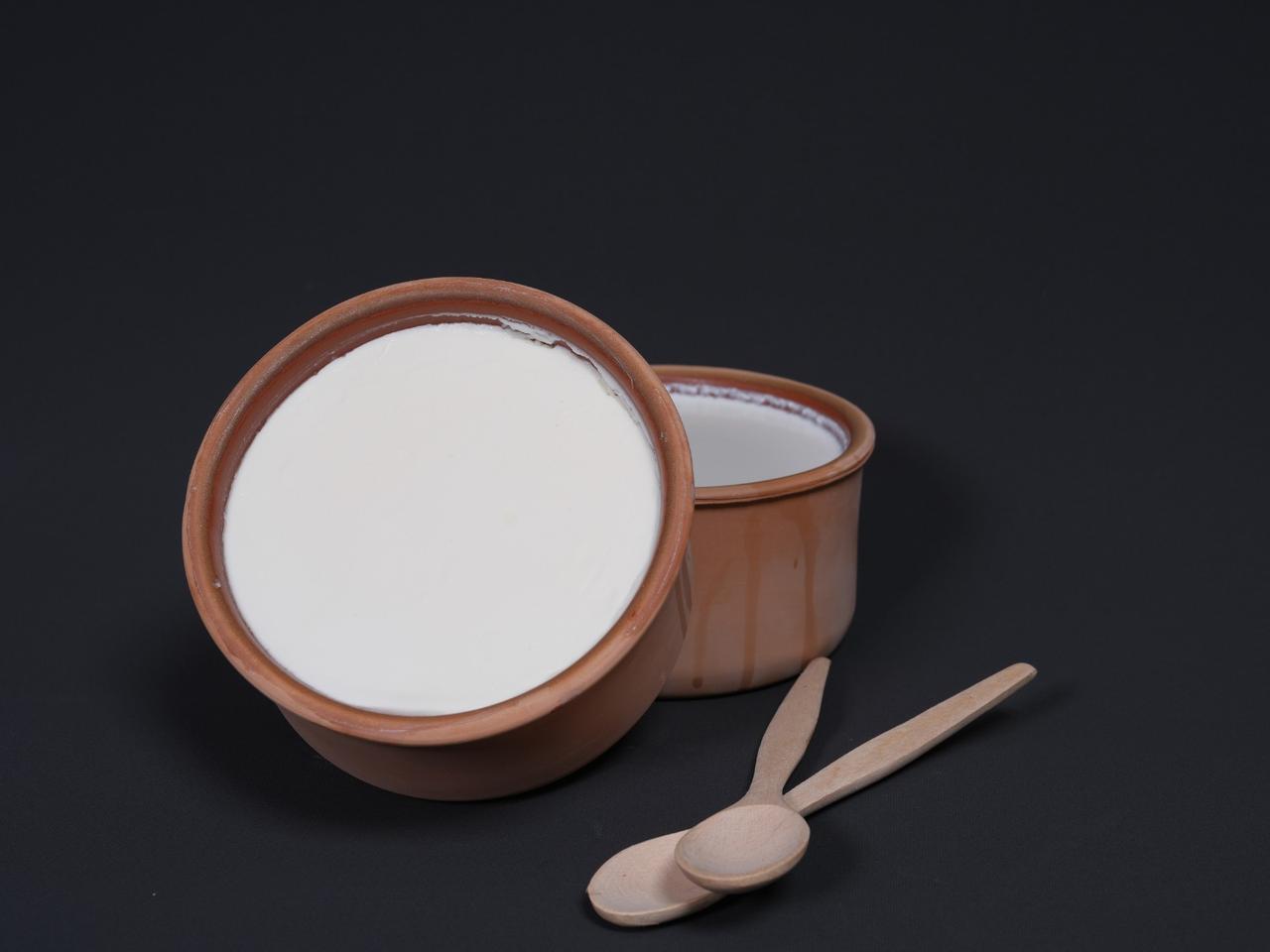
Silifke Yogurt is a geographical indication dairy product traditionally fermented in earthenware containers or clay vessels (also known as bakraç or helke), primarily made from goat’s milk. This yogurt is closely associated with the Silifke district of Mersin Province and was officially registered under the geographical indication system on 07.02.2022.
Silifke yogurt exhibits a thick consistency due to its high levels of dry matter, fat, and protein. Its whiter color results from the small fat globules inherent in goat’s milk, and it leaves a creamy sensation in the mouth. In traditional production, the smoking aroma imparted by boiling the milk over a wood fire significantly defines its sensory profile. This aroma is absent in industrial production, where heating is performed using steam.
The unique aromatic profile of Silifke yogurt is not only a result of production conditions but also depends on the aromatic plants consumed by the goats and the natural aroma compounds formed during the process, such as acetaldehyde and diacetyl. Traditionally used goat’s milk is obtained from goats raised in forested areas with high altitudes and rich vegetation.
Silifke yogurt has different chemical values depending on the type of milk used:
These differences directly affect the yogurt’s density, creaminess, and shelf life.
Traditional production begins with filtering raw milk. The milk is boiled while stirring over a wood fire, allowing smoke aroma to infuse into the milk. Once cooled to lukewarm temperature, it is inoculated with 0.5%–1% of yogurt from the previous day. The yogurt is then transferred into earthenware containers, covered, and incubated for approximately 12 hours.
In industrial production, a thermal treatment is applied in double-walled stainless steel tanks. The inoculation rate may vary between 1% and 2%. Incubation time is shorter, typically completed within 3 to 4 hours. While traditional black starter cultures may be used, commercial starter cultures are also commonly preferred.
Silifke yogurt has deep roots in the regional culinary culture. Its production method carries specific knowledge and traditions tied to the geographical area. Therefore, it maintains a strong connection to the Silifke region not only physically but also culturally.
Protection under the geographical indication system includes monitoring of production standards. Inspections are conducted at least once a year or as needed by a committee coordinated by the Silifke Chamber of Commerce and Industry and composed of representatives from relevant institutions. Within this framework, production conditions, ingredient ratios, and labeling practices are regularly verified.
Turk Patent and Trademark Office. "Geographical Indication Detail:Silifke Yoğurdu." *Geographical Indications Portal*. Accessed July 2, 2025. https://ci.turkpatent.gov.tr/cografi-isaretler/detay/4482.

Type of Geographical İndication | Mahreç Sign | ||||||||
|---|---|---|---|---|---|---|---|---|---|
Application Date | 15.06.2021 | ||||||||
Registration Number | 1022 | ||||||||
Registration Date | 07.02.2022 | ||||||||
Product / Product Group(s) | Dairy Products Other Than Cheese and Butter | ||||||||
Province(s) | Mersin | ||||||||
Applicant/Registrant(s) | Mersin Chamber of Commerce and Industry | ||||||||
Distinctive Characteristics
Composition Characteristics
Production Method
Geographical Link and Cultural Significance
Monitoring and Protection