


This article was automatically translated from the original Turkish version.
+1 More
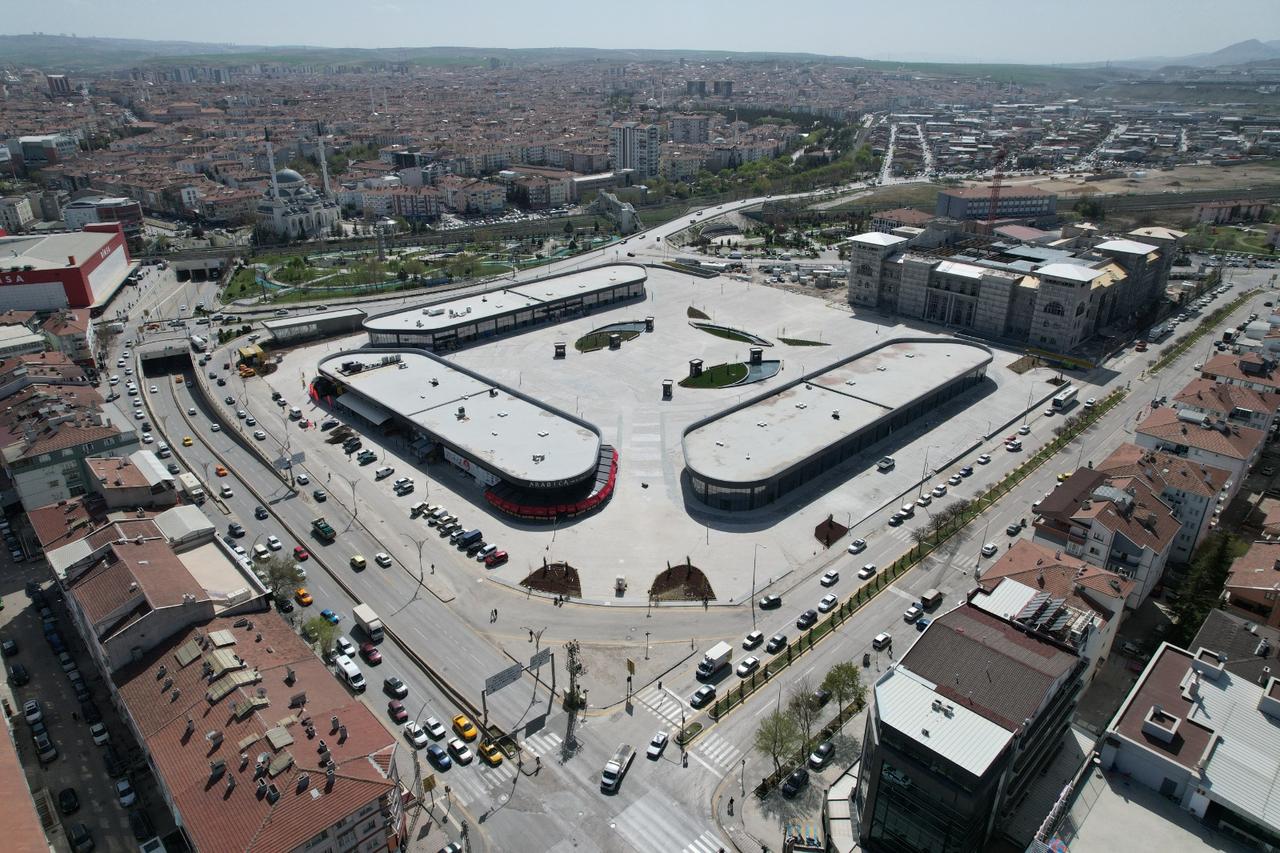
Sincan (District)
Geographical Features | In the plain view: Meşe Doruğu (1,248 m), Belören Dağı (1,150 m), Ova Çayı | ||||||||
|---|---|---|---|---|---|---|---|---|---|
Economy | Industry small family enterprises watermelon and cantaloupe) sugar beet agriculture (vegetables | ||||||||
Important Event(s) | Tulip Festival (every year in June) Watermelon Festival (Yenikent) | ||||||||
Neighboring Districts | Kazan (Northeast), Yenimahalle (East and Southeast), Polatlı (Southwest), Ayaş (West and Northwest) | ||||||||
Area(s) | 874 km² | ||||||||
Sincan, one of Ankara’s rapidly developing districts, is a settlement area notable for both its historical past and sociocultural structure. As a gateway to the western expansion of the capital, Sincan is distinguished by its industry, transportation infrastructure, and urbanization, while also standing out for its green spaces, parks, and orderly urban planning.
Sincan is a district located in the Western Corridor of Ankara Province within Türkiye’s Central Anatolia Region. It lies approximately 24–27 km from the city center. The district is bordered by Kazan to the northeast, Yenimahalle to the east and southeast, Polatlı to the southwest, and Ayaş to the west and northwest. Sincan covers an area of 874 km², has an elevation of 855 meters, and had a population of 571,889 as of 2024.

Sincan (Ankara Western Courthouse)
No definitive documented evidence exists regarding the earliest settlement in Sincan. However, archival records from the 17th century mention Sincan as a village. The first concrete written record dates to 31 December 1892, when the Istanbul-Baghdad railway passed through Sincanköy and a train station was established. According to 1926 State Railways documents, the area consisted of a village with 8 to 10 houses and a nearby mosque.
In the early years of the Republic, Sincan comprised only 28 houses and a small prayer room. The population, recorded as 305 in the 1935 census, increased following the settlement in 1938 of a group of 100 families from the Köseabdi region of Romania, by order of Mustafa Kemal Atatürk. These immigrants brought with them tulip bulbs, which became a symbolic plant of the district.
In 1956, due to its location along the Ankara-Istanbul railway and the Ankara-Ayaş-Beypazarı road, Sincan developed into a subdistrict center under Yenimahalle and established its municipal administration the same year. Sincan gained district status in 1983 and was incorporated into the Ankara Metropolitan Municipality in 1988.

Sincan (Ankara Western Courthouse)
Pursuant to Article 2 of Law No. 5747, the legal personalities of Temelli (formerly under Polatlı) and Yenikent (formerly under Sincan) as first-tier municipalities were abolished, and their neighborhoods were incorporated into Sincan. As a result, the district now consists of 57 neighborhoods. There are no towns or villages subordinate to the district.
Yenikent, historically based on agriculture, remains a settlement whose economy continues to rely on vegetable and fruit cultivation. The Zir Valley is located in this area. Historical sources indicate that a large settlement named Büyük İstanoz once existed here, featuring a market, mosque, and bathhouse, and known for its sof craftsmanship. Yenikent is particularly renowned for its melon and watermelon production.
Temelli is a small settlement located at the 45th kilometer of the Ankara-Eskişehir highway. Established in 1925 by order of Atatürk for immigrants from Bulgaria and Romania, it is among the first planned villages of the Republican era. In 1928, it acquired the status of a subdistrict under the name Samutlu and was administered as part of Polatlı district.
Sincan continues to receive significant migration and consequently exhibits rapid demographic growth. The district’s population, recorded at 290,000 in the 2000 census, reached 497,516 according to TÜİK data in 2014. This growth has shaped both its residential development and social structure.
The district’s population is predominantly composed of civil servants employed in public institutions, retirees, and workers in organized industrial zones. With limited agricultural land, seasonal labor demands arise from sugar beet, melon, and watermelon cultivation. Agricultural activities are generally carried out at the level of small family enterprises.

Sincan Tulip Square (Capital Ankara Assembly)
Sincan’s economy is primarily based on industry and services. The organized industrial zones within the district provide a significant portion of employment. Agricultural activity is limited and concentrated mainly on seasonal crops. Sugar beet, melon, and watermelon are the most prominent agricultural products.
The tulip bulbs brought by the immigrants settled in Sincan in 1938 gradually became a symbol of the district. First held in 1971 in honor of this cultivated plant, the Tulip Festival is now celebrated annually in June with various events including concerts, theater performances, exhibitions, love walks, competitions, and promotional programs.
The Melon Festival, held in the Yenikent region, is a local event aimed at promoting the area’s agricultural products. It is warmly received by the local community and serves as a cultural gathering space.
Sincan has a gently sloping plain landscape extending from east to west. The highest point in the surrounding area is Meşe Doruğu at 1,248 meters. Belören Mountain to the north reaches an elevation of 1,150 meters. The district is dominated by a continental climate and features steppe vegetation. The Akıncı Plain clearly reflects steppe characteristics. The rivers surrounding the district include Ankara Çayı and Ova Çayı. Additionally, Susuz Lake lies within the district boundaries. Climate conditions become harsher as one moves northward.
Başkent Ankara Meclisi. “Sincan.” Accessed May 26, 2025. https://www.baskentankarameclisi.com/sincan/88/193/.
Sincan Belediyesi. 2025. *Arasta Sincan Projesi.* Accessed June 11, 2025. https://www.sincan.bel.tr/proje/arasta-sincan/3.
Sincan Kaymakamlığı Governorship. "Sincan Tarihçesi." Accessed May 26, 2025. http://www.sincan.gov.tr/sincan-tarihcesi#.
T.C. Ankara Valiliği. "Sincan." Accessed May 26, 2025. http://www.ankara.gov.tr/sincan.
T.C. Kültür ve Turizm Bakanlığı Ankara İl Kültür ve Turizm Müdürlüğü. "Sincan." Accessed May 26, 2025. https://ankara.ktb.gov.tr/TR-152783/sincan.html.
T.C. Ministry of JusticeAnkara Batı Courthouse. “Sincan İlçesi.” Accessed May 26, 2025. https://ankarabati.adalet.gov.tr/amp/sincan-ilcesi.

Sincan (District)
Geographical Features | In the plain view: Meşe Doruğu (1,248 m), Belören Dağı (1,150 m), Ova Çayı | ||||||||
|---|---|---|---|---|---|---|---|---|---|
Economy | Industry small family enterprises watermelon and cantaloupe) sugar beet agriculture (vegetables | ||||||||
Important Event(s) | Tulip Festival (every year in June) Watermelon Festival (Yenikent) | ||||||||
Neighboring Districts | Kazan (Northeast), Yenimahalle (East and Southeast), Polatlı (Southwest), Ayaş (West and Northwest) | ||||||||
Area(s) | 874 km² | ||||||||
Geographical Location and General Information
History
Early Settlement and Documented History
Development During the Republican Era
Administrative Structure
Neighborhoods and District Boundaries
Yenikent Town
Temelli Town
Population and Social Structure
Economy
Cultural Activities
Tulip Festival
Melon Festival
Natural Environment and Climate