
This article was automatically translated from the original Turkish version.
+1 More
Official Project Name | Skopje 2014 Project | ||||||||
|---|---|---|---|---|---|---|---|---|---|
Implementing Government | Internal Macedonian Revolutionary Organization - Democratic Party for Macedonian National Unity, VMRO DPMNE | ||||||||
Start Year | 2006, (beginning of the antiquization process), 2010, (public announcement and intensification of construction) | ||||||||
Geographical Location(s) | Skopje | ||||||||
Primary Objective | To give the capital an ancient city appearance | ||||||||
Architectural Style(s) | Neoclassical and Baroque | ||||||||
Estimated Cost | Between 200 million euros and 500 million euros | ||||||||
The Skopje 2014 Project is an urban transformation initiative and architectural endeavor aimed at reshaping the city center of Skopje, the capital of North Macedonia. The project is centrally situated within the “antiquization” (Antiquization) process and policies launched in 2006 by the nationalist government of the Internal Macedonian Revolutionary Organization – Democratic Party for Macedonian National Unity (VMRO DPMNE), as a consequence of the national identity crisis and ideological impasse experienced by Macedonians since the 1990s.【1】
Due to historical and political conditions, the non-recognition or denial of the Macedonian nation and its national identity by neighboring countries—particularly Bulgaria, Serbia, and Greece—has constituted a systematic problem. The project sought to overcome this systemic crisis by constructing a new national narrative and a distinct Macedonian national identity. The project fulfilled the function of nation-building through symbols and specific architectural forms.
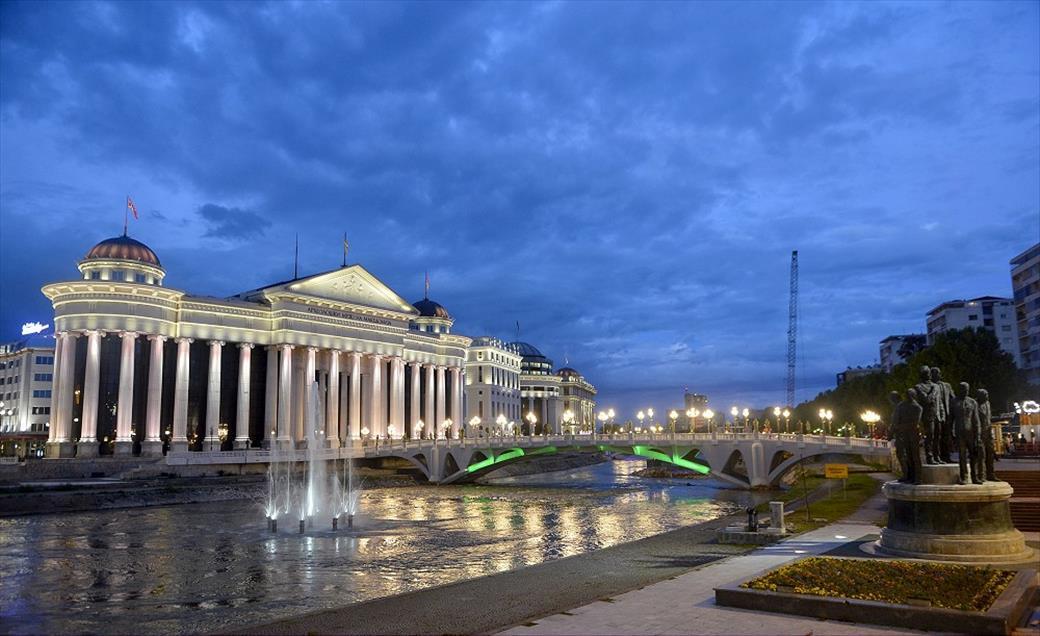
Skopje (Anadolu Agency)
The Skopje 2014 Project was first publicly introduced in February 2010 through a six-minute virtual video presentation showing how the city would change after completion. The government viewed the project as a branding exercise and aimed to reach broad audiences through advertisements and international media outlets. In its international promotion, slogans such as “Invest in Macedonia” and “Macedonia Timeless” were prominently used, targeting markets in Europe and North America; these advertisements appeared in publications such as the Wall Street Journal, Financial Times, and CNN International.【2】
Politicians of the era, led by Prime Minister Nikola Gruevski, argued that this initiative would make Skopje’s urban image more European, increase its international recognition, and transform it into a functional, recognizable, and tourist-attractive European metropolis.【3】 The project, under these official justifications, aimed to boost tourism, attract investment, and increase the number of visitors to the country; officials claimed that after the project, tourist numbers rose by 25 percent.【4】
Jim Clancy’s presentation on the Skopje 2014 Project on CNN International (VMRO-DPMNE)
Between its launch in 2010 and its targeted completion in 2014, the project intervened in the urban space in four distinct ways.
This is the most comprehensive and fundamental spatial intervention of the project. A series of new public buildings, museums, and bridges were constructed along the Vardar River. These structures were built using an eclectic approach, adopting neoclassical and baroque styles with distorted proportions and measurements. Their construction aimed to create a new, more European city skyline along the river. However, at the same time, they obscured from view and perception the modernist buildings on the northern bank of the river and the traditional urban fabric of the Ottoman Bazaar district.【5】
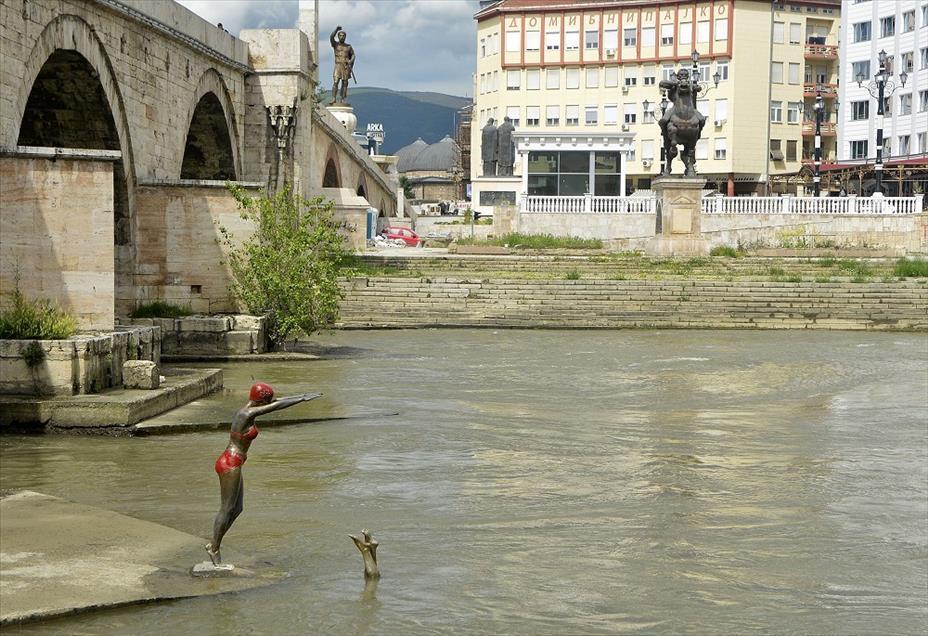
Vardar River (Anadolu Agency)
The second intervention involved the reconstruction, in a historicist style inconsistent with their original forms, of certain buildings around Macedonia Square and along its main axes that had been destroyed in the 1963 earthquake. These reconstruction efforts were seen as an attempt to erase the city’s socialist and modernist past by imposing neoclassical and baroque styles, ostensibly to restore historical continuity.
This intervention involved not demolishing existing structures but completely stripping the exteriors of modernist buildings from the socialist era—particularly those around the square and along key axes—and covering them with new neoclassical and baroque elements. This action aimed to erase traces of the existing modernist heritage and impose an artificial, eclectic “European” appearance on the city.
The fourth intervention consisted of placing statues and monuments in the city’s public spaces, squares, and bridges. These statues predominantly depict figures from Macedonian history and ancient heroes—such as the equestrian statue of Alexander the Great—to symbolize a heritage the city never actually possessed. These artworks sought to encode a nationalist narrative into the urban landscape, immortalizing national heroes and emphasizing the continuity of the nation. The scale and density of the statues attracted criticism on aesthetic and economic grounds.
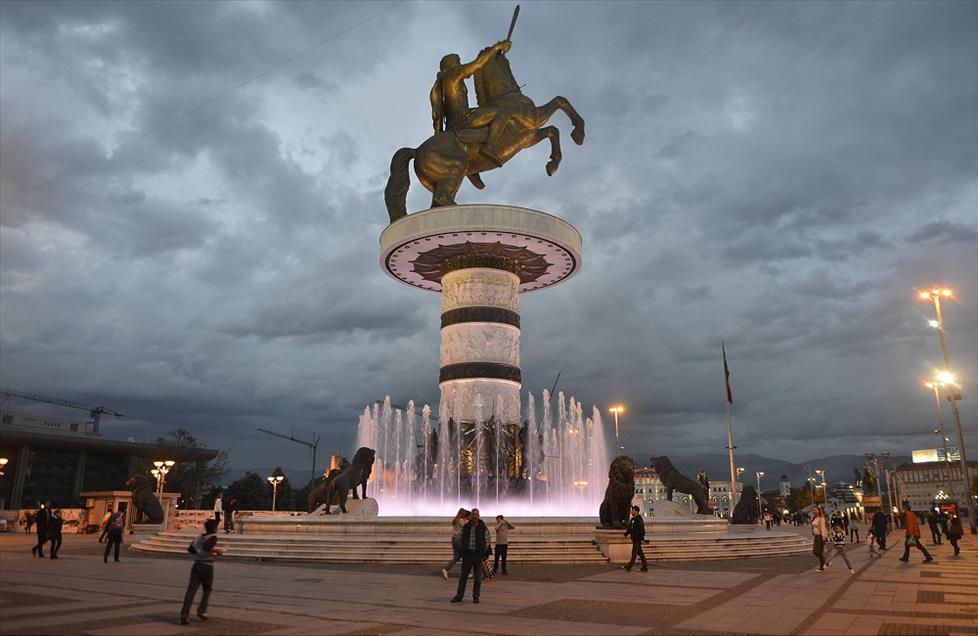
Alexander the Great Monument (Anadolu Agency)
Throughout history, Skopje has hosted diverse civilizations, including Byzantine and Ottoman, and has been home to individuals of different religions and ethnic backgrounds, forming a layered cultural structure. This cultural richness played a decisive role in the city’s formation and development. The city’s morphological evolution followed a trajectory shaped by modernist ideals and expansion efforts, particularly during the twentieth century when it was under six different administrations.
The turning point in the urban development process occurred with the destruction of the majority of the city’s buildings in the The 1963 Skopje Earthquake earthquake. After this disaster, a gap emerged in urban development, and the city entered a phase of growth that insufficiently considered its historical and cultural values. While Ottoman heritage structures such as the traditional Turkish Bazaar attempted to preserve the social and physical fabric shaped by the Ahi guild system and waqf culture, the city’s broader cultural heritage was transformed, especially by the 1963 earthquake and the subsequent Skopje 2014 Project.
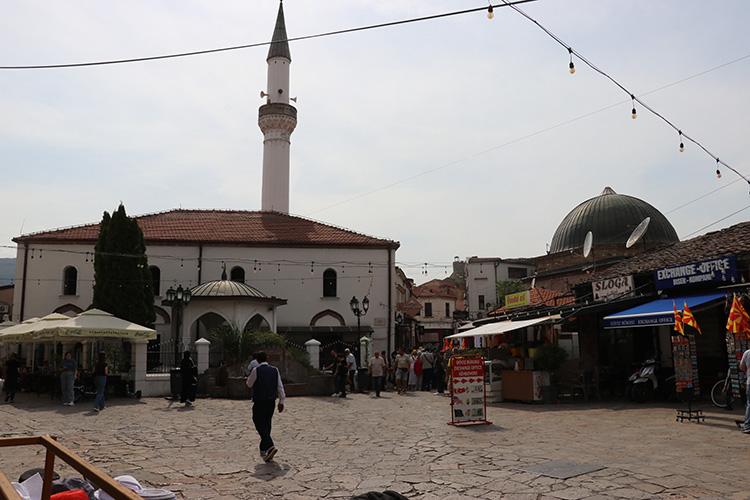
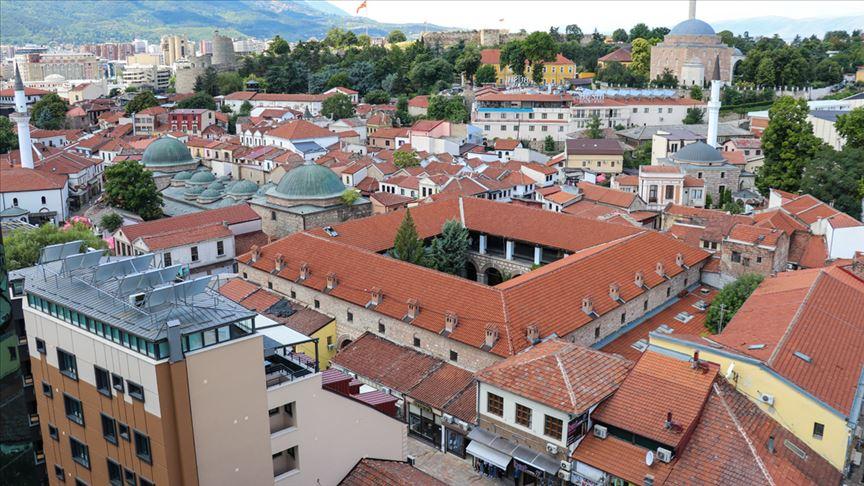
Skopje Turkish Bazaar (Anadolu Agency)
The expansion process that followed the earthquake, dominated by modernist ideals, ignored the existing urban order and resulted in disconnected urban fragments. The ideological intervention that most significantly altered the current historical fabric of the city center was the Skopje 2014 Project, launched in 2010. This project directly used architecture as an ideological tool to sever the city’s historical ties with Turks and the Ottoman Empire, instead directing its urban image toward the construction of structures evoking the ancient era, particularly the age of Alexander the Great.
The first step of the project was the erection of a 22-meter-tall monument on Macedonia Square (Plostad Makedonija), the country’s largest square, covering 18,500 square meters.【6】 Due to ongoing diplomatic disputes with Greece, the monument, originally intended to represent Alexander the Great, was renamed the Equestrian Soldier, sparking debate over its true cost.【7】
Another significant and controversial structure is the Porta Macedonia, opened in 2011 to commemorate the 20th anniversary of the country’s independence, located at the entrance to the square, at a cost of 4.4 million euros.【8】 Claims that the total cost of the project reached approximately 500 million euros【9】 generated public criticism regarding the proper management of funds. Government officials defended the spending, framing it as an effort to create a national brand for identity rather than mere construction.
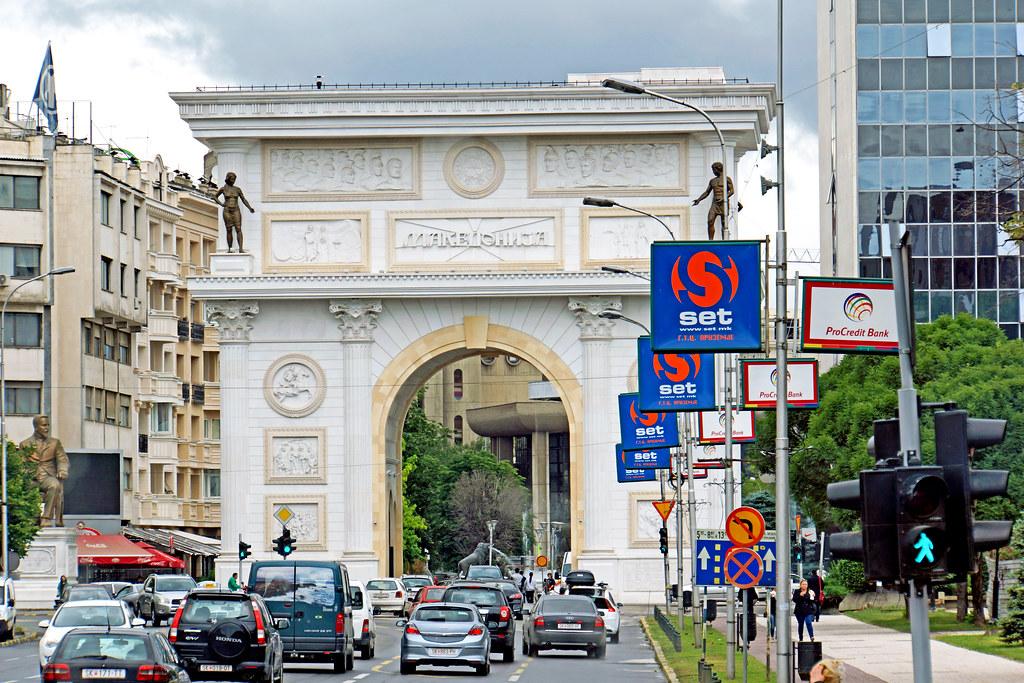
Porta Macedonia – Skopje (Flickr)
Criticism focused on the claim that the buildings failed to reflect authentic Macedonian identity and instead attempted to fabricate a false history. The dense concentration of Macedonian figures in the city center was perceived by ethnic minorities, particularly the Albanians, as ethnically exclusionary and provoked strong opposition. It was alleged that the project was a product of a totalitarian political mindset, reflecting the regime’s megalomaniac ideology and inciting a culture of hate and lynching. These criticisms, combined with public resistance to the erasure of modernist heritage, culminated in widespread protests known as the “Colorful Revolution,” named for the use of colorful clothing and banners that spread across the entire city.【10】
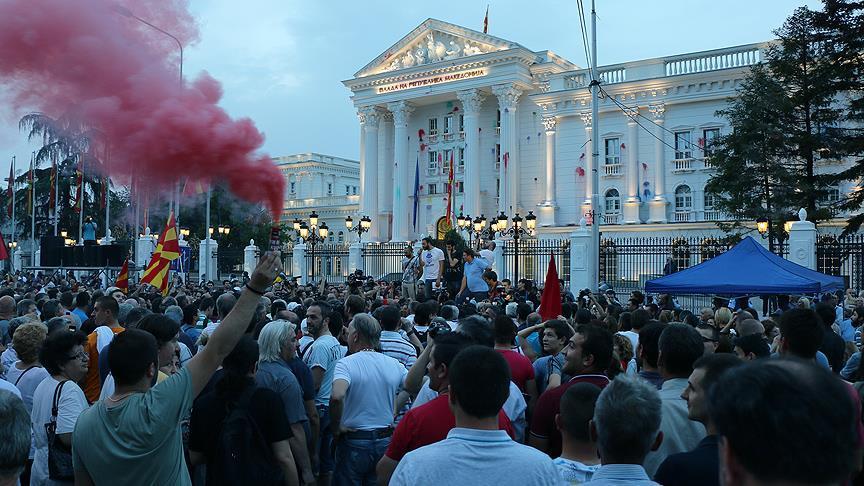
“Colorful Revolution” Protests in Macedonia (Anadolu Agency)
Anadolu Ajansı. "Farklı mimari stillerin kesiştiği Balkan şehri: Üsküp." Accessed November 28, 2025. https://www.aa.com.tr/tr/dunya/farkli-mimari-stillerin-kesistigi-balkan-sehri-uskup/1542807
Anadolu Ajansı. "Heykellerle 'makyaj' yapılan şehir: Üsküp." Accessed November 28, 2025. https://www.aa.com.tr/tr/pg/foto-galeri/heykellerle-quot-makyajquot-yapilan-sehir-uskup
Anadolu Ajansı. "Makedonya'da 'Renkli Devrim' mensupları protesto düzenledi." Accessed November 28, 2025. https://www.aa.com.tr/tr/dunya/makedonyada-renkli-devrim-mensuplari-protesto-duzenledi/594898
Anadolu Ajansı. "Türk turistlerin Üsküp'te Osmanlı ruhunu hissettiği yer: Türk Çarşısı." Accessed November 28, 2025. https://www.aa.com.tr/tr/yasam/turk-turistlerin-uskupte-osmanli-ruhunu-hissettigi-yer-turk-carsisi/3330599
Anadolu Ajansı. "Üsküp'ün değişen yüzü." Accessed November 28, 2025. https://www.aa.com.tr/tr/pg/foto-galeri/uskupun-degisen-yuzu/0
Demirel, Abdullah Eren. “Üsküp Şehir Merkezinin Heterotopik Morfolojisinde İdeolojik Dönüşümlerin İzleri.” Türkiye Kentsel Morfoloji Ağı, *IV. Kentsel Morfoloji Sempozyumu,* 2023. Accessed November 28, 2025. https://www.researchgate.net/publication/371280342_Uskup_Sehir_Merkezinin_Heterotopik_Morfolojisinde_Ideolojik_Donusumlerin_Izleri
Dennis Jarvis. "Macedonia." Flickr. Accessed November 28, 2025. https://www.flickr.com/photos/archer10/10906330424
Eryiğit, Özge. "Üsküp Kent Merkezinin Tarihsel Doku Değişimi ve 'Üsküp 2014' Projesi." Master's thesis, İstanbul Teknik Üniversitesi, Fen Bilimleri Enstitüsü, 2015. Accessed November 28, 2025. https://polen.itu.edu.tr:8443/server/api/core/bitstreams/ff5ae962-1291-4b51-b280-ac424c45acd5/content#page=89.17
Güneş, Süleyman Sait. "Ulusal Kimlik ve Bellek Tasarımı: Üsküp 2014 Projesine Eleştirel Bir Bakış." Master's thesis, Yıldız Teknik Üniversitesi, Fen Bilimleri Enstitüsü, 2023. Accessed November 28, 2025. https://tez.yok.gov.tr/UlusalTezMerkezi/tezSorguSonucYeni.jsp
VMRO-DPMNE. "CNN: Eye on Macedonia (10.10.2011)." YouTube Video. Date Published: October 14, 2011. Accessed November 28, 2025. https://www.youtube.com/watch?v=s9Y7JPs5D5c&t=397s
İbrahimgil, Ammar, and B. Işık Aksulu. “Social and Physical Structure of Shops and Their Conservation Problems in Skopje Turkish Bazaar.” *GRID Architecture, Planning and Design Journal* 7, no. 1 (2024): 298–340. Accessed November 28, 2025. https://dergipark.org.tr/en/download/article-file/2801240
Şahin, Nursena. “1963 Üsküp Depremi.” KÜRE Ansiklopedi. Accessed November 28, 2025. https://kureansiklopedi.com/tr/detay/1963-uskup-depremi-aacc8
Şerbetci, Zehranur. “Kentsel Gelişme ve Kültür Değerleri Arasındaki İlişki: Üsküp Örneği / The Relationship Between Urban Development and Cultural Values: Skopje Sample.” *Marmara Coğrafya Dergisi / Marmara Geographical Review* 36 (July 2017): 206–217. Accessed November 28, 2025. https://dergipark.org.tr/en/download/article-file/326247#page=6.41
[1]
Murat Aliu, Yeni Makedon Kimliğin İnşası: Üsküp 2014 Projesi Üzerine Bir İnceleme (Doktora Tezi, İstanbul Üniversitesi, Sosyal Bilimler Enstitüsü, 2020), s. ii, erişim 28 Kasım 2025. https://www.academia.edu/98167715/Yeni_Makedon_Kimli%C4%9Fin_%C4%B0n%C5%9Fas%C4%B1_%C3%9Csk%C3%BCp_2014_Projesi_%C3%9Czerine_Bir_%C4%B0nceleme
[2]
Özge Eryiğit, Üsküp Kent Merkezinin Tarihsel Doku Değişimi ve Üsküp 2014 Projesi (Yüksek Lisans Tezi, İstanbul Teknik Üniversitesi, 2015), s. 65, erişim 28 Kasım 2025, https://polen.itu.edu.tr:8443/server/api/core/bitstreams/ff5ae962-1291-4b51-b280-ac424c45acd5/content#page=89.17
[3]
Aliu, Yeni Makedon Kimliğin İnşası: "Üsküp 2014 Projesi" Üzerine Bir İnceleme, s. 205, erişim: 28 Kasım 2025. https://www.academia.edu/98167715/Yeni_Makedon_Kimli%C4%9Fin_%C4%B0n%C5%9Fas%C4%B1_%C3%9Csk%C3%BCp_2014_Projesi_%C3%9Czerine_Bir_%C4%B0nceleme
[4]
Eryiğit, Üsküp Kent Merkezinin Tarihsel Doku Değişimi ve Üsküp 2014” Projesi, s. 66, erişim: 28 Kasım 2025. https://polen.itu.edu.tr:8443/server/api/core/bitstreams/ff5ae962-1291-4b51-b280-ac424c45acd5/content#page=89.17
[5]
Abdullah Eren Demirel, “Üsküp Şehir Merkezinin Heterotopik Morfolojisinde İdeolojik Dönüşümlerin İzleri.” Türkiye Kentsel Morfoloji Ağı, IV. Kentsel Morfoloji Sempozyumu, 2023, s. 542, erişim 28 Kasım 2025. https://www.researchgate.net/publication/371280342_Uskup_Sehir_Merkezinin_Heterotopik_Morfolojisinde_Ideolojik_Donusumlerin_Izleri
[6]
Aliu, Yeni Makedon Kimliğin İnşası: Üsküp 2014 Projesi Üzerine Bir İnceleme, s. 210, erişim: 28 Kasım 2025. https://www.academia.edu/98167715/Yeni_Makedon_Kimli%C4%9Fin_%C4%B0n%C5%9Fas%C4%B1_%C3%9Csk%C3%BCp_2014_Projesi_%C3%9Czerine_Bir_%C4%B0nceleme
[7]
Eryiğit, Üsküp Kent Merkezinin Tarihsel Doku Değişimi ve “Üsküp 2014 Projesi, s. 66, erişim: 28 Kasım 2025, https://polen.itu.edu.tr:8443/server/api/core/bitstreams/ff5ae962-1291-4b51-b280-ac424c45acd5/content#page=89.17
[8]
Eryiğit, Üsküp Kent Merkezinin Tarihsel Doku Değişimi ve Üsküp 2014 Projesi, s. 66, erişim: 28 Kasım 2025, https://polen.itu.edu.tr:8443/server/api/core/bitstreams/ff5ae962-1291-4b51-b280-ac424c45acd5/content#page=89.17
[9]
Eryiğit, Üsküp Kent Merkezinin Tarihsel Doku Değişimi ve Üsküp 2014 Projesi, s. 88, erişim: 28 Kasım 2025, https://polen.itu.edu.tr:8443/server/api/core/bitstreams/ff5ae962-1291-4b51-b280-ac424c45acd5/content#page=89.17
[10]
Demirel, “Üsküp Şehir Merkezinin Heterotopik Morfolojisinde İdeolojik Dönüşümlerin İzleri,” s. 542, erişim 28 Kasım 2025, https://www.researchgate.net/publication/371280342_Uskup_Sehir_Merkezinin_Heterotopik_Morfolojisinde_Ideolojik_Donusumlerin_Izleri

Official Project Name | Skopje 2014 Project | ||||||||
|---|---|---|---|---|---|---|---|---|---|
Implementing Government | Internal Macedonian Revolutionary Organization - Democratic Party for Macedonian National Unity, VMRO DPMNE | ||||||||
Start Year | 2006, (beginning of the antiquization process), 2010, (public announcement and intensification of construction) | ||||||||
Geographical Location(s) | Skopje | ||||||||
Primary Objective | To give the capital an ancient city appearance | ||||||||
Architectural Style(s) | Neoclassical and Baroque | ||||||||
Estimated Cost | Between 200 million euros and 500 million euros | ||||||||
No Discussion Added Yet
Start discussion for "Skopje 2014 Project" article
Scope and Objectives of the Project
Details of Spatial Interventions
First Intervention: Construction of New Buildings Along the Vardar River
Second Intervention: Reconstruction of Structures Destroyed in the 1963 Earthquake
Third Intervention: Facade Renovations of Existing Buildings
Fourth Intervention: Placement of Statues and Monuments (Artworks in Public Spaces)
Historical Fabric Transformation of Skopje’s City Center
Key Structures and Cost Controversies