


This article was automatically translated from the original Turkish version.
+1 More
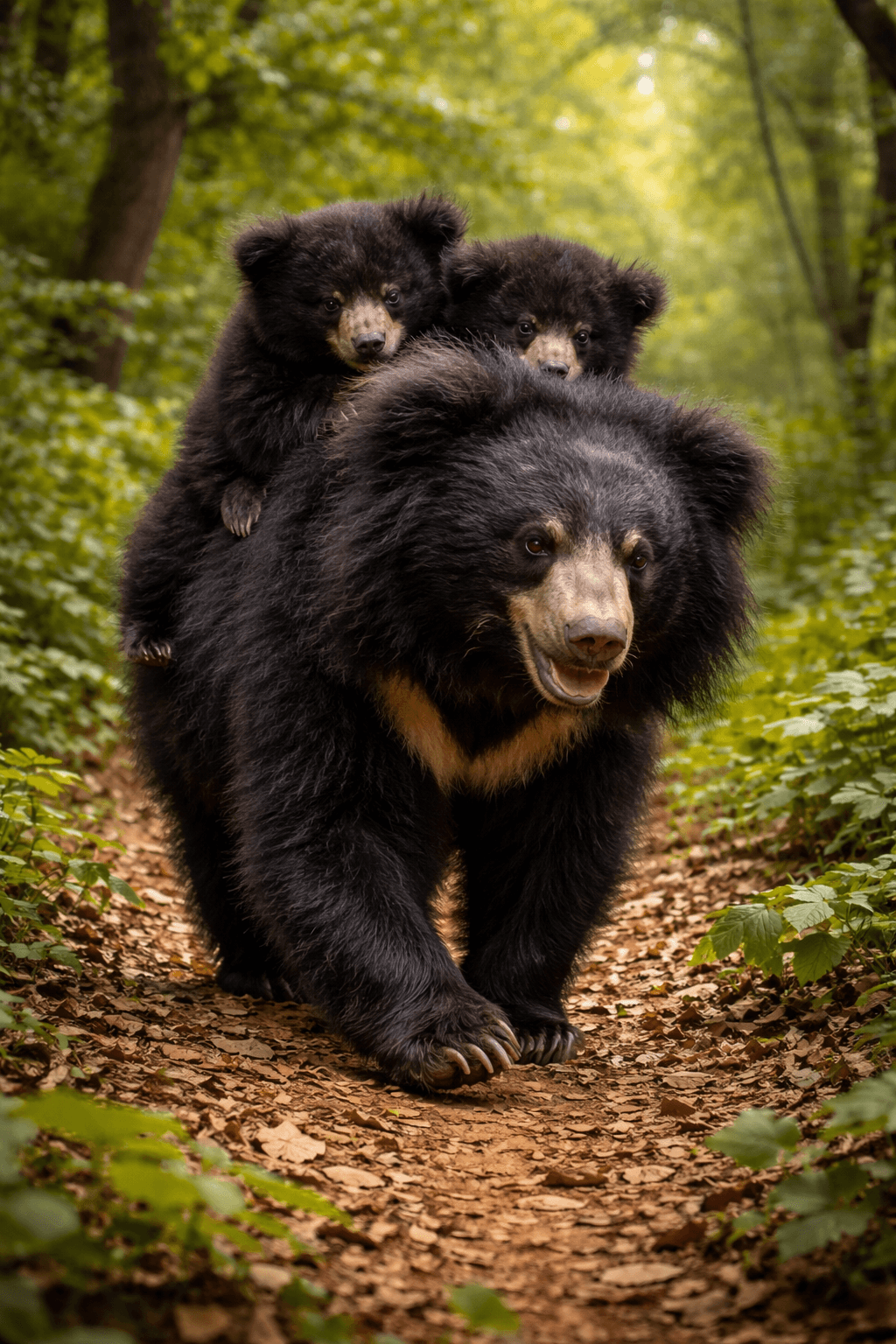
Tembel Ayı (Yapay Zeka ile Oluşturulmuştur.)
Sloth bear (Melursus ursinus) is a bear species native to South Asia and highly adapted to an insectivorous diet. The species is particularly common in countries such as India Sri Lanka Nepal and Bhutan. Forested areas shrublands and savanna-type habitats provide suitable environments for the sloth bear. Its fur is typically long coarse and shaggy and is characterized by a pale patch on the chest. The long snout and flexible lips enable it to feed on insects such as termites and ants.
The sloth bear belongs to the order Carnivora and the family Ursidae. It is classified within the genus Melursus and is the only species in this genus. Its scientific name is Melursus ursinus.
Systematically the sloth bear is distinctly different from other bears in terms of morphology and behavior. Its elongated lips and specialized dentition adapted for insectivory are key features distinguishing it from other bear species. Body structure and fur arrangement are also used in systematic classification.【1】
Sloth bears are medium-sized with a body length typically ranging from 1.2 to 1.8 meters. Their bodies are long and covered in shaggy fur which is usually black. The pale V-shaped or Y-shaped marking on the chest varies among individuals.
The snout and lip structure are among the most distinctive features of the species. The snout is long and flexible and the lips can be protruded to suck up insects. This adaptation works in conjunction with the dental structure to facilitate feeding on termites and ants. Some upper incisors may be missing which enhances the efficiency of suction feeding.
The sloth bear has long powerful and curved claws used for digging into insect nests. These claws are also effective for defense. The soles of the feet are thickly furred which protects them from hot soil and rough tree bark.【2】
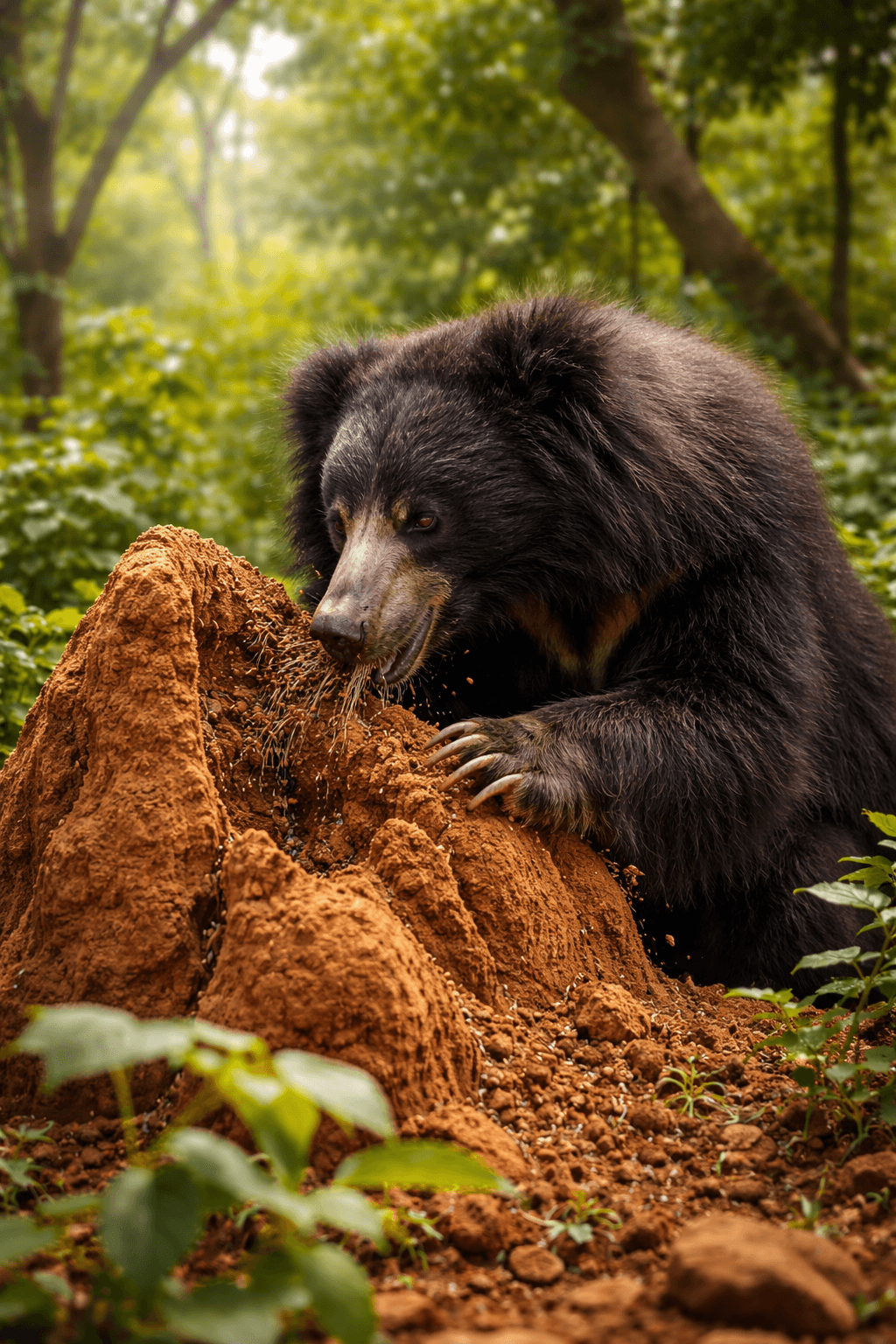
Sloth Bear (Generated by Artificial Intelligence)
The sloth bear is widespread across the Indian subcontinent. Its natural range includes India Sri Lanka Nepal and Bhutan. This species is particularly found in tropical dry forests shrublands and savanna areas.
Habitat preferences are largely determined by food availability. Higher densities are observed in areas with abundant termite and ant colonies. In forested regions sloth bears have developed climbing abilities and use trees both for foraging and carrying cubs. Near human settlements they may occasionally enter agricultural fields in search of food.【3】
Sloth bears are primarily insectivorous. Their diet consists largely of termites and ants but they also consume fruit honey and various plant materials. During feeding they extend their lips into a tube-like shape to suck up insects and may produce loud sucking sounds.
style="white
[1]
LeeAnn Bies “Melursus ursinus (sloth bear)” Animal Diversity Web Access Date: 22 March 2026
[2]
Bülent Gözcelioğlu “Tembel Ayı” TÜBİTAK Bilim ve Teknik Access Date: 22 March 2026
[3]
Bülent Gözcelioğlu “Tembel Ayı” TÜBİTAK Bilim ve Teknik Access Date: 22 March 2026

Tembel Ayı (Yapay Zeka ile Oluşturulmuştur.)
No Discussion Added Yet
Start discussion for "Sloth Bear (Melursus ursinus)" article
Taxonomy and Systematics
Morphological Characteristics
Geographic Distribution and Habitat
Diet