


This article was automatically translated from the original Turkish version.
Let us accept it.
We live in an age where everything and everyone is presented as beyond perfect.
We pick up our phones and within minutes become guests in the lives of hundreds of people: one person’s morning coffee, another’s vacation, someone else’s wedding, graduation, new job, fitness routine, happy family dinner…
And for some reason, everyone is doing wonderfully.
Everyone looks beautiful.
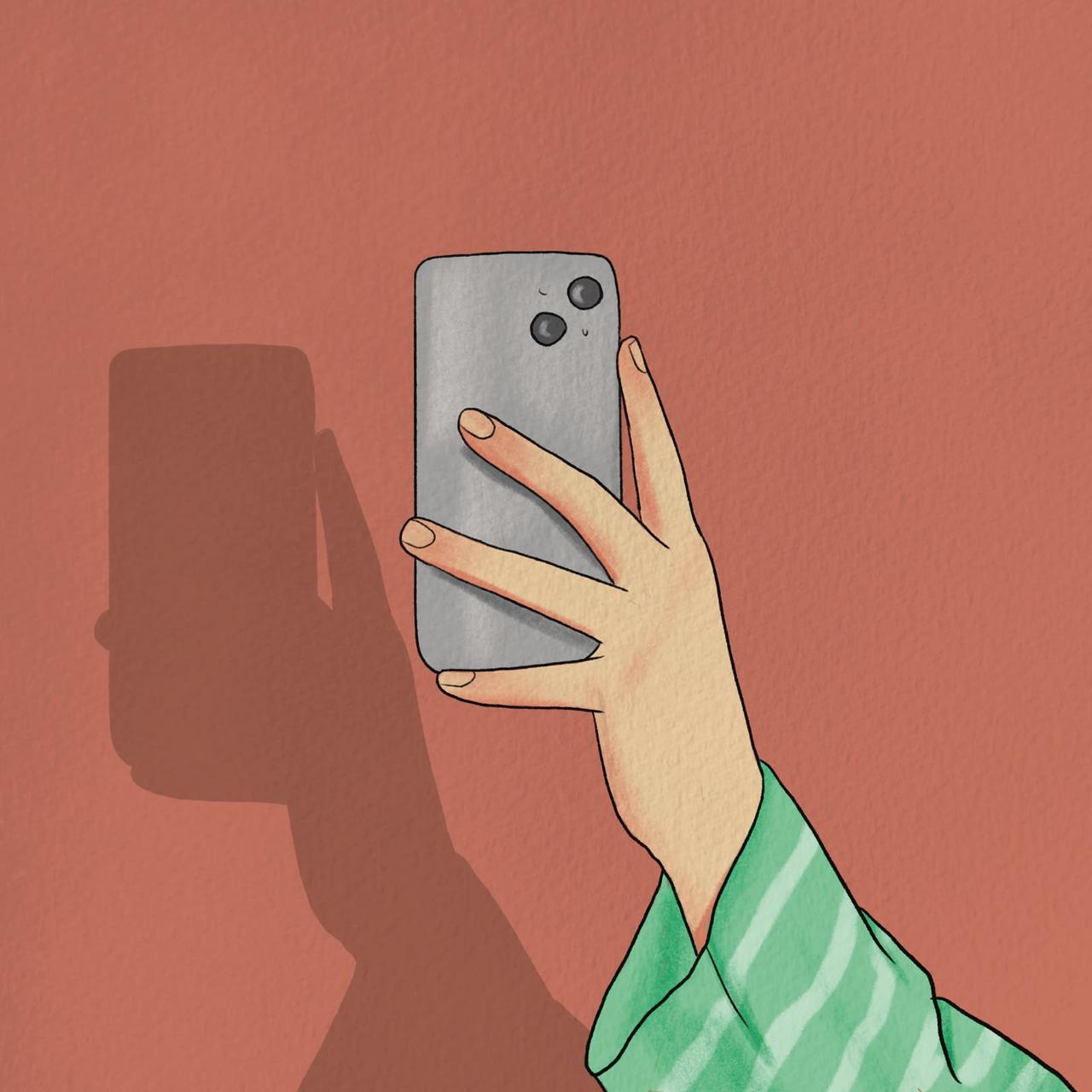
Temsili Çizim (Çizim: Esra Abdulazizoğlu)
Everyone is successful.
Everyone is happy.
Everyone seems to have figured out life.
Yet we alone feel like we are falling behind.
But is everyone’s life really this flawless?
Of course not.
What we call social media does not show us life in its entirety, but only a few carefully selected seconds. No one shares the moment they did not want to get out of bed in the morning. No one adds to their story the silence that followed hours of argument. They rarely post about a failed exam, an unfinished project, a night spent crying, or days filled with unease.
Instead, we get a beautiful photo of coffee:
“I started my day like this.”
We do not know about the sleepless night before that coffee, the kitchen chaos during breakfast prep, or whether the person felt truly good when the photo was taken.
And we do not need to know.
Because that is not a diary; it is often a display window.
And in a display window, no one shows the clutter in the storage room.
Yet we stand in front of that window and strangely compare the curated life of others to our own. As the saying goes, the neighbor’s chicken looks like a peacock to the neighbor. Perhaps what we experience on social media is just a more digital version of this.
Confusing the display window with reality is, I believe, where the greatest illusion begins.
We look at their most beautiful photo and think of our worst day. We see their success and diminish our own journey.
Moreover, the things we compare are not even equal.
One person shows us a few seconds of their life, while we live our own life for twenty-four hours.
In those few seconds, the hair looks perfect, the house is clean, the lighting is ideal, the coffee is on the table, and life seems to be on track.
But within the twenty-four hours of real life, alongside those moments, there is also fatigue, mistakes, uncertainty—and of course, joy too.
Being human means stumbling a little, being confused sometimes, occasionally losing hold of the thread.
After all, we are human!
This is not about saying our lives are bad. The real issue is the illusion that we are watching the entirety of someone else’s life.
When we hear “filter,” most of us think of apps that alter faces, right?
But to me, the filter on social media is much more than that.
When a person decides which photo to share from their life, they are already making a selection; by choosing which moments to show, they make all others invisible.
Therefore, what we see on social media is not only perfected faces; more often it is a narrative of life that gives the impression of being “polished and everything is fine.”
And we watch these narratives as if they were reality itself.
While real life remains behind the curtain, we watch a world where the stage lights never dim. Yet behind every scene, there is another story the audience never sees.
So what happens next?
After a while, we begin to adopt social media’s standards and develop an attitude toward our own lives.
“Why don’t I travel this much?”
“Why doesn’t my home look like this?”
“Why am I not this productive?”
“Why don’t I look this good?”
And countless other questions…
Here is where we need to pause and reflect. Because humans gradually come to accept as normal whatever they are constantly exposed to. Our eyes grow accustomed; our standards shift.
So what is normal?
What is normal life?
Normal life is a little messy.
It is a little delayed.
Sometimes it is unplanned.
Sometimes it is dull.
Sometimes it is joyful.
And sometimes it is utterly ordinary.
And all of this is not a flaw in life; it is life itself.
We need to step away from these display windows and return to ordinary life.
While the screen’s light illuminates our faces, it can sometimes magnify the shadows over our own lives.
Let us ask ourselves:
Do we truly desire the lives we see on social media, or do we simply believe we must desire them because they are constantly before our eyes?
I am not saying we must quit social media entirely.
The issue is not social media itself, but recognizing what it can and cannot do for us.
Let us drink a cold cup of coffee.
Let us talk to a real human being.
Let us sit awhile in our messy room.
Let us take a photo that is not perfect.
Or better yet, let us take no photo at all.
Let one of our days pass without posting.
Let no one like it.
Let no one see it.
Let no one know.
And yet, life continues to be lived.
The most beautiful thing about life is precisely this:
That it is valuable even when no one sees it.
Social media can constantly tell us: “Be more beautiful. Be more successful. Look happier.”
But perhaps the real question we should be asking is: “Am I truly living as myself amid all of this?”
When the screen turns off, the lights go out, the crowd disperses…
When you are alone in that quiet room, are you content to be yourself?