


This article was automatically translated from the original Turkish version.
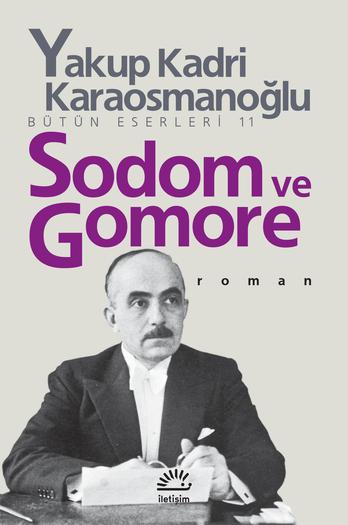
Author(s) | Yakup Kadri Karaosmanoğlu | ||||||||
|---|---|---|---|---|---|---|---|---|---|
Genre | Novel | ||||||||
Publication Year | 1928 | ||||||||
Period(s) | National Literature-Republic | ||||||||
Sodom and Gomorrah is a significant novel by Yakup Kadri Karaosmanoğlu, published in 1928, which offers a profound examination of the moral and social decay of Istanbul under occupation in Turkish literature. The novel takes its name from the cities of Sodom and Gomorrah, mentioned in the Torah, which were destroyed by divine wrath due to their moral corruption. It equates Istanbul during the occupation with these biblical cities. Presented within the context of the Armistice period, the work is regarded as a social and historical novel.
The novel is set in Istanbul under British occupation following World War I. The author draws a parallel between Istanbul during this period and the cursed cities of Sodom and Gomorrah from the Torah, emphasizing the city’s moral and social decline. The protagonist, Necdet, is a patriotic young man who advocates resistance against the occupiers. Necdet’s fiancée, Leyla, represents the corrupted Istanbul society of the time through her relationships with occupying officers. The conflict between these two characters lays bare the collapse of both individual and societal values.
Necdet: A young intellectual educated in the West, he defends resistance against the occupiers and speaks out against Istanbul’s moral decay.
Leyla: Necdet’s fiancée, she embodies the morally bankrupt Istanbul society of the era through her relationships with occupying officers. She is a character detached from ethical values and obsessed with entertainment.
Sami Bey: Leyla’s father, a former Ottoman bureaucrat who adopts a passive stance toward the occupiers and reflects the moral disintegration within the family.
Cemil: Necdet’s friend, who joins the Kuva-yi Milliye as a patriotic youth and is killed in action. His character symbolizes resistance and sacrifice.
As noted in Osman Mergen’s master’s thesis, the novel contains rich intertextuality with sacred texts and Western literature. Particularly, the biblical story of Sodom and Gomorrah is linked to the works of Shakespeare, Oscar Wilde’s The Picture of Dorian Gray, and the writings of Pierre Loti, revealing the novel’s layered structure. This intertextuality is distinctly evident in the characterization and plot development.
Sodom and Gomorrah is one of Yakup Kadri Karaosmanoğlu’s works that most powerfully reflects his social critique. The author deeply explores the moral and social collapse of occupied Istanbul through the inner conflicts of individuals and societal corruption. The novel is regarded as a work that interrogates the socio-political structure of the era and the positions of individuals within it.
Karaosmanoğu, Yakup Kadri. Sodom ve Gomore. İletişim Yayınları, İstanbul, 2020.
Mergen, Osman. Yakup Kadri Karaosmanoğlu’nun Sodom ve Gomore Romanında Metinlerarası İlişkiler. Master's thesis, Nevşehir Hacı Bektaş Veli Üniversitesi, 2022.
Turk Edebiyatı. "Sodom ve Gomore – Yakup Kadri Karaosmanoğlu," Turk Edebiyatı. Accessed May 1, 2025. https://www.turkedebiyati.org/sodom-ve-gomore/.
Öncü, Müge. "Bir Vicdan Muhasebesi: Sodom ve Gomore." Motif Akademi Halkbilimi Dergisi 16, no. 42 (2023): 652-663.

Author(s) | Yakup Kadri Karaosmanoğlu | ||||||||
|---|---|---|---|---|---|---|---|---|---|
Genre | Novel | ||||||||
Publication Year | 1928 | ||||||||
Period(s) | National Literature-Republic | ||||||||
No Discussion Added Yet
Start discussion for "Sodom and Gomorrah (Book)" article
Plot and Thematic Structure
Characters
Intertextuality and Literary Connections