


This article was automatically translated from the original Turkish version.
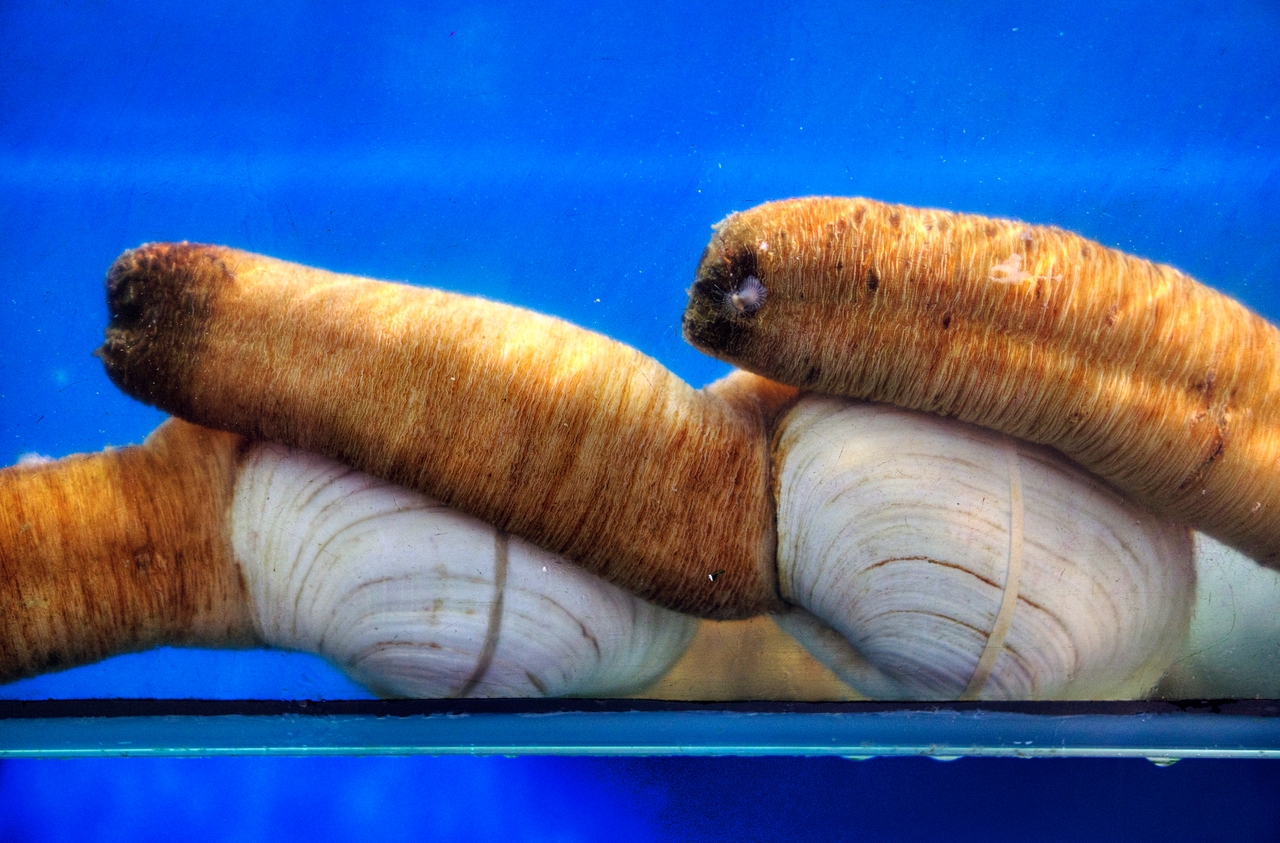
The geoduck (Panopea generosa) is a long-lived, large-sized marine mollusk. It derives its name from the Chinook word "geídəq" and is commonly found along the Pacific coast of North America. Its long siphon and lifespan exceeding 100 years have made the geoduck an important species in marine biological research. The geoduck performs essential functions such as feeding and respiration through its siphon and leads a burrowing life on the seafloor.
The geoduck plays a crucial filtering role in the ecosystem by consuming plankton. This feeding behavior forms an important part of the food chain. Additionally, it is economically significant due to its value as a delicacy in Asian cuisine. However, overfishing and environmental threats can sometimes place pressure on geoduck populations.
The geoduck is one of the largest burrowing clam species in the world and is distinguished by its unique morphology. While its shell length ranges from 15 to 20 cm, its siphon can reach lengths exceeding one meter. The inability of the siphon to be fully retracted into the shell is a defining feature that separates it from other clam species. The outer surface of the siphon is thick and skin-like, enabling the animal to carry out feeding and respiration functions.
Geoducks typically weigh between 1 and 2 kilograms; some individuals attract attention with masses exceeding 4 kilograms. They exhibit rapid growth during their first 15 years of life, reaching their maximum size within this period. With lifespans of up to 150 years, the geoduck is among the longest-lived organisms in marine ecosystems. These traits reinforce its resilience and ecological role.
The long siphon structure facilitates the geoduck’s ability to remain anchored in the seafloor. During feeding, the siphon filters plankton to meet the animal’s energy needs. Respiration also occurs through the siphon, supporting the geoduck’s metabolism. These structural features form the foundation of its survival strategies.
The geoduck has a wide distribution along the Pacific coast of North America, particularly from Alaska to Baja California. These mollusks prefer sandy or muddy seafloor environments at depths of 5 to 25 meters. They bury themselves beneath the sediment, exposing only their siphons to filter plankton from the water column.
These mollusks spend the majority of their lives motionless on the seafloor. They interact with their environment and obtain food solely through their siphons. This adaptation enables the geoduck to avoid natural predators and sustain a long lifespan. It also contributes to the stability of the seafloor, supporting ecosystem health.
The quality of water in their habitat is critical for the geoduck’s health and growth. They feed more efficiently in nutrient-rich and clean waters. However, pollution and environmental degradation can negatively impact geoduck populations. Therefore, protecting and sustainably managing their habitats is of great importance.
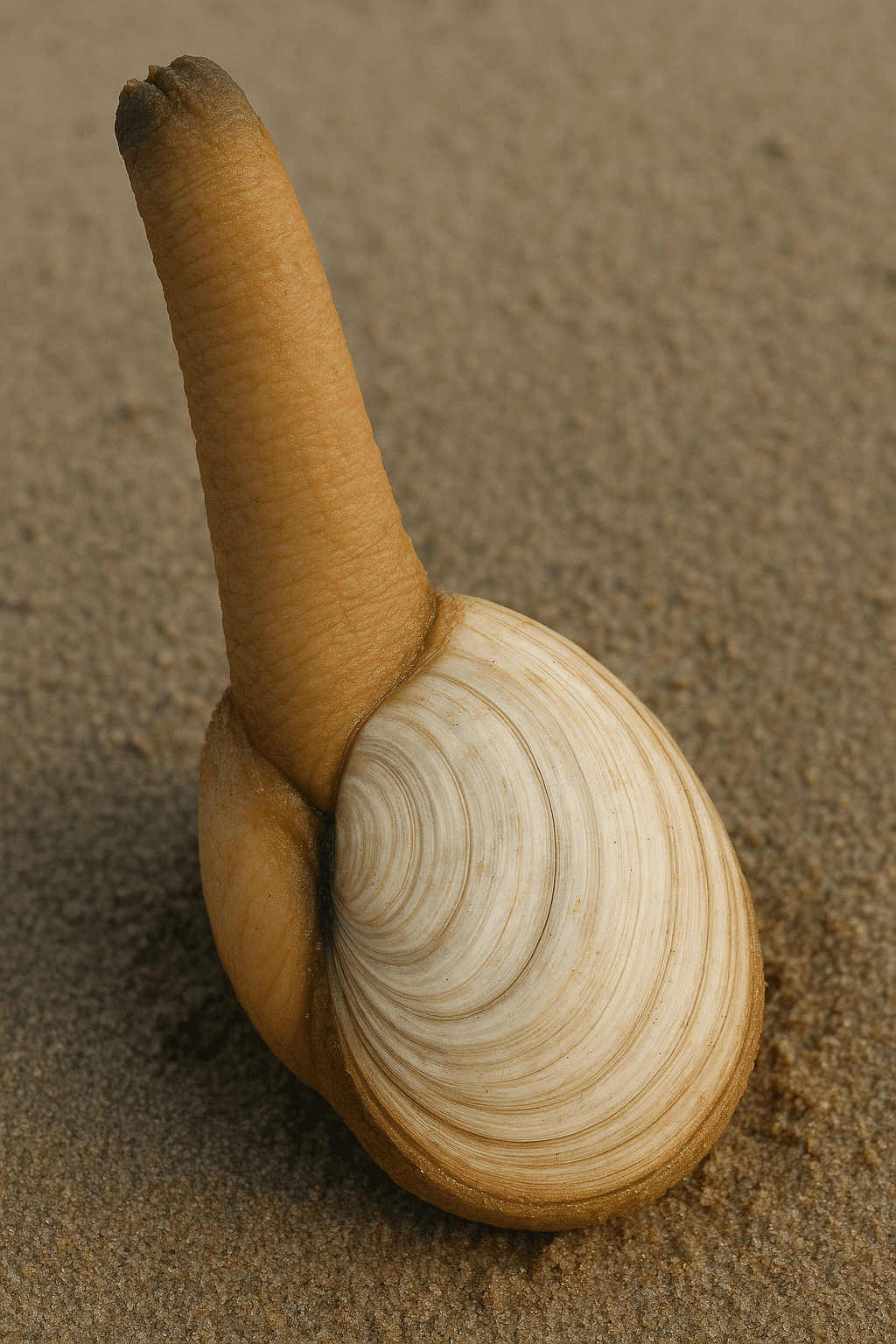
Geoduck (Generated by Artificial Intelligence).
The geoduck is a solitary marine organism with no social structure. It typically lives in isolation on the seafloor. Consequently, its mobility is limited, and its interaction with the environment occurs exclusively through the siphon.
Environmental conditions significantly influence geoduck behavior. Changes in water temperature and pH levels can directly affect their physiology. Research has shown that low pH levels slow larval development and reduce reproductive success. This highlights the potential impacts of climate change on geoduck populations.
The geoduck’s sedentary lifestyle provides natural protection against predators. However, environmental degradation and human activities can weaken this protection. Therefore, studying the behavioral and physiological responses of the geoduck is essential for developing effective conservation strategies.
The geoduck employs a filter-feeding strategy, drawing water in through its siphon to capture plankton and organic particles. This filtration process contributes to the cleaning of seawater while simultaneously meeting the animal’s nutritional needs. The geoduck’s feeding behavior plays a decisive role in maintaining plankton balance within the ecosystem.
Water quality and plankton density directly affect the geoduck’s feeding efficiency. In clean, plankton-rich waters, they grow faster and develop more healthily. However, water pollution and other environmental stressors can negatively alter feeding habits. Particularly, contaminants such as heavy metals can disrupt the feeding process and weaken metabolism.
Feeding habits are one of the fundamental factors supporting the geoduck’s energy balance and longevity. Preserving feeding resources is vital for maintaining healthy geoduck populations. This underscores the importance of developing sustainable fishing practices and environmental protection policies.
The geoduck reproduces through external fertilization. Females can produce billions of eggs over their lifetime, while males release sperm into the water. Fertilization occurs in the water column, and fertilized eggs develop into free-swimming larvae. After completing their planktonic stage, these larvae settle on the seafloor and mature into adults.
Larval development is highly sensitive to environmental factors. Water temperature and pH levels are the primary determinants of larval growth. Adverse environmental conditions can increase larval mortality and hinder population renewal. This further emphasizes the potential impacts of global threats such as climate change on the geoduck.
Reproductive success and larval survival rates are critical for the geoduck’s long-term persistence in the ecosystem. Therefore, preserving habitat quality and monitoring environmental variability are essential for the sustainability of geoduck populations. Understanding these processes contributes to safeguarding both the ecological and economic value of the species.
Due to its high economic value, the geoduck faces threats from overfishing. Additionally, environmental stressors such as habitat destruction and pollution can negatively affect populations. As a result, some regions have implemented conservation measures including fishing quotas and size limits. Aquaculture initiatives are also being pursued to reduce pressure on wild stocks.
Conserving the geoduck is important not only for economic reasons but also for the health of the ecosystem. Strengthening environmental protection policies and promoting sustainable fishing practices support the long-term survival of this species.

No Discussion Added Yet
Start discussion for "Softshell Clam (Panopea generosa)" article
Physical Characteristics
Habitat and Distribution
Behavior and Social Structure
Feeding Habits
Reproduction and Larvae
Threats and Conservation Efforts