
This article was automatically translated from the original Turkish version.
+2 More
Location | Eynez Underground Coal Mine Soma Manisa | ||||||||
|---|---|---|---|---|---|---|---|---|---|
Date(s) | 13 May 2014 | ||||||||
Loss of Life | 301 Miners | ||||||||
Rescued Workers | 486 Workers | ||||||||
Cause of Death | Primarily carbon monoxide poisoning | ||||||||
Primary Event Cause | Carbon monoxide dispersion due to friction | ||||||||
Critical Issues | high gas concentration power outage Ventilation failure | ||||||||
The Soma mine disaster was a mass workplace accident that occurred on 13 May 2014 during a shift change at the Eynez underground coal mine in the Soma district of Manisa, where approximately 5,000 workers were employed. The incident arose as a result of a fire caused by coal coming into contact with oxygen in a nearby underground production area, leading to the rapid spread of carbon monoxide. Workers were severely affected within a short time. Autopsies determined that the primary cause of death was carbon monoxide poisoning. A total of 486 workers were rescued from the mine. The mine’s operations had been transferred to a private company under a concession model, and production capacity had been expanded over the years, resulting in a large-scale facility housing thousands of workers.
Technical assessments of the disaster’s causes have focused on the smoldering of coal due to its contact with oxygen near the main transport gallery, and the rapid dissemination of the resulting carbon monoxide. It has been stated that power outages and disruptions to ventilation airflow further hindered evacuation efforts. Following the incident, large-scale search and rescue operations were launched, and a three-day national mourning period was declared across the country.
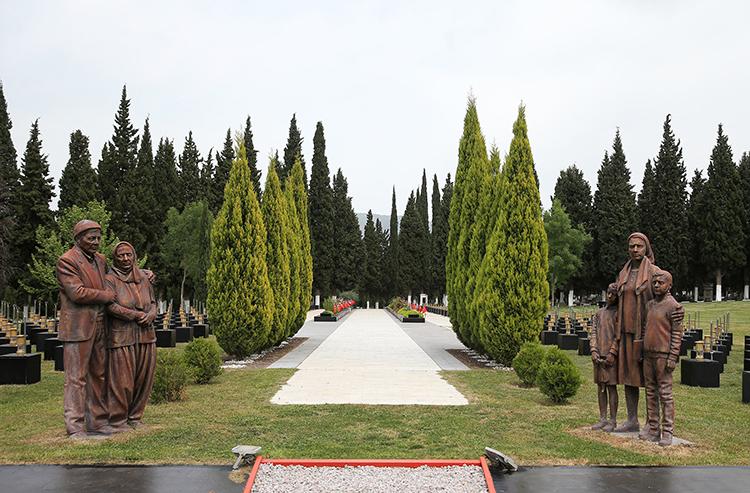
Soma Mine Martyrs Cemetery (Anadolu Ajansı)
The Eynez underground coal mine where the disaster occurred held its operating license from the Turkish Coal Enterprises Institution (TKİ), but its operations were carried out by a private company under a concession model. The mine was opened in 1990 by TKİ, transferred to another firm through a tender in 2006, and then reassigned to the current operator under a new contract in 2009. With each transfer, annual production volume was incrementally increased; preparatory galleries and production faces were expanded, and the number of workers rose significantly. The same operating company also acquired rights to other nearby mining areas, expanding its production capacity and simultaneously operating multiple mines.【1】
The mine’s production system relied on classical underground mining methods, tracking lignite seams through deep underground galleries. Coal production was organized through an integrated structure involving main transport galleries, ventilation systems, production faces, and support systems. Each production area required synchronized advancement and support operations, continuous and balanced airflow, and the transport of extracted coal to the surface via conveyor belts or rail wagons. Because the concession contract with TKİ included a purchase guarantee tied to a minimum tonnage, production pace became one of the defining factors in the mine’s operational regime.
Multiple shift systems were implemented in the workforce organization, with engineers, technical staff, and workers of various specializations assigned to different roles. State inspection reports revealed the existence of intermediate-level structures labeled as “team leaders” but functionally acting as subcontractors. The width and support characteristics of galleries connecting production areas were critical to maintaining safe and continuous underground working conditions. The ventilation system, composed of primary and secondary airflows, was designed to deliver clean air to work zones and remove harmful gases; its functionality was directly compromised during power outages or airflow disruptions.

Soma Mine Disaster (Anadolu Ajansı)
The incident that began on 13 May 2014 at the Eynez underground coal mine in Soma developed as a smoldering fire, triggered by coal coming into contact with oxygen in a region close to underground production areas, rapidly spread across a wide zone. Technical investigations indicated that this smoldering initiated a series of chemical reactions producing large volumes of carbon monoxide, which then rapidly traveled through the main transport galleries.【2】
The high concentration of workers inside the mine at the time of the shift change contributed to the large number of casualties. Official findings confirmed that carbon monoxide poisoning was the primary cause of death, indicating that the gas reached critical levels within a very short time.
The interruption of the power supply was one of the key factors determining the course of the disaster. The power outage disrupted the normal operation of the ventilation system, altered the direction of clean airflows, and accelerated the spread of gas underground. Rapidly decreasing visibility and rising temperatures made it difficult for workers to reach evacuation routes. Survivors reported that smoke quickly became dense, mask usage time was limited, and many workers experienced rapid respiratory impairment. This situation demonstrated that the gas dispersion severely restricted operational mobility.

Search and Rescue Operations (Anadolu Ajansı)
Following the disaster, search and rescue efforts began with attempts to locate trapped workers and initiate evacuations in accessible zones. Shortly after the incident, rising temperatures and carbon monoxide levels inside the mine, caused by power failure and ventilation system failure, severely restricted both the movement of workers inside and the progress of rescue teams. Rescue personnel were forced to operate using personal oxygen support systems due to high gas concentrations, which technically complicated the continuity and depth of the intervention.
The initial phase of the response focused on reaching areas where live workers were located. Rescue teams reported that severely affected workers were prioritized for extraction to the surface, many had lost consciousness due to dense smoke, and transportation occurred under extremely limited visibility. Some rescued workers were reported to have bleeding from the mouth, nose, and ears, and physical signs of carbon monoxide poisoning were clearly evident, indicating that gas concentrations underground had reached critical levels.
Parallel to underground operations, triage procedures were conducted at the mine entrance by medical teams, and emergency medical care was provided to workers severely affected by the gas. Technical teams simultaneously worked to reorganize ventilation, accelerate gas removal, and secure safe access routes to galleries. However, the difficulty in controlling gas movement delayed access to certain areas.
Search and rescue operations continued uninterrupted for days; a total of 486 workers were safely evacuated, while 301 workers lost their lives. 【3】 Technical and administrative assessments of the response highlighted that conditions in the first hours of the disaster presented extraordinary risks, with gas concentration and temperature critically impeding rescue speed, while continuous air and equipment support remained essential for rescue teams to sustain their operations.
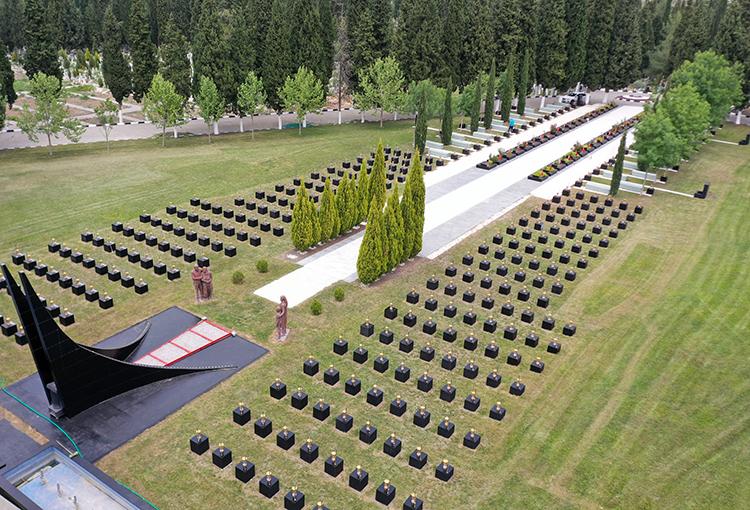
Soma Mine Martyrs Cemetery (Anadolu Ajansı)
Technical and institutional investigations following the disaster revealed that occupational health and safety practices must be evaluated in relation to the mine’s operational structure. The Turkey Bar Association report documented findings that risk assessment procedures at the mine were not aligned with ventilation infrastructure, gas monitoring mechanisms, or emergency protocols. The report also highlighted structural problems concerning the quality of occupational health and safety training, the effectiveness of inspection processes, and the continuity of technical supervision.【4】 The report noted that disruptions in the ventilation system and changes in gas flow direction critically impeded worker evacuation, demonstrating the vulnerability of the safety infrastructure to production pressures.
Investigations into employment relations identified the presence of intermediate-level structures labeled as “team leaders” but functioning de facto as subcontractors. Inspection reports indicated that these individuals exercised actual authority over work organization, shaping worker speed, shift schedules, and production pressure. This revealed that employer-worker relations were not confined to formal structures; subcontractor-like arrangements significantly influenced workplace safety culture and risk perception. The link between compensation and production performance, particularly in areas with bonus systems, was seen as an incentive for workers to operate under high tempo and hazardous conditions.
When occupational health and safety conditions are assessed alongside the organizational structure of employment, evaluations indicate that the production-oriented model exerted pressure on technical safety requirements. Post-incident investigations showed that the insufficient institutionalization of a safety culture hindered early risk detection and effective preventive measures. In this context, the disaster’s consequences are understood not merely as the result of a technical failure but as the outcome of structural interactions between occupational safety practices and employment relations.
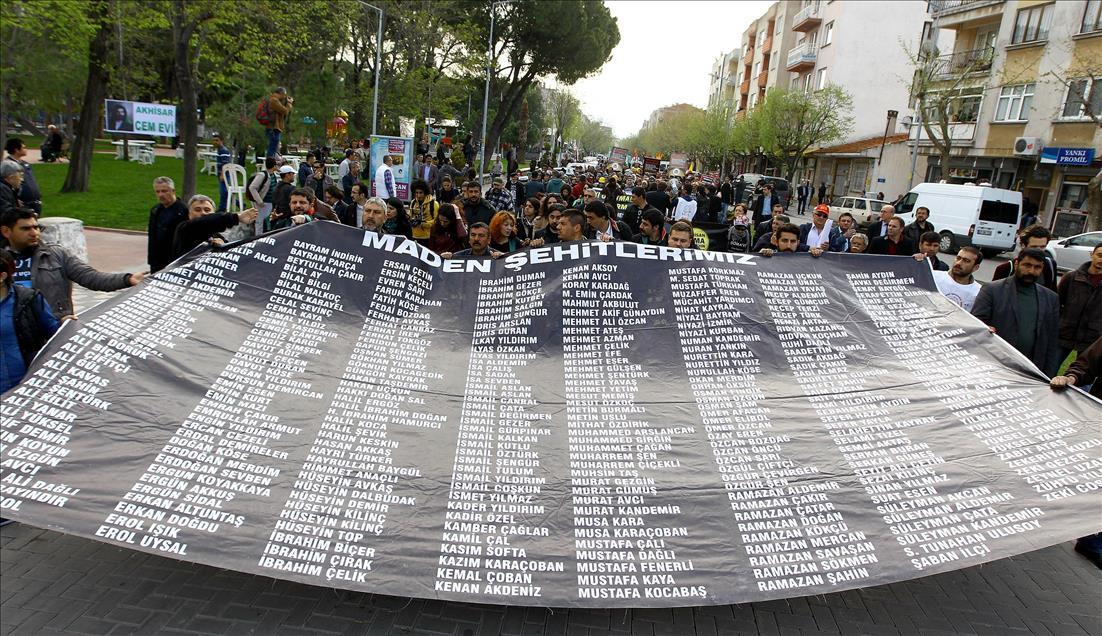
Workers Who Lost Their Lives in the Soma Mine Disaster (Anadolu Ajansı)
The disaster in Soma was evaluated not only for its economic and technical dimensions but also for its wide-ranging social consequences. A national mourning period was declared across the country, memorial ceremonies were held in various cities and international forums, and public opinion remained focused for an extended period on the social aftermath of the tragedy. The scale of collective loss deeply affected families and close circles of the large population employed in the mining sector; the simultaneous arrival of death notifications in many households created a visible rupture in the social fabric.
The situation of the families constituted one of the most visible social impacts of the disaster. A significant proportion of the 301 deceased workers were young, leaving behind spouses and children. Official records indicate that their deaths resulted in numerous children losing their parents and families facing prolonged economic and psychological uncertainty.
Solidarity practices at the societal level also emerged as a significant dimension. Condolence ceremonies and memorials were held; various social groups exhibited collective behaviors aimed at preserving the memory of the workers.
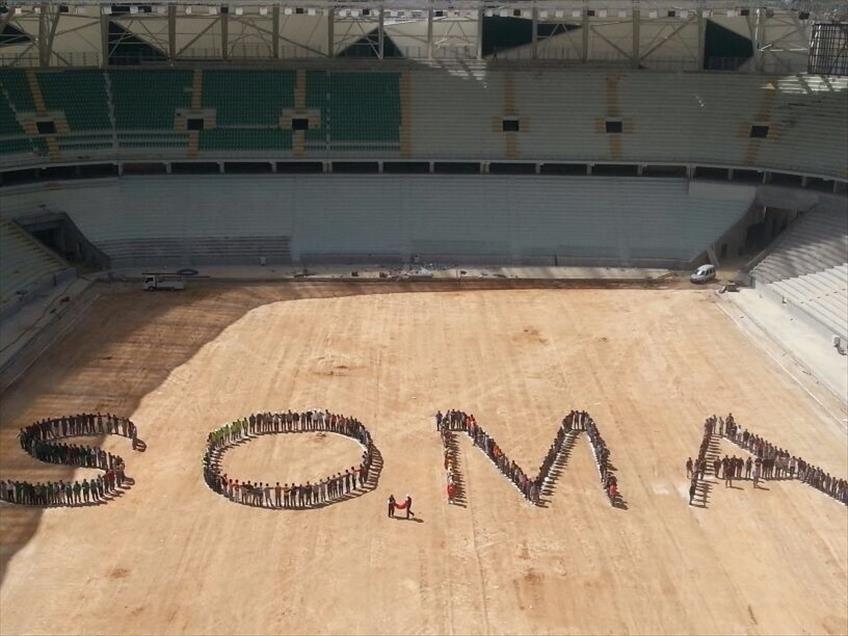
Soma Mine Disaster (Anadolu Ajansı)
Following the Soma disaster, administrative and judicial proceedings were conducted through a multi-level framework aimed at clarifying the causes of the incident and identifying responsibility. In the initial phase, administrative investigations were launched by units under the Ministry of Labor and Social Security and the Ministry of Energy and Natural Resources, evaluating inspection records, occupational safety documents, and technical infrastructure reports. A parliamentary investigation commission established within the Grand National Assembly of Türkiye visited the mine site to gather information and shared its observations on the overall state of the sector with the public. A comprehensive report prepared by the Turkey Bar Association complemented administrative assessments by presenting findings on the technical, legal, and structural dimensions of the disaster.【5】
The judicial process began with the initiation of a criminal investigation, leading to prosecutions against mine managers, engineers, and other personnel responsible for occupational safety. In 2015, court rulings imposed prison sentences ranging from 15 to 22 years and six months on five defendants. The regional court’s decisions were subject to appellate review; one defendant was released, while the majority of rulings were upheld. Subsequently, the 12th Criminal Chamber of the Court of Cassation issued annulment rulings against some defendants, triggering a retrial. In the retrial, Can Gürkan, Chairman of the Board of Soma Kömürleri A.Ş., was sentenced to 20 years for “causing the death and injury of multiple persons through conscious negligence,” while engineers Adem Ormanoğlu and Efkan Kurt received sentences of 12 years and six months each; another defendant, Haluk Evinç, was acquitted.【6】
The participation of victims’ families attracted significant attention during the trials, which were conducted under intense public scrutiny. Protests occurred in courtrooms, and reactions were observed upon the announcement of verdicts. Throughout the process, both the identification of perpetrators and the legal accountability of mine management and oversight mechanisms were debated.
The Soma disaster has been recorded in history as a multifaceted event demonstrating the necessity of evaluating underground mining’s technical, institutional, and organizational dimensions together. Administrative, technical, and judicial investigations into the disaster revealed that its course was determined by the natural reactions of coal, vulnerabilities in ventilation and energy infrastructure, the structure of work organization, and systemic failures in the integrated functioning of occupational health and safety practices. The difficulty of search and rescue operations, the rapid rise in gas concentration, and the limited availability of evacuation routes were factors that intensified the disaster’s consequences. Subsequent judicial proceedings and institutional assessments brought to the forefront the need to reevaluate the mining sector’s oversight, safety culture, and employment relations. The social impact of the disaster and the long-term consequences faced by families have necessitated viewing the event not merely as a technical malfunction but as a multidimensional social and institutional breakdown.
Aliağaoğlu, Alpaslan, and Fırat Çiltepe. “Kömür ve Ölümün Buluştuğu Yer: Hüzün Turizmi Açısından Soma Maden Faciası.” *Atatürk Üniversitesi Sosyal Bilimler Enstitüsü Dergisi* 24, special issue (2020): 131–150. Accessed December 1, 2025. https://dergipark.org.tr/en/download/article-file/1348795
Anadolu Ajansı. “Ermenek'te Kömür Ocağında İşçilerin Mahsur Kalması.” Accessed December 1, 2025. https://www.aa.com.tr/tr/pg/foto-galeri/somadaki-maden-faciasi
Anadolu Ajansı. “Soma Şehitleri Facianın 6'ncı Yılında Dualarla Anılacak.” Accessed December 1, 2025. https://www.aa.com.tr/tr/turkiye/soma-sehitleri-facianin-6nci-yilinda-dualarla-anilacak/1837686
Anadolu Ajansı. “Soma'da Acılar İlk Günkü Gibi.” YouTube. Accessed December 1, 2025. https://www.youtube.com/watch?v=Z0uUVBz1eOw
Anadolu Ajansı. “Soma'daki Facia Uluslararası Basında.” Accessed December 1, 2025. https://www.aa.com.tr/tr/turkiye/somadaki-facia-uluslararasi-basinda/159690
Anadolu Ajansı. “Soma'daki Maden Faciası Davası.” Accessed December 1, 2025. https://www.aa.com.tr/tr/pg/foto-galeri/tutuklu-8-sanik-durusma-salonuna-getirildi
Anadolu Ajansı. “Soma'daki Maden Faciası Davasında Cezalar Belli Oldu.” Accessed December 1, 2025. https://www.aa.com.tr/tr/gunun-basliklari/somadaki-maden-faciasi-davasinda-cezalar-belli-oldu/1200623
Anadolu Ajansı. “Soma'daki Maden Faciası Davasında Yeniden Yargılanan 4 Sanık Hakkında Karar Çıktı.” Accessed December 1, 2025. https://www.aa.com.tr/tr/turkiye/somadaki-maden-faciasi-davasinda-yeniden-yargilanan-4-sanik-hakkinda-karar-cikti/2275441
Anadolu Ajansı. “Soma'daki Maden Faciası.” Accessed December 1, 2025. https://www.aa.com.tr/tr/pg/foto-galeri/maden-kazasinda-hayatini-kaybedenler-anildi
Anadolu Ajansı. “Soma'daki Maden Faciası.” Accessed December 1, 2025. https://www.aa.com.tr/tr/pg/foto-galeri/somada-kurtarma-calismalari-suruyor
Anadolu Ajansı. “Soma'daki Maden Faciasında Yaşamını Yitiren İşçilerin Ailelerinin Acısı Dinmiyor.” Accessed December 1, 2025. https://www.aa.com.tr/tr/yasam/somadaki-maden-faciasinda-yasamini-yitiren-iscilerin-ailelerinin-acisi-dinmiyor/3217022
Anadolu Ajansı. “Soma’daki Maden Faciasının 11. Yılı.” Accessed December 1, 2025. https://www.aa.com.tr/tr/gundem/somadaki-maden-faciasinin-11-yili/3564517
Anayasa Mahkemesi. “Soma Maden Kazasına İlişkin Kamu Görevlileri Hakkında Soruşturma İzni Verilmemesi Nedeniyle Yaşam Hakkının İhlal Edilmesi.” *Türkiye Cumhuriyeti Anayasa Mahkemesi — Bireysel Başvuru Basın Duyuruları*. Accessed December 1, 2025. https://www.anayasa.gov.tr/tr/haberler/bireysel-basvuru-basin-duyurulari/soma-maden-kazasina-iliskin-kamu-gorevlileri-hakkinda-sorusturma-izni-verilmemesi-nedeniyle-yasam-hakkinin-ihlal-edilmesi/
Aydemir, Aslı. “İtibarın Yönetilememesi ve Yıkıma Götüren Süreç: Soma Maden Kazası Örneği.” *Afyon Kocatepe Üniversitesi Sosyal Bilimler Dergisi* 23, no. 3 (2021): 1104–1127. Accessed December 1, 2025. https://dergipark.org.tr/en/download/article-file/1583816
Aydın, Güler, and Şeyma Yıldırım. “Soma Maden Kazası Sonrası Yaşanan Ailevi ve Psikolojik Sorunlar.” *Toplum ve Sosyal Hizmet* 31, no. 3 (2020): 874–903. Accessed December 1, 2025. https://dergipark.org.tr/tr/download/article-file/884898
Soma District Governorship. "13 Mayıs 2014’te Yaşanan Maden Faciası." *Türkiye Cumhuriyeti Soma Kaymakamlığı*. Accessed December 1, 2025. http://soma.gov.tr/13-mayis-2014de-yasanan-maden-faciasi
TRT Haber. “Soma maden faciası davasında karar tarihi açıklandı.” Accessed December 1, 2025. https://www.trthaber.com/haber/turkiye/soma-maden-faciasi-davasinda-karar-tarihi-aciklandi-372713.html
TRT Haber. “Soma'daki maden faciasında yaşamını yitiren işçilerin ailelerinin acısı dinmiyor.” Accessed December 1, 2025. https://www.trthaber.com/foto-galeri/somadaki-maden-faciasinda-yasamini-yitiren-iscilerin-ailelerinin-acisi-dinmiyor/64793/sayfa-1.html
TRT Haber. “Soma’daki maden şehitleri, facianın 10. yılında anılıyor.” Accessed December 1, 2025. https://www.trthaber.com/foto-galeri/somadaki-maden-sehitleri-facianin-10-yilinda-aniliyor/64821/sayfa-1.html
Topal, Çağatay, Fatma Umut Beşpınar, and Çağrı Topal. “Soma’da Madencilerin Risk Anlamlandırmalarında Kurumsal ve Yerel Bilginin Üretim Dinamikleri”. *Mülkiye Dergisi* 42, no. 3 (October 2018): 371–402. Accessed December 1, 2025. https://dergipark.org.tr/tr/download/article-file/774676
Turkish Union of Engineers and Architects Chambers. *Soma Maden Disaster TMMOB Report*. Ankara: TMMOB, September 2014. Accessed December 1, 2025. https://www.tmmob.org.tr/sites/default/files/somaraporu.pdf
Türkiye Barolar Birliği İnsan Hakları Merkezi. *Soma Maden Faciası Raporu*. Ankara: Türkiye Barolar Birliği Yayınları, November 2014. Accessed December 1, 2025. https://www.barobirlik.org.tr/dosyalar/duyurular/20141112_somamadenfaciasipdf.pdf
Çoban Keneş, Hatice, and İnan Özdemir Taştan. “Madencinin Acısına Bakmak: Ulusal Basında Soma Maden ‘Facia’sının Haberleştirilmesi”. *Ankara Üniversitesi SBF Dergisi* 71, no. 1 (March 2016): 125–60. Accessed December 1, 2025. https://dergipark.org.tr/tr/download/article-file/160133
Özgür, Ömer Faruk. “Kriz Yönetimi ve Kriz İletişimi Bağlamında Soma Maden Faciası Krizine Bakış.” *Al Farabi Uluslararası Sosyal Bilimler Dergisi* 2, no. 2 (2018): 29–55. Accessed December 1, 2025. https://dergipark.org.tr/tr/download/article-file/482204
Özkır, Yusuf, and Başak Şişman. “Soma Maden Kazasının İnternet Gazetelerinde Aktarılmasının Haberde İdeoloji Bağlamında Değerlendirilmesi.” *Iğdır Üniversitesi Sosyal Bilimler Dergisi*, no. 6 (2014): 65–81. Accessed December 1, 2025. https://dergipark.org.tr/en/download/article-file/2154093
[1]
Turkey Bar Association Human Rights Center. Soma Mine Disaster Report. Ankara: Turkey Bar Association Publications, November 2014. Accessed 1 December 2025. https://www.barobirlik.org.tr/dosyalar/duyurular/20141112_somamadenfaciasipdf.pdf
[2]
Turkey Bar Association Human Rights Center. Soma Mine Disaster Report. Ankara: Turkey Bar Association Publications, November 2014. Accessed 1 December 2025. https://www.barobirlik.org.tr/dosyalar/duyurular/20141112_somamadenfaciasipdf.pdf
[3]
Anadolu Ajansı. “The 11th Anniversary of the Soma Mine Disaster.” Anadolu Ajansı. Accessed 1 December 2025. https://www.aa.com.tr/tr/gundem/somadaki-maden-faciasinin-11-yili/3564517
[4]
Turkey Bar Association Human Rights Center. Soma Mine Disaster Report. Ankara: Turkey Bar Association Publications, November 2014. Accessed 1 December 2025. https://www.barobirlik.org.tr/dosyalar/duyurular/20141112_somamadenfaciasipdf.pdf
[5]
Turkey Bar Association Human Rights Center. Soma Mine Disaster Report. Ankara: Turkey Bar Association Publications, November 2014. Accessed 1 December 2025. https://www.barobirlik.org.tr/dosyalar/duyurular/20141112_somamadenfaciasipdf.pdf
[6]
Anadolu Ajansı. “Verdict Issued in Retrial of Four Defendants in Soma Mine Disaster Case.” Anadolu Ajansı. Accessed 1 December 2025. https://www.aa.com.tr/tr/turkiye/somadaki-maden-faciasi-davasinda-yeniden-yargilanan-4-sanik-hakkinda-karar-cikti/2275441


Location | Eynez Underground Coal Mine Soma Manisa | ||||||||
|---|---|---|---|---|---|---|---|---|---|
Date(s) | 13 May 2014 | ||||||||
Loss of Life | 301 Miners | ||||||||
Rescued Workers | 486 Workers | ||||||||
Cause of Death | Primarily carbon monoxide poisoning | ||||||||
Primary Event Cause | Carbon monoxide dispersion due to friction | ||||||||
Critical Issues | high gas concentration power outage Ventilation failure | ||||||||
Structure and Operation of the Mine
Sequence of Events
Search and Rescue Operations and Emergency Response
Occupational Health and Safety Conditions and Employment Relations
Social Impact and the Situation of Families
Administrative and Judicial Processes