

This article was automatically translated from the original Turkish version.
Songkran is a festival that symbolizes the traditional beginning of the New Year in the Thai calendar and is regarded as one of the country’s most important cultural events. The name of the festival derives from the Sanskrit word “Sankranti,” which fundamentally means “to move,” “to proceed,” or “a transition.”【1】
Astrologically, this transition signifies the Sun’s movement from the zodiac sign of Pisces into Aries, the first sign of the zodiac. It is believed that this holiday may have originated from an ancient Hindu festival called Makar Sankranti and was adopted during the Khmer Empire’s rule over Thailand in the 11th century. At its core, the festival embodies the philosophy of renewal—the cleansing and washing away of the negative aspects and impurities of the previous year.

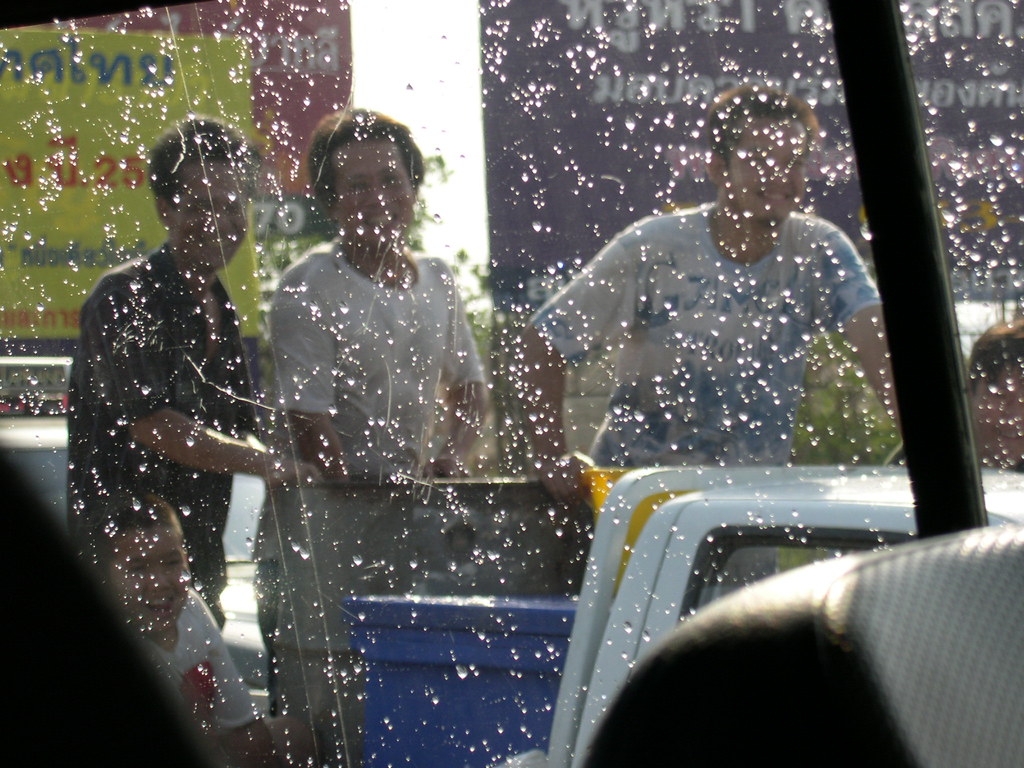
Images from the Songkran Festival (Flickr)
The Songkran Festival traditionally begins on 13 April each year in Thailand and lasts for three days, concluding on 15 April. However, due to the growing importance of the festival and its inclusion in 2023 on UNESCO’s Representative List of the Intangible Cultural Heritage of Humanity, celebrations in some regions have been extended from 11 April to 15 April under the name “Maha Songkran” (Great Songkran).【2】
This period also coincides with the end of the annual rice harvest season, giving it economic significance. The extended official holiday, which falls during April—the hottest month of the year in Thailand—allows Thai people to return to their hometowns to reunite with family and spend time with loved ones. As a result, a large-scale migration occurs from major urban centers such as the capital Bangkok toward rural areas.
About the Songkran Festival (Global News)
Songkran features traditional rituals centered on purification, respect, and renewal. In preparation for the New Year, people clean their homes, schools, and workplaces. Central to religious observances is the practice of Buddhists visiting temples to listen to monks, make offerings such as food, and participate in merit-making activities.
One of the most significant rituals is Song Nam Phra, the ritual washing of Buddha statues with scented water. Traditionally, water infused with nam ob, a Thai perfume, is used, and it is believed that this act not only shows reverence to the statues but also brings good fortune to the person performing it. Within families, respect is demonstrated through the Rod Nam Dam Hua tradition, in which younger generations pour scented water over the hands of their elders as a sign of respect and to receive blessings for the New Year. Additionally, at some temples, visitors build sand stupas decorated with flags and flowers to replace the sand that has been carried on footwear throughout the year.【3】

A Buddhist Practicing Religious Rituals During the Songkran Festival (Flickr)
The aspect of the festival that has gained worldwide recognition is its massive water fights, considered one of the country’s largest and most iconic celebrations. People of all ages, both locals and tourists, take to the streets armed with water guns, buckets, and hoses, splashing one another. Silom Road and Khao San Road in Bangkok are among the central locations where these mass water battles occur.
With the modernization of the celebrations, events such as the Maha Songkran World Water Festival have introduced EDM concerts, water-splashing zones, parades, and light shows featuring 1,200 drones. In Ayutthaya, the country’s capital, elephants are used to spray water as part of the festivities. Despite the festive atmosphere, it is expected that participants observe cultural etiquette by avoiding spraying water on monks, the elderly, or directly into someone’s face.【4】

Images from the Songkran Festival (Flickr)
The Songkran period is a time when seasonal dishes feature prominently in Thai cuisine. Because April coincides with the mango season, a popular Thai dessert, Mango Sticky Rice, is widely consumed. Another dish prepared to combat the heat is Khao Chae, which consists of rice soaked in jasmine-scented iced water and served with salty side dishes.
The manner and intensity of celebrations vary by region. For example, Bangkok and Chiang Mai are major centers attracting large crowds and hosting elaborate festivities, while coastal cities such as Songkhla and Surat Thani may have more subdued atmospheres. In contrast, provinces like Phrae, Lamphun, and Ubon Ratchathani incorporate cultural parades and folk games into their traditional celebrations.【5】
[1]
Thailand NOW, ‘’Maha Songkran Festival 2025’’, Thailand NOW, son erişim tarihi: 29 Ekim 2025, https://www.thailandnow.in.th/event/songkran-festival/
[2]
Thailand NOW, ‘’Maha Songkran Festival 2025’’, Thailand NOW, son erişim tarihi: 29 Ekim 2025, https://www.thailandnow.in.th/event/songkran-festival/
[3]
BBC Travel, ‘’Songkran — the world’s biggest water fight’’, BBC Travel, Son erişim tarihi: 29 Ekim 2025, https://www.bbc.com/travel/article/20250411-songkran-the-worlds-biggest-water-fight
[4]
Thailand NOW, ‘’Maha Songkran Festival 2025’’, Thailand NOW, son erişim tarihi: 29 Ekim 2025, https://www.thailandnow.in.th/event/songkran-festival/
[5]
Thailand NOW, ‘’Maha Songkran Festival 2025’’, Thailand NOW, son erişim tarihi: 29 Ekim 2025, https://www.thailandnow.in.th/event/songkran-festival/
No Discussion Added Yet
Start discussion for "Songkran Festival (Traditional Thai New Year)" article
Dates, Significance, and UNESCO Recognition
Traditional Rituals
Modern Celebrations and Water Battles
Gastronomy and Regional Variations