
This article was automatically translated from the original Turkish version.
Dragon Capsule
Altitude | 8.1 m | ||||||||
|---|---|---|---|---|---|---|---|---|---|
Diameter | 4 m | ||||||||
Spacecraft Volume | 9.3 m³ | ||||||||
Cargo Volume | 37 m³ | ||||||||
Launch Payload Mass | 6.000 kg | ||||||||
Return Payload Mass | 3.000 kg | ||||||||
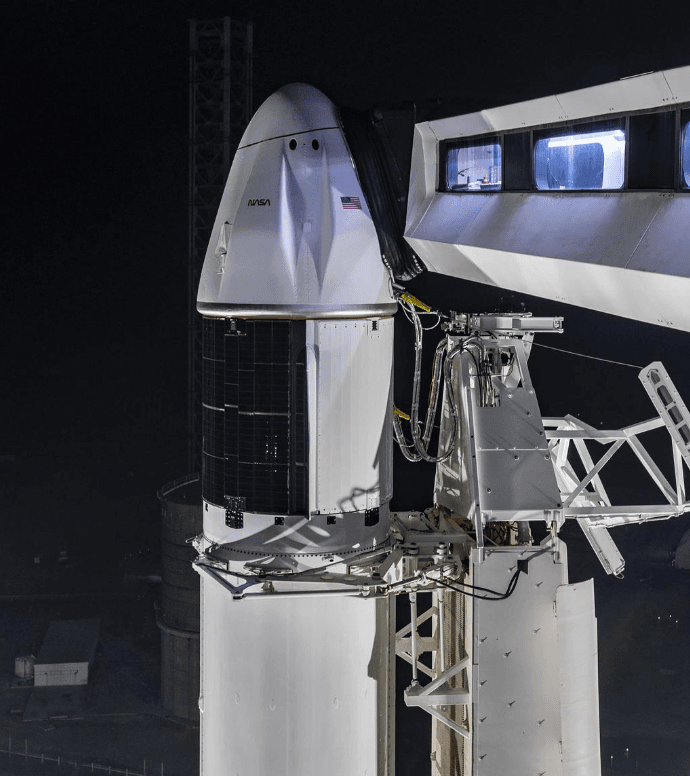
Dragon is a reusable spacecraft developed by SpaceX for both crewed and uncrewed missions. The first version, Cargo Dragon (Dragon 1), was developed under NASA’s Commercial Orbital Transportation Services (COTS) program to deliver cargo to the International Space Station (ISS). The later-developed Crew Dragon (Dragon 2) was designed under NASA’s Commercial Crew Program for crewed missions and began its first operational mission in 2020. Dragon is the first American system to resume human spaceflight after the termination of the U.S. Space Shuttle program in 2011.

The Dragon spacecraft is constructed using composite materials and a heat-resistant ablative TPS (thermal protection system). The Crew Dragon variant has a maximum capacity of seven crew members and is equipped with a launch escape system that enables the safe separation of the crew in emergency situations. Eight SuperDraco engines mounted on the capsule form part of this system. The capsule is also fitted with an automated NASA Docking System (NDS) for berthing with space stations. Upon return, it lands softly in the ocean using parachutes.
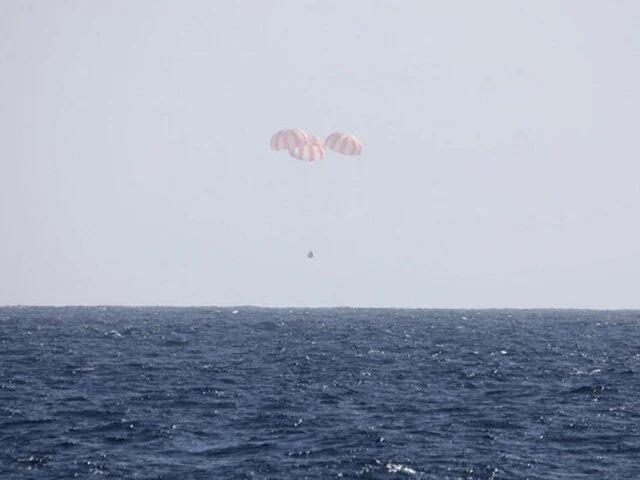
Dragon Capsule Return - SpaceX
The Dragon spacecraft is launched aboard SpaceX’s Falcon 9 rocket. After launch, the capsule reaches orbit and autonomously docks with the ISS. At the end of the mission, the capsule undocks from the station, reenters the atmosphere, and descends with the help of four main parachutes, making a soft landing in the Atlantic Ocean or the Gulf of Mexico. SpaceX recovery teams retrieve the capsule and extract the crew or cargo.

Crew Dragon has been certified by NASA in accordance with its human spaceflight safety requirements. The In-Flight Abort Test and Pad Abort Test, conducted using the SuperDraco engines, have successfully demonstrated the crew’s ability to safely escape in emergency scenarios. The capsule is equipped with advanced safety features including life support systems, emergency communication systems, and radiation shielding.
Notable Missions
Dragon Spacecraft (YouTube)
NASA. "Commercial Crew Program." Accessed July 5, 2025. https://www.nasa.gov/commercialcrew
NASA. "SpaceX Commercial Resupply." Accessed July 5, 2025. https://www.nasa.gov/international-space-station/commercial-resupply
NASA. “Inside the SpaceX Crew Dragon Spacecraft, NASA.” YouTube video, February 28, 2019. https://youtu.be/mE_hCTfMdng
SpaceX. "Crew-8 Mission." Accessed July 5, 2025. https://www.spacex.com/launches/mission/?missionId=crew-8
SpaceX. "Dragon." Accessed July 5, 2025. https://www.spacex.com/vehicles/dragon/

Dragon Capsule
Altitude | 8.1 m | ||||||||
|---|---|---|---|---|---|---|---|---|---|
Diameter | 4 m | ||||||||
Spacecraft Volume | 9.3 m³ | ||||||||
Cargo Volume | 37 m³ | ||||||||
Launch Payload Mass | 6.000 kg | ||||||||
Return Payload Mass | 3.000 kg | ||||||||
No Discussion Added Yet
Start discussion for "SpaceX Dragon Capsule" article
Design and Structure
Versions
Cargo Dragon (Dragon 1):
Crew Dragon (Dragon 2):
Launch and Recovery
Safety and Certification
Missions and Applications