
 Recently Added:

This article was automatically translated from the original Turkish version.
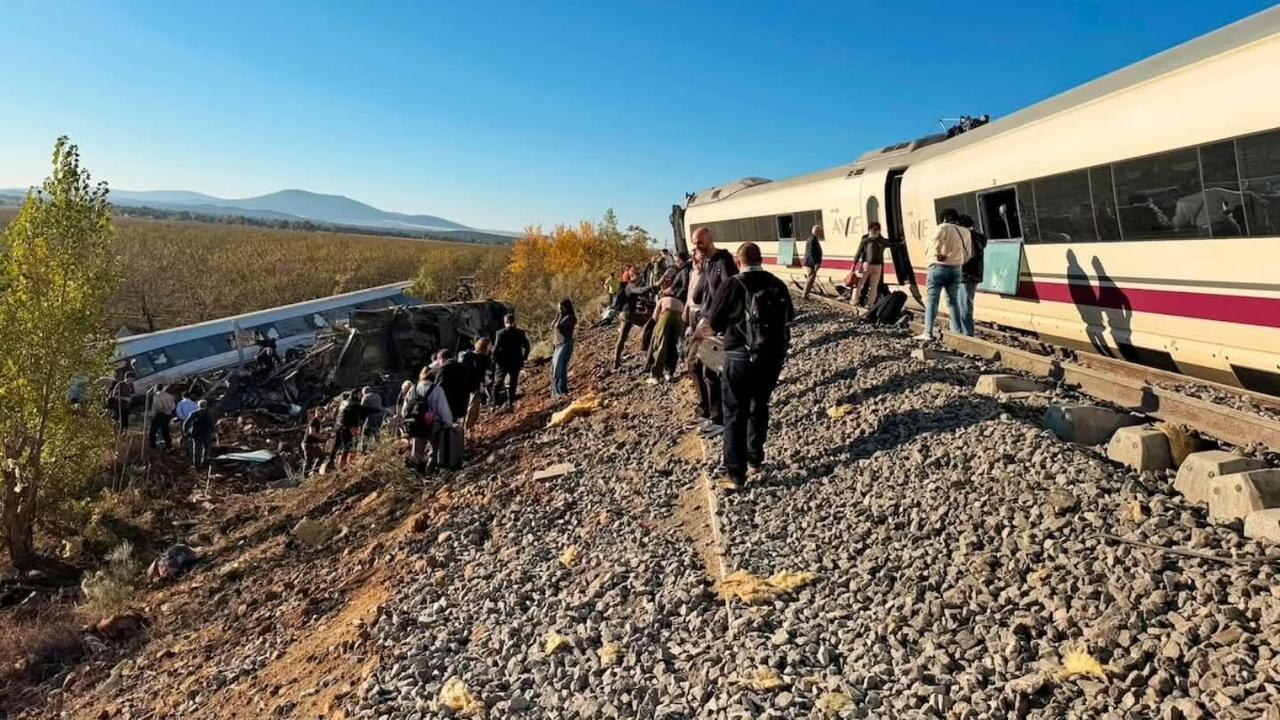
Urda High-Speed Train Accident, which occurred on Wednesday, 28 October 2026, was a railway accident involving a rear-end collision between a train operated by private rail company Iryo and a Renfe AVE high-speed train on the Madrid–Andalusia high-speed rail line near the station in the municipality of Urda, in the province of Toledo, Spain. At least two carriages derailed and plunged down the embankment beside the railway line. Following the accident, high-speed train services between Madrid and Andalusia were suspended. Initial casualty figures reported by different institutions on the day of the accident ranged from at least 10, at least 39, to at least 46 fatalities; dozens of others sustained injuries of varying severity.
The accident occurred at 08:54 local time on Wednesday, 28 October 2026. The Castilla-La Mancha 112 Emergency Service reported that the collision took place near Urda station and that two carriages had fallen down the embankment after impact.【1】 A spokesperson for the Castilla-La Mancha regional government stated that the Renfe and Iryo trains collided shortly after 09:00, causing two Iryo carriages to derail, and that the cause of the accident and the number of injured were still being determined.【2】
Spain’s railway infrastructure operator Adif announced the incident via its X account and classified it as an “incidencia” (incident). Adif’s statement read: “Transport has been disrupted on the Madrid–Andalusia high-speed rail line due to a rear-end collision between two trains.”【3】
Images shared on social media after the accident showed damaged carriages lying several metres down the railway embankment.
The trains involved were Renfe train number 2080 and Iryo train number 6076, both operating on the Madrid–Seville route. The Renfe train number 2080 departed from Madrid-Puerta de Atocha station at 08:00.【4】 Both trains were travelling from Madrid toward Seville. Initial reports indicated that the Iryo train, which was ahead on the same route, was struck from behind by the Renfe train.
Adif stated that the accident occurred between Mora and Orgaz and Urda, at the 118th kilometre of the line. Some reports also described the location as being on the high-speed rail line between Los Yébenes and Urda.【5】 The accident took place directly opposite Urda station.
The first findings shared by sources from the Ministry of Transport and Sustainable Mobility of Spain suggest that an AVE train operated by Renfe may have collided from behind with a train operated by Iryo, resulting in two carriages of the Iryo train derailing.【6】 The reason why the AVE train did not stop in time remains unknown as of the first day. The causes of the accident are under investigation.
In the initial hours of the accident, health and Civil Protection teams assessed the humanitarian impact; no official count of injured or deceased persons was released at this stage. The Castilla-La Mancha 112 Emergency Service reported in the early phase that there were “several injured” but that the exact number was still unknown. The Castilla-La Mancha regional government confirmed that there were injuries in the accident.
Spanish government sources confirmed that at least 10 people lost their lives in the accident and indicated that the death toll was expected to rise. According to figures released by the Castilla-La Mancha Emergency Service, the number of fatalities was reported as at least 39.【7】 Civil Protection (Protección Civil) announced that the number of deceased was at least 46.【8】 Dozens of people were also injured to varying degrees in the accident.
Firefighting teams from the Alcázar de San Juan and Orgaz fire stations, Civil Protection teams from surrounding municipalities, three ambulance helicopters and two intensive care ambulances (UVI) were deployed at the scene.
The Castilla-La Mancha regional government activated the Castilla-La Mancha Regional Emergency Plan (PLATECAM) at Emergency Operational Status Level 1 in Toledo.【9】 Under this plan, the Guardia Civil, firefighting teams under the Toledo Provincial Council (Diputación de Toledo), Civil Protection units and the Red Cross (Cruz Roja) were dispatched to the area. An emergency protocol was prepared at the Toledo Hospital.
The Autonomous Community of Madrid also sent eight firefighting teams and eight units from Summa112 to assist in the response. ASEM112 established a psychosocial support center at Atocha station for victims and their families. Adif personnel also traveled to the accident zone. Railway traffic was fully suspended to allow cranes and technical teams to operate in the affected area.
Urda Mayor Manuel Galán Moreno confirmed that there were injured people in the accident and stated that Civil Protection had requested the preparation of a sports hall to provide services to the injured. Galán indicated that emergency services were asked to prepare a sports hall to accommodate the injured.【10】 In a statement to a regional radio station, Galán also said that the 112 emergency service had contacted him and confirmed that a sports hall had been prepared to receive the injured.
Renfe has activated the telephone line 900 10 10 20 for relatives of passengers affected by the accident and for the injured. This line is to be used exclusively by the families of the injured to obtain information.
Following the accident, rail transport on the Madrid–Andalusia high-speed rail line has been completely suspended. In a statement on its X account, Renfe confirmed that a “railway accident” had occurred on the Madrid–Andalusia high-speed line and announced that services between Madrid, Ciudad Real and Andalusia have been suspended. Renfe has allowed passengers affected by the line closure to change or cancel their tickets free of charge.
Spanish Prime Minister Pedro Sánchez canceled his daily schedule due to the accident and did not attend the closing ceremony of the 2026 World Obesity Summit, which was to be held at the Ministry of Health building. Sánchez shared the following message on his social media account: “I am shaken by the serious train accident in Toledo. I am in constant contact with Minister of Transport Óscar Puente and President of Castilla-La Mancha Emiliano García-Page. Emergency teams are working on site in coordination with all relevant authorities to assist those affected and ensure their safety. My love, solidarity and support go out to all the injured and their families.”【9】
Government spokesperson Minister Elma Saiz canceled a planned press statement following the closing of a UGT meeting in the Balearic Islands titled “Reduction Coefficients: A Historical Debt to Female Staff Members.” The Spanish Government has characterized the incident as a “serious accident”.
Minister of Transport Óscar Puente received news of the accident while addressing the audience at the opening of the World Infrastructure Forum at the School of Civil Engineering of the Polytechnic University of Madrid and immediately left the event. Puente first went to the control center at Atocha station to assess the situation and then announced his intention to proceed to the accident site.
Castilla-La Mancha President Emiliano García-Page announced that he and his government had suspended their programs and traveled to the accident site. García-Page made the following statement on X: “I am closely and with concern following the train accident that occurred this morning in Urda. I am currently on my way to the scene, and both I and the rest of my government are suspending our programs.”
Andalusian Regional Government President Juanma Moreno made the following statement on X: “I am deeply concerned about the new train accident that occurred on the line between Madrid and Andalusia in the province of Toledo. A horror. Another nightmare. Andalusia is ready to provide any assistance needed to the victims.”
Madrid City Council has suspended all events planned for that day.
The accident occurred during the election campaign period ahead of the 29 November general elections. People's Party (PP) General Secretary Alberto Núñez Feijóo interrupted a radio interview with the newspaper La Vanguardia in Barcelona upon hearing the news of the accident and left the room. Feijóo had been scheduled to attend a pre-election event in Barcelona alongside the leader of the Catalan People's Party, Alejandro Fernández, and the lead candidate on the Barcelona list, Xavier García Albiol. Feijóo canceled all his pre-election events. The PP suspended all pre-election activities planned nationwide; Madrid PP also canceled its entire regional campaign program.
Vox leader Santiago Abascal did not cancel his program and stated: “We will not be used as a tool for this, and we will not be now either; we will continue traveling across Spain to expose the state of infrastructure under this government.” Abascal, referring to Sánchez’s campaign participation, called on him to “suspend his dance performances.”【11】
In an interview with Antena 3, Abascal announced that his party would join the judicial process to demand preservation of evidence and claimed that some evidence in the Adamuz accident had gone missing. Abascal said: “This is an absolute tragedy.” He also stated: “We still do not know what happened in Adamuz.” Abascal added: “We are facing a new accident while still not knowing what happened in the previous one.”
Frente Amplio has suspended all pre-election activities by its candidates. Frente Amplio’s prime ministerial candidate Ada Colau said she was following developments regarding the accident “with great concern” and expressed solidarity with those affected. In a social media post, Colau also sent a message of “support for emergency teams currently on site.”
Railway Union (Sindicato Ferroviario) spokesperson Rafael Escudero has described the accident as “very strange.” In an interview with Antena 3, Escudero stated that there was no commercial stop in the area where the accident occurred, that traffic was monitored in real time, and that the train had access to real-time information about the track’s condition, even noting that the train would stop if an obstacle such as another train were detected.【12】 The union spokesperson also said on the program Espejo Público, “We can talk about dozens of deaths.”
The Urda accident is the second major accident to occur on Spain’s high-speed rail network within 2026. On 18 January 2026, an Iryo train derailed near Adamuz in the province of Córdoba and collided with a Renfe Alvia train traveling in the opposite direction.【13】 The number of fatalities in the Adamuz accident has been reported by various sources as at least 40, 45 and 46. The investigation into the Adamuz accident is ongoing.【8】
CNN. "Two High-Speed Trains Collide in Spain, Rail Operator Says." CNN, Accessed October 28, 2026.https://edition.cnn.com/2026/10/28/europe/high-speed-trains-collide-spain-intl.
El Economista. "Última Hora del Accidente de Tren AVE con IRYO Hoy, en Directo | Urda (Toledo), Heridos y Muertos." Accessed October 28, 2026.https://www.eleconomista.es/transportes-turismo/noticias/d8429/10/26/Ultima-hora-del-accidente-de-tren-AVE-con-IRYO-hoy-en-directo-Urda-Toledo-heridos-y-comunicados.html.
France 24. "Two High-Speed Trains Collide in Southern Spain, Rail Operator Says." France 24, Accessed October 28, 2026.https://www.france24.com/en/europe/20261028-two-high-speed-trains-collide-in-southern-spain-rail-operator-says.
Infobae. "El Portavoz del Sindicato Ferroviario Ve ‘Muy Raro’ el Accidente de Trenes." Accessed October 28, 2026.https://www.infobae.com/espana/agencias/2026/10/28/el-portavoz-del-sindicato-ferroviario-ve-muy-raro-el-accidente-de-trenes/.
Libertad Digital. "Última Hora | Dos Trenes Colisionan en Toledo y Varios Vagones Caen por un Terraplén." Accessed October 28, 2026.https://www.libertaddigital.com/espana/2026-10-28/accidente-tren-urda-toledo-alta-velocidad-iryo-renfe-7483067/#google_vignette.
OKDIARIO. "Nueva Tragedia Ferroviaria: Al Menos 46 Muertos Tras el Choque de un Iryo y un AVE en Urda (Toledo)." Accessed October 28, 2026.https://okdiario.com/espana/nuevo-accidente-ferroviario-chocan-iryo-ave-yebenes-toledo-20646558.
Reuters. "Two High-Speed Trains Collide in Spain, Rail Operator Says." Reuters, Accessed October 28, 2026.https://www.reuters.com/world/two-high-speed-trains-rear-end-spain-rail-operator-says-2026-10-28/
The Olive Press. "Breaking: At Least 10 Dead as Two High-Speed Trains Collide Near Toledo, with Madrid-Andalucia Line Shut." Accessed October 28, 2026.https://www.theolivepress.es/spain-news/2026/10/28/toledo-train-crash-accident-spain/.
【1】
The Olive Press. "Breaking: At Least 10 Dead as Two High-Speed Trains Collide Near Toledo, with Madrid-Andalucia Line Shut." Accessed October 28, 2026.https://www.theolivepress.es/spain-news/2026/10/28/toledo-train-crash-accident-spain/.
【2】
Reuters. "Two High-Speed Trains Collide in Spain, Rail Operator Says." Reuters. Accessed October 28, 2026.https://www.reuters.com/world/two-high-speed-trains-rear-end-spain-rail-operator-says-2026-10-28/.
【3】
OKDIARIO. "Nueva Tragedia Ferroviaria: Al Menos 46 Muertos Tras el Choque de un Iryo y un AVE en Urda (Toledo)." Accessed October 28, 2026.https://okdiario.com/espana/nuevo-accidente-ferroviario-chocan-iryo-ave-yebenes-toledo-20646558.
【4】
El Economista. “Última Hora del Accidente de Tren AVE con IRYO Hoy, en Directo | Urda (Toledo), Heridos y Muertos.” El Economista, Accessed October 28, 2026.https://www.eleconomista.es/transportes-turismo/noticias/d8429/10/26/Ultima-hora-del-accidente-de-tren-AVE-con-IRYO-hoy-en-directo-Urda-Toledo-heridos-y-comunicados.html.
【5】
CNN. "Two High-Speed Trains Collide in Spain, Rail Operator Says." CNN, Accessed October 28, 2026.https://edition.cnn.com/2026/10/28/europe/high-speed-trains-collide-spain-intl.
【6】
Infobae. "El Portavoz del Sindicato Ferroviario Ve ‘Muy Raro’ el Accidente de Trenes." Accessed October 28, 2026.https://www.infobae.com/espana/agencias/2026/10/28/el-portavoz-del-sindicato-ferroviario-ve-muy-raro-el-accidente-de-trenes/.
【7】
Libertad Digital. "Última Hora | Dos Trenes Colisionan en Toledo y Varios Vagones Caen por un Terraplén." Libertad Digital, Accessed October 28, 2026.https://www.libertaddigital.com/espana/2026-10-28/accidente-tren-urda-toledo-alta-velocidad-iryo-renfe-7483067/#google_vignette.
【8】
OKDIARIO, “Nueva Tragedia Ferroviaria”.
【9】
El Economista, “Última Hora del Accidente de Tren AVE con IRYO Hoy, en Directo”.
【10】
France 24. "Two High-Speed Trains Collide in Southern Spain, Rail Operator Says." Accessed October 28, 2026.https://www.france24.com/en/europe/20261028-two-high-speed-trains-collide-in-southern-spain-rail-operator-says
【11】
Libertad Digital, “Última Hora | Dos Trenes Colisionan en Toledo”.
【12】
Infobae, “El Portavoz del Sindicato Ferroviario Ve ‘Muy Raro’ el Accidente de Trenes”.
【13】
The Olive Press, “Breaking: At Least 10 Dead as Two High-Speed Trains Collide Near Toledo”.
Emiliano García-Page, President of the Autonomous Government of Castilla-La Mancha, where the accident occurred, announced that the number of fatalities had risen to 68. García-Page noted that 44 of the deceased were on a train operated by Iryo and 24 were on a Renfe AVE train.
It was also reported that 53 people injured in the accident are receiving treatment in hospitals, with 15 of them in critical condition. Following the accident, scheduled surgeries in hospitals around Toledo were postponed and medical services prioritized care for those injured in the train collision.
Spain’s Minister of Transport and Sustainable Mobility, Óscar Puente, presented technical details regarding the accident during a press conference at the ADIF central control center at Atocha train station in Madrid.
According to Puente, the LZB train control system at Urda station was disabled at 08:30 due to a communication failure between three computers in the network. As a result of this failure, the LZB safety system became inoperable along a 63-kilometer stretch of railway, causing all trains in that section to stop automatically. Control responsibility then transferred to the ADIF control center at Atocha Station in Madrid.
At 08:36, the control center authorized the Renfe AVE train to resume its journey. Approximately 25 kilometers later, at 08:54, the AVE train collided from behind with the Iryo train, which was stationary at the entrance to Urda station.
Puente stated that the accident was not directly caused by the technical failure in the primary system but by an erroneous movement authorization issued by the control center after the failure. Initial assessments indicated that human error was likely a key factor.
Transport Minister Óscar Puente criticized the control center for authorizing the AVE train to continue its journey while the Iryo train was stationary on the tracks. Puente said, “A rear-end collision involving a train on Spain’s railways is an utterly unimaginable scenario.”
Puente assessed the control center’s decision to grant movement authorization despite a red signal as a grave error, stating, “It is incomprehensible and wrong to order a train to proceed without resolving the issue or fully understanding the situation.”
The minister also noted that the control center issued multiple incorrect instructions during the incident.
According to Puente, the control operator requested all trains in the area to resume normal speeds. However, one train driver corrected this instruction, emphasizing that under the prevailing safety conditions, trains could only proceed at a speed consistent with visibility. The minister stated that the maximum permissible speed under those conditions was 40 kilometers per hour.
Spanish Prime Minister Pedro Sánchez visited the accident site to conduct an assessment and announced a three-day official period of national mourning. Sánchez stated that the investigation into the accident would continue until its conclusion and that any negligence would be uncovered.
The Prime Minister also referred to another high-speed train accident that occurred near Curubia on 18 January 2026, which resulted in 46 fatalities. Sánchez said, “For a country like Spain, experiencing two high-speed train accidents within the same year is unacceptable.” He pledged that all necessary measures would be taken to restore public confidence in Spain’s railway system and enhance passenger safety.
Following the disaster, King Felipe VI of Spain, Prime Minister Pedro Sánchez, government members, and leaders of political parties in opposition have canceled their daily programs. Authorities have stated that relevant institutions have been assigned to prioritize rescue and health operations. Temporary suspension of rail services has also affected high-speed train connectivity between the capital Madrid and the southern regions of the country.
Anadolu Ajansı. “İspanya'daki iki hızlı trenin çarpıştığı kazada 68 kişi hayatını kaybetti.” Accessed October 29, 2026.https://www.aa.com.tr/tr/dunya/ispanyadaki-iki-hizli-trenin-carpistigi-kazada-68-kisi-hayatini-kaybetti/4103535

The Urda High-Speed Train Accident occurred on 28 October 2026 near the village of Urda in the province of Toledo, Spain, when a Renfe-operated AVE train collided from behind with an Iryo train on the Madrid–Andalusia high-speed rail line. Following the collision, two carriages of the Iryo train derailed and plunged down an embankment, leading to the suspension of all high-speed train services between Madrid and Andalusia. Initial fatality figures reported on the day of the accident varied among different institutions, with minimum estimates of 10, 39 and 46 deaths; dozens of others sustained injuries of varying severity. The accident, whose causes are under investigation, led several political parties to suspend their campaign activities ahead of the 29 November general elections and became the second major accident on Spain’s high-speed rail network in 2026, following the Adamuz crash in January.
No Discussion Added Yet
Start discussion for "Spain Urda High-Speed Train Accident (2026)" article
October 28, 2026
Course of the Accident
October 28, 2026
Trains Involved and Accident Location
October 28, 2026
Initial Information on the Cause of the Accident
October 28, 2026
Fatalities and Injuries
October 28, 2026
Search, Rescue and Emergency Response
October 28, 2026
Impact on Rail Transport
October 28, 2026
Official Statements and Reactions
October 28, 2026
Description of the Railway Union
October 28, 2026
Adamuz Accident
October 29, 2026
Increase in the Number of Fatalities in the Accident
October 29, 2026
Cause of the Accident and Failure in the Railway Safety System
October 29, 2026
Statements by Transport Minister Óscar Puente
October 29, 2026
Prime Minister Pedro Sánchez Declares Three Days of National Mourning
October 29, 2026
King Felipe VI and Political Leaders Cancel Their Programs