


This article was automatically translated from the original Turkish version.
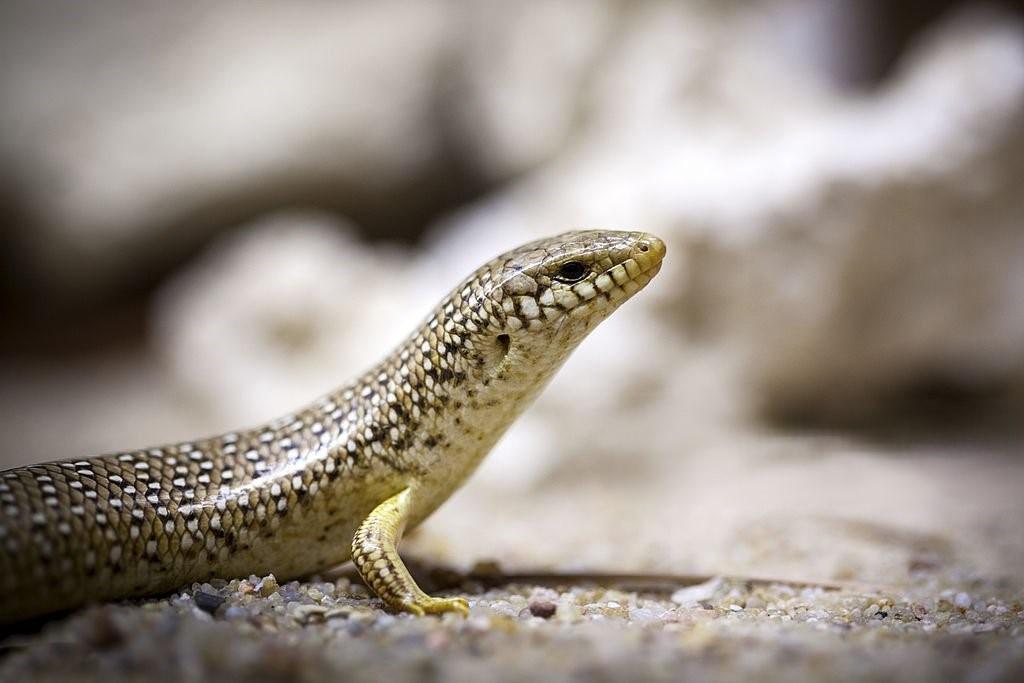
Spotted Skink (Chalcides ocellatus), is one of the most widespread species in the Scincidae family and has a broad distribution across the Mediterranean Basin, the Middle East, North Africa, and Southwest Asia. This species is described as an organism with high ecological tolerance due to its ability to thrive in both natural and human-modified seminatural habitats. Generally found in stony, shrubby, and sandy terrains, Chalcides ocellatus has been observed at elevations ranging from lowlands up to 1000 meters. Its distribution encompasses numerous distinct biogeographic regions including islands, making this a key factor contributing to genetic and morphological variation among local populations.
Chalcides ocellatus is a reptile belonging to the order Squamata, which includes scaled reptiles. Its classification is as follows: Kingdom: Animalia, Phylum: Chordata, Class: Reptilia, Order: Squamata, Family: Scincidae, Genus: Chalcides, Species: Chalcides ocellatus. The Scincidae family encompasses lizards with generally cylindrical bodies and short limbs, widely distributed across the globe. The genus Chalcides includes species primarily found in Europe, North Africa, and Western Asia. Members of this genus typically exhibit a semifossorial lifestyle and are commonly observed in dry, stony environments.
Recent mitochondrial DNA analyses have revealed significant regional genetic differentiation within C. ocellatus. These variations have been shaped by paleogeographic events such as climatic fluctuations since the Pleistocene, the formation and fragmentation of land bridges. Genetic flow between populations in Mediterranean islands and those in Anatolia, the Levant, and North Africa has been found to be limited, indicating the influence of microevolutionary processes. This suggests that local adaptations and isolated populations have played a significant role in the evolutionary history of the species. Furthermore, the observation of morphologically distinct individuals on certain islands provides clues that speciation may be in its early stages.
Chalcides ocellatus is characterized by a cylindrical and elongated body. Body length typically ranges between 15 and 30 cm, though variations occur depending on age, sex, and geographic origin. Weight generally falls between 22 and 39 grams, with natural populations showing seasonal fluctuations due to feeding conditions. The head is small relative to the body and lacks a distinct neck segment, consistent with the aerodynamic body design typical of reptiles.
The skin is smooth and covered with small, overlapping scales that reduce water loss and enhance resistance to abrasion. The color pattern commonly features black ringed spots (ocelli) distributed over a yellowish-brown or gray background. These spots form the basis of the species’ name and vary in number and arrangement among individuals. The tail is typically equal to or longer than the body length, and autotomy scars are occasionally observed. The five-toed limbs are well developed, enabling both semifossorial movement and active surface locomotion. These anatomical traits enhance the adaptability of C. ocellatus to diverse habitat conditions.

Chalcides ocellatus (Spotted Skink) (iStock)
Chalcides ocellatus has a wide distribution across the western Palearctic region. The species is naturally found from coastal areas of southern Europe through North Africa to the Middle East and Western Asia. Its range largely overlaps with the Mediterranean climate zone. Local populations occur in countries such as Italy, Greece, Türkiye, Egypt, Libya, Israel, Syria, and Iran. This distribution is thought to have been shaped by past climatic shifts, sea level fluctuations, and the formation of land bridges.
C. ocellatus exhibits considerable habitat flexibility, inhabiting both natural and anthropogenically modified environments. It is typically found in low-elevation shrublands, stony slopes, coastal dunes, and semiarid desert zones. However, it has also been recorded in agricultural fields, orchards, and rural settlements. The species is adapted to burrowing into loose or sandy substrates and becomes active during the cooler hours of the day, particularly in regions with high surface temperatures. This broad habitat use is a key trait supporting its environmental resilience and extensive geographic range.
Chalcides ocellatus is primarily faunivorous, feeding largely on invertebrates. Field observations have shown that its diet consists mainly of small arthropods such as grasshoppers (Orthoptera), ants (Formicidae), spiders (Araneae), isopods (Isopoda), and various insect larvae. In some cases, opportunistic feeding behavior has been documented, including cannibalism of conspecific juveniles. This behavior is interpreted as a consequence of competitive pressure in resource-limited environments.
Behaviorally, C. ocellatus is mostly solitary and diurnal. It tends to bask in the sun during early morning and late afternoon to regulate body temperature but retreats to shaded areas when ambient temperatures become excessive. Upon perceiving a threat, it rapidly escapes into surrounding vegetation or beneath rocks for camouflage. Its locomotion is based on surface crawling, with speed varying according to substrate type. Additionally, the structural complexity of its habitat directly influences both predator avoidance strategies and foraging efficiency.

Chalcides ocellatus (Spotted Skink) (iStock)
Chalcides ocellatus exhibits an ovoviviparous reproductive strategy, in which embryos develop fully inside the mother’s body and are born alive. This trait provides an advantage in adapting to habitats with variable environmental conditions. Ovoviviparity allows embryos to develop under stable thermal conditions, increasing offspring survival rates in arid and semiarid regions with pronounced temperature fluctuations.
Females typically give birth once per year, producing 2 to 6 offspring per litter. Litter size and offspring size vary according to the female’s age, body condition, and environmental conditions. Neonates are fully developed and capable of independent life immediately after birth; parental care is not observed. Although the lifespan of C. ocellatus in the wild has not been precisely determined, individuals are known to live for several years under favorable conditions. Seasonal factors such as temperature and humidity significantly influence reproductive success and life cycle dynamics.
Chalcides ocellatus employs a passive thermoregulatory strategy as a thermokonformer (or ectotherm), meaning its internal body temperature parallels that of the environment. This strategy is energetically more efficient than active thermoregulation in endotherms, as no additional energy is expended to generate internal heat. However, this comes at the cost of increased sensitivity to environmental temperature fluctuations.
Thermoregulatory behaviors in this species primarily involve basking and seeking shade. Individuals optimize metabolic activity by basking in sunlit areas during the morning and retreat to shaded zones during midday to avoid overheating. These behaviors directly affect digestion efficiency and locomotor performance. Furthermore, physiological processes such as enzyme activity, digestion rate, and immune response show marked variation with body temperature. In this context, the sensitivity of C. ocellatus to environmental temperature profiles constitutes an important area of study within ecosystem dynamics and climate change research.
Parasitological studies conducted in Türkiye have identified various helminth parasites infecting individuals of Chalcides ocellatus. Nematodes (roundworms) and cestodes (tapeworms) are particularly prevalent. The diversity and intensity of helminth species detected vary according to habitat type, microclimatic conditions, and feeding habits of the host individuals.
Parasite presence can directly affect the overall health of the host. High parasite loads may lead to reduced digestive efficiency, weakened immune function, and disrupted energy balance. However, many individuals develop a degree of tolerance to low-level infestations. This resilience is likely linked to the species’ adaptability to widespread and variable environmental conditions. Studies on the composition and distribution of helminths not only contribute to understanding individual health but also provide indirect indicators of ecosystem health.
Chalcides ocellatus is classified as “Least Concern” by the International Union for Conservation of Nature (IUCN). This status reflects that current population levels are widespread and stable, with no significant global threats in the short term. Its broad geographic distribution and ability to adapt to diverse habitats play a crucial role in maintaining this stability.
Nevertheless, local habitat degradation and changes in land use may pose long-term risks. Intensification of agricultural activities, destruction of coastal habitats due to urbanization, and shifts in microhabitat conditions driven by climate change are potential stressors affecting C. ocellatus populations. Additionally, in some regions, collection of individuals for the pet trade represents a potential threat. Therefore, continued implementation of sustainable habitat management and monitoring programs across its range is essential.
Animalia.bio. "Ocellated Skink – Facts, Diet, Habitat & Pictures." Accessed June 7, 2025. https://animalia.bio/index.php/ocellated-skink.
Incedogan, S., H. S. Yildirimhan, and C. R. Bursey. “Helminth Parasites of the Ocellated Skink, Chalcides ocellatus (Forskal, 1775) (Scincidae) from Turkey.” Comparative Parasitology 81, no. 2 (2014): 260–269. Accessed June 7, 2025. https://doi.org/10.1654/4708.1.
Kapsalas, G., A. Deimezis-Tsikoutas, T. Georgakopoulos, I. Gkourtsouli-Antoniadou, K. Papadaki, K. Vassaki, and P. Pafilis. “How Effectively Do European Skinks Thermoregulate? Evidence from Chalcides ocellatus, a Common but Overlooked Mediterranean Lizard.” Acta Herpetologica 13, no. 1 (2018): 75–82. Accessed June 7, 2025. https://doi.org/10.13128/acta_herpetol-21192.
Kornilios, P., P. Kyriazi, N. Poulakakis, Y. Kumlutaş, Ç. Ilgaz, M. Mylonas, and P. Lymberakis. “Phylogeography of the Ocellated Skink Chalcides ocellatus (Squamata, Scincidae), with the Use of mtDNA Sequences: A Hitch-Hiker’s Guide to the Mediterranean.” Molecular Phylogenetics and Evolution 54, no. 2 (2009): 445–456. Accessed June 7, 2025. https://doi.org/10.1016/j.ympev.2009.09.015.
Çiçek, K., and B. Göçmen. “Food Composition of Ocellated Skink, Chalcides ocellatus (Forskal, 1775) (Squamata: Scincidae), from the Cyprus Island.” Acta Herpetologica, 2013. Accessed June 7, 2025. https://doi.org/10.13128/acta_herpetol-13404.

No Discussion Added Yet
Start discussion for "Spotted Gecko (Chalcides ocellatus)" article
Taxonomy and Evolutionary Relationships
Morphology and Anatomical Features
Distribution and Habitat
Diet and Behavior
Reproduction and Life Cycle
Thermoregulation and Physiology
Parasites and Health
Conservation Status and Threats