


This article was automatically translated from the original Turkish version.
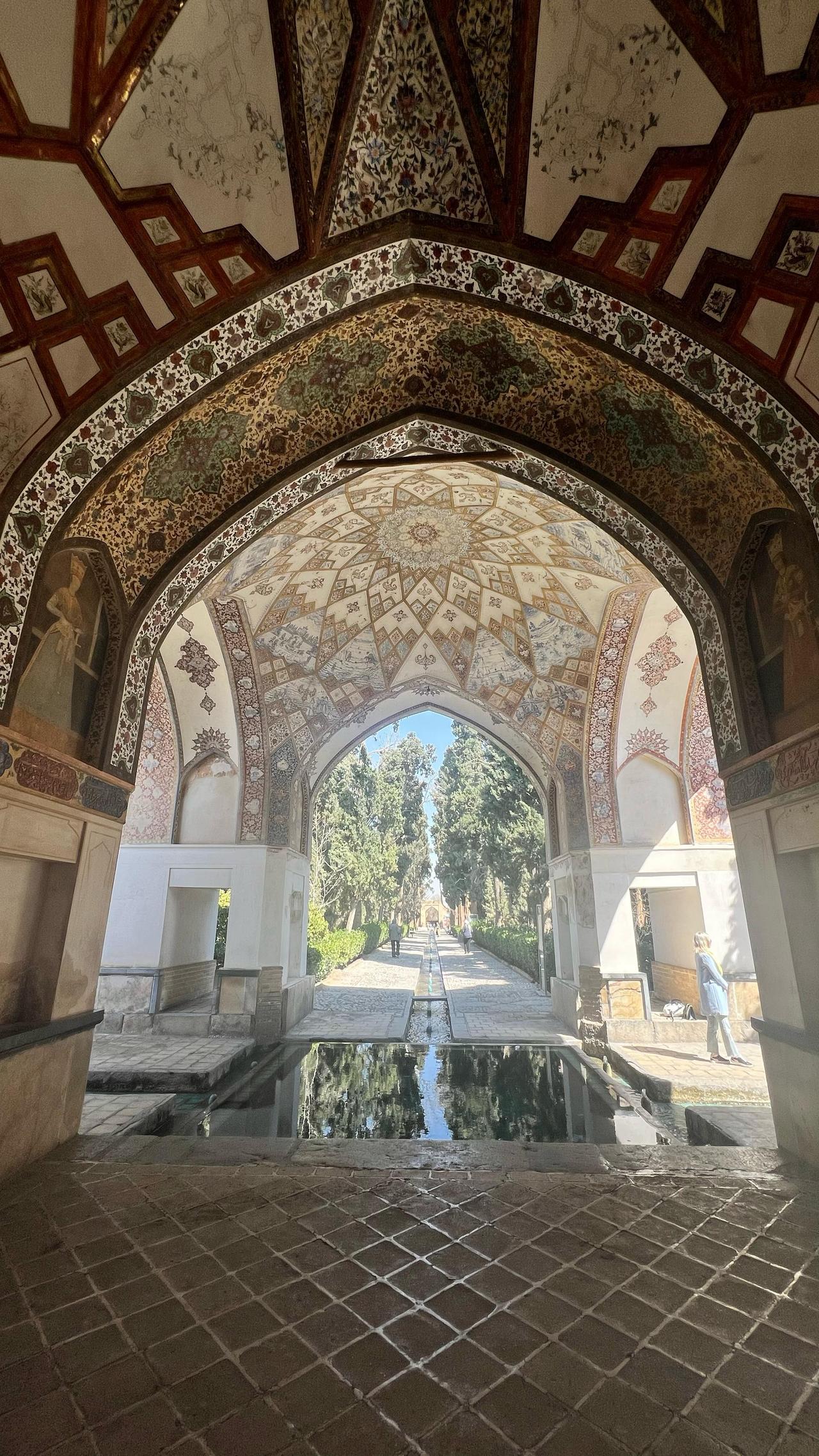
Fin Garden is located in the city of Kashan, Iran, and is one of the exemplary instances of post-Islamic Iranian garden design. It embodies the characteristics of the traditional Iranian garden typology, particularly the “Chahar Bagh” model. Simultaneously, it represents a multilayered landscape architecture that integrates functional and mystical elements through its water system, architectural layout, and symbolic structure. Fin Garden is a complex where philosophical, religious, and cultural ideologies are materialized.

Courtyard of Fin Garden (Photo: Duygu Şahinler)
Although the origins of Fin Garden can be traced back to the Buyid period (10th century), its most significant development occurred during the Safavid era under the orders of Shah Abbas I. Over time, it was reorganized and enriched by successive Iranian dynasties:
Fin Garden stands out through its four-armed symmetrical plan based on the “Chahar Bagh” model. This layout is defined by a central axis and structure, typically a water palace. Water channels flowing across the main and secondary axes, surrounded by planted plots, form the garden’s framework. The integration of water, symmetry, and centralized design creates a “paradisiacal” model.

Example of Interior Decorations (Photo: Duygu Şahinler)
In Fin Garden, water is not merely used for irrigation but is also regarded as a sacred element. Its varied forms evoke visual, aesthetic, and religious associations:
The visibility and purity of water reflect influences from both Zoroastrian and Islamic concepts of sanctity. The arrangement of water channels in the garden attempts to mirror the Qur’an’s description in Surah Rahman of “two seas” flowing together.
Fin Garden embodies the post-Islamic ideal of “paradise on earth.” The Qur’anic depiction of “gardens with rivers of gold” served as inspiration for such gardens. In this context, the four-part layout symbolizes the four rivers of paradise: water, milk, honey, and wine. The way water flows from a central source into four directions symbolizes divine unity and cosmic order. The pavilions in the garden do not represent human earthly dominion but rather the presence of the Divine on earth.
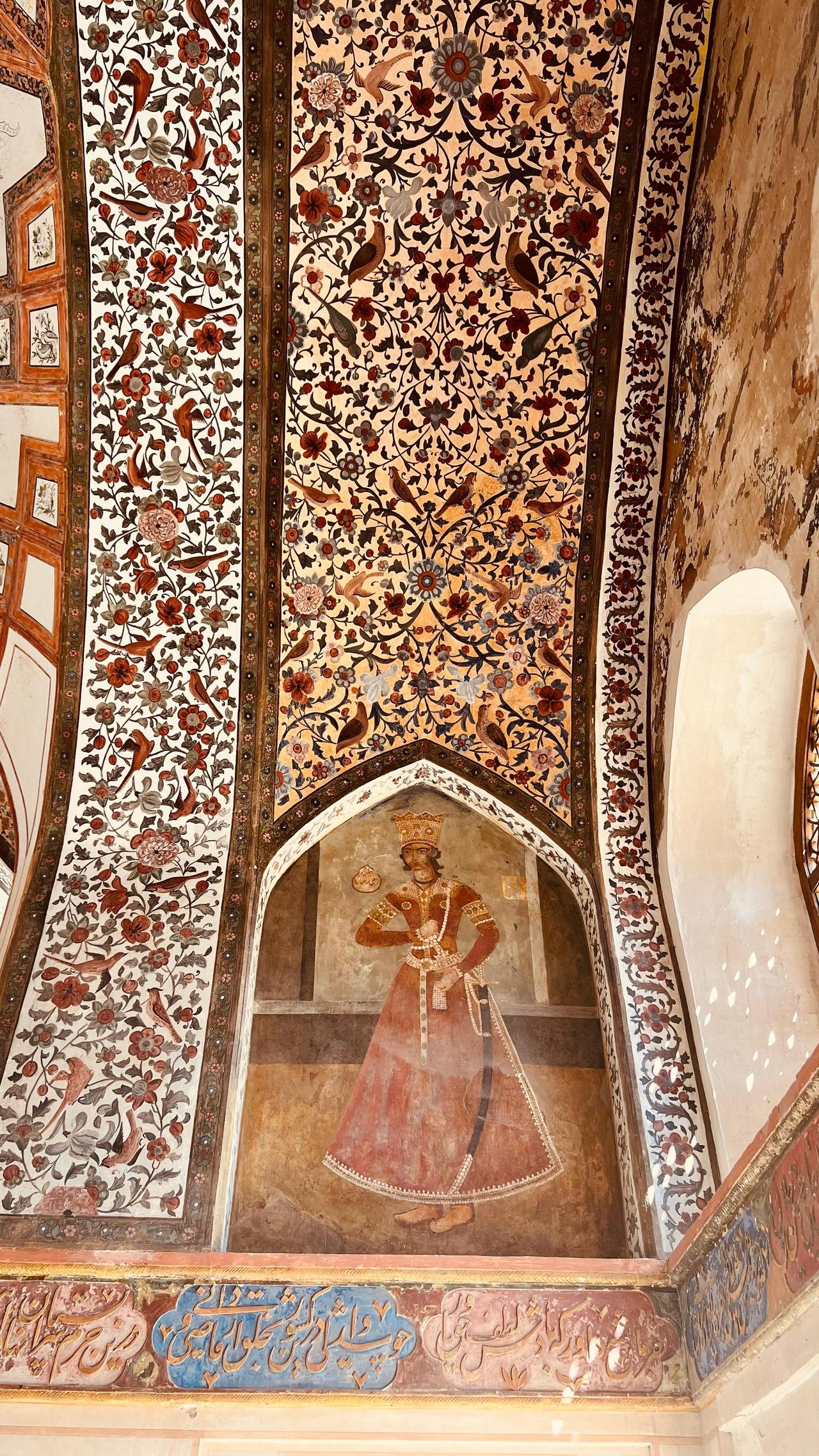
Example of Interior Decorations (Photo: Duygu Şahinler)
However, the symbolic structure of Fin Garden is not solely Islamic but also inherits Zoroastrian thought. Water, fire, and nature are considered sacred. This Zoroastrian worldview gradually merged with Islamic paradisiacal imagery, resulting in Fin Garden becoming a unique synthesis of pre-Islamic and Islamic traditions.
Labibzadeh, Raziyeh, Mehdi Hamzenejad, and Mohammad Ali Khan Mohammadi. "بررسي تطبيقي تأثير ايدههای معنوی در شكل باغ: مطالعه موردی باغ پاسارگاد از دوره هخامنشی و باغ فين از دوره اسلامی" [A Comparative Study of the Effect of Spiritual Ideas on Garden Form: Case Study of the Pasargadae Garden from the Achaemenid Period and the Fin Garden from the Islamic Era]. *Faslname-ye Elmi-Pazhoheshi-ye Honar, Memari va Shahrsazi-ye Nazar* 8, no. 19 (Winter 1390/2011): 3–16. https://www.bagh-sj.com/article_716_en.html
Mahdavinejad, Mohammadjavad, Nasim Gholami Rostam, and Sepide Mahdavi. "The Role of the Gestalt Theory in Understanding Persian Architectural Masterpieces, Case Study: Fin-Garden of Kashan." *International Journal of Management and Sustainability* 2, no. 1 (2013): 1–13. https://archive.conscientiabeam.com/index.php/11/article/view/916/1296

History
Structural Features
Structures
Water Systems and Symbolic Meaning
Symbolic and Spiritual Layers
Islam’s Paradigm of Paradise
Zoroastrian Influences and Synthesis