This article was automatically translated from the original Turkish version.
Location | Adıyaman | ||||||||
|---|---|---|---|---|---|---|---|---|---|
Construction Date(s) | 4th or 5th century | ||||||||
Repairs | post-2023 (post-earthquake restoration works) 2010 (Directorate of Foundations regional restoration) 1905 (repair according to inscriptions) 1890 (wooden altar construction) 1888 (according to Syriac inscriptions) | ||||||||
Material(s) | Regularly cut stone and wood | ||||||||
Usage | Syriac Orthodox community | ||||||||
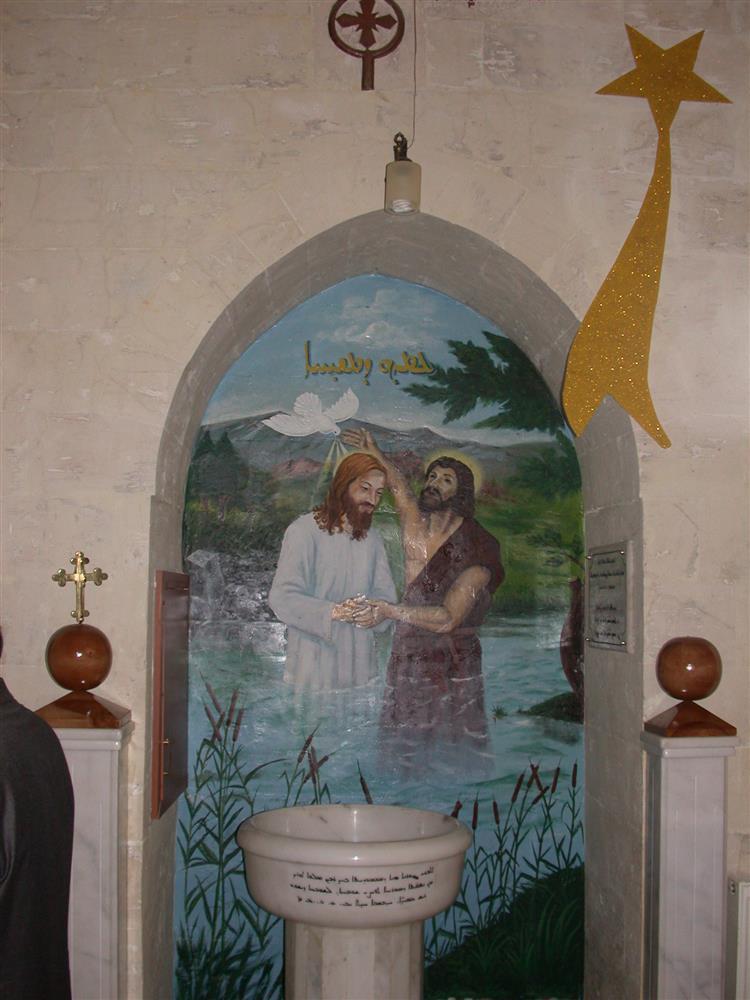
St. Pavlus (Mor Petrus-Yuhanna) Church is a Syriac Orthodox church located in the center of Adıyaman Province, believed to date back to the early Christian period and still open for worship today. The building features a basilical plan and has undergone historical restorations, playing a significant role in the religious and cultural life of the Syriac community across various periods.

St. Pavlus (Mor Petrus-Yuhanna) Church (Türkiye Culture Portal)
The church is situated within the boundaries of the Mara Neighborhood in the central district of Adıyaman Province, near the city center. Its geographic coordinates are approximately 37.751172° latitude and 38.237915° longitude.
The exact construction date of the building is unknown, but based on its architectural fabric and local historical records, it is estimated to have been built in the 4th or 5th century. The church has maintained its presence over the centuries and has undergone various restorations:
St. Pavlus Church is a three-nave basilical structure oriented in an east-west direction. The upper level of the narthex on the western façade opens into the main interior space.
The wooden altar in the apse is one of the significant architectural elements that retain their original character. The façade and load-bearing systems of the building are constructed using finely cut stone, while a traditional technique combining stone and wood is applied in the interior spaces.
The church is currently used for worship by the Syriac Orthodox community. It holds the status of a registered cultural heritage asset and is recognized as part of the cultural legacy.
The church is open to visitors daily from 09:00 to 17:00 on weekdays. However, due to ongoing restoration work following the 2023 earthquake, visiting conditions may change; it is recommended to confirm the current status on site.
Adıyaman Belediyesi. "Mor Petrus ve Mor Paulus Kilisesi." *Sanal Tur: Tarihî Yerler*. Accessed July 7, 2025. https://sanaltur.adiyaman.bel.tr/tarihiyerler/morpetrusvemorpaulus.html
Adıyaman İl Directorate of Culture and Tourism. "Cami ve Kiliseler." Adıyaman Provincial Directorate of Culture and Tourism Official Website. Accessed July 7, 2025. https://adiyaman.ktb.gov.tr/TR-165846/cami-ve-kiliseler.html
Ministry of Culture and Tourism. "Mor Petrus ve Mor Paulus Kilisesi." *Türkiye Kültür Portalı*. Accessed July 7, 2025. https://www.kulturportali.gov.tr/turkiye/adiyaman/gezilecekyer/mor-petrus-ve-mor-paulus-klses

Location | Adıyaman | ||||||||
|---|---|---|---|---|---|---|---|---|---|
Construction Date(s) | 4th or 5th century | ||||||||
Repairs | post-2023 (post-earthquake restoration works) 2010 (Directorate of Foundations regional restoration) 1905 (repair according to inscriptions) 1890 (wooden altar construction) 1888 (according to Syriac inscriptions) | ||||||||
Material(s) | Regularly cut stone and wood | ||||||||
Usage | Syriac Orthodox community | ||||||||
No Discussion Added Yet
Start discussion for "St. Paul (Mor Petrus-Yuhanna) Church" article
Location
History
Architectural Features
Current Use and Status
Visit Information