

This article was automatically translated from the original Turkish version.
Starling (Sturnus vulgaris) is a bird species native to the Palearctic region but now established in many parts of the world due to human introduction. It is an omnivorous bird with high social adaptability, belonging to the family Sturnidae within the order Passeriformes (songbirds). These birds typically measure about 21.5 centimeters in length and weigh between 70 and 100 grams. They play a dual ecological role: as predators that control populations of harmful insects and as aggressive competitors that displace native bird species.
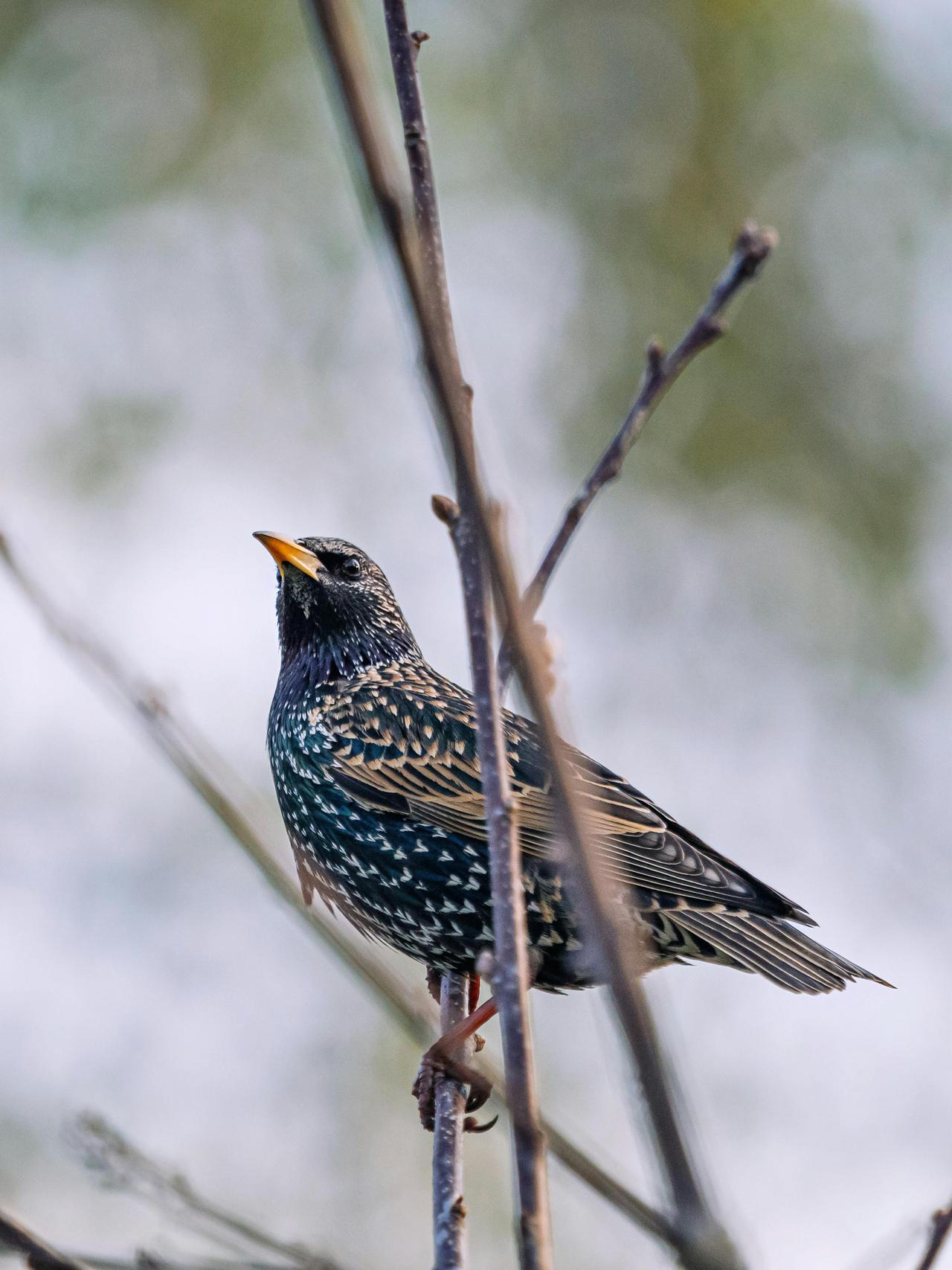
Starlings exhibit seasonal and sexual dimorphism in their physical appearance. During the breeding season, adults display iridescent purple, violet, and glossy green hues on their black plumage. As winter approaches, worn feather tips reveal white or cream-colored speckles on the back, chest, and head. Anatomically, they have a pointed beak, a short tail, a flat head, a robust body, and short triangular wings. The beak turns yellow during the breeding season but is black or dark in color during the rest of the year. Sexual dimorphism is pronounced: males have longer breast feathers and a bluish patch at the base of the beak, while females have shorter breast feathers and a pinkish patch at the beak base.
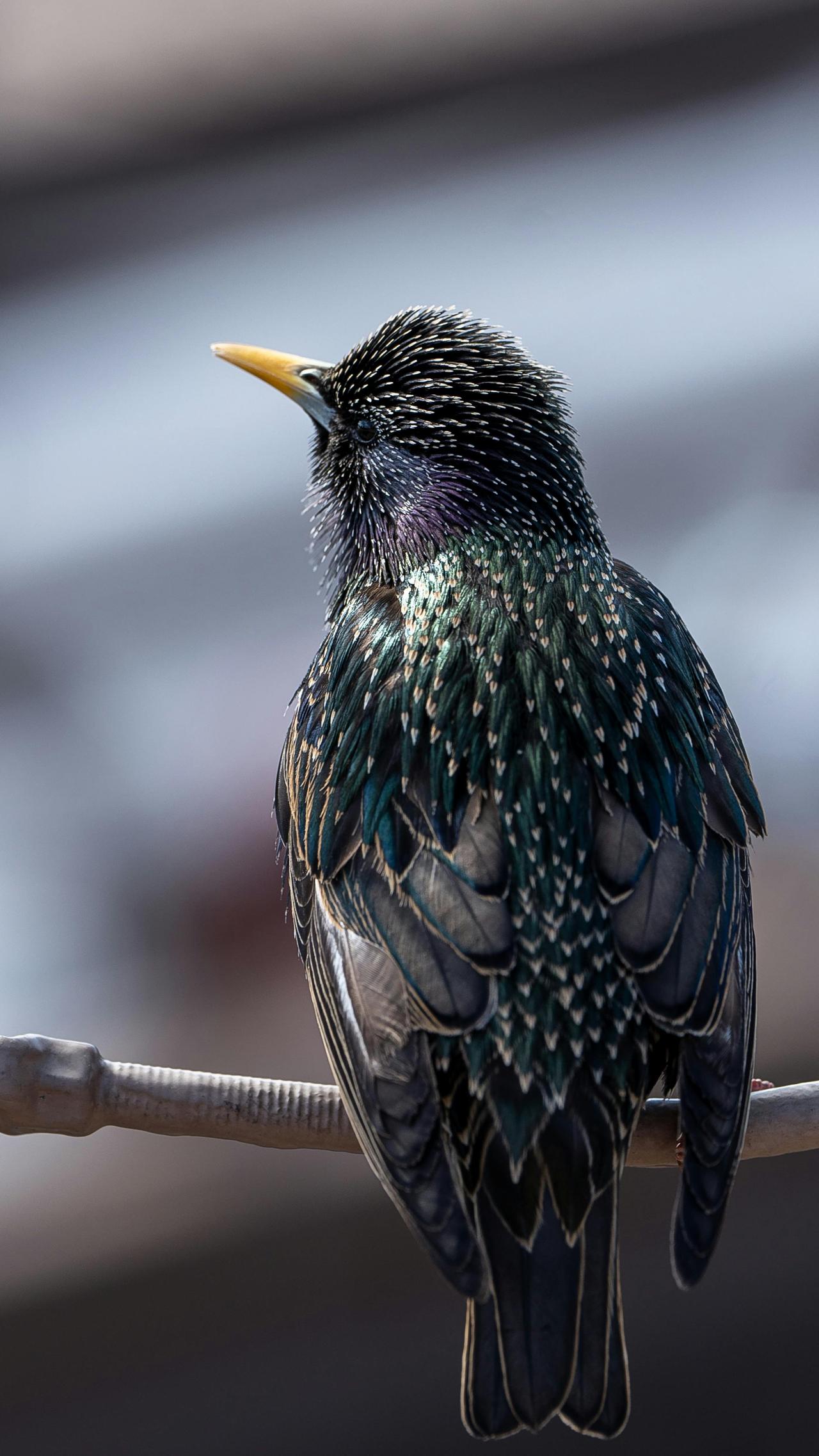
Starling (Sturnus vulgaris) (pexels)
The natural range of this species extends from central Siberia to the Azores, from Norway in the north to the Mediterranean in the south. However, following their introduction to North America in 1890, they have spread across most of the world, excluding the Neotropics, achieving a cosmopolitan distribution. In Türkiye, they are among the most commonly observed bird species throughout the country and in all types of terrain; large flocks numbering in the hundreds of thousands can form, especially during winter migration from the north. They inhabit lowland areas, agricultural fields, orchards, forest edges, parks, and urban environments where human settlements are present.
Starlings are omnivores whose diet includes both animal and plant sources. Their primary food items consist of invertebrates such as insects, insect larvae, snails, and earthworms, as well as fruits, seeds, and grains. These birds forage on the ground using rapid strides and employ a unique method of prying open hard or sheltered food items with their beaks, acting like a lever. This feeding behavior provides positive economic value by controlling agricultural pest insects; however, it also causes direct damage to fruit crops and harvests, resulting in negative economic impacts on farming. Furthermore, due to their aggressive nature, they displace native bird species that nest in cavities, contributing to a decline in local avian biodiversity.
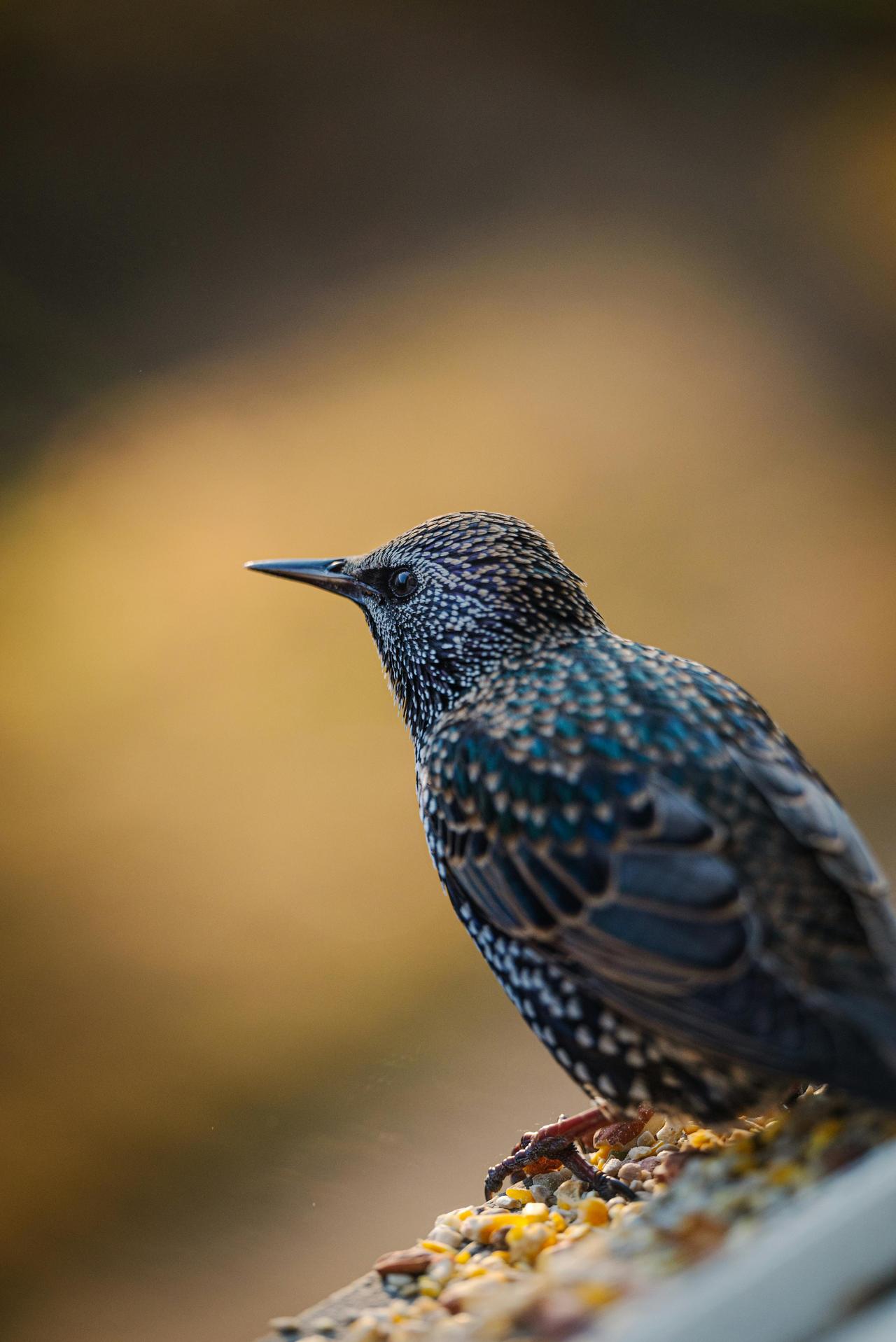
Starling (Sturnus vulgaris) (pexels)
The breeding season of this species primarily occurs in spring and early summer. Classified as secondary cavity nesters, starlings do not excavate their own nests but instead occupy existing tree holes, building crevices, eaves, or abandoned nests of other birds. While they are predominantly monogamous, polygynous behavior and multiple broods within a single breeding season have also been observed. Females typically lay an average of five pale blue-white eggs and undertake most of the approximately eleven-day incubation period. The hatchlings are altricial and remain in the nest for 21 to 23 days before fledging; however, they continue to be fed by their parents for several additional days until they achieve full independence. The longest recorded lifespan in the wild is slightly over fifteen years.
Outside the breeding season, starlings spend most of the year in enormous flocks, flying, foraging, and roosting in forests or reedbeds, demonstrating highly social behavior. This flocking structure serves as an early warning system against predators. Their vocal communication is exceptionally sophisticated. In addition to whistles, clicks, rattles, and harsh squeals, they are highly skilled mimics capable of imitating the calls of frogs, cats, other bird species, and even mechanical environmental sounds. The species flies with sudden wingbeats and glides in straight lines, exhibiting high ecological tolerance and environmental adaptability, which enables it to dominate the ecosystems it inhabits.


No Discussion Added Yet
Start discussion for "Starling (Sturnus vulgaris)" article
Taxonomy and Physical Characteristics
Geographic Distribution and Habitat
Feeding Habits and Ecological Role
Reproduction and Life Cycle
Behavior and Communication