

This article was automatically translated from the original Turkish version.
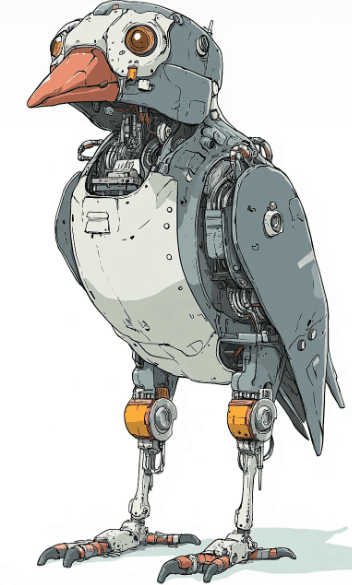
The term “stochastic parrot” (Eng. stochastic parrot), used in the field of artificial intelligence, was introduced to critically describe how large language models (LLMs) generate text based on statistical probabilities. This term draws an analogy between the behavior of AI systems—which produce text without understanding it, merely following the statistical likelihood of preceding words—and the mimicry of parrots. The concept entered academic literature in 2021 through the article titled “On the Dangers of Stochastic Parrots: Can Language Models Be Too Big?” by Emily M. Bender, Timnit Gebru, Angelina McMillan-Major, and Shmargaret Shmitchell.
The concept of the “stochastic parrot” was developed to highlight the statistical nature underlying the apparent human-like text generation capabilities of artificial intelligence systems. In the 2020s, large language models (such as GPT, BERT, and T5) expanded rapidly, trained on vast datasets, yet this growth has raised ethical, ecological, and epistemological concerns. Bender and colleagues argued that these models possess not the capacity for “language understanding” but only the ability to “imitate language statistics.”
This critique has triggered both technical and sociotechnical debates within AI research. Over time, the term “stochastic parrot” has also been adopted in fields such as philosophy of technology, digital ethics, sociology of information, and cognitive science.
Large language models operate on the foundation of statistical language modeling. These models predict the probability of a word in a sequence based on preceding words. The generated text consists of words selected according to these probability distributions. Consequently, although the model’s output may appear meaningful, it does not stem from semantic awareness—it is merely a product of data statistics.
The “stochastic parrot” concept argues that language models can capture context statistically but cannot comprehend meaning. This raises the question: “Does artificial intelligence truly understand?” Moreover, since the datasets used to train these models contain cultural, political, and ethical biases, there is a risk that their outputs reproduce these biases.
Bender and colleagues argue that the impacts of large language models must be discussed not only in technical terms but also in social and environmental ones. Training these models requires substantial energy consumption, leading to a significant carbon footprint. Additionally, issues related to copyright and personal privacy arise concerning the data used for training.
The “stochastic parrot” analogy also encompasses criticism of artificial intelligence systems gaining authority in knowledge production. Although such systems create an impression of high accuracy, the reliability of the knowledge they generate must be questioned. Even though their outputs may appear meaningful, their epistemological basis remains statistical imitation.
Crawford, Kate. 2021. "Atlas of AI: Power, Politics, and the Planetary Costs of Artificial Intelligence." New Haven: Yale University Press. Accessed October 6, 2025.
Mitchell, Melanie. 2019. "Artificial Intelligence: A Guide for Thinking Humans." New York: Farrar, Straus and Giroux. Accessed October 6, 2025.
Morley, Jessica, Luciano Floridi, Libby Kinsey, and Anat Elhalal. 2019. "From What to How: An Initial Review of Publicly Available AI Ethics Tools, Methods and Research to Translate Principles into Practices." arXiv preprint arXiv:1905.06876. Accessed October 6, 2025.
Bender, Emily M., Timnit Gebru, Angelina McMillan-Major, and Shmargaret Shmitchell. 2021. “On the Dangers of Stochastic Parrots: Can Language Models Be Too Big?” *Proceedings of the 2021 ACM Conference on Fairness, Accountability, and Transparency (FAccT ’21)*, 610–623. Accessed October 6, 2025. https://doi.org/10.1145/3442188.3445922
Floridi, Luciano, and Massimo Chiriatti. 2020. “GPT-3: Its Nature, Scope, Limits, and Consequences.” *Minds and Machines* 30: 681–694. Accessed October 6, 2025. https://doi.org/10.1007/s11023-020-09548-1
Pixabay. 2023. "AI-Generated Bird Robot Mechanical Illustration." Accessed October 6, 2025. https://pixabay.com/illustrations/ai-generated-bird-robot-mechanical-9431600/
“No Legal Personhood for AI.” 2023. *Patterns* 4 (8): 100945. Accessed October 6, 2025. https://www.sciencedirect.com/science/article/pii/S2666389923002453
“Unsafe AI for Education: A Conversation on Stochastic Parrots.” 2022. *Journal of Interactive Media in Education* 2022(1): 5. Accessed October 6, 2025. https://jime.open.ac.uk/articles/10.5334/jime.1079

Origin of the Concept
The Statistical Nature of Language Models
Probabilistic Text Generation
Meaning, Context, and Representation
Ethical and Social Dimensions
Data Ethics and Environmental Cost
Knowledge Production and Authority