This article was automatically translated from the original Turkish version.
Location | Mudurnu Türkiye Bolu | ||||||||
|---|---|---|---|---|---|---|---|---|---|
Elevation(s) | 1050 m | ||||||||
Area(s) | Nature park 810 hectares Lake 6 hectares | ||||||||
Protection Status | 22 November 2011 Nature Conservation Area | ||||||||
Ecosystem | Forest ecosystems Wetland | ||||||||
Main Tree Species | Red pine Silver fir Linden Hornbeam Oak species Hornbeam Uludağ fir Scots pine Black pine | ||||||||
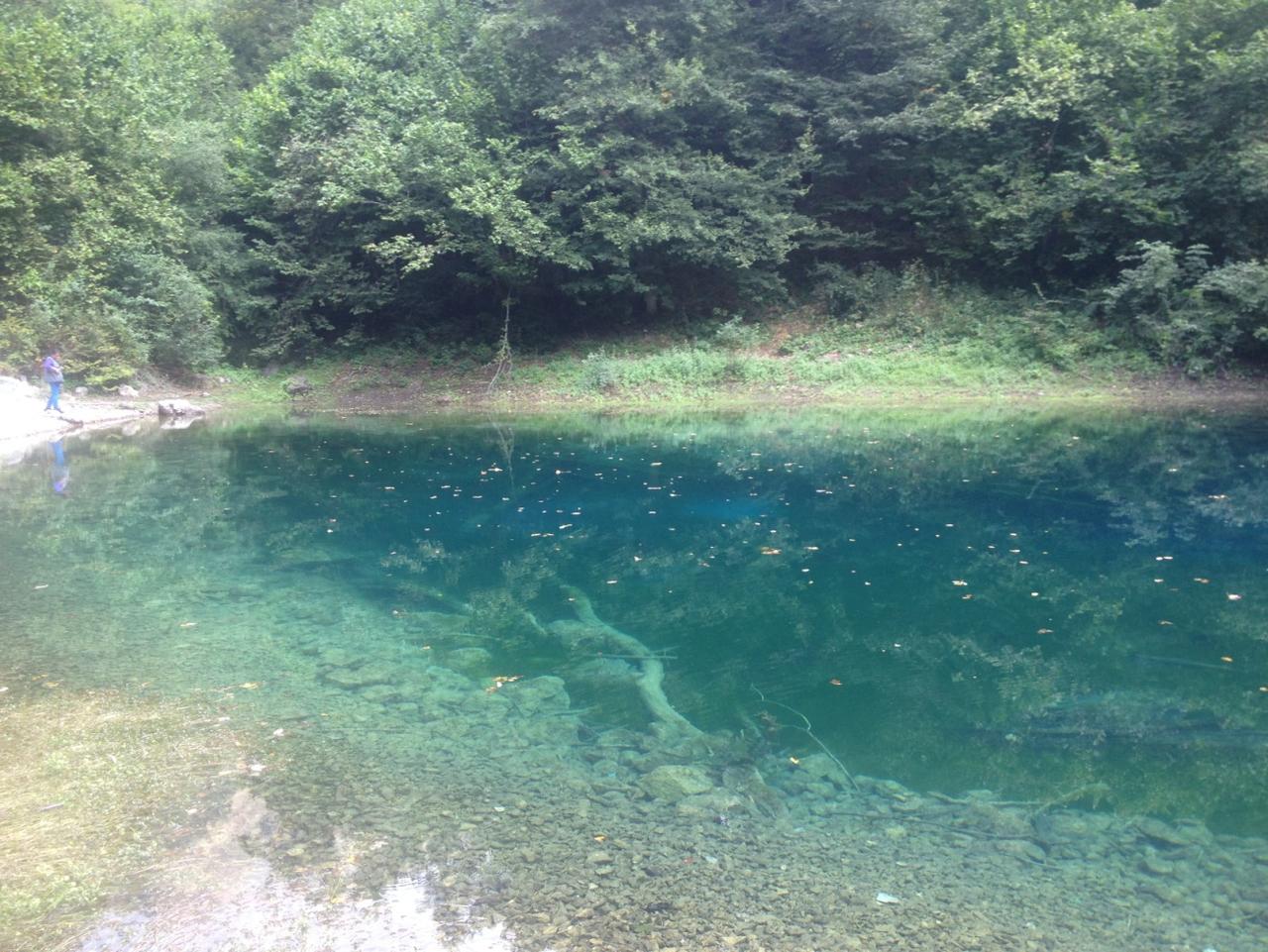
Sülüklü Göl Tabiat Parkı is a nature park located within the boundaries of the Mudurnu district of Bolu Province, Türkiye. It is approximately 50 kilometers from the Mudurnu district center and 85 kilometers from Bolu city. The area can also be reached via the Ankara–Beypazarı–Nallıhan–Mudurnu route. The lake, situated at an elevation of about 1050 meters, covers an area of 6 hectares.

Sülüklü Göl (Türkiye Culture Portal)
Sülüklü Göl was formed approximately 300 years ago (in 1702–1703) when a landslide blocked the course of the Tavşansuyu Stream. The lake lies on limestone formations of the Lower Cretaceous, and calcareous soils predominate in the area. After the landslide, the upper portions of pine and oak trees submerged under the lake waters did not decay and remained upright. When water levels drop during summer months, these trees create a striking landscape on the lake surface.
The area was declared a “Nature Conservation Area” on 25 March 1988 and its status was changed to “Nature Park” on 22 November 2011. The total area of the nature park is 810 hectares. Along with Sülüklü Göl, Kavaklı and Pis lakes are among the park’s primary natural values.
According to data from the Mudurnu Meteorological Station, the annual average temperature is 10.1 °C and the average annual precipitation is 559.2 mm. According to the Göynük Meteorological Station, the annual average temperature is 10.8 °C and precipitation is 609.1 mm. The region lies within a moderately humid climate zone.
Sülüklü Göl and its surroundings are rich in biological diversity, encompassing wetland and forest ecosystems. Due to its location at the intersection of the Europe-Siberia, Mediterranean, and Iran-Turan phytogeographical regions, the area exhibits high floral diversity. Floristic studies conducted between 2009 and 2010 identified 406 vascular plant taxa belonging to 79 families and 230 genera. Of these, 38 are endemic to Türkiye, giving an endemism rate of 9.36%.
Major tree species include black pine (Pinus nigra), Scots pine (Pinus sylvestris), Nordmann fir (Abies nordmanniana), Oriental beech (Fagus orientalis), various oak species (Quercus cerris, Q. robur, Q. petraea), hornbeam (Carpinus betulus), linden (Tilia tomentosa), maple (Acer spp.), and black alder (Alnus glutinosa). Additionally, species such as boxwood (Buxus sempervirens), cherry laurel (Laurocerasus officinalis), Turkish hazel (Corylus colurna), and European bladdernut (Staphylea pinnata) are found around the lake.
The lake derives its name from a former population of leeches, although these organisms are no longer present in the lake today. The area is also rich in birds, mammals, and aquatic organisms.
The nature park is located in a culturally rich region of Bolu. In the nearby district of Mudurnu, the Ahi tradition is still practiced, and tradespeople gather for prayers every Friday. The local culinary profession is particularly renowned through the Mengenli masters. Traditional crafts in the region include blacksmithing, coppersmithing, and needlework embroidery.
Sülüklü Göl Tabiat Parkı is used for activities such as hiking, cycling, angling, picnicking, tent camping, and photography. Within the park boundaries, infrastructure elements include dirt roads, footpaths (approximately 1.3 km), toilets, fountains, picnic tables, trash bins, containers, a water reservoir, and solar energy panels.
The area holds significant value as a natural laboratory at the regional scale due to its preserved natural forest structure, high plant diversity, and presence of endemic species. Floristic inventory studies provide a fundamental data source for monitoring potential future environmental changes.
Kanoğlu, Salih Sercan, Necmi Aksoy, Ali Kaya, and Nezahat Gökyiğit. “Sülüklü Göl (Bolu-Adapazarı / Türkiye) çevresinin florası.” *Bağbahçe Bilim Dergisi* 3, no. 2 (2016): 20–42. Accessed August 12, 2025. https://dergipark.org.tr/tr/download/article-file/1073467.
Ministry of Agriculture and Forestry of the Republic of Turkey, 9th Regional Directorate. "Bolu - Sülüklügöl Nature Park." Accessed August 12. https://bolge9.tarimorman.gov.tr/Menu/57/Bolu-Suluklugol-Tabiat-Parki.
Ministry of Culture and Tourism of the Republic of Türkiye, Culture Portal. "Sülüklügöl Nature Park - Bolu." Accessed August 12. https://www.kulturportali.gov.tr/turkiye/bolu/gezilecekyer/mudurnu-suluklugol.
Turkish Ministry of Culture and Tourism, Bolu Provincial Directorate of Culture and Tourism. “Sülüklügöl Tabiat Parkı - Mudurnu.” Accessed August 12. https://bolu.ktb.gov.tr/TR-366014/suluklugol-tabiat-parki---mudurnu.html

Location | Mudurnu Türkiye Bolu | ||||||||
|---|---|---|---|---|---|---|---|---|---|
Elevation(s) | 1050 m | ||||||||
Area(s) | Nature park 810 hectares Lake 6 hectares | ||||||||
Protection Status | 22 November 2011 Nature Conservation Area | ||||||||
Ecosystem | Forest ecosystems Wetland | ||||||||
Main Tree Species | Red pine Silver fir Linden Hornbeam Oak species Hornbeam Uludağ fir Scots pine Black pine | ||||||||
No Discussion Added Yet
Start discussion for "Sülüklü Lake Nature Park" article
Formation and Geological Structure
Protection Status
Climate Characteristics
Ecosystem and Flora
Fauna and Ecological Features
Cultural and Socioeconomic Environment
Recreational Use and Infrastructure
Scientific Importance