


This article was automatically translated from the original Turkish version.
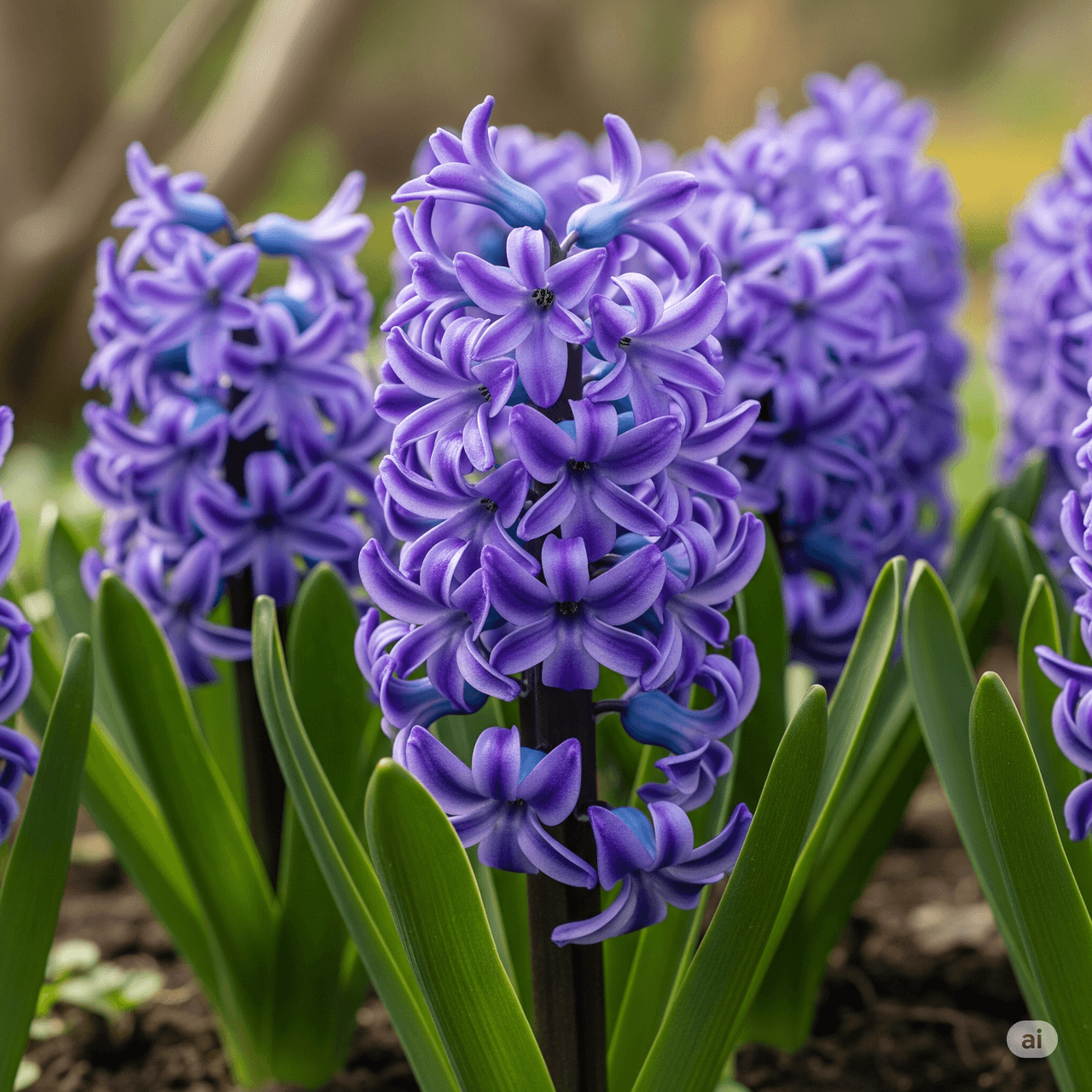
Sümbül (Hyacinthus orientalis L.)
Taxonomy | Hyacinthus orientalis L. | ||||||||
|---|---|---|---|---|---|---|---|---|---|
Family | Asparagaceae | ||||||||
Growth Form | Bulbous, perennial plant, 20–30 cm | ||||||||
Leaf Characteristics | Long, narrow and fleshy leaves | ||||||||
Flower Colors | Blue, purple, pink, white | ||||||||
Habitat | Eastern Mediterranean countries sunny or partially shaded areas | ||||||||
Sümbül (Hyacinthus orientalis L.) is a bulbous and perennial plant species belonging to the Asparagaceae family. Naturally occurring in the Eastern Mediterranean and Western Asia regions, this plant is known for its colorful and fragrant flowers that bloom especially during spring. Sümbül is used both as an ornamental plant in gardens and landscape designs and for various purposes in traditional medicine and the cosmetics industry.
Sümbül is a bulbous perennial plant reaching a height of 20–30 cm. Its leaves are long, narrow, and fleshy, emerging in a rosette pattern from the base. The flowers are densely arranged in spikes on an upright stem and can appear in various colors such as blue, purple, pink, and white. The flowers emit a pleasant fragrance that spreads through the environment, particularly during spring.
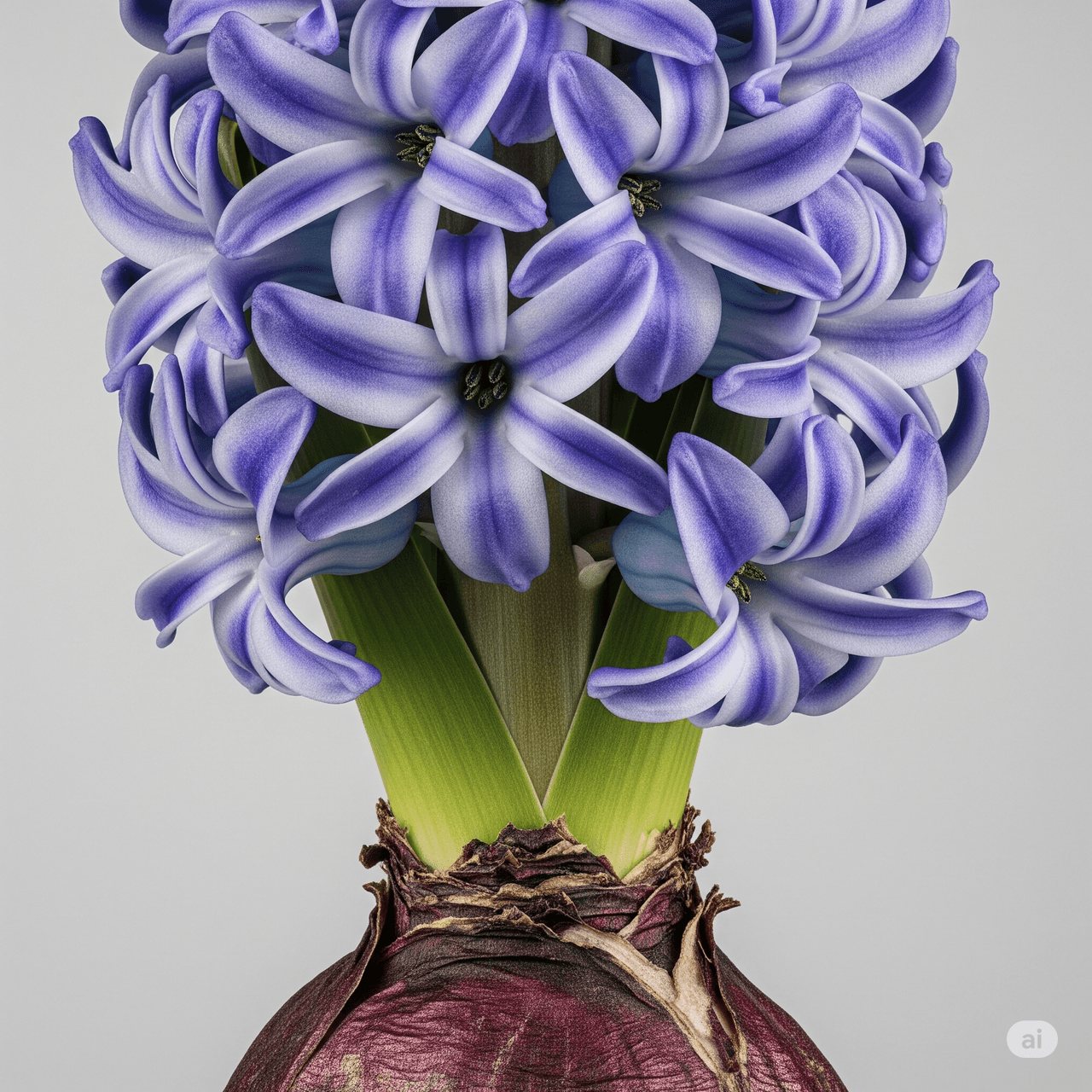
General Morphology of Sümbül (generated by artificial intelligence)
Sümbül naturally grows in Eastern Mediterranean countries such as Türkiye, Syria, Lebanon, and Israel. It prefers sunny or partially shaded areas and thrives in well-drained soils. It is tolerant of cold winter conditions and blooms in spring. Additionally, it is widely cultivated as an ornamental plant in parks and gardens.
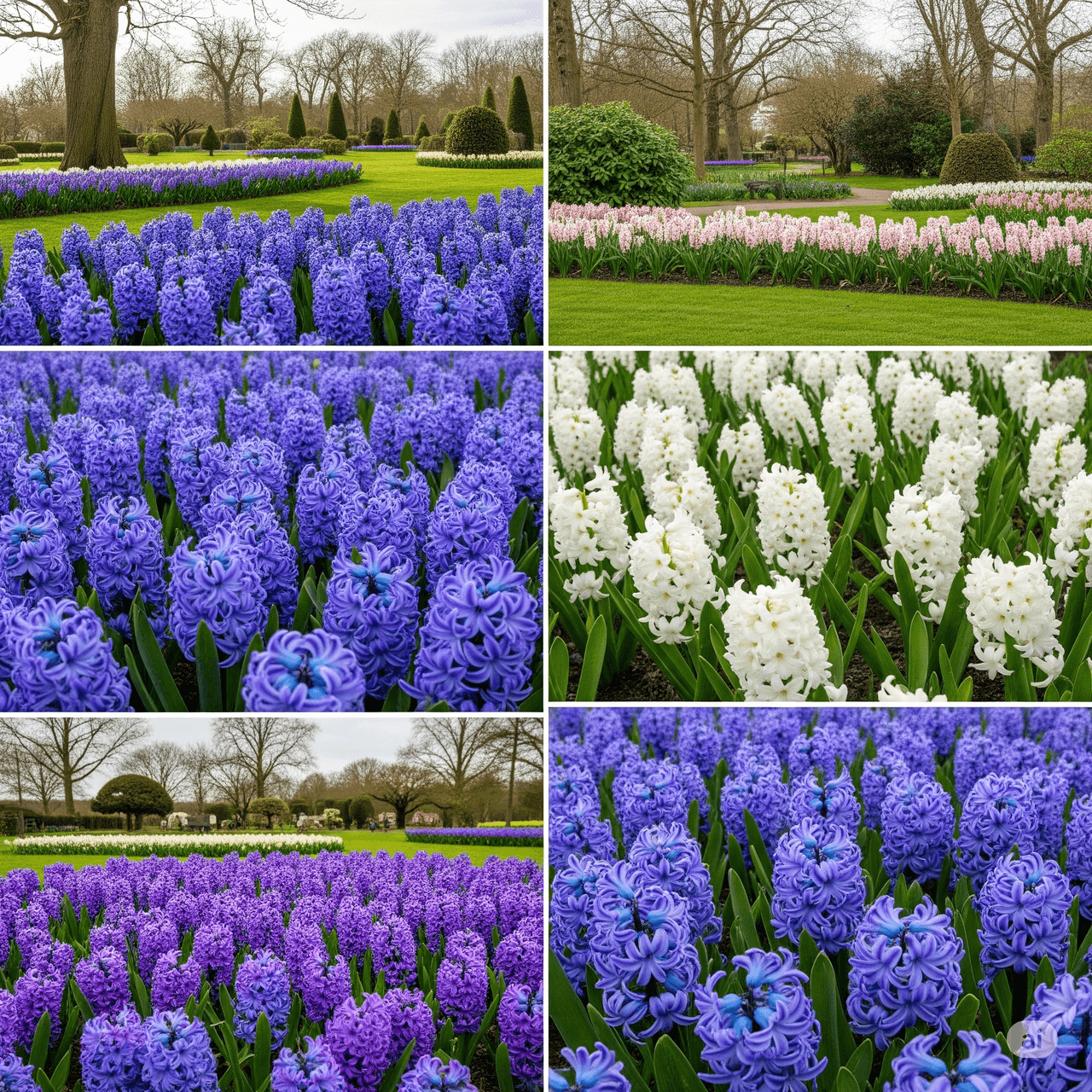
Use of Sümbül in Parks and Gardens (generated by artificial intelligence)
The Sümbül plant contains various phytochemical components including alkaloids, flavonoids, saponins, and essential oils. These compounds contribute to the plant’s medicinal and aromatic properties.
Some parts of the Sümbül plant, particularly the bulb, can be toxic to humans and animals. The saponins it contains may cause gastrointestinal disturbances such as nausea, vomiting, and diarrhea. Therefore, its medicinal use must be carefully evaluated.
Sümbül has been used in traditional medicine to treat various ailments. Modern research suggests that Sümbül extracts may possess potential anti-inflammatory, analgesic, and anticancer properties. However, further scientific studies are required to establish the clinical validity of these possibilities. 【1】
Essential oils extracted from Sümbül flowers are used in cosmetics and aromatherapy. Due to their pleasant fragrance, they are preferred in perfumes and skin care products. Additionally, they are believed to have calming and stress-relieving effects in aromatherapy.
Demirci-Kayiran, S., & Yildirim, A. (2017). The ethnobotanical uses of Hyacinthaceae species growing in Turkey and a review of pharmacological activities. Journal of Ethnopharmacology, 198, 1-10. Accessed May 25, 2025. https://www.researchgate.net/publication/316504218_The_ethnobotanical_uses_of_Hyacinthaceae_species_growing_in_Turkey_and_a_review_of_pharmacological_activities
El-Naggar, H. M., Shehata, A. M., Moubarak, M., & Osman, A. R. (2023). Optimization of Morphogenesis and In Vitro Production of Five Hyacinthus orientalis Cultivars. Horticulturae, 9(2), 176. Accessed May 25, 2025. https://www.mdpi.com/2311-7524/9/2/176
Kaya, A. R. (2017). Farklı Yetiştirme Ortamlarının Kaya Sümbülü (Hyacinthus orientalis subsp. chionophilus.)’nün Bazı Bitkisel Özellikleri Üzerine Etkileri. Iğdır Üniversitesi Fen Bilimleri Enstitüsü Dergisi 7(4), 243-247. Accessed May 25, 2025. https://dergipark.org.tr/tr/download/article-file/419711
Olgaç, Y., Kasım, R., and Kasım, M. U. (2024). Usability of 'Pink Pearl', 'Aiolos' and 'Blue Jacket' Hyacinth (Hyacinthus orientalis L.) varieties with Pre- and Postharvest Boric Acid Application as Cut Flowers. Tekirdağ Ziraat Fakültesi Dergisi, 21(5), 1323-1335. Accessed May 25, 2025. https://dergipark.org.tr/en/pub/jotaf/issue/88500/1260695
Taha, Z., Al-Kury, L. T., & Talib, W. H. (2021). Immunomodulatory and Anticancer Activities of Hyacinthus orientalis L. Plants, 10(4), 617. Accessed May 25, 2025. https://www.mdpi.com/2223-7747/10/4/617
[1]
Z. Taha, L. T. Al-Kury ve W. H. Talib, “Immunomodulatory and Anticancer Activities of Hyacinthus orientalis L.,” Plants 10, no. 4 (2021): 617.

Sümbül (Hyacinthus orientalis L.)
Taxonomy | Hyacinthus orientalis L. | ||||||||
|---|---|---|---|---|---|---|---|---|---|
Family | Asparagaceae | ||||||||
Growth Form | Bulbous, perennial plant, 20–30 cm | ||||||||
Leaf Characteristics | Long, narrow and fleshy leaves | ||||||||
Flower Colors | Blue, purple, pink, white | ||||||||
Habitat | Eastern Mediterranean countries sunny or partially shaded areas | ||||||||
No Discussion Added Yet
Start discussion for "Sümbül (Hyacinthus orientalis L.)" article
Morphological Characteristics and Ecological Adaptations
General Morphology
Habitat and Growth Conditions
Chemical Composition and Toxicology
Phytochemical Content
Toxicological Properties
Pharmacological Potential and Applications
Use in Traditional and Modern Medicine
Applications in Cosmetics and Aromatherapy