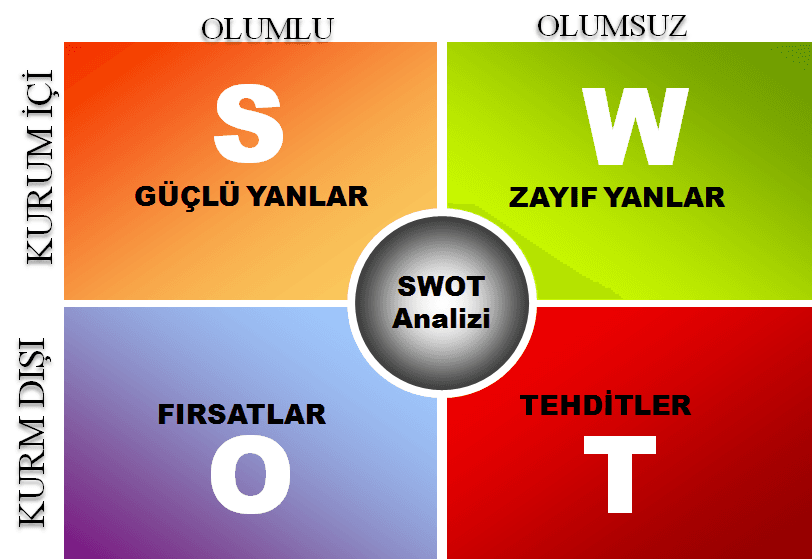
SWOT analysis is a strategic analytical method used to evaluate the internal and external factors of an organization, business, or individual. The analysis aims to contribute to the strategic decision-making process by systematically identifying the strengths and weaknesses of the organization or individual, as well as the opportunities and threats they face. This method is applied across various fields including business management, strategic planning, human resource management, education, public policies and individual career planning like.
SWOT analysis allows for a comprehensive assessment of the current situation by comparing internal factors (strengths and weaknesses) with external factors (opportunities and threats). Thus, organizations and individuals can leverage their strengths effectively, develop strategies to improve weaknesses, assess opportunities strategically, and take preventive measures against threats.
Elements of SWOT Analysis
SWOT analysis consists of four main components:
- Strengths: These are the internal attributes of an organization or individual that provide a competitive advantage. For businesses, elements such as brand value, financial stability, technological capabilities, human resources and customer loyalty can be considered strengths. For individuals, academic achievements, personal competencies and professional skills may represent strengths.
- Weaknesses: These are internal attributes that may lead to a competitive disadvantage and require improvement. In businesses, low market share, insufficient financial resources, ineffective marketing strategies or technological lag can be classified as weaknesses. For individuals, skill gaps, time management issues or low motivation may fall into this category.
- Opportunities: These are external factors that can lead to positive outcomes for the organization or individual. Opportunities for businesses may include access to new markets, technological advancements, favorable industry shifts or government incentives. For individuals, opportunities may include educational scholarships, new career prospects or increased demand in their field.
- Threats: These are external risks faced by the organization or individual. Economic crises, increased competition, regulatory changes, supply chain disruptions or shifts in consumer behavior can pose threats to businesses. For individuals, unemployment, industry stagnation or unexpected economic changes may be considered threats.
SWOT Analysis Representation (Source: New Ankara)
Importance and Application Areas of SWOT Analysis
SWOT analysis serves as a important guide in the strategic decision-making process for individuals and organizations. It is used common in academic research, the business world and public administration. The key advantages of this method include:
- Strategic planning and management: Businesses can use SWOT analysis to assess internal and external conditions when formulating long-term strategies.
- Market analysis and competitive advantage: SWOT analysis is an effective tool for evaluating the competitive environment and maximizing market opportunities.
- Human resource management: It can be used to identify employees’ strengths and weaknesses in order to plan training and development programs.
- Career planning: Individuals can shape their careers and capitalize on opportunities by analyzing their own strengths and weaknesses.
- Education sector and academic research: SWOT analysis plays a significant role in students’ career selection, academic guidance and personal development processes.
- Corporate risk management: Organizations can identify threats and develop crisis management and risk mitigation strategies.
Methodological Implementation of SWOT Analysis
A systematic process is followed when implementing SWOT analysis:
- Identification of internal factors: Analysis of strengths and weaknesses is conducted.
- Identification of external factors: Market trends, industry analyses and environmental variables are evaluated.
- Creation of the SWOT matrix: Strategies are developed by analyzing combinations of strengths-opportunities (SO), weaknesses-opportunities (WO), strengths-threats (ST), and weaknesses-threats (WT).
- Development of an action plan: Decision mechanisms are established and implemented based on the identified strategies.