This article was automatically translated from the original Turkish version.
+2 More
Location | Sydney / Australia | ||||||||
|---|---|---|---|---|---|---|---|---|---|
Architect(s) | Jørn Utzon (Denmark) | ||||||||
Construction Years | 1959–1973 | ||||||||
Opening Date | 1973-10-20 | ||||||||
Main Hall Capacity | 2,800 people | ||||||||
Total Number of Rooms | 1,000 | ||||||||
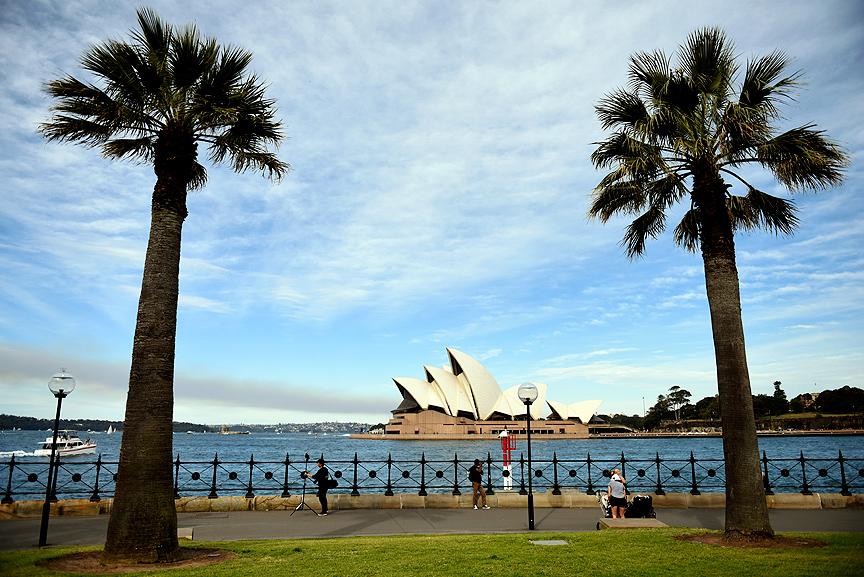
The Sydney Opera House is a structure located on Bennelong Point, a peninsula extending into Sydney Harbour in the city of Sydney, Australia. Opened in 1973, the building is regarded as one of the most important works of 20th-century architecture and is listed on the UNESCO World Heritage List. The design integrates numerous innovations and creative approaches in both architectural form and structural engineering.
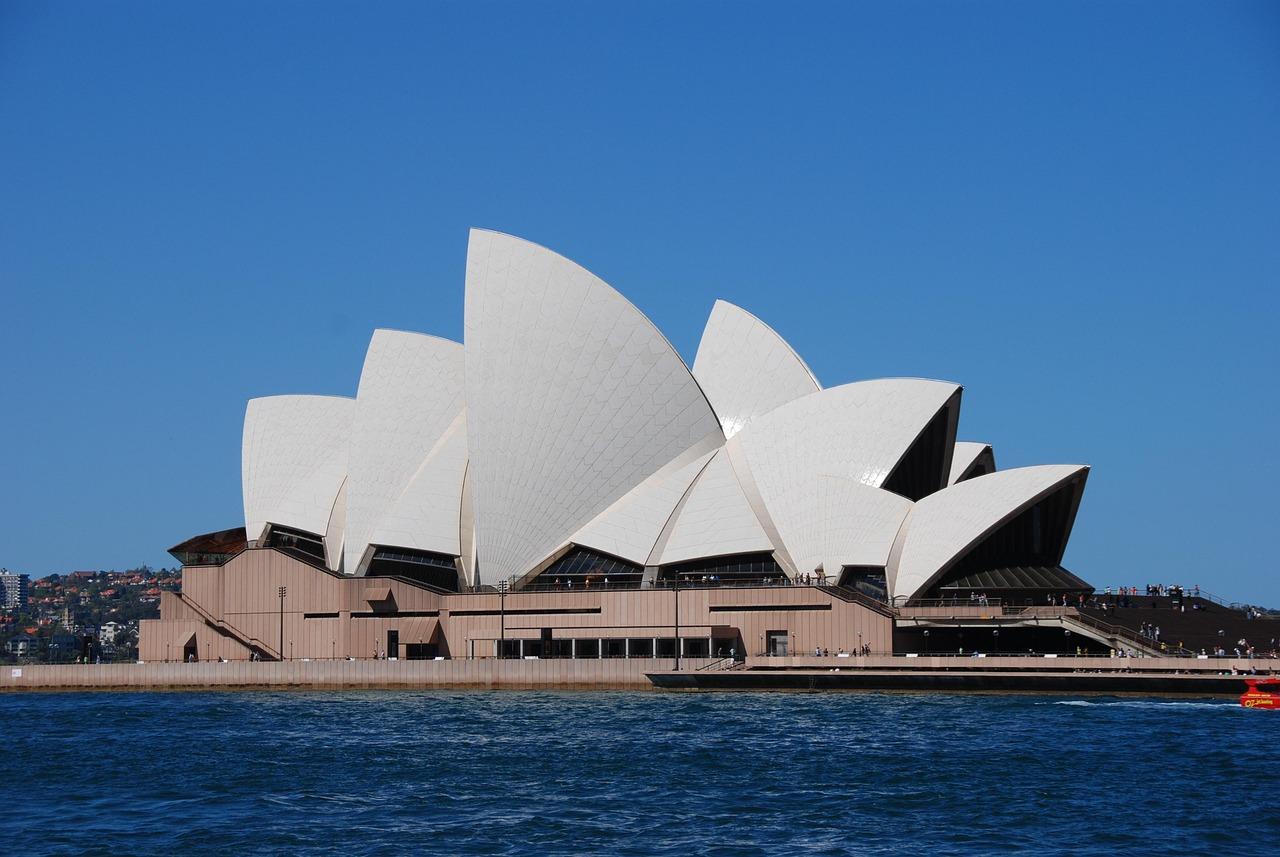
The Sydney Opera House (Pixabay)
The design of the Opera House was undertaken by Danish architect Jørn Utzon. Utzon won a competition organized by the Government of New South Wales in 1956 to select the design for the building and was later awarded the Pritzker Architecture Prize in 2003 for his design. During the design process, Utzon’s initial sketches were evaluated by the competition jury as possessing high aesthetic and structural potential.
Construction began in 1959 after the demolition of the former Fort Macquarie Tram Depot located on the same site. The construction consisted of three main phases: the construction of the podium, the creation of the outer shells, and the completion of the interior spaces.
The podium construction commenced before the final design was completed, leading to some structural issues that required modifications in 1963. Between 1957 and 1963, Jørn Utzon and the engineering firm Arup developed a shell system that made the structural realization of the building’s domes possible. After twelve trials, a ribbed precast concrete shell system based on sections of a sphere was determined to be feasible.
According to Utzon’s design vision, each shell evokes the image of white sails emerging from the deep blue ocean. The roof surface is clad with 1,056,000 white ceramic tiles imported from Sweden, and the completion of the roof took 11 years.
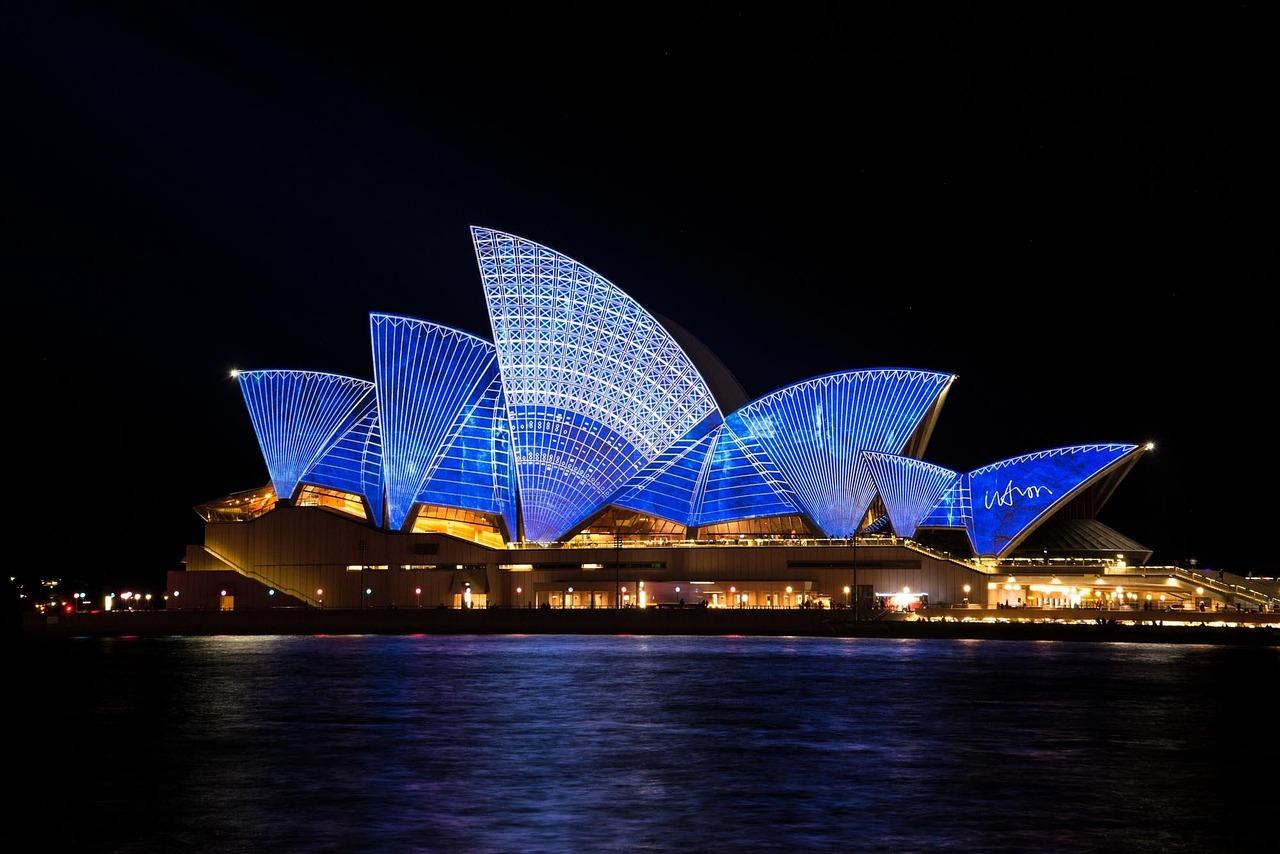
The Sydney Opera House (Pixabay)
In 1966, Utzon resigned from the project due to rising costs. He was replaced by Australian architects Peter Hall, DS Littlmore and Lionel Todd. The second phase of the project was completed after the installation of 2,194 precast shells. In the third phase, various functional modifications were made to Utzon’s original design: the main hall was optimized for concerts, and the second hall was converted into an opera and ballet theatre. Additionally, three small theatre stages, a library, a cinema, three restaurants, six bars and sixty dressing rooms were added. The Opera House contains a total of 1,000 rooms.
The building consists of three groups of shell structures resting on a large platform. The shells are supported by extensive glass surfaces and vertical ribs; the glass is double-glazed with a plastic layer between the panes that enhances durability and provides acoustic insulation. This design represents a contemporary approach that balances aesthetic and functional considerations.
The main hall has a capacity of 2,800 people. The second hall, known as the Opera Theatre, is used for opera and ballet performances. Wide staircases and terrace areas facilitate visitor access and transform the structure into an urban sculpture.
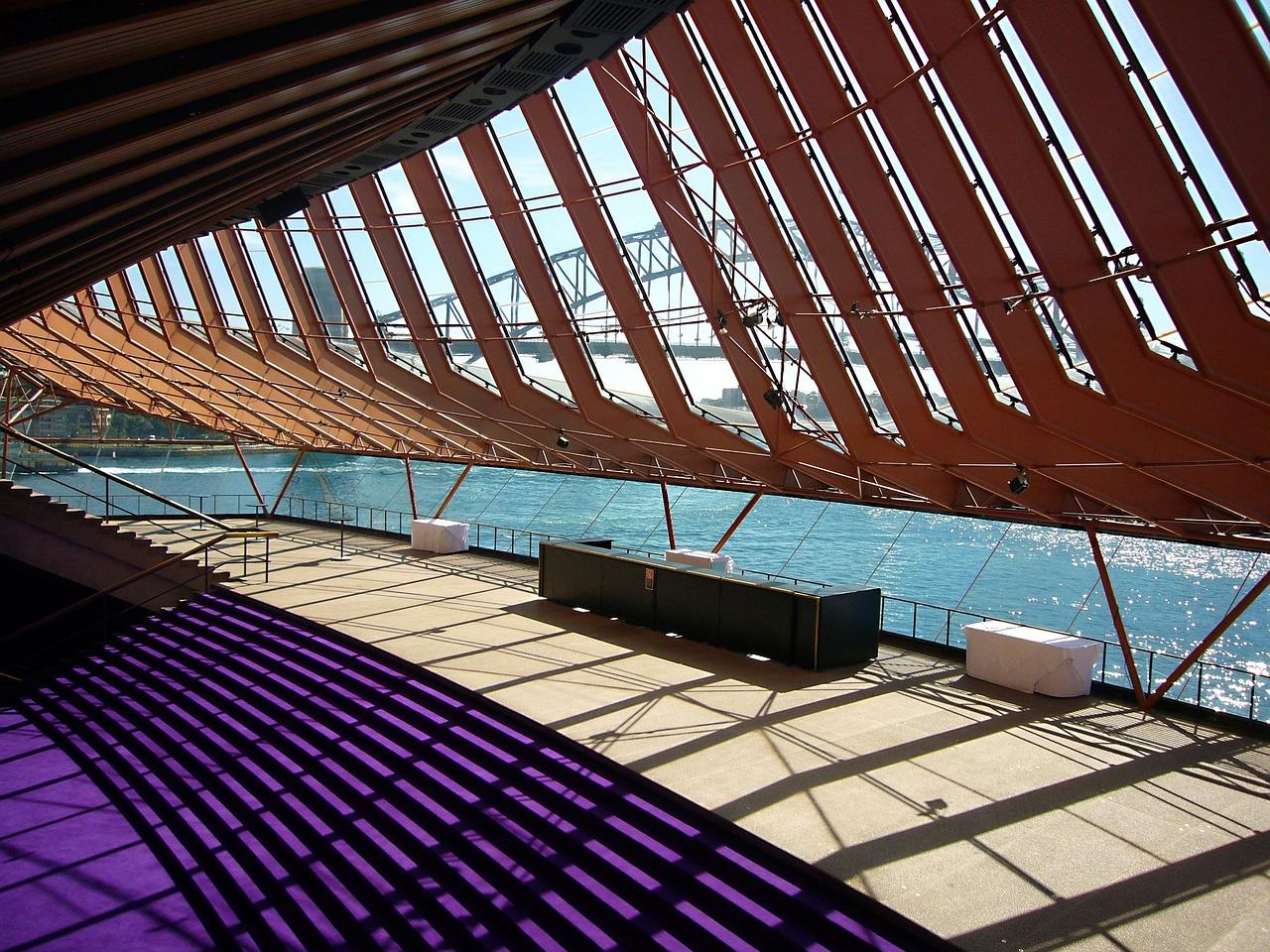
The Sydney Opera House (Pixabay)
The Sydney Opera House is recognized as a turning point in modern architecture and one of the symbolic landmarks of Australia. It functions as a cultural center open to the entire community and hosts a variety of performing arts events. Utzon’s original design concept and Arup’s engineering contributions have established the building as a reference in the fields of architecture, engineering and construction.
The building was added to the National Heritage List in 2005 under the Environment Protection and Biodiversity Conservation Act of 1999 and to the New South Wales State Heritage Register in 2003. It is maintained through regular conservation and repair programs, with the Sydney Opera House Management Plan and Utzon Design Principles aiming to preserve both its functionality and uniqueness.
Anadolu Ajansı. "Sydney Opera Evi her gün binlerce ziyaretçi ağırlıyor." Accessed August 16, 2025. https://www.aa.com.tr/tr/kultur-sanat/sydney-opera-evi-her-gun-binlerce-ziyaretci-agirliyor/1023866
Arkitektuel. "Sydney Opera Binası." Accessed August 16, 2025. https://www.arkitektuel.com/sydney-opera-binasi/
Pixabay. "Sidney opera evi, Bina, Mimari görseli JPG." Accessed August 18, 2025. https://pixabay.com/tr/photos/sidney-opera-evi-bina-mimari-363244/
Pixabay. "Sydney, Avustralya, Opera binası görseli JPG." Accessed August 18, 2025. https://pixabay.com/tr/photos/sydney-avustralya-opera-binas%C4%B1-680908/
Pixabay. “Sydney, Opera, Avustralya görseli JPG.” Accessed August 18, 2025. https://pixabay.com/tr/photos/sydney-opera-avustralya-2910646/
Sydney Opera House. "Our Story." Sydney Opera House. Accessed August 16, 2025. https://www.sydneyoperahouse.com/our-story
UNESCO. “Sydney Opera House.” UNESCO World Heritage Centre. Accessed August 16, 2025. https://whc.unesco.org/en/list/166/

Location | Sydney / Australia | ||||||||
|---|---|---|---|---|---|---|---|---|---|
Architect(s) | Jørn Utzon (Denmark) | ||||||||
Construction Years | 1959–1973 | ||||||||
Opening Date | 1973-10-20 | ||||||||
Main Hall Capacity | 2,800 people | ||||||||
Total Number of Rooms | 1,000 | ||||||||
Design and Architect
Construction Process and Structural System
Design Modifications and Completion
Architectural Features
Material Use
Usage and Capacity
Cultural and Universal Value
Conservation and Management