

This article was automatically translated from the original Turkish version.
+2 More
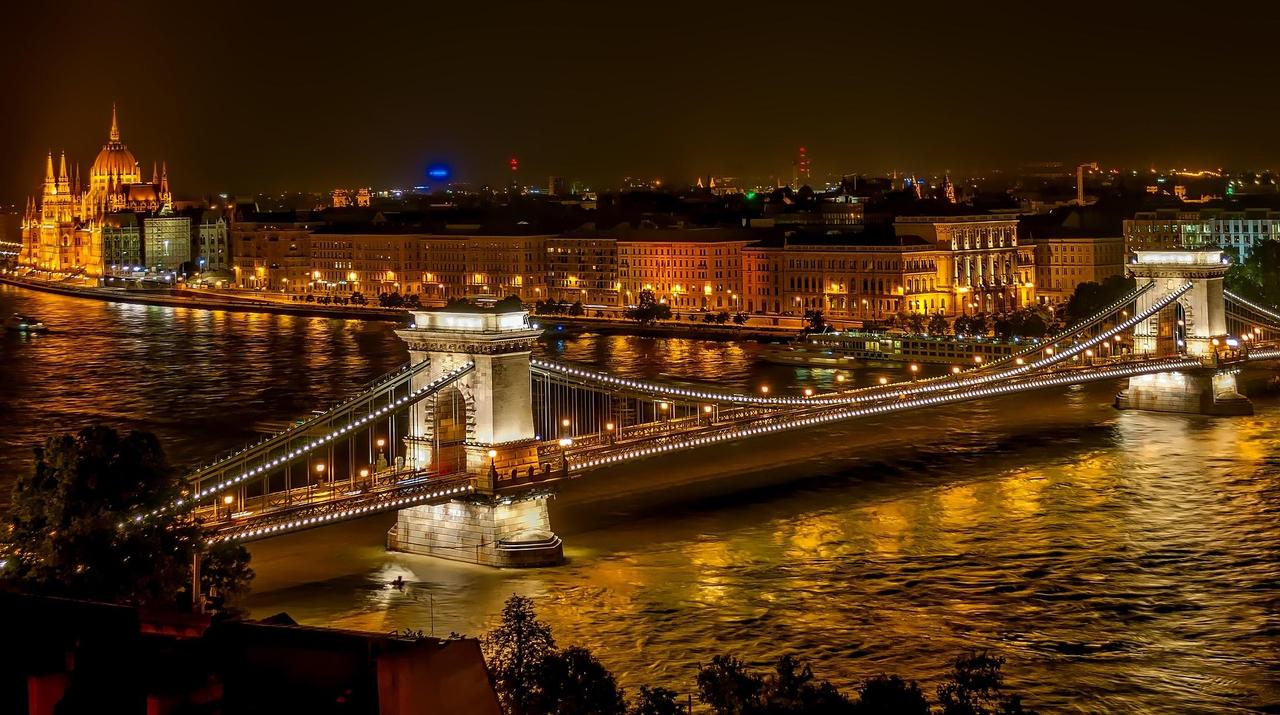
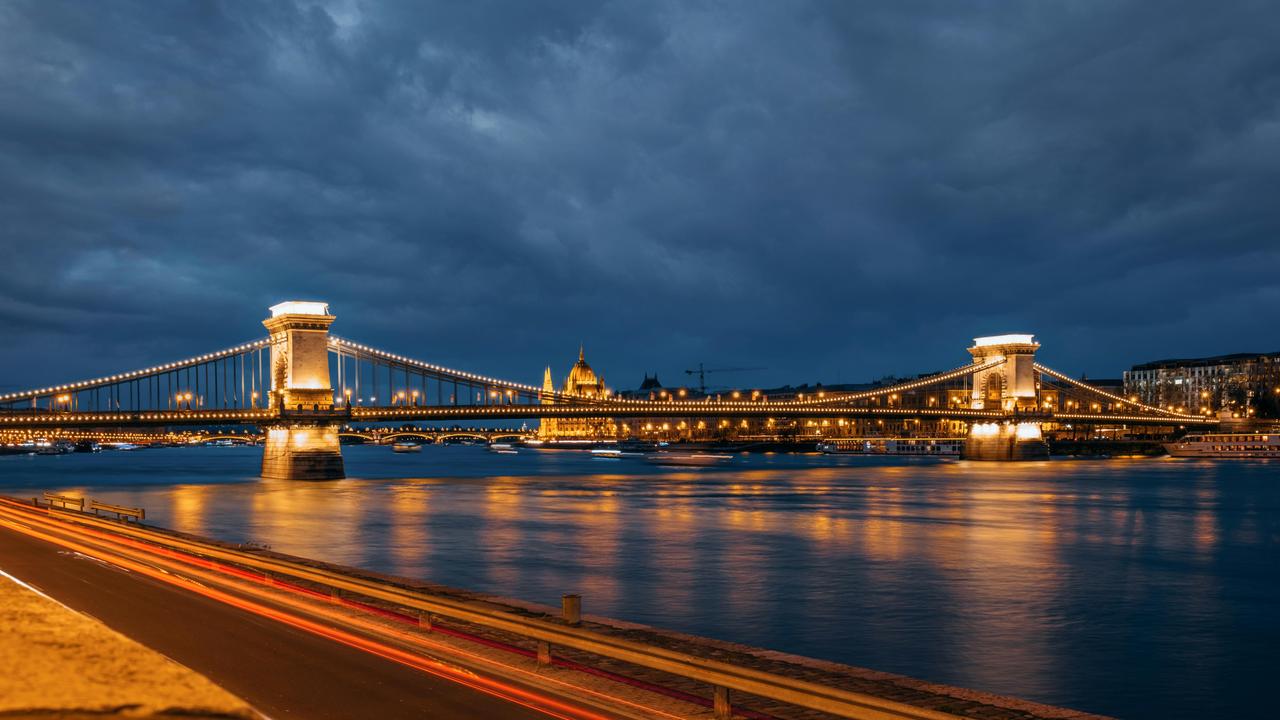
Széchenyi Chain Bridge, a suspension bridge spanning the Danube River in Budapest, the capital of Hungary, connecting the districts of Buda and Pest. The bridge was constructed between 1839 and 1849 and holds the distinction of being the first permanent bridge over the Danube River in Hungary. The structure was designed by British engineer William Tierney Clark, while the construction was overseen locally by Adam Clark. The bridge derives its name from István Széchenyi, one of its key supporters, and is also widely known as the Chain Bridge.
Széchenyi Chain Bridge (Pexels)
The history of the Széchenyi Chain Bridge encompasses its planning and construction in the mid-19th century, its opening, period of use, and subsequent phases of destruction and reconstruction. Designed in accordance with the technical and engineering standards of its time, the structure has undergone various modifications and interventions over the years to reach its present state.
Planning for the Széchenyi Chain Bridge began in the 1830s as a response to transportation challenges in the region. The absence of a permanent bridge across the Danube River meant that seasonal and temporary bridges had to be erected and dismantled each winter, disrupting transit. The design was prepared by British engineer William Tierney Clark, who opted for a suspension bridge type. Technical solutions and engineering practices were developed in England, while the implementation was managed by local engineer Adam Clark. Funding was secured through private capital, with contributions from economic actors of the era.【1】
Széchenyi Chain Bridge (Pixabay)
Construction began in 1839 and was completed after approximately ten years of work. During construction, the bridge’s main components and metal elements were sourced from various countries, while stonework and metal fabrication were carried out by multiple suppliers. The chain system and load-bearing elements were manufactured in line with the industrial capacity of the era. A large workforce was employed throughout the construction process, and the bridge was completed and opened to traffic in 1849.【2】
The Széchenyi Chain Bridge was completed and opened to traffic in 1849. Following its opening, it replaced the previous temporary and seasonal bridge systems. The structure attracted attention due to its technical features and load-bearing system, becoming a fundamental connection point in the urban transportation network. The bridge was named after István Széchenyi, and this name became inseparable from the structure over time.【3】
Széchenyi Chain Bridge (Pixabay)
During World War II, the Széchenyi Chain Bridge was destroyed in 1945, with only the towers remaining standing. After its destruction, the bridge remained unusable for an extended period, and transportation across the Danube in Budapest was rerouted through alternative crossings. A decision was made after the war to reconstruct the bridge, preserving its essential characteristics. The bridge was rebuilt and reopened to traffic in 1949. During reconstruction, the main load-bearing system and overall design features were retained, and the structure was restored to conform closely to its original form. Through this process, the Széchenyi Chain Bridge regained its pre-war function and maintained its place in Budapest’s transportation infrastructure.【4】
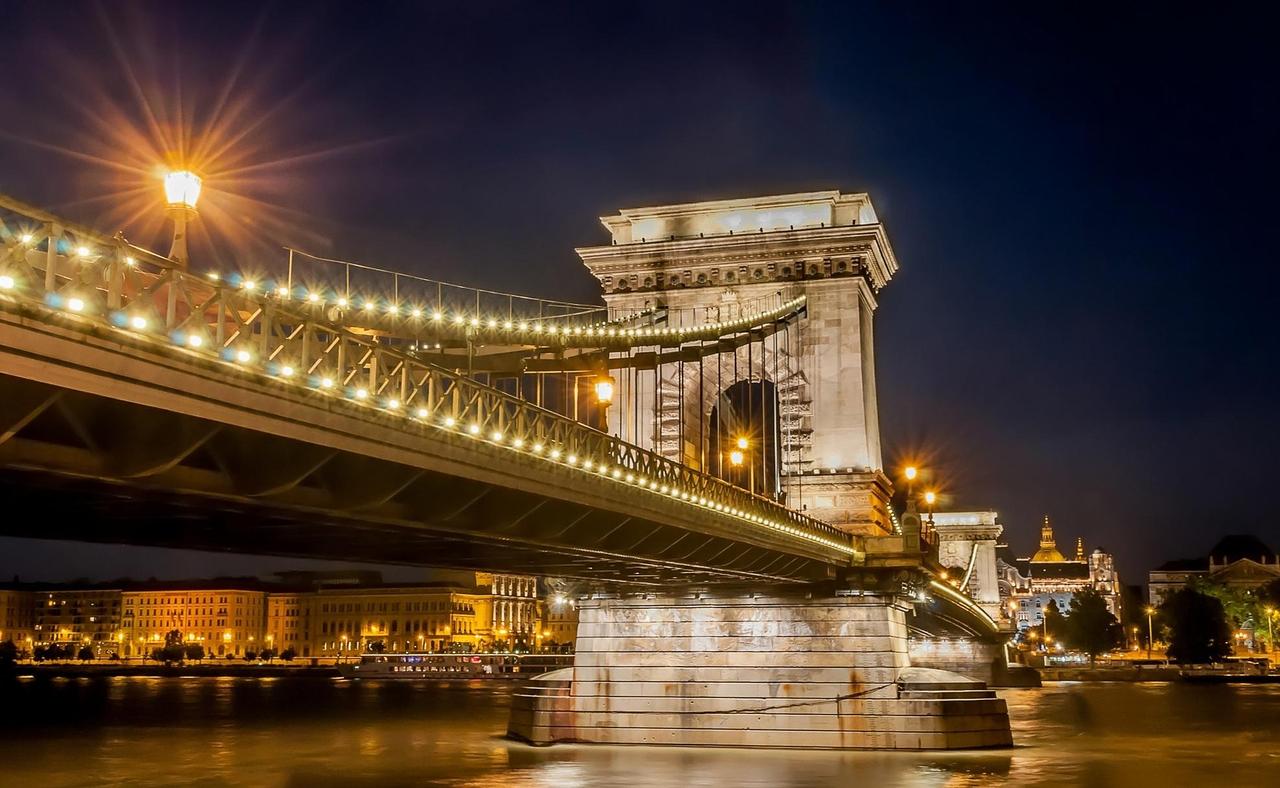
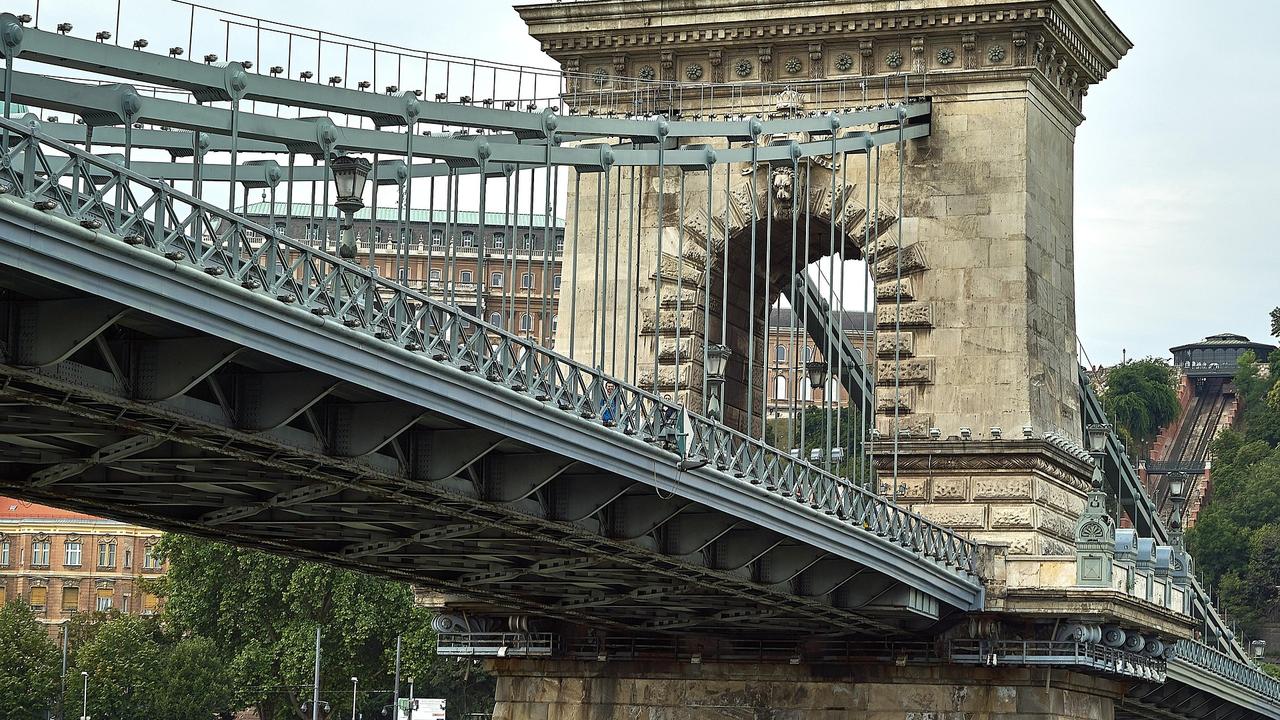
The Széchenyi Chain Bridge is a suspension bridge designed with a chain system, its primary load-bearing elements consisting of chains and vertical hangers connected to them. The structure’s load-bearing system is arranged to work in conjunction with rigid beam deck elements. The materials used in the bridge are predominantly steel and cast iron, and the structural system is designed to transfer loads through the chain elements to the main supports.
Széchenyi Chain Bridge (Pixabay)
The Széchenyi Chain Bridge is a suspension bridge whose primary load-bearing system relies on chain elements. The system is constructed by passing the main chains over the towers and connecting them to the deck via vertical hangers. In this system, loads are transferred from the deck to the hangers, then to the chains, and finally to the supports. Rigidity is provided by a beam-type deck system working in conjunction with the chain system. The bridge’s geometry is based on a symmetric load-bearing structure designed to evenly distribute loads along its span.
The materials used in the structure are predominantly steel and cast iron components. The chain elements are manufactured from high-strength metals and are designed to withstand tensile forces. The deck system is constructed from more rigid elements to ensure effective load distribution. Pin connections at the joints are arranged to allow a degree of movement between components. This material and connection system was designed to support the bridge’s long-term structural integrity.
The main span of the Széchenyi Chain Bridge is approximately 202.6 meters.【5】 Including the side spans, the total length is approximately 380 meters.【6】 The supporting towers serve as the primary vertical elements that guide the main chain system. The deck width is designed to accommodate both vehicular and pedestrian traffic simultaneously and is supported by a rigid system ensuring even load distribution across the section.
The bridge’s engineering characteristics are based on the principle of tensile force transmission through the chain system. Loads transmitted through the main chains are transferred to the deck via hangers. Pin systems are used particularly at connection points to allow a degree of movement. This system is designed to accommodate internal force variations caused by temperature changes and loading. As one of the earliest examples of long-span chain bridges, the Széchenyi Chain Bridge represents an important structural arrangement in engineering history.
Széchenyi Chain Bridge (Pexels)
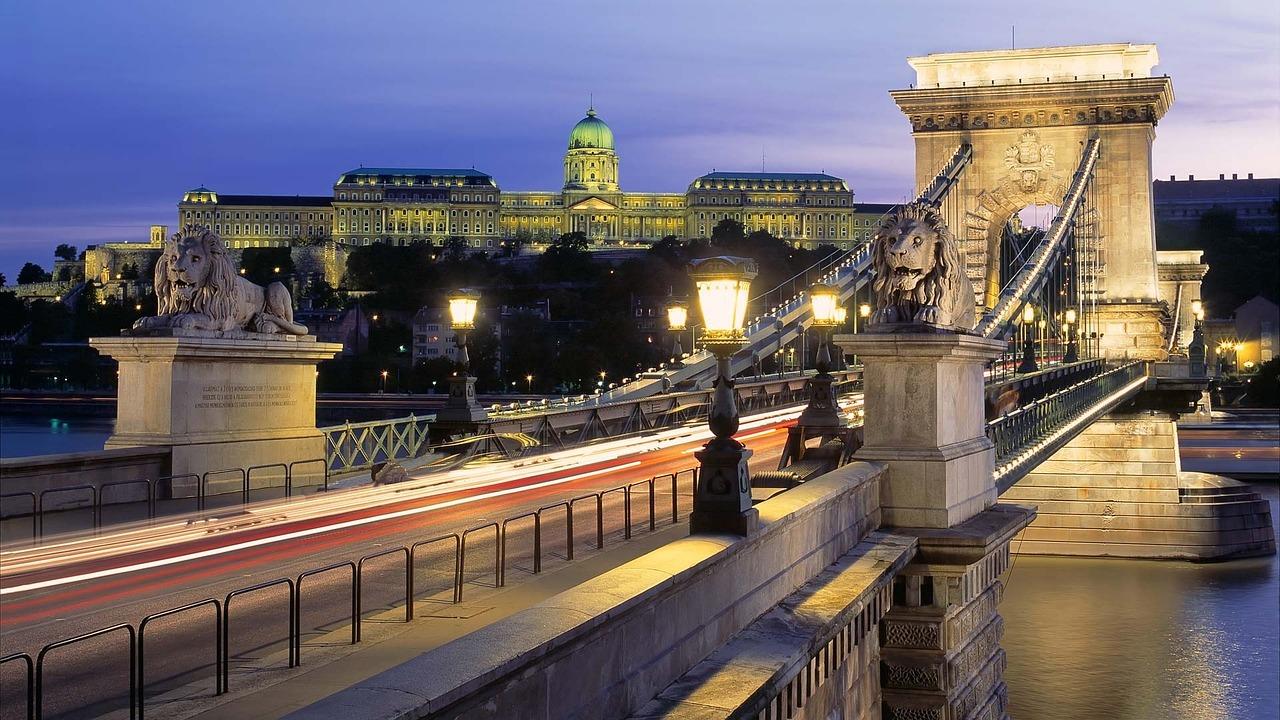
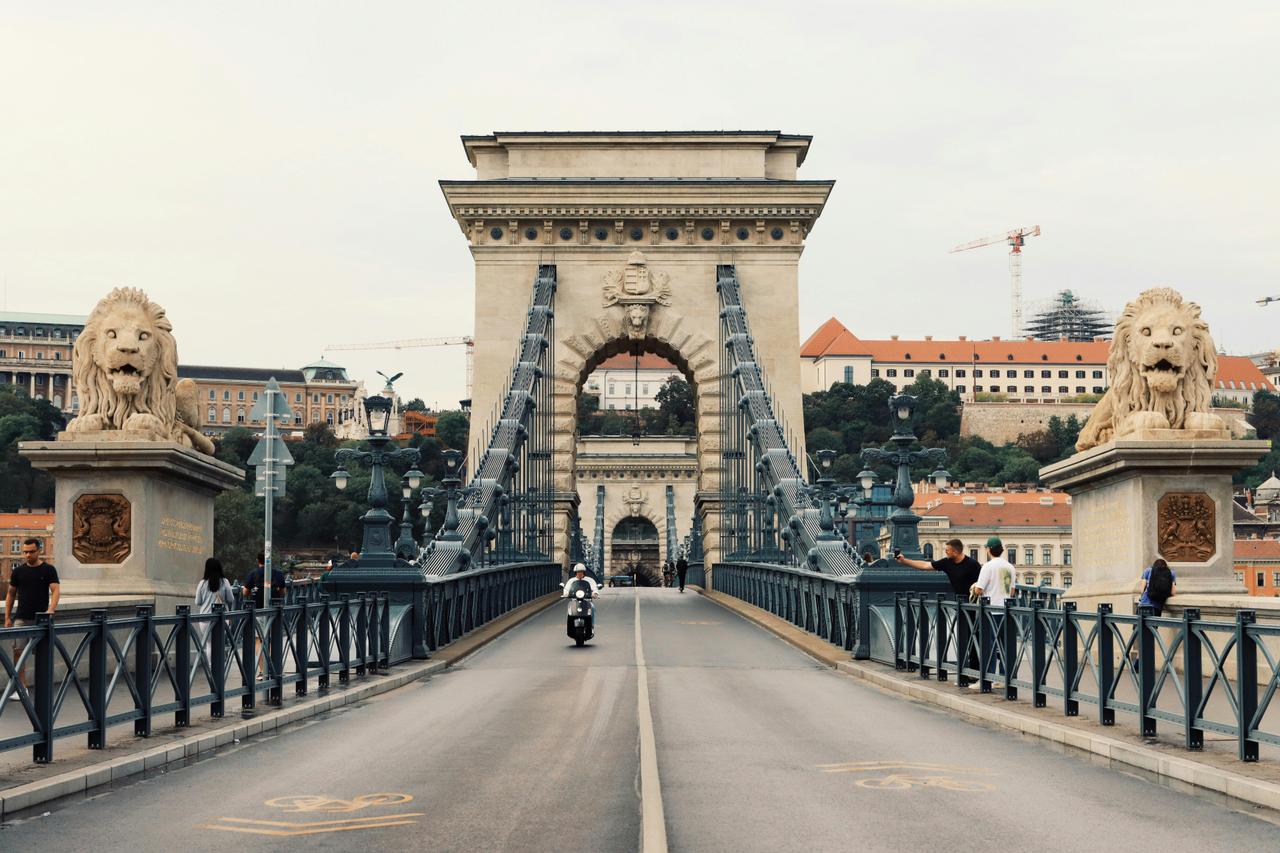
The decorative and sculptural elements of the Széchenyi Chain Bridge are integral to its architectural unity and contribute significantly to its character. The lion statues at the bridge entrances are among its most recognizable visual features. These statues are symmetrically positioned at the entrance points on both banks and are integrated into a cohesive design. Additional architectural detailing is present on the towers supporting the chain system and at the entrance areas. These decorative elements, while independent of the load-bearing system, serve as complementary features that enhance the bridge’s visual composition.
The construction of the Széchenyi Chain Bridge was carried out under a unique financing model within the political and economic context of the era. The necessary financial resources were obtained through donations and various contributions, and a dedicated financial structure was established for the project. Technical and administrative responsibilities were managed within a defined organizational framework, and the necessary legal regulations were defined by the competent authorities of the time. Upon opening, the toll system, usage conditions, and maintenance responsibilities were legally established, granting the structure a status suitable for public use.
Széchenyi Chain Bridge (Pixabay)
The Széchenyi Chain Bridge stands as a symbolic structure within Budapest’s historical and architectural identity. Since its construction, it has served as a fundamental infrastructure element physically linking the two banks of the city. Despite damage and reconstruction phases over the years, the bridge has maintained continuity as a vital urban transportation link. In this regard, it is regarded as a structural connection between the two banks and remains a key component of the city’s transportation system.
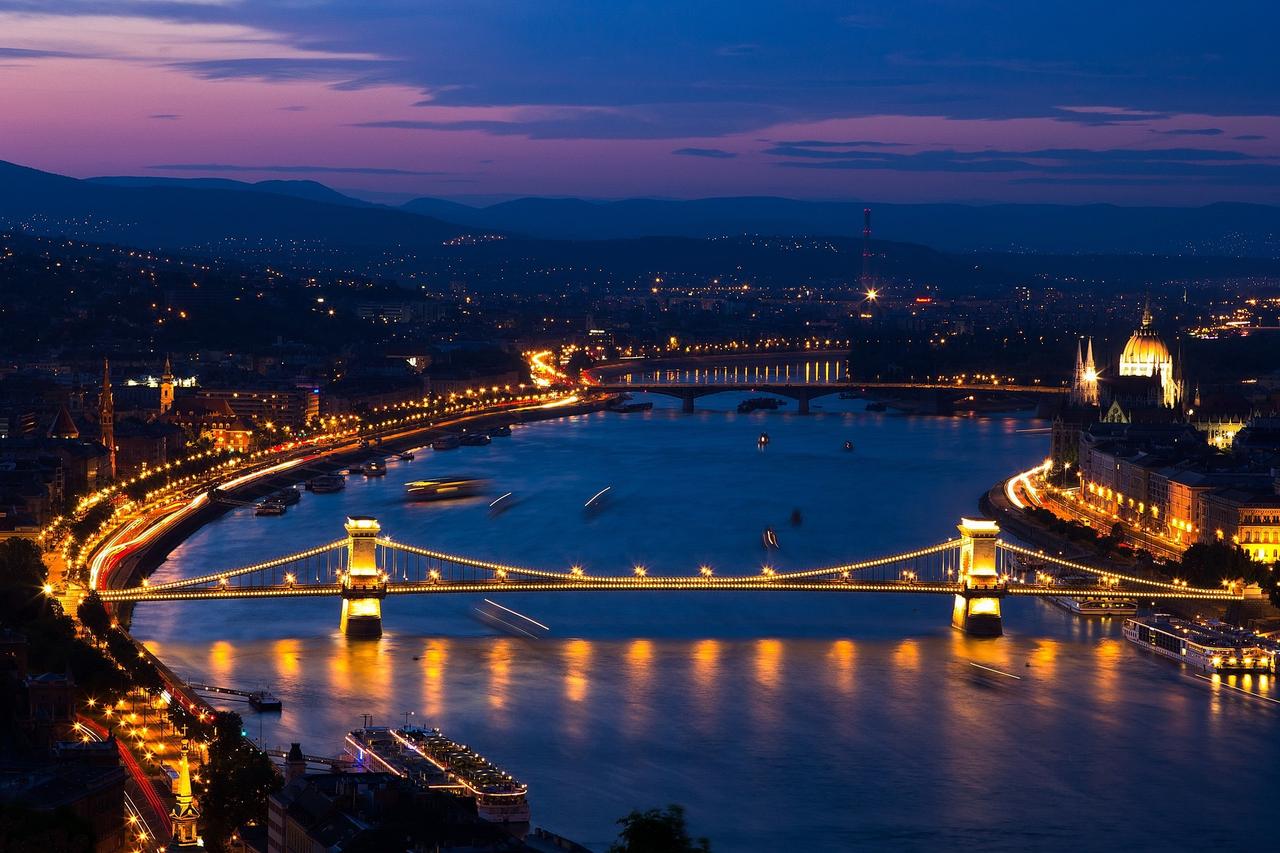
As one of Budapest’s iconic structures, the Széchenyi Chain Bridge appears in various forms of visual media and cultural representations. As a significant structure representing the city’s historical fabric, it is frequently featured in photography, film, and documentary works among prominent urban elements. Its location over the Danube River and distinctive architecture have made it a recognizable feature of the city skyline. Due to these characteristics, the bridge is consistently associated with Budapest and holds an important place in the city’s overall visual identity.
Algorino. "Budapeşte, Zincir köprü, Macaristan görseli." Pixabay. Accessed April 13, 2026. https://pixabay.com/tr/photos/budape%c5%9fte-zincir-k%c3%b6pr%c3%bc-macaristan-4422894/
Blizniak. "Budapeşte, Köprü, Doğa görseli." Pixabay. Accessed April 13, 2026. https://pixabay.com/tr/photos/budape%c5%9fte-k%c3%b6pr%c3%bc-su-mimari-529427/
Efre, Efrem. "Budapeşte." Pexels. Accessed April 13, 2026. https://www.pexels.com/tr-tr/fotograf/budapeste-19577629/
Eray. "Budapeşte, Macaristan." Pexels. Accessed April 13, 2026. https://www.pexels.com/tr-tr/fotograf/isiklar-su-nehir-irmak-7534648/
Hince. "Budapeşte, Zincir köprü, Tuna görseli." Pixabay. Accessed April 13, 2026. https://pixabay.com/tr/photos/budape%c5%9fte-zincir-k%c3%b6pr%c3%bc-tuna-trafik-342499/
Kövesdi, Balázs, Dénes Kollár, Bence Szabó, and László Dunai. “Investigations on the Historical Széchenyi Chain Bridge.” *CE/Papers* 6, no. 3–4 (2023): 1086–1092. Accessed April 13, 2026. https://real.mtak.hu/180070/
Kövesdi, Balázs, Dénes Kollár, and László Dunai. “Temporary Structural Health Monitoring of Historical Széchenyi Chain Bridge.” *Buildings* 14, no. 2 (2024): 1–15. Accessed April 13, 2026. https://www.mdpi.com/2075-5309/14/2/535
LyraBelacqua-Sally. "Budapeşte, Köprü, Zincir köprü görseli." Pixabay. Accessed April 13, 2026. https://pixabay.com/tr/photos/budape%c5%9fte-k%c3%b6pr%c3%bc-zincir-k%c3%b6pr%c3%bc-1212121/
Széchenyi István Levelezései. "The bridge of the future: the Chain Bridge in Budapest." Great Enterprises. Accessed April 13, 2026. https://szechenyilevelezes.abtk.hu/en/levelek/great-enterprises/chain-bridge/
Unknown artist. "Szechenyi Chain Bridge, Suspension Bridge, Landmark Visual." Pixabay. Accessed April 13, 2026. https://pixabay.com/tr/photos/szechenyi-zincir-k%c3%b6pr%c3%bcs%c3%bc-asma-k%c3%b6pr%c3%bc-1758196/
Visit Budapest. “The Széchenyi Chain Bridge.” Accessed April 13, 2026. https://www.visitbudapest.info/en/budapest/sights-in-budapest.html?id=343
Zsubio. "Akşam, Kent, Köprü görseli." Pixabay. Accessed April 13, 2026. https://pixabay.com/tr/photos/ak%c5%9fam-kent-k%c3%b6pr%c3%bc-zincir-k%c3%b6pr%c3%bc-4182585/
[1]
Széchenyi István Levelezései, “The bridge of the future: the Chain Bridge in Budapest,” Great Enterprises, Last Access: 13 April 2026, https://szechenyilevelezes.abtk.hu/en/levelek/great-enterprises/chain-bridge/
[2]
A.e.,
[3]
Visit Budapest, “The Széchenyi Chain Bridge,” Visit Budapest, Last Access: 13 April 2026, https://www.visitbudapest.info/en/budapest/sights-in-budapest.html?id=343
[4]
A.e.,
[5]
Balázs Kövesdi, Dénes Kollár ve László Dunai, “Temporary Structural Health Monitoring of Historical Széchenyi Chain Bridge,” Buildings 14, no. 2 (2024): 1, Last Access: 13 April 2026, https://www.mdpi.com/2075-5309/14/2/535
[6]
Széchenyi István Levelezései, “The bridge of the future: the Chain Bridge in Budapest,” Great Enterprises, Last Access: 13 April 2026, https://szechenyilevelezes.abtk.hu/en/levelek/great-enterprises/chain-bridge/


No Discussion Added Yet
Start discussion for "Széchenyi Chain Bridge" article
History
Planning and Construction Process
Opening and Early Period
World War II and Reconstruction
Architectural and Technical Features
Structural Design and Materials
Dimensions and Engineering Characteristics
Decorations and Statues
Financing and Legal Framework
Cultural and Symbolic Significance
Place in Popular Culture